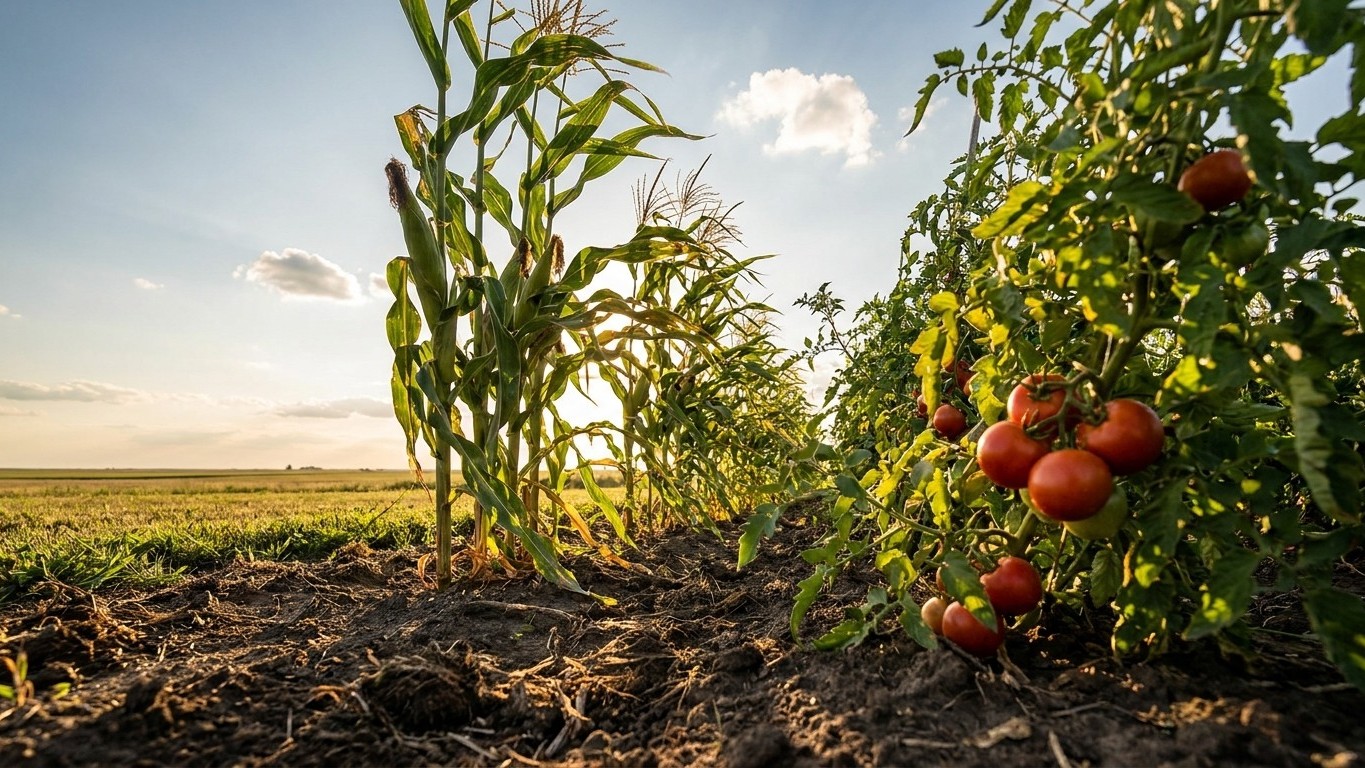

Sweet corn in Missouri gets eaten at three moments: as seed and seedling in cool spring soil, as leaves unroll from the whorl in early summer, and at silking, when the ears become the target. Which insects are behind it changes from county to county, so the University of Missouri Extension and its county offices have the final word. You can still match a symptom to a growth stage and know how much calendar the season gives you.
Which pests attack corn in Missouri
The University of Missouri Extension documents which insects are active in the state’s gardens and fields, and its county offices know what is moving locally. A statewide list also contains plenty of insects that never touch a corn plant. The useful way to sort the trouble is by the part of the plant that gets eaten, because that is what you see first.
Which problems belong in a corn patch?
Four groups of feeders matter for sweet corn:
- Seed and seedling feeders: soil-dwelling insects that eat the sprouting seed or cut young plants near the ground.
- Leaf and whorl chewers: caterpillars and beetles that feed on the leaves as they unfurl from the central funnel.
- Silk and ear feeders: insects that clip the silks and work down into the kernels at the tip of the ear.
- Wildlife: birds and mammals that go after seed in spring and ripening ears in summer.
One mistake is common: gardeners see an insect on a plant, assume it is the culprit, and treat the corn. An insect sitting on a leaf is not proof that it is eating the leaf.
Which ones can you ignore?
Pests of orchard trees and shade trees show up on regional pest lists, but they need a woody host and do not feed on corn. The same goes for insects that live in stored grain. If an extension handout lists an insect, check what it eats before you worry about it.
Pest pressure also depends on when your corn is exposed. Seed sown early sits in the ground longer before it sprouts, and Clemson Cooperative Extension gives the planting rule: “Do not plant before the soil temperature at the 4-inch depth is at least 50 ºF. Wait to plant extra-sweet varieties until soil temperatures reach 65 °F.” A thermometer pushed 4 inches into the soil tells you more than the calendar does. The Clemson factsheet on sweet corn has the full planting guidance, and our guide to When to Sow Sweet Corn in Missouri covers timing for the state.
When each one shows up, and what it does first
The season sets the clock. Near Kansas City International airport, NOAA NCEI Climate Normals put the mean last spring freeze between April 6 and April 20 and the mean first fall freeze between October 18 and October 29. Downtown runs about five days earlier in spring, and southern Missouri is milder still. Soil warm enough for sweet corn arrives well after the last freeze, so seed goes in later than frost dates suggest. After planting, the crop needs 60 to 90 days to mature, and that has to fit before the fall freeze.
Seedling feeders come first, in the weeks after the seed goes in. The first sign is a gappy row or a thin stand. Sometimes a seedling’s center leaf wilts while the outer leaves still look green, or a plant is cut off at the soil line. If you dig where a seed should have sprouted and find a soft, rotted kernel, cold soil is a better suspect than an insect.
Whorl chewers arrive as the plants put on leaf, well before the tassel. What you see is a line of holes across a leaf, repeated down the blade like a stamped pattern, because the insect chewed through the leaf while it was still rolled up. Look inside the funnel of young leaves for chewed tissue and droppings. Damage at this stage is usually cosmetic and the plant outgrows it. Extension offices can tell you when it is worth acting.
Silk and ear feeders show up once the plant tassels and silks emerge. You may see clipped or tangled silks, droppings at the ear tip, or chewed kernels under the husk. This stage also lands in the hottest part of the year. The Kansas City reference station averages 32.7 days a year at 90 F or more, so silking often coincides with heat and high water demand. A stressed plant sets a poorer ear, which makes insect damage harder to tell from a pollination problem.
Wildlife has two peaks: birds and other animals dig for seed in spring, then strip husks and pull stalks over in late summer as the kernels fill. Late plantings also race the fall freeze. Our piece on Will Sweet Corn Ripen in Missouri? works through that question.
Telling the damage apart from everything else
Many corn problems look like insect damage and are not. Water stress, nutrient shortage, bad pollination and wind damage can all be mistaken for an insect, and wasted spraying usually starts with a wrong diagnosis. The table pairs each symptom with its likely causes and the sign that separates them. Take anything unclear to your county extension office.
| What you see | Likely causes | What settles it |
|---|---|---|
| Thin or gappy stand | Seed rot in cold soil, or seed-feeding insects | Dig up an unsprouted seed. Check soil temperature at 4 inches. |
| Rows of holes across leaves | Chewing insects feeding in the whorl | Look inside the funnel for droppings or the insect itself. |
| Leaves rolled and gray-green on hot afternoons | Water stress | Plants recover overnight. Insect damage does not reverse. |
| Pale or yellow leaves, older ones first | Nutrient shortage | A uniform pattern across the row, with no chewing marks. |
| Short ears with scattered missing kernels | Poor pollination or drought at silking | Clean husk and random gaps, not chewed tissue at the tip. |
| Flattened or snapped stalks | Wind or mechanical damage | Breaks with no feeding marks on the stalk. |
| Bland, starchy ears | Delay after picking, or the wrong types tasseling together | Taste after picking the same morning. Check which types you planted. |
The last two rows are the easiest to blame on bugs. Sweetness is lost if su, se and sh2 types tassel at the same time, and Utah State University Extension says to plant in blocks of three or more rows so the plants pollinate each other. A single long row pollinates poorly and gives ragged ears.
Sweetness also fades after picking. Clemson Extension says: “Sweet corn loses sugar from the kernel rapidly at high temperatures… Sweet corn can be stored under optimal conditions for about five days, but will lose sweetness with each day of storage.” Sugar loss is fastest in su types, slower in se, and slowest in sh2.
What actually works here, and what is a waste of time
A physical barrier at the right time beats a treatment in most cases. Floating row cover over new seedlings keeps out many early feeders, but the cover has to come off before the tassels open, or pollination fails. A fence or netting around the patch handles wildlife better than any repellent.
Calendar matters as much as the barrier. Sowing at the right soil temperature, 50 F at 4 inches for ordinary sweet corn and 65 F for extra-sweet types, gets seedlings through the vulnerable stage quickly. Planting in blocks of three or more rows gives better pollination and fuller ears, which makes the crop more forgiving of minor insect injury. Where the 60 to 90 days from planting leave little margin before the first fall freeze, a late planting is a gamble, and it can also meet higher pest numbers at silking. Ask the county office how pressure runs where you live.
What is registered for home gardeners changes, so check with your local extension office for what is currently approved and how it should be used. The extension office can also say whether a given insect justifies treatment at all.
Several common practices waste time. Spraying on a calendar without identifying the insect misses most of the time. Treating leaf holes late in the season is pointless because the plant has already outgrown them. Insects inside a husk are mostly out of reach once they are there. And planting early in cold soil to beat the bugs costs you the seed.
Where to check this for your own county
The University of Missouri Extension runs a county office in nearly every part of the state, and the staff there know which insects are active in your area this season. Call or visit with your photo, your sample and a few details: when you planted, which type of sweet corn it is, and what stage the plants were at when the damage appeared.
A statewide list says what has been documented somewhere in Missouri. It does not say what is eating the corn in one particular yard. A patch near a woodlot faces more wildlife, and a sheltered corner warms sooner in spring. The broader Growing Sweet Corn in Missouri guide covers site, soil and block planting in more detail.
Next step: before the next planting, push a thermometer 4 inches into the bed, and put the county office’s number next to the seed packets.
Common questions
When should I plant sweet corn to avoid early pests?
Plant by soil temperature rather than date. Ordinary sweet corn needs soil at least 50 F at the 4-inch depth, and extra-sweet varieties need 65 F. Soil warms well after the last spring freeze, so the freeze date alone is not a planting signal.
Can I tell insect damage from drought stress?
Often, yes. Rolled, gray-green leaves in the afternoon that recover overnight point to water stress. Holes, droppings and chewed tissue point to insects. If you are unsure, bring a sample to your county extension office.
Will late-planted corn finish before the fall freeze?
Sweet corn needs 60 to 90 days from planting. Near Kansas City International airport, the mean first fall freeze falls between October 18 and October 29, so count forward from your planting day and compare. A late planting of a long-season type may not fit.
How long can picked sweet corn wait before eating?
About five days under optimal conditions, and heat shortens it. Sweetness drops with each day, and sh2 types hold sugar longest while su types lose it fastest.