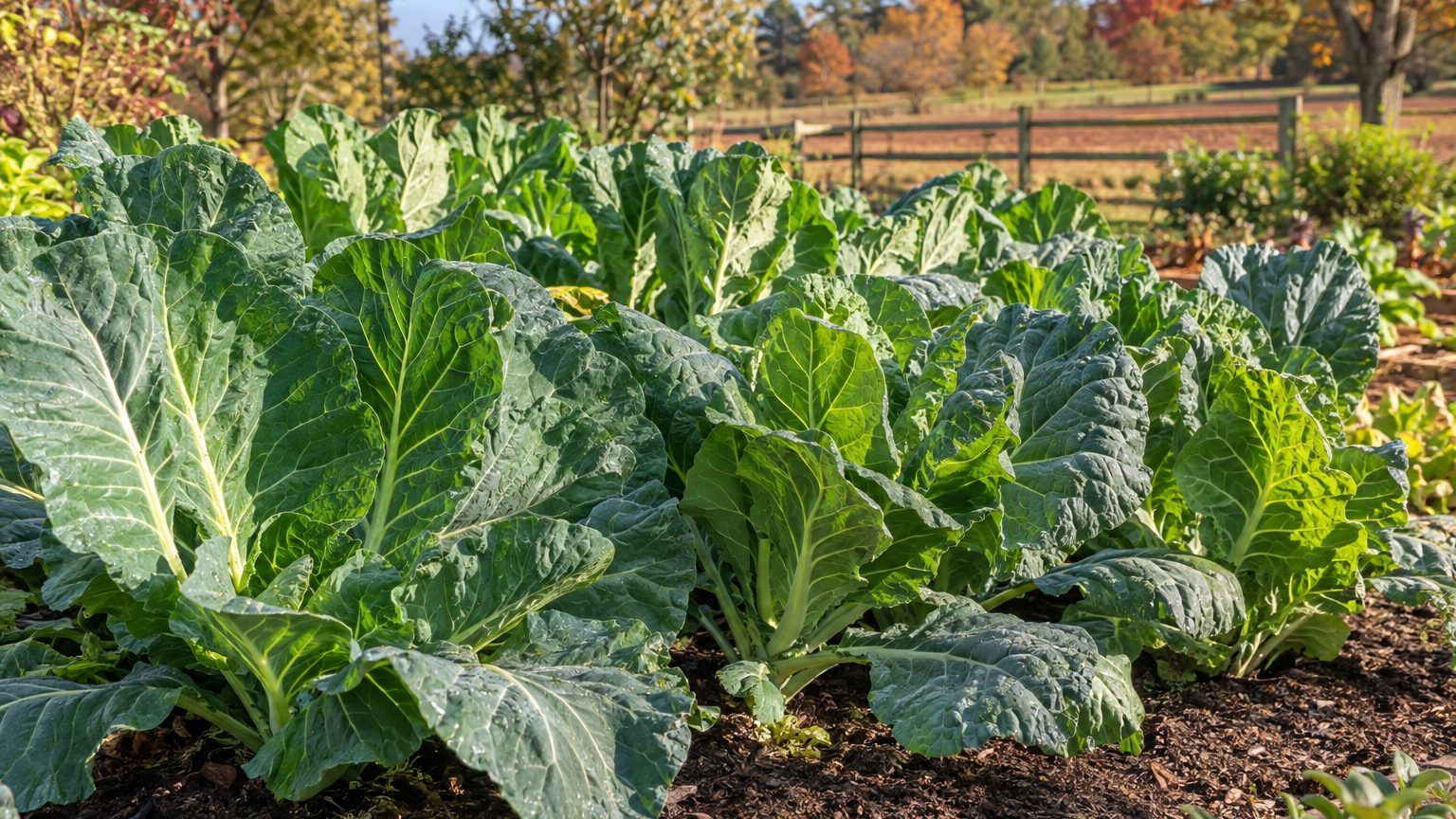

The best collards for Montana are compact, early-to-mid-season types grown as annuals from transplants. Slow Southern heirlooms that need months of warmth are the poor bet. Hardy kale, chard and mustard fill the gaps around them. A mild valley like Billings has roughly 20 to 24 weeks between spring and fall freezes, which is enough for a solid collard crop if you start early and don’t dawdle.
The short answer for Montana
Choose collards that reach harvest size quickly, set them out as transplants, and expect to replant every spring. That is the whole decision in one sentence. The details come from the season itself, and the season here is short enough to punish a slow variety.
What the season allows
Billings is one of the milder valleys in the state. Its NOAA 1991-2020 Climate Normals put the last spring freeze between April 29 and May 10, and the first fall freeze between October 1 and October 14. Those dates mark the band where the chance of a 32°F freeze runs between 30 and 70 percent. They describe odds, not a guarantee, so a freeze after May 10 or before October 1 is a normal surprise rather than a freak event.
Count the weeks between those dates and you get roughly 20 to 24 of frost-free growing time at best. A collard plant uses a good share of that to build a full set of leaves. Frost does not end the harvest, though. Collards tolerate light freezes, and many gardeners find the leaves taste better after a few cold nights.
Choosing by type
The table sorts the useful choices by what they are rather than by seed-catalog promises. Variety names are examples of each type, and availability changes from year to year.
| Type | Examples | Fit for Montana |
|---|---|---|
| Compact, cold-tolerant collards | Vates, Champion | Best all-round choice; smaller plants finish inside a short season |
| Fast hybrid collards | Flash | Good where the season is shortest or planting runs late |
| Tall Southern heirlooms | Georgia Southern | Risky; bred for long seasons and slow to size up |
| Loose-heading collards | Morris Heading | Worth a trial in a mild valley, less so at altitude |
| Hardy kale | Winterbor, Red Russian, Siberian types | Reliable backup, often the easier green in cold spots |
Greens that fill the gaps
Collards are slow to start in spring, so fast crops earn their space. Spinach, mustard and chard can go in while the soil is still cool, and kale shrugs off weather that makes collards sulk. A bed that mixes two or three of these gives you something to pick in June and something to pick after the first October freeze. For the full crop profile, see Growing Collards in Montana, and for sowing dates use When to Plant Collards in Montana.
What will not work here
Most failures with collards in this state come from borrowing a Southern routine. The crop is the same plant, but the clock it runs on is different.
Slow varieties and late starts
A tall heirloom sown outdoors in late May has the same 20-to-24-week ceiling as everything else, and it still needs to build big leaves before a freeze arrives on October 1 in a bad year. The plants end up small and thin, and the gardener ends up with a bed of leaves the size of a dinner plate. Direct-sowing collards after the last frost makes this worse, because the seedlings spend weeks in cold soil doing very little. Starting seeds indoors and setting out transplants buys back several weeks that the climate will not give you any other way.
Planting out too early fails in the opposite direction. Moving transplants into the ground in mid April because the weather turned warm for a week ignores the fact that the last freeze can land as late as May 10 in Billings. Elsewhere in the state it can come later still. Young plants handle a light frost but not a hard one, so keep a row cover or old bedsheets handy for the first weeks.
Counting on winter survival
In Southern gardens, collards sit through winter and keep producing. Here the mean daily minimum in the coldest month is 17.9°F in Billings, and that is an average of the nightly lows. Plenty of nights run colder. Collards are not reliable at those temperatures, so treat them as a crop that ends with the season. Mulch and a south-facing wall might carry a few plants through a mild winter, but a garden plan that depends on it will disappoint more often than not.
Watering once a week
Summers east of the Continental Divide run hot and dry, and a single weekly soaking does not keep up with leafy greens. The top few inches of soil dry out between waterings, growth stalls, and leaves turn tough and bitter. Collards do better with a deep drink two or three times a week during the hottest stretch, plus a layer of straw or shredded leaves to hold moisture. Wind adds to the problem by drying leaves faster than the roots can replace the water, so a windbreak of fencing or a row of taller plants helps in open sites.
Close spacing is less of a concern than in humid states, because dry air keeps leaf disease in check. Even so, crowding collards invites flea beetles and cabbage worms to hide in dense foliage, and giving each plant room makes both easier to spot.
What changes across Montana
Montana is not one garden. The USDA Plant Hardiness Zone Map 2023 (built on 1991-2020 normals) places the state anywhere from zone 3a to 6a. That spans four numbered zones, and the zone system rests on a single variable: the average annual extreme minimum temperature. So no single answer to “what should I plant” covers the state, and the Billings dates above describe a mild valley, not a typical one.
Hardiness zones matter less for collards than for perennials, because collards are replanted every year. For a vegetable like this one, frost dates and the length of the growing season do most of the deciding. The zone still tells you something useful: a place with a lower zone number has colder winters and usually a shorter window between freezes. Mountain valleys can see frost in any month, so a gardener in one of them should plan for a season shorter than anything on the Billings calendar.
Readers in the northern part of the state or at higher elevations should shift in three directions. Favor the fastest collards and kale over anything with a long maturity. Start seeds earlier indoors and keep transplants in pots a little longer, so they go out when the soil has actually warmed. And keep cover close at hand through the whole summer, since a cold night in July is possible in the high valleys. Readers who aren’t sure where they fall should look up their location on the USDA Plant Hardiness Zone Map rather than guess from a neighbor’s garden, since one valley can differ from the next by a full zone.
Where to check this for your own county
Your state extension service is the next stop. Montana State University Extension runs county offices across the state, and each one knows its own local weather, soil and pests in a way no statewide summary can.
Look for three things when you get there:
- A local planting calendar or frost-date table for the nearest town, not just the nearest large city.
- Vegetable variety trials run in your county or a similar one, which show what actually finished in a short season.
- The contact details for your county office or a Master Gardener program, where someone can answer a question about your own soil and elevation.
A county recommendation beats a state one, every time. A statewide rundown has to cover places with a few hundred feet of elevation difference and weeks of difference in the last spring freeze, so it can only point to a range. The county office can narrow that range to your side of the valley.
Checking this against your own garden
Dates and zones are a starting point. What your own yard does in April and May outranks anything printed in a table, and three simple observations will tell you more than a forecast.
Soil warmth by feel. Push a hand into the bed down to the second knuckle in mid-morning. If the soil feels distinctly cold and clammy, transplants will sit and sulk. Check a sunny corner against a shaded or low spot. A spot that stays cold a week longer than the rest is a pocket where frost lingers and where the earliest planting should not go.
Local plants leafing out and blooming. Lilacs and dandelions respond to accumulated warmth, so their timing is a decent guide to when spring has really arrived. If the lilacs in your neighborhood are well behind a friend’s across town, your garden runs cooler than the nearest weather station suggests, and your planting dates should slide later.
The first true leaves. The round seed leaves come first, then the first true leaves with their ruffled edges. Seedlings that put on those leaves slowly outdoors are telling you that the bed is cold or shaded. Seedlings that grow them fast are ready for more space. Write the dates down each year, and after two or three seasons you will have a record of your own garden that beats any average.
Common questions
Can collards survive a Montana winter?
Not reliably. The mean daily minimum in the coldest month is 17.9°F at the Billings reference station, and many nights run colder than that average. Some plants may make it through a mild winter with heavy mulch, but it is safer to replant each spring.
Is kale an easier choice than collards?
In cold or high-elevation gardens, usually yes. Kale tolerates cool weather well and starts producing sooner, while collards need more time to build their big, smooth leaves. Many Montana gardeners plant both and see which one suits their yard.
When should I start collard seeds?
Indoors, about four to six weeks before the last freeze window, which means late March to early April in a Billings-type valley. Transplants then go out around the end of the window, with cover ready. When to Plant Collards in Montana has the sowing dates.
Will fall frost hurt my collards?
A light frost is fine and often improves the flavor. A hard freeze well below 32°F eventually ends the crop, so harvest heavily before one is forecast. Frozen leaves are brittle, so wait until they thaw before picking.