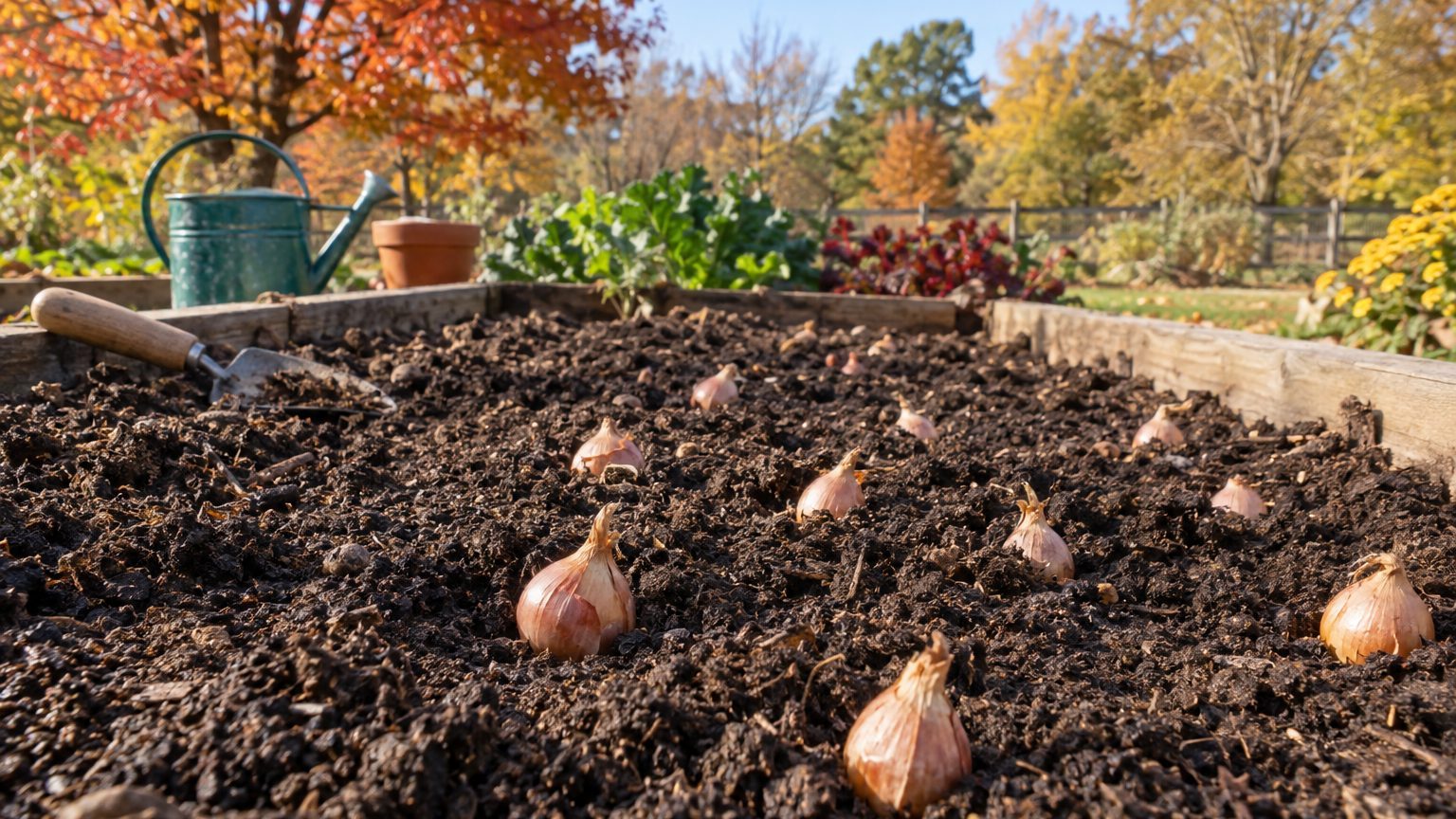

Plant shallots in Newfoundland and Labrador in early spring, as soon as the soil can be worked, ideally before or around the average last spring frost of May 30. Fall planting is possible but riskier here. Both dates are averages from a single St. John’s station, not promises. Gardens elsewhere in the province can run weeks behind.
The short answer for Newfoundland and Labrador
The calendar numbers come from Environment and Climate Change Canada’s 1981-2010 climate normals for the ST JOHN’S A station. They are:
- Last spring frost: on average May 30
- First fall frost: on average October 17
Each is the midpoint of a spread of dates, not a deadline. In one year out of two, the last spring frost lands later than May 30, and in one year out of two the first fall frost arrives later than October 17. Treat May 30 as the middle of a window, never as the day it’s safe.
The two dates sit about 140 days apart. That’s the frost-free stretch in an average St. John’s year, and it’s the number that shapes everything else on this page. Shallots are frost-tolerant, so you don’t wait for May 30 to pass. You plant sets (the small bulbs sold for planting) once the ground has thawed and drained enough that a handful crumbles instead of smearing. In many years that falls before the average last frost, and the sets simply sit and root while nights stay cold.
Why spring and not fall as the default? A fall-planted shallot has to root, then sit through a winter. The coldest month at the reference station has a mean daily minimum of -8.7 °C (16.4 °F). Cold alone isn’t the issue for a hardy bulb under mulch. The issue is a wet, fluctuating maritime winter that can heave shallow sets out of the ground or rot them in saturated soil. This page doesn’t have a ground-freeze date for the province, so it can’t name a safe fall planting day. If you try a fall batch, hedge with a spring batch alongside it.
Pick a variety that suits a short, cool season before you pick a date. The page on The Best Shallots to Grow in Newfoundland and Labrador covers that choice, and the main guide, Growing Shallots in Newfoundland and Labrador, covers the rest of the season, from soil to harvest.
What will not work here
Starting shallots from true seed on a slow schedule is the first thing to cut. Seed-grown shallots need a long run from sowing to a harvestable bulb, and a frost-free window of roughly 140 days in an average year doesn’t leave much margin once you subtract the cold spring. Sets are the practical route. The slowest, late-maturing types will still be sizing up when October’s first frost arrives, and that frost is only a midpoint, so it can show up earlier.
Planting late is the second failure. Shallots form bulbs in response to lengthening days, and the plant needs weeks of leaf growth before that signal arrives. Sets pushed into the ground in late June, after waiting for a “safe” May 30 that never was a guarantee, have far less leaf to feed the bulb. You end up with small, thin-necked bulbs that store poorly.
Weekly watering on a schedule is the third mistake, and it’s a habit imported from hotter states. A maritime climate like this one tends toward cool, damp, foggy summers, so the usual problem is too much moisture, not too little. Shallots sitting in wet soil are open to rot and fungal disease. Water only when the top inch or two is dry, and skip the schedule.
Tight spacing fails for the same reason. The close rows that squeeze extra bulbs into a sunny dry-climate bed trap humidity around the foliage. In a damp season that invites mildew and neck rot. Give each set room for air to move, and favor raised beds or well-drained ground over low spots where water pools.
Skipping a soil test is a quieter way to lose a crop. Many soils in this part of the country run acidic, and shallots do poorly in strongly acid ground. This page doesn’t have a provincial soil pH figure, so a simple test before planting will tell you whether lime is needed. It’s cheap, and it’s much easier to correct before the bulbs go in.
One last thing that doesn’t work: planting a fall batch bare. No mulch plus a wet winter is how sets end up on the surface in March.
What changes across Newfoundland and Labrador
The hardiness zone on file is 6a, in the Canadian system, for the reference city. That’s the Canadian zone, built by Natural Resources Canada from seven climate variables, and it does not convert to a USDA zone. NRCan itself says there are no simple conversions between the two systems. It’s also the zone of one city, not of a province that spans an island and a large mainland region.
So there is no single answer for the province. The frost dates above come from St. John’s, and northern or upland districts run weeks behind that station. Labrador, the interior of the island and higher ground will see a later thaw, a later last frost and an earlier first fall frost than the coastal reference point. This page doesn’t have zone or frost figures for those places, so it won’t guess at them.
What to shift if you’re north or at altitude
Push your planting date back by however many weeks your local thaw trails the coast, and plan for a shorter season on the back end. Favor the earliest-maturing shallot types, since a short window punishes slow ones hardest. Raised beds warm sooner and drain faster. A layer of row cover over young shoots can also buy some protection from late cold snaps.
Fall planting gets harder the farther you go from the coast. Colder ground and deeper, longer snow cover make spring planting the safer bet in most inland or northern gardens.
To find out where your own garden sits, don’t rely on this page. Use NRCan’s Canada’s Plant Hardiness Site, which lets you look up your municipality on the map. Compare it against 6a and treat the gap as a signal to adjust the timing.
Where to check this for your own county
A recommendation for your own area beats a provincial one every time, and this page is the provincial one. It rests on one station’s averages and can’t see your valley, your hillside or your distance from the water. The people who can are your provincial agriculture staff.
Start with the Newfoundland and Labrador Department of Fisheries, Forestry and Agriculture. Look for two things. First, a planting calendar for your region, or any guidance on spring planting dates for vegetables and alliums such as onions and garlic. Second, any information on varieties that have been trialled in your part of the province, since a shallot that finishes in a mild coastal garden may not finish in a colder district.
This page doesn’t have a shallot-specific calendar from the provincial service, and it won’t pretend otherwise. If the department doesn’t publish one for your area, ask their agriculture staff directly what they’d advise for onion-family crops. Shallots are close cousins, so that guidance transfers well. Local garden clubs, community gardens and nurseries that sell sets in your area also hold hard-won knowledge about which dates have worked in recent years.
Checking this against your own garden
Your own observations outrank every date here. Three are worth watching, and none needs equipment.
The first is soil warmth and texture by feel. Dig down a few inches in spring and squeeze a handful. If it crumbles and your hand doesn’t ache from cold after a minute, the ground is workable. If it forms a sticky, waterlogged ball, wait. A bed that reaches this stage a week or two ahead of a neighbor’s tells you that you have a warm, well-drained microclimate.
The second is where the snow and standing water go last. Patches that hold meltwater or stay frosty into May are your slow spots. Put shallots on the ground that clears first, and keep wet pockets for something that tolerates them.
The third is the first green shoots poking through your sets. Note the date each year, and write it down. After two or three seasons, that date and your harvest timing will tell you more about your garden than the St. John’s average ever will. If the tops yellow and fall over before the first fall frost, your season was long enough. If frost catches them green, move next year’s planting earlier or choose a faster variety.
Common questions
Is May 30 a safe date to plant shallots?
It isn’t a safe date for anything tender, and it isn’t a deadline for shallots. May 30 is the average last spring frost at the St. John’s station, so in one year out of two the last frost comes later. Shallots tolerate frost, so you can plant before it, as soon as the soil is workable.
Can I plant shallots in the fall in Newfoundland and Labrador?
You can, but it’s riskier than spring planting. The average first fall frost at the reference station is October 17, and winter lows average -8.7 °C in the coldest month. Wet, shifting winter conditions can heave or rot sets. Mulch heavily, and plant a spring batch as backup.
How long is the frost-free season?
About 140 days between the average last spring frost (May 30) and the average first fall frost (October 17) at the St. John’s station. These are averages from 1981-2010 normals, so any single year can run shorter or longer, and districts farther north or at altitude have less.
Is the 6a zone a USDA zone?
No. The 6a figure is Natural Resources Canada’s hardiness zone for the reference city, built from seven climate variables. It doesn’t convert to a USDA zone, so don’t use it to read US planting charts.