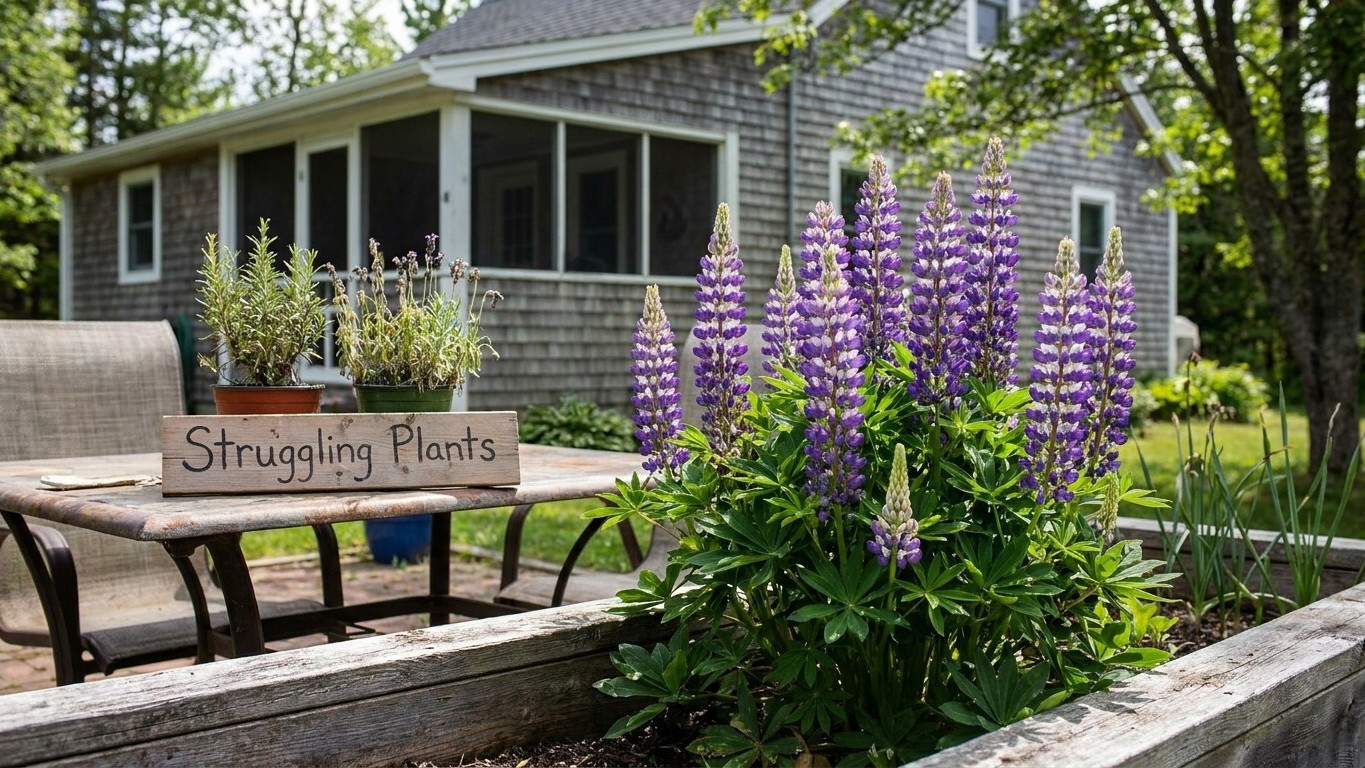

New Brunswick flowers thrive when they are chosen for a very cold winter and a short, mild summer, not for the photo on the plant tag. Environment and Climate Change Canada’s 1981-2010 climate normals put the mean minimum temperature in the coldest month at -13.9 °C at the Moncton reference station, and record zero days a year reaching 90°F there. That combination favors hardy perennials and cool-season annuals over anything bred for a long, hot summer elsewhere. Before buying a plant, check its printed hardiness rating against a winter this severe, not against how good it looks in the catalog photo.
Putting a border together

A good border in this province is built in layers, timed to bloom in waves, and left with breathing room. Environment and Climate Change Canada’s 1981-2010 normals put the average last spring frost at Moncton on May 23 and the average first fall frost on October 2, which works out to a growing season a little longer than four months in a typical year. Those are mean dates, not guarantees. Frost arrives later than either date in roughly half of all years, so treat the window as a midpoint to plan around, not a safe deadline to plant by. Coastal ground near the Bay of Fundy and inland valleys away from Moncton run on a noticeably different schedule, sometimes weeks apart from each other, so a plant list built for one part of the province can mislead a gardener in another.
Layering by height and structure
Put the tallest, sturdiest plants at the back or center of a bed and step down from there. Delphinium elatum hybrids, hardy to roughly zone 3 on the seed packet, can top five feet and need staking in an open site. Phlox paniculata ‘David’, hardy zone 4 to 8 and bred for strong mildew resistance, holds a mid-height layer at three to four feet and carries white flowers through late summer. Bring the front down further with Rudbeckia fulgida ‘Goldsturm’ (zone 3 to 9, around two feet) and Echinacea purpurea (zone 3 to 9, two to three feet), both of which shrug off a hard winter without any protection. For edging, dwarf Dianthus and Alyssum stay under a foot and soften the line between bed and lawn. Match a plant’s printed hardiness rating to a winter with a coldest-month mean minimum of -13.9 °C, not to the bloom photo on the tag, and treat anything rated below zone 4 as a gamble unless it gets heavy mulch or a sheltered corner.
Stringing bloom across the season
Succession means never leaving a bare week between one plant finishing and the next opening. Spring bulbs, tulips and daffodils planted the previous fall, open first, often before the last frost date has even arrived. Peonies such as Paeonia lactiflora ‘Sarah Bernhardt’, hardy zone 3 to 8, follow in early summer with a two- to three-week bloom window. Daylilies like Hemerocallis ‘Stella de Oro’ (zone 3 to 9) and Siberian iris (zone 3 to 8) carry the middle of summer. By late summer and into fall, New England aster (Symphyotrichum novae-angliae, zone 4) and Sedum ‘Autumn Joy’ (zone 3 to 9) take over, with the sedum’s flower heads holding color well past the first light frosts.
| Plant | Bloom period | Mature height | Hardiness (per catalog) |
|---|---|---|---|
| Peony ‘Sarah Bernhardt’ | Early summer | 2-3 ft | Zone 3-8 |
| Daylily ‘Stella de Oro’ | Early to late summer, repeat bloom | 1-1.5 ft | Zone 3-9 |
| Rudbeckia ‘Goldsturm’ | Mid to late summer | 2 ft | Zone 3-9 |
| New England aster | Late summer to fall | 3-5 ft | Zone 4 |
| Sedum ‘Autumn Joy’ | Late summer into fall | 1.5-2 ft | Zone 3-9 |
Annuals fill the gaps a young perennial border always leaves in its first couple of years. Cosmos bipinnatus ‘Sensation’, about 70 days from seed to bloom on the packet, and Calendula officinalis ‘Pacific Beauty’, around 50 to 55 days, both grow fast enough to count on inside this frost-free window. Do the arithmetic yourself rather than trusting the packet alone: sown outdoors soon after the average May 23 last frost at Moncton, a 70-day cosmos should be blooming well before the average October 2 first frost, with weeks to spare in most years. A cooler, wetter spring can still push that back, which is exactly the kind of local variation a single seed packet can’t account for.
Cool-summer annuals that fill in fast
Because the reference station at Moncton logs zero days a year at 90°F or above, flowers that actually prefer mild conditions do better here than they do further south, where summer heat stalls them out.
- Pansy and viola (Viola cornuta ‘Sorbet Series’): tolerate a light frost without damage and keep flowering into cool fall weather.
- Sweet pea ‘Old Spice Mix’: roughly 60 to 70 days to bloom, prefers cool roots and stalls badly once real heat arrives, which never happens here.
- Nasturtium ‘Alaska Mix’: 35 to 45 days to bloom, thrives in poorer soil and cooler air than most catalogs assume.
- Snapdragon ‘Rocket Mix’: cold-tolerant as a young plant and often set out as a transplant rather than direct-sown, given the short window.
Not everything sold at the garden center is built for this climate. Tropical and subtropical flowers that need a long run of real heat to perform struggle here, because that heat simply doesn’t arrive at the Moncton reference station in most years. Some common disappointments:
- Tropical hibiscus (Hibiscus rosa-sinensis), hardy only to about zone 9: survives outdoors here only as a container plant brought in before frost.
- Bougainvillea, hardy to about zone 9-11: needs sustained heat to flower and will only ever be a summer patio plant.
- Lantana camara, hardy to about zone 8-11: grows here but rarely flowers hard without long hot days.
- Canna and dahlia tubers, generally rated zone 7 and up: the ground freezes too deep to leave them in place over winter, so they must be lifted and stored indoors every fall.
- Large-flowered zinnias bred for hot, humid climates: they’ll grow, but size and flower count often fall short of the seed catalog photo in a cool summer.
Gardeners in Hawaii build entire beds around bougainvillea and hibiscus, because the heat those plants need is simply the weather there (see Flowers That Actually Thrive in Hawaii, and the Ones That Struggle). In New Brunswick the same plants are, at best, a summer guest that comes back inside before the first fall frost. Gardeners further out along the Gulf of St. Lawrence, in Newfoundland and Labrador, work with an even shorter and cooler season, and the same hardy-perennial approach carries over there too (see Flowers That Actually Thrive in Newfoundland and Labrador, and the Ones That Struggle).
Repeating color and leaving room to grow
Repetition is what makes a long bed read as one planting instead of a row of unrelated pots. Pick two or three colors, a purple-and-gold pairing of Echinacea and Rudbeckia works well, and repeat that pairing every four to six feet down the border rather than scattering single specimens of a dozen different plants. Leave real space between young perennials at planting, matching the gap to the mature spread printed on the tag rather than to how sparse the bed looks in May. A peony crowded at planting rarely recovers its shape later, and a border planted too tight in year one is doing all its fighting underground by year three. Leave a few open pockets for self-seeding annuals like Nigella damascena and columbine (Aquilegia), which will wander into gaps on their own over a season or two and soften hard edges without any replanting on your part.
Local help
New Brunswick’s Master Gardener volunteer groups, where active in a given community, are usually the fastest way to get a plant list tuned to your own yard instead of to Moncton’s averages, since a garden on the Fundy coast and one in the Saint John River valley can sit a full hardiness zone apart from each other. For the underlying climate figures and broader growing guidance, check Agriculture and Agri-Food Canada’s site at agriculture.canada.ca first. Our own New Brunswick guides collect frost dates, soil notes and planting advice specific to this province rather than to Canada as a whole, which is a useful second stop once you know your own local conditions.
Common questions
Can I grow tropical hibiscus or bougainvillea outside in New Brunswick?
Only as a container plant you move indoors for the winter. Both are rated hardy to roughly zone 9 or warmer on the plant tag, far above what any New Brunswick winter allows, so they need to come inside as houseplants well before the first fall frost and can go back outdoors once the danger of frost has passed in spring.
When is it actually safe to plant annuals outside?
Environment and Climate Change Canada’s 1981-2010 normals put the average last spring frost at Moncton on May 23, but that’s a mean date, not a guarantee. Frost arrives later than that in roughly half of all years, which means gardeners who plant right on that date routinely lose tender seedlings to a late cold snap. Watch the extended forecast in the two weeks around it rather than marking a single day on the calendar, and hold tender annuals a little longer if you garden away from the immediate Moncton area.
Why do my dahlias or cannas come back weaker every year, or not at all?
They’re probably being left in the ground over winter when they shouldn’t be. Dahlia and canna tubers are generally rated hardy only to around zone 7 or 8 on the catalog, well short of a New Brunswick winter where the coldest month’s mean minimum runs to -13.9 °C at Moncton. Lift the tubers in fall once the foliage blackens with frost, store them cool and dry indoors over winter, and replant once the soil has warmed again in spring.
What hardiness zone is New Brunswick, so I know what to buy?
There isn’t one answer for the whole province, and this article won’t assign a single zone number, because conditions vary widely between the coast and the interior. Use the hardiness rating printed on the plant tag as a floor rather than a target. With a coldest-month mean minimum of -13.9 °C recorded at Moncton by Environment and Climate Change Canada, treat anything rated below zone 3 or 4 as needing a sheltered site, heavy mulch, or both, to reliably make it through winter.
Related guides
- Flowers That Actually Thrive in Quebec, and the Ones That Struggle
- Flowers That Actually Thrive in Nova Scotia, and the Ones That Struggle
- Flowers That Actually Thrive in Newfoundland and Labrador, and the Ones That Struggle