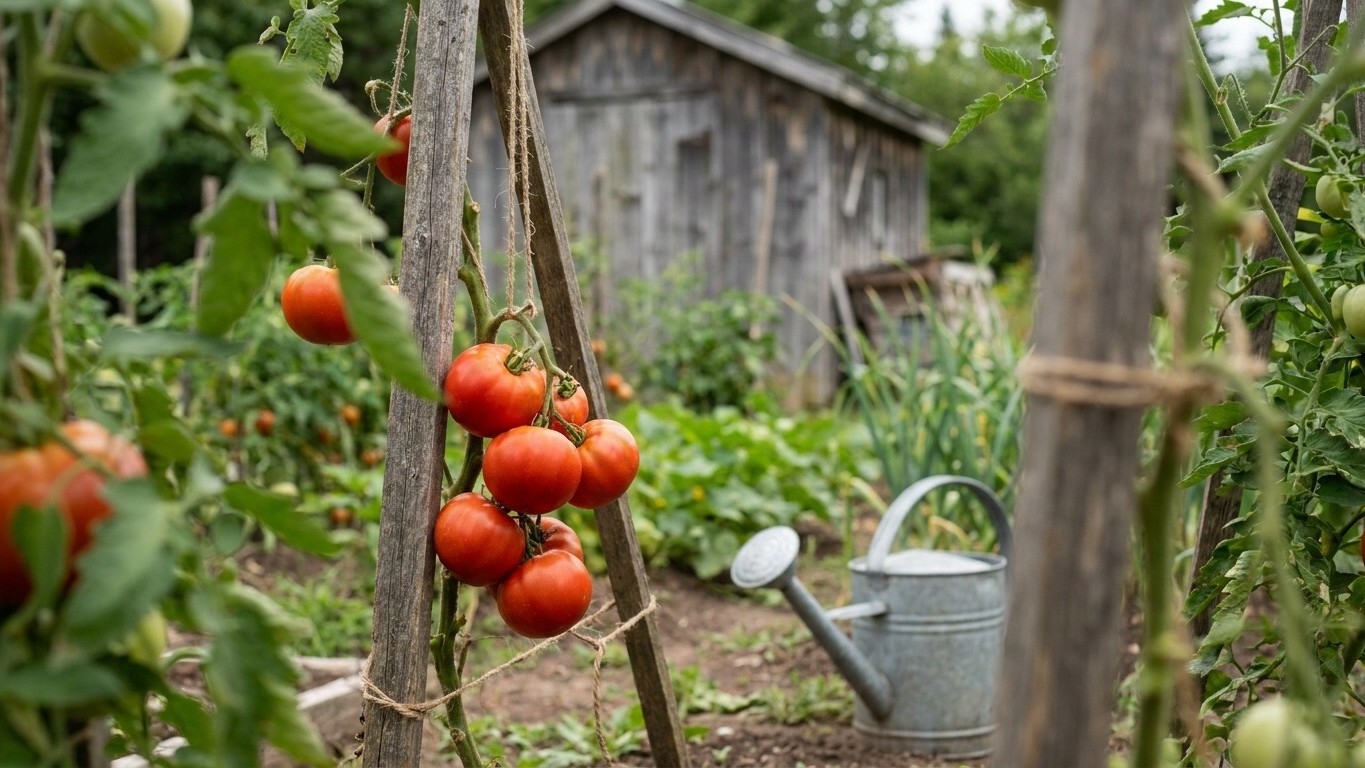

New Brunswick’s average last spring frost falls on May 23, and the first fall frost returns around October 2, according to Environment and Climate Change Canada’s 1981-2010 climate normals for the Moncton station. That leaves an average frost-free season of 131 days, though the real date lands later than that average in about half of all years. Get transplants into the ground in early June, after your own yard has shown a couple of weeks of frost-free nights, and pick varieties that can ripen inside that window.
When to plant Tomatoes in New Brunswick

Moncton’s climate station is the long-term record Environment and Climate Change Canada publishes for the region, and its 1981-2010 normals put the average last spring frost at May 23 and the average first fall frost at October 2. Those two dates bracket an average growing season of 131 frost-free days. Treat May 23 as the midpoint of a spread rather than a guarantee: in roughly half of the years in that record, frost arrived after that date, sometimes by a week or two. Northern New Brunswick, the upper Saint John River valley, and higher elevations inland run behind Moncton’s coastal-influenced climate, often by a week or more in both spring and fall, so a gardener further north should push every date in this article later and treat the whole season as shorter.
Counting Back From transplant day
Work backward from an early-June transplant target, as explained in Tomato Planting Dates in New Brunswick: Counting Back From Your Frost Window. Most tomato seed packets call for starting indoors six to eight weeks before plants go outside, which lands seed-starting in early to mid April for most varieties. Fast cherry types like Sakura or Sun Gold can go a little later in that window since they size up quickly, while a longer-season paste type like San Marzano II does better started at the early end, so the transplant is sturdy and already showing its first true leaves by planting time. For a fuller rundown of which cultivars fit the local season, see this list of Tomato Varieties That Ripen in Time in New Brunswick.
Sow into cell trays or small pots under grow lights or a bright window, keep the mix consistently moist, and expect germination within a week at room temperature. Pot up into larger containers once the first true leaves appear if the seedlings will sit indoors more than five or six weeks, since a rootbound seedling stalls instead of growing on schedule.
Hardening off and setting out
Before transplanting, harden seedlings off over seven to ten days: start with an hour or two of sheltered outdoor light, add an hour a day, and bring plants back in if a cold snap threatens. Set plants out in early June, once nights are reliably staying above the low temperatures that damage tomato tissue and the soil has warmed. Tomatoes do not simply survive a frost, they die back to the ground, so there is no advantage to rushing a week ahead of the average and every advantage to watching your own yard rather than the calendar. If a late cold snap is forecast after you have already planted, cover rows with a bedsheet or row cover overnight rather than risk losing the crop.
Soil and site preparation
Tomatoes want at least six to eight hours of direct sun a day, so pick the sunniest, most open part of the yard, away from the shade of fences, sheds, or mature trees. A site with good air movement also dries leaves faster after rain or dew, which matters in the humid summers New Brunswick gets off the Bay of Fundy and the Gulf of St. Lawrence.
Building the bed
Work compost or well-rotted manure into the bed in the weeks before planting rather than the day of, so it has time to break down into a form roots can actually use. Many Maritime yards sit on heavy, clay-rich soil left behind by glacial till, and tomatoes planted into wet, compacted ground establish slowly and are more prone to root rot. A raised bed, or simply a mounded row four to six inches above grade, solves most drainage problems without any other intervention. If the soil is heavy, dig in coarse compost and aged manure to open the structure rather than reaching for sand, which tends to make clay soils denser rather than looser.
A soil test is the only reliable way to know your pH and nutrient levels rather than guessing, and it is worth doing the year before if you are breaking new ground. For more on adapting seasonal garden tasks to different parts of the province, see our New Brunswick guides.
Spacing
Space indeterminate varieties, the ones that keep growing and setting fruit all season, about 24 to 36 inches apart in rows three feet apart if staked, or wider if left to sprawl. Determinate varieties, which grow to a set size and ripen most of their crop over a shorter window, can go a little closer, around 18 to 24 inches, since they stop growing once they set their final fruit cluster. Crowded plants take longer to dry after rain and are the first to show fungal disease, so err on the wider spacing in a season already working against a short growing window.
Varieties that suit New Brunswick
With an average of 131 frost-free days at Moncton, and less than that further inland or north, days to maturity is the first number to check on any seed packet or plant tag. That figure counts from the day a transplant goes into the ground, not from seed, and catalogue numbers shift by a week or two either way depending on the weather that particular summer, so treat them as a planning range rather than a promise.
Disease resistance matters almost as much as speed in a humid Maritime summer, where fungal and viral pressure builds through August. Resistance codes on a seed packet, things like intermediate resistance to nematodes or high resistance to Fusarium wilt, tell you which named diseases a variety was bred to shrug off, and picking a resistant variety is cheap insurance against a problem that would otherwise cost you the plant.
Matching variety to the season
The table below sets out, for transplants going in early June, roughly when each variety’s first fruit should ripen and how much of the season is left afterward before Moncton’s average October 2 frost. These figures are calculated from the catalogue’s days-to-maturity number against the local frost window, not observed local yields, so use them as a planning guide and adjust for your own microclimate.
| Variety | Type | Days to maturity | Disease resistance | First ripe | Margin before frost |
|---|---|---|---|---|---|
| Sakura | Indeterminate | 55 | Nematodes, ToMV, Fusarium 1&2 | Late July | ~63 days |
| Edox | Indeterminate | 55 | Nematodes, ToMV, Fusarium 1&2 | Late July | ~63 days |
| Valentine | Indeterminate | 55 | Early blight (intermediate) | Late July | ~63 days |
| Glacier | Determinate | 55 | None listed | Late July | ~63 days |
| Sun Gold | Indeterminate | 57 | TMV, Fusarium 1 | Early August | ~61 days |
| Juliet | Indeterminate | 60 | Late & early blight (intermediate) | Early August | ~58 days |
| Supersweet 100 | Indeterminate | 60 | Verticillium, Fusarium 1 | Early August | ~58 days |
| Amalfi | Determinate | 68 | Nematodes, late & early blight | Mid August | ~50 days |
| Cherokee Purple | Indeterminate | 72 | None listed | Mid August | ~46 days |
| Big Beef Plus | Indeterminate | 72 | Nematodes, gray leaf spot, ToMV | Mid August | ~46 days |
| Tiren | Indeterminate | 75 | Verticillium, ToMV, Fusarium 1 | Mid August | ~43 days |
| Granadero | Indeterminate | 75 | Nematodes, Verticillium, ToMV | Mid August | ~43 days |
| San Marzano II | Indeterminate | 78 | None listed | Late August | ~40 days |
| Celebrity Plus | Determinate | 78 | Nematodes, gray leaf spot, ToMV | Late August | ~40 days |
The shortest-season group, Sakura, Edox, Valentine and Glacier, all finish in 55 days and carry the widest safety margin, which makes them the forgiving choice for a first tomato bed or a yard that runs cooler than Moncton. Sun Gold and Supersweet 100 are cherry types bred for a long picking season rather than one big harvest, and their early first-ripe date means you are eating fruit well before the paste and slicing types even color up. Cherokee Purple, an heirloom slicer, carries no listed disease resistance, so it rewards wider spacing and mulching more than the resistant hybrids do. San Marzano II and Celebrity Plus sit at the far end of the table, with the smallest margin before the average frost, and are worth pairing with black plastic mulch or an early-window transplant if your yard runs cooler than Moncton’s average. Gardeners across the Northumberland Strait on Prince Edward Island work with a broadly similar frost window and face the same trade-off between flavor and finishing time.
What to plant alongside
Basil is the classic tomato companion, and while the folklore claim that it improves tomato flavor has no controlled trial behind it, basil does draw in pollinators and its dense, low growth shades the soil around the tomato’s root zone, which helps keep moisture even. Borage is worth the space for a similar reason: it pulls in bees and hoverflies, and hoverfly larvae eat aphids, one of the few pests that shows up reliably on tomato foliage.
Marigolds get planted alongside tomatoes more than almost any other flower, largely on the strength of research showing French marigold roots release compounds that suppress certain root-knot nematodes in the soil around them. That effect is real in controlled trials but modest in an open garden bed, so treat marigolds as a pleasant, pollinator-friendly border rather than a substitute for choosing a nematode-resistant variety like Sakura or Edox in the first place.
What to keep away
Keep tomatoes well clear of potatoes and other nightshades. Both share early blight and late blight, and planting them in the same bed, or even rotating tomatoes into last year’s potato ground, gives any spores already in the soil a second host to jump to. Corn is another plant to separate from tomatoes where possible, since the corn earworm and the tomato fruitworm are the same insect, and a nearby corn patch gives it a place to build up numbers before moving to the tomatoes. Fennel is broadly disliked by most vegetable garden neighbours, tomatoes included, because it releases compounds into the soil that slow the growth of plants around it, so keep it in a bed of its own. Heavy feeders like brassicas compete hard for the same nitrogen a tomato plant needs to fill out its fruit, so give cabbage, broccoli and their relatives their own dedicated space rather than tucking them along a tomato row.
Watering, feeding and support
Water deeply and infrequently rather than a little every day. Most tomato plants need the equivalent of one to two inches of water a week, counting rainfall, delivered in one or two soakings rather than a daily sprinkle that only wets the top inch of soil. Shallow, frequent watering trains roots to stay near the surface, which makes the whole plant more vulnerable to a dry spell later in the season. Water at the base rather than overhead where possible, since wet foliage sitting overnight is what most fungal diseases need to get started.
Mulch and feeding
A three-inch layer of straw or shredded leaf mulch, laid once the soil has warmed through in June, holds moisture, keeps weeds down, and stops soil from splashing onto the lower leaves during rain, one of the main ways early blight spreads from the ground up. Black plastic mulch does the same job while also warming the soil a few degrees, worth considering for the longer-season varieties on the table above that need every extra day of heat they can get.
Feed at transplanting with compost or a balanced fertilizer worked into the planting hole, then side-dress again once the first fruit is the size of a golf ball. Avoid heavy nitrogen after that point. A tomato plant fed too much nitrogen puts its energy into lush, dark foliage instead of fruit, and that leafy growth is exactly what a short Maritime season cannot afford to spend time on.
Staking and pruning
Indeterminate varieties, which keep growing and flowering until frost stops them, need a stake or cage five to six feet tall to keep the vine and fruit off the ground. Determinate varieties finish at a set height and can usually get by with a shorter, standard tomato cage. In a coastal or open yard exposed to Maritime wind, drive stakes deep and tie the main stem loosely every twelve inches rather than relying on a cage alone, since a top-heavy, fruit-laden plant catches wind like a sail.
For indeterminate types, pinch out the suckers, the small shoots that form in the joint between the main stem and each leaf branch, at least below the first flower cluster. This keeps the plant to one or two main stems, improves airflow through the foliage, and channels its energy into ripening the fruit already set rather than growing new branches it may not have time to finish. Determinate varieties need little to no suckering, since removing growth points on a plant that is not going to keep growing anyway only cuts your eventual yield.
Common problems
Most tomato failures trace back to one of a handful of causes, and reading the symptom correctly saves a season instead of guessing and reaching for the wrong fix.
Blossom end rot
A flat, sunken, leathery patch forms at the blossom end of the fruit, opposite the stem, and turns dark brown to black as it spreads. It is a calcium delivery problem rather than a calcium shortage in most soils, caused by uneven watering that interrupts the plant’s ability to move calcium into the fruit. Consistent watering fixes it faster than any calcium spray, so check mulch and watering rhythm before buying a product.
Fruit cracking
Concentric rings or radial splits open in the skin, usually after a dry spell is broken by heavy rain or a sudden deep watering. The fruit swells faster than the skin can stretch. Even, regular watering and a layer of mulch that buffers soil moisture through a downpour are the main prevention, and cracked fruit is still fine to eat if you catch it before it rots at the split.
Leaf curl
Leaflets cup upward and the leaf feels thicker than normal but stays green. This is usually physiological, a response to heat, wind, or a recent hard pruning, rather than disease, and it does not need treatment unless it comes paired with yellowing or spotting, which points toward a virus or nutrient problem instead.
Fusarium and verticillium wilt
Leaves yellow and wilt starting on one side of the plant or one branch, even when the soil is moist, and a cut stem often shows brown streaking inside. Both wilts live in the soil for years, so there is no in-season cure. Choosing a resistant variety is the only real defense: Tiren, Granadero, Sun Gold and Supersweet 100 all carry high resistance to Fusarium or verticillium wilt, and are the better pick for a bed with a history of either disease.
Poor fruit set
Flowers form and drop without ever swelling into fruit, usually during a stretch of very hot nights or heavy, sustained rain that keeps pollen from transferring properly. It is rarely a problem in a New Brunswick summer, which runs cooler than the regions where heat-driven blossom drop is common, but a long wet spell can still knock pollination back for a week or two. Gently shaking flower clusters by hand on a dry afternoon helps pollen move when bee activity is low.
Tomato hornworms
A thick green caterpillar, up to four inches long, with white diagonal stripes down its sides and a curved horn at the rear end, strips leaves and can defoliate a branch overnight. They are surprisingly hard to see against the foliage until the damage is already done. Hand-picking at dusk, when they are most active, is the most reliable control in a home garden, and dropping them into soapy water finishes the job.
Ripening before the frost comes back
This is the calculation that decides whether a variety belongs in a New Brunswick garden at all. Moncton’s climate normals give an average of 131 frost-free days between the May 23 last frost and the October 2 first frost. Transplants go in early June, roughly one to two weeks after that average last frost date, which leaves somewhere in the range of 115 to 125 days of the season still ahead once the plant is actually in the ground.
Doing the math for your own variety
Subtract the days-to-maturity figure on the seed packet from that remaining window to see how much slack you have. A 55-day variety like Sakura or Glacier, planted in early June, reaches first fruit with roughly two months still to spare before the average frost. A 78-day variety like San Marzano II or Celebrity Plus uses most of that window just to reach its first ripe fruit, leaving closer to 40 days to bring in the bulk of the crop before frost risk returns. Both finish inside an average year at Moncton, but the paste tomatoes have far less room for a cold, slow spring or an early fall frost to eat into that margin.
Three things buy back time if your yard runs cooler than Moncton or you want more insurance on a longer-season variety: starting seed at the early end of the six-to-eight-week indoor window rather than the late end, warming the soil with black plastic mulch before transplanting, and covering plants with a floating row cover or a simple plastic tunnel on cold nights in both April and September to stretch the season at both ends. None of these turn a 78-day tomato into a 55-day one, but each can realistically buy back a week to ten days, which matters most for the varieties sitting at the bottom of the margin table above. Gardeners in Newfoundland and Labrador work with a noticeably shorter season than mainland New Brunswick, and the growing tomatoes in Newfoundland and Labrador guide covers the same arithmetic for a climate where even the short-season varieties need every one of those tricks.
Harvest and end of season
Pick fruit once it has fully colored for its variety, whether that is the deep red of Big Beef Plus, the near-black dusty rose of Cherokee Purple, or the gold of Sun Gold. A tomato pulls free with a gentle twist when it is ready, or snip it off with scissors to avoid tearing the stem. Fruit picked at the “breaker” stage, just starting to show color, ripens fully within a few days on a kitchen counter out of direct sun and tastes nearly as good as vine-ripened, a useful option once nights start cooling in September.
As frost approaches
Moncton’s climate normals put the average first fall frost at October 2, and the same caution applies here as in spring: real years land later than that average about half the time, but they also land earlier the other half. Watch the forecast rather than the calendar once September arrives. On a night with frost forecast, either cover the plants with row cover or old sheets to buy a few more days, or harvest everything that has any color at all and bring it inside.
Green tomatoes still on the vine at season’s end will ripen indoors if wrapped individually in newspaper and stored in a single layer in a cool, dark spot, checked every few days for any that have turned. Alternatively, pull whole plants by the roots before a hard frost and hang them upside down in a garage or shed. Fruit already showing a blush of color will usually finish ripening on the vine even after the plant itself is dead, and this is often the best way to salvage a September crop of longer-season varieties like San Marzano II or Celebrity Plus that ran out of daylight before they ran out of fruit.
Local help
Frost dates, soil results and disease pressure all vary by county even within a small province, and Moncton’s figures are only a starting point. For localized planting calendars and soil testing, contact Agriculture and Agri-Food Canada, the federal department that oversees agricultural extension resources for New Brunswick, and ask about the nearest office handling home garden soil tests. A soil test result specific to your own yard is worth more than any provincial average.
Common questions
Can I just direct-seed tomatoes outside instead of starting indoors?
Not reliably in New Brunswick. With an average of 131 frost-free days at Moncton, a tomato seeded directly in the ground after the last frost would need to reach maturity from seed rather than from a transplant, which most varieties cannot do before the season runs out. Start indoors and set out transplants instead.
My yard is colder than the Moncton average, how do I adjust these dates?
Push everything later by however many days your last frost typically trails Moncton’s, and lean toward the 55 to 60 day varieties on the table above rather than the 75 to 78 day ones. If you do not know your own average frost date, watch several years of your own garden and note when frost actually hits, since that local record beats any regional average.
Do I need a greenhouse or hoop tunnel to grow tomatoes here?
No, but a simple floating row cover or plastic tunnel in April and again in September adds real insurance for the longer-season varieties, and black plastic mulch warms the soil a few degrees earlier in the season. None of these are required for the short-season varieties like Sakura or Glacier.
Can I grow tomatoes in pots on a deck or balcony?
Yes, and determinate varieties like Glacier, Amalfi or Celebrity Plus generally suit containers better than sprawling indeterminate types. Containers dry out faster than garden soil, so expect to water more often, sometimes daily in hot, windy weather.
Why are the lower leaves on my tomato plant turning yellow?
Lower leaf yellowing late in the season is often just the plant shedding older growth as it puts its energy into ripening fruit, and it is not a cause for concern on its own. Yellowing paired with brown spots, wilting on one side of the plant, or streaking up the stem points to a fungal disease or wilt instead, covered in the common problems section above.