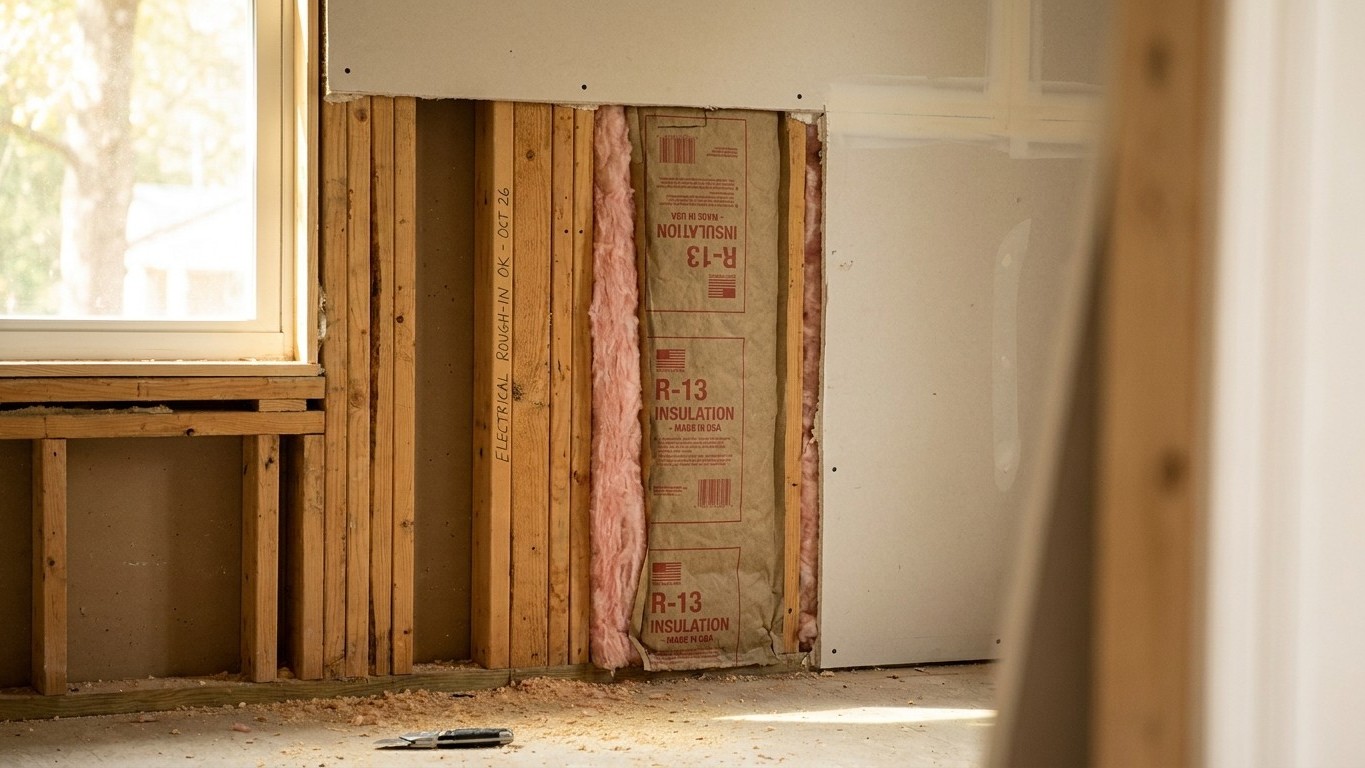

Yes. New Hampshire sits entirely within IECC Climate Zones 5A and 6A, and neither zone appears on the short list where the International Residential Code drops the vapor retarder requirement. That single fact settles the question for the whole state, even though the two zones split its ten counties differently in other parts of the energy code.
What the code asks for in New Hampshire

The 2021 International Residential Code, Section R702.7, is direct: a vapor retarder of the class set by Table R702.7(2) “shall be provided on the interior side of frame walls.” The code then carves out four situations where that requirement doesn’t apply, and the one that changes the answer by geography reads: “A vapor retarder shall not be required in Climate Zones 1, 2 and 3.” New Hampshire isn’t on that list.
The state’s ten counties split between two zones: five counties fall in 6A, five in 5A. That’s the kind of split that, in a warmer state, would produce two different answers to this exact question. Here it doesn’t. Both 5A and 6A sit well outside the exemption zone, so a wall in Coos County (6A) and a wall in Rockingham County (5A) both fall under the same interior vapor retarder requirement, even though the two zones drive different numbers elsewhere in the energy code, like insulation R-values.
That’s worth pausing on, because it’s not how every state works. A state that spans, say, Zone 3 and Zone 5 would have one set of counties exempt and another required to install a retarder, with the line drawn county by county. New Hampshire’s split doesn’t create that fork. The practical outcome for this specific requirement is the same from Portsmouth to Pittsburg.
“Not required” isn’t the phrase in play here anyway, since New Hampshire isn’t in the exempt zones. But it’s worth remembering for context: even where the exemption does apply, in Zones 1 through 3, it removes an obligation. It doesn’t ban a vapor retarder outright. The exception is about not forcing a layer that could cause harm in a humid climate, a point that matters more in the next section.
None of this tells a homeowner or builder exactly what class of retarder to install in a specific wall assembly, and this page won’t either. The class named in Table R702.7(2) depends on the wall’s construction and the local jurisdiction’s adopted code edition, which is a conversation for the local building department, not a website. A wall built with the wrong vapor control doesn’t announce the problem right away. It shows up years later, as rot inside a cavity nobody’s checked since the drywall went up.
Why the answer is the opposite in a warm climate
The requirement flips in Zones 1, 2 and 3 for a reason rooted in physics, not paperwork. In a cold climate like New Hampshire’s, the warm, moisture-laden air sits inside the house all winter. An interior vapor retarder stops that indoor humidity from migrating into the wall cavity and hitting a cold sheathing, where it would condense. That’s the mechanism the retarder is built to interrupt, and it’s why R702.7 puts the retarder on the interior side of the frame wall.
Flip the climate and the moisture flips direction. In a warm, humid region, the damp air is mostly coming from outside, pushing inward through the wall assembly during the cooling season. If a builder installs the same kind of interior vapor retarder there, out of habit or because it’s what’s stocked at the supply yard, that layer becomes the coldest, most impermeable surface the incoming vapor meets. That’s exactly backward from what the wall needs.
The U.S. Department of Energy’s Building America program describes what happens next in plain terms: “If the wall contains a vapor retarder on the interior side of the insulation, the water vapor will condense on this cool, impermeable surface.” The result, in the DOE’s words, is “ruined insulation, mold, and structural rot of framing members.” That’s not a minor performance issue. That’s the same kind of hidden, slow-motion damage a cold-climate wall suffers when it’s missing a retarder it needs, just triggered from the opposite direction.
This is the reason the code writes different rules for different climate zones. It isn’t bureaucratic inconsistency. It’s the code following the direction the water is actually traveling in each region. A vapor retarder is a directional tool, not a universal upgrade, and installing one where the moisture load runs the other way can do more damage than skipping it.
New Hampshire’s winters put it firmly in the cold-climate camp, where the interior retarder is doing the job it was designed for. But the exemption for Zones 1 through 3 only makes sense once you see what an interior Class I layer does to a wall that’s fighting moisture from the outside instead.
The three classes, and why the word matters
The code doesn’t ask for “a vapor barrier.” It asks for a retarder of a specific class, defined by how much moisture vapor passes through it, measured in perms. Those three classes cover very different materials and very different permeability.
| Class | Example materials | Perm rating |
|---|---|---|
| Class I | Sheet polyethylene, nonperforated aluminum foil | 0.1 perm or less |
| Class II | Kraft-faced fiberglass batts, vapor retarder paint | above 0.1 up to 1.0 perm |
| Class III | Latex or enamel paint | above 1.0 up to 10.0 perm |
Sheet polyethylene is what most people picture when they hear “vapor barrier,” and it’s near-impermeable for a reason: it’s a Class I material, sitting at 0.1 perm or lower. Calling it a “vapor barrier” without naming the class skips over the entire disagreement between a builder working in a cold state and one working in a warm-humid one. It’s not that one believes in vapor control and the other doesn’t. It’s that the class appropriate for a 6A wall in New Hampshire can be the wrong class for a 2A wall in the Gulf Coast, and that mismatch is where the damage the DOE describes comes from.
Here’s the detail most homeowners miss entirely: ordinary latex paint qualifies as a Class III vapor retarder. Anyone who’s painted an interior wall with a standard latex finish already has a vapor retarder on that wall, whether they meant to or not. It’s a mild one, well up in the 1.0 to 10.0 perm range, but it counts.
One more distinction worth keeping straight: a vapor retarder and an air barrier aren’t the same thing, even though the same sheet of material sometimes does both jobs. A vapor retarder slows moisture diffusion through a material. An air barrier stops bulk air movement, which carries a lot more moisture a lot faster than diffusion ever does. They’re related, but conflating them is a separate mistake from the class confusion above.
Where the rule stops
R702.7 lists exceptions beyond the climate-zone one already covered above. Three of them apply regardless of zone:
- Basement walls
- The below-grade portion of any wall
- Construction where accumulation, condensation or freezing of moisture will not damage the materials
The basement exception is the one most New Hampshire homeowners actually run into, since so many houses in the state have full or partial basements. A concrete or masonry foundation wall holds moisture from the surrounding soil and releases it slowly, sometimes over years, especially before it’s fully cured or if drainage around the foundation isn’t great. That assembly needs to be able to dry inward toward the conditioned space. Sealing the interior face with a low-perm vapor retarder traps that moisture against the concrete instead, working against the wall rather than protecting it, the same directional mismatch described in the section above, just below grade instead of in a warm climate.
The below-grade portion exception applies the same logic to any wall, not just full basement walls, wherever part of it sits underground. Above-grade framing on that same wall can still fall under the standard interior retarder requirement once it rises above the soil line.
The third exception, for construction where moisture won’t damage the materials, is the broadest and the most fact-specific. It covers assemblies, like certain masonry or rainscreen designs, where the materials themselves tolerate moisture cycling without rot or corrosion, so the retarder isn’t doing protective work it needs to do elsewhere. For the fuller picture on how these exceptions play out below grade, the basement wall guide on this site covers the assembly-level detail that a general code summary can’t.
Who actually decides, in New Hampshire
The IRC is a model code. New Hampshire, like every state, adopts its own edition, sometimes with amendments, sometimes years behind the current model. The version enforced in a given town is whatever that jurisdiction’s building department has adopted and is currently enforcing, not necessarily the 2021 edition referenced here. That’s the office with the actual answer for a specific address, a specific wall assembly, and a specific permit application.
This matters more in New Hampshire than it might in a milder state, because the winters here carry real weight. Manchester averages about 6,172 heating degree days a year against a 65°F base, a figure that measures how much heating demand a typical winter piles up, day after day, not a temperature reading. Compare that to a cooling load of roughly 773 degree days at the same station, and the imbalance is obvious: this is a heating-dominated climate, and the interior vapor retarder requirement in R702.7 exists because of exactly that kind of load, not despite it.
None of that changes the fact that the specific class, the specific installation detail, and the specific exception that might apply to one wall assembly are questions for the local building department, not a general guide. A wall assembled with the wrong vapor control in New Hampshire’s climate doesn’t fail on move-in day. It fails quietly, inside the cavity, and the owner usually finds out only once the drywall comes off for some other reason.