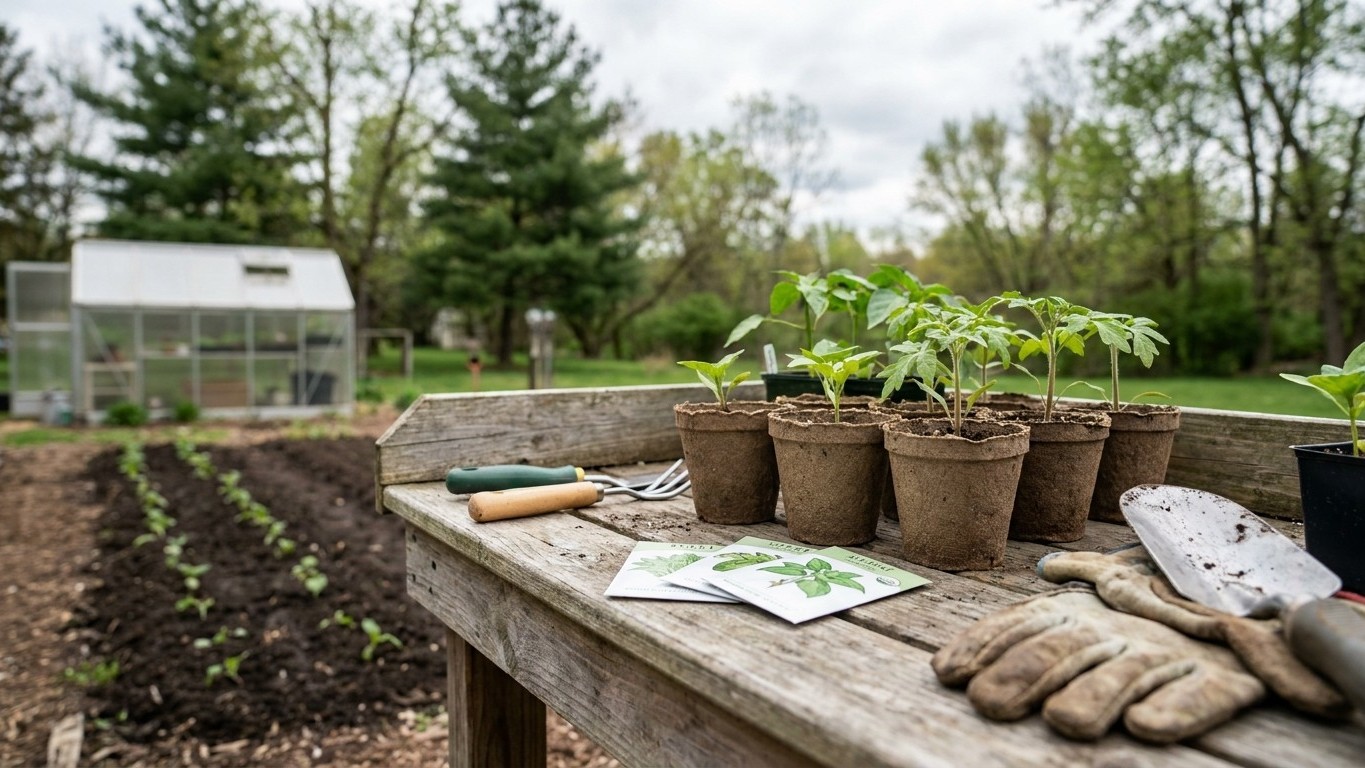

April in New Hampshire sits right on top of the state’s last frost window, so the safe answer depends on where in the month you’re standing. Hardy crops like peas, spinach, and onion sets can go into workable soil once it’s dried out. Tomatoes, peppers, and other tender vegetables should wait until after the frost risk clears, which for much of the state runs later than the reference dates below.
What goes in the ground in April

The calendar says spring, but the soil doesn’t always agree. New Hampshire’s last spring frost falls between April 16 and April 27 at the reference weather station near Concord, according to NOAA NCEI’s 1991-2020 climate normals. That means for roughly the first two to three weeks of the month, the ground is still cold, and for the back half, frost remains a live possibility rather than a settled matter. The USDA places the state across hardiness zones 3b to 6a, a range wide enough that a garden in the Connecticut River valley and one in the White Mountains foothills can be weeks apart in soil readiness.
Reading the soil, not the calendar
What decides whether something goes in the ground isn’t the date on the wall. It’s whether the soil has dried out enough to crumble instead of clump, and whether it has warmed past the mid-40s Fahrenheit a few inches down. A handful of dirt that forms a muddy ball instead of falling apart means wait, no matter what the calendar says.
What’s safe to plant now
With that test in mind, April is workable for the cold-hardy crops that actually want a chill: garden peas, spinach, arugula, and other loose-leaf greens can go in as soon as the soil crumbles. Onion sets and shallots tolerate light frost and are worth getting in early, since they need a long season to bulb up. Radishes and carrots can be direct-sown once the top few inches have dried out, though carrots germinate slowly in cold soil and may sit for two weeks before showing green.
What doesn’t belong outdoors yet is anything that came from a warm-climate ancestor: tomatoes, peppers, squash, cucumbers, beans, and corn. Putting these into soil still in the 40s doesn’t just risk frost death, it stunts them even if they survive, since chilled roots stop taking up nutrients. Save those for after the frost window closes in your own yard, not the reference station’s.
What to start under cover
Seed packets that recommend starting indoors six to eight weeks before last frost only work if you know your own last frost date, and the honest range for New Hampshire runs from April 16 to April 27 at the reference station, later in colder pockets. Count backward from whichever end of that window matches your county, then add a week if your garden sits at elevation or in a low spot that collects cold air.
Counting backward from your frost date
Tomatoes and peppers are the crops most gardeners start under cover this month, and the arithmetic matters more than the label. Tomatoes need six to eight weeks indoors before transplant, so seed started in early April is timed for late May to early June setting out, well clear of the frost window. Peppers run slower, eight to ten weeks, and are worth starting at the very beginning of the month if not before. Cabbage, broccoli, and other brassicas started under cover now are ready to go outside under a low tunnel or cold frame well before tender crops, since they tolerate a light frost themselves.
The two ways it goes wrong
The two ways this goes wrong are opposite problems. Start too early without enough light and warmth, and seedlings turn leggy and rootbound in their trays weeks before the ground is ready for them, arriving at transplant time already stressed. Start too late, and short-season crops like peppers may not have enough growing days left before fall frost arrives in October to produce a real harvest. Staggering a second, smaller sowing two weeks after the first hedges against both mistakes.
What is ready to pick
April is thin pickings outdoors, and that’s normal rather than a sign anything went wrong. Anything that survived the winter under snow or mulch is the first thing worth checking: overwintered kale, leeks, and parsnips left in the ground often taste sweeter after a winter of cold exposure, since the plant converts starches to sugar as a kind of natural antifreeze. Dig these as the ground softens rather than waiting for a specific date.
Rhubarb is usually the first fresh stalk of the season in New Hampshire gardens, pushing up red shoots as soil temperatures climb, though established crowns handle harvest better than ones planted within the last year. Asparagus beds that are several years old may start sending up their first thin spears late in the month in the warmer parts of the state, though a bed cropped too early or too hard in its first seasons weakens for years afterward.
Cold frames and low tunnels planted with hardy greens in late winter or early spring should be producing baby spinach and lettuce leaves by now, and a light thinning of the row encourages the rest to size up rather than compete for space.
Indoors, this is a good stretch to check what’s left in storage. Potatoes that have started sprouting eyes, onions gone soft at the neck, and winter squash with any give or dark soft spots should be pulled and used first, before they take the rest of the bin down with them.
The jobs that matter this month
Soil that’s been sitting under snow all winter benefits from a real look before anything goes into it. Working in compost or aged manure now, while beds are still mostly empty, is far easier than trying to fit it around growing plants later, and it gives amendments a few weeks to integrate before the bulk of transplanting starts.
Soil, mulch, and staking
Mulch pulled back too far too fast is one of April’s quiet mistakes, but mulch left completely untouched can also smother emerging perennials and delay soil warming. The fix is a partial pull-back: rake mulch off crowns and emerging shoots while leaving it in place between rows, where it still suppresses the first flush of weeds. Staking and support structures for peas and other early climbers should go in at planting, not after the vines are six inches tall and already reaching for something that isn’t there. A trellis installed after the fact disturbs roots and never sits as solid as one set before the seed goes in.
Pruning, ordering, and maintenance
Succession sowing starts now for anything harvested young, like radishes and loose-leaf lettuce. A second small sowing every two weeks keeps a steady supply coming rather than one glut followed by a gap. This is also the window for finishing dormant pruning on fruit trees and berry canes before buds break open, since cuts made after leaves emerge cost the plant stored energy it already spent pushing growth.
Anyone who hasn’t ordered seed for the season should do it now. Popular varieties of tomatoes, peppers, and seed potatoes sell out from suppliers before the ground is even ready to plant them. Turning the compost pile, sharpening pruners and hoes, and walking the fence line for winter damage round out the list of jobs that are far easier to do now than once the garden is in full swing.
What not to do in April
Trusting air over soil
The most common mistake is trusting the air temperature over the soil. A run of 60-degree afternoons doesn’t mean the ground six inches down has caught up, and tomatoes or peppers set out on the strength of one warm week usually sit in cold, wet soil that stunts them long before any frost shows up to finish the job. Wait for the soil test, not the forecast.
Working wet soil is the second trap. Walking on or tilling a bed that’s still soggy from snowmelt compacts the structure for the whole season, squeezing out the air pockets roots need. If a footprint leaves a shiny, compressed mark, the bed isn’t ready, no matter how many other gardeners are already planting.
Timing mulch and fertilizer
Pulling mulch and row cover off too early after a mild spell is its own risk, since New Hampshire’s frost window runs into the back half of April and sometimes later. Perennials and early greens exposed too soon can take frost damage that a few more days of cover would have prevented entirely.
Feeding nitrogen-heavy fertilizer at this point pushes soft, leafy growth on fruiting plants before they’ve built any root system to support it, and that soft growth is exactly what late frost damages worst. Save the nitrogen push for once plants are established, and lean on phosphorus and potassium for anything going in now to encourage root development instead.
Checking this against your own county
Every date in this article comes from one weather station, and New Hampshire covers a lot of ground between the seacoast and the northern mountains. Elevation alone can push a last frost date back by a week or two, and low-lying spots that collect cold air overnight, sometimes called frost pockets, run behind even nearby gardens at the same elevation. The southern tier of the state generally warms weeks ahead of the Great North Woods.
Treat the April guidance here as a starting point, then confirm it against local conditions. UNH Cooperative Extension tracks frost data and planting guidance specific to New Hampshire counties and is the better source for a date that matches your actual garden.
Common questions
Is it too early to plant tomatoes outdoors in New Hampshire in April?
Yes, for most of the state. The last spring frost falls between April 16 and April 27 at the reference station, and gardens away from that station often run later. Keep tomatoes indoors or under cover until the frost risk has cleared locally.
Can I direct-sow peas in New Hampshire in April?
Yes, once the soil crumbles instead of clumping. Peas tolerate cold soil and light frost far better than warm-season crops, which makes them one of the safest early sowings of the month.
When should I start pepper seeds indoors for a New Hampshire garden?
Count back eight to ten weeks from your local last frost date. Since the reference window runs April 16 to April 27, that puts seed-starting for many gardens in early to mid-February, with later-frost counties starting a bit later.
What USDA hardiness zone is New Hampshire in?
The USDA Plant Hardiness Zone Map places the state between zones 3b and 6a, based on average annual extreme minimum temperature. Where a specific garden falls within that range depends heavily on elevation and distance from the coast.