
October in New Hampshire is garlic month, harvest month, and frost month all at once. The reference frost window for the state runs October 13 to October 26, so gardeners still have weeks to pull in the last vegetables, plant garlic and shallots for next year, and put beds to bed before the ground locks up.
What goes in the ground in October

Soil temperature, not the date on the calendar, decides what survives this month. Warm-season crops are finished no matter how mild the afternoon feels. What decides the rest is whether a plant needs weeks of active root growth before a hard freeze, or whether it can sit dormant through winter and wake up in spring.
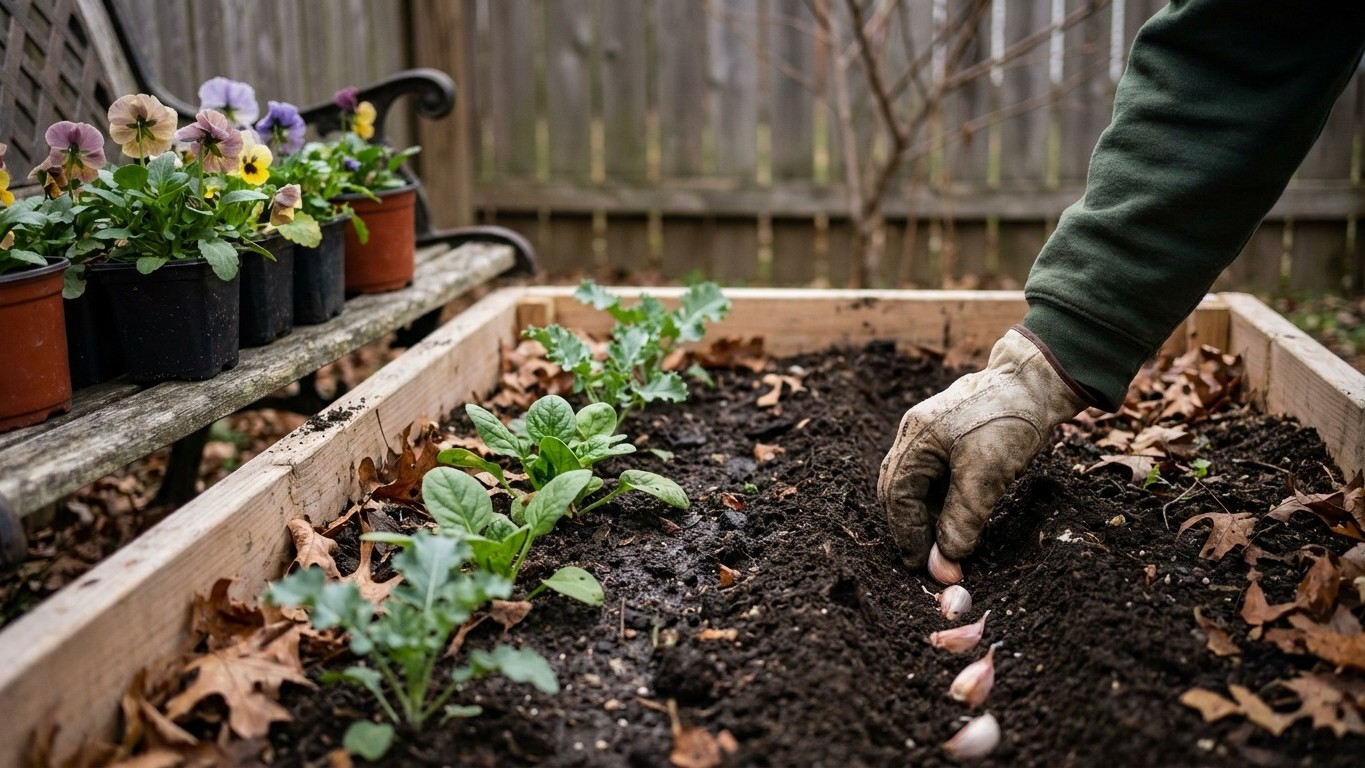
Garlic and shallots are the signature October planting in New Hampshire gardens. Cloves and bulbs go into loosened, well-drained soil, ideally three to four weeks before the ground freezes solid, which gives roots time to establish without pushing top growth that frost would only kill back. Mulch heavily with straw once the soil has cooled, and skip watering once the ground is saturated from fall rain.
Spring-flowering bulbs, tulips, daffodils, crocus, also belong in the ground this month. They need a stretch of cold soil to trigger the internal clock that makes them bloom on schedule, and October gives them that runway before the deep freeze.
Hardy greens still have a narrow window early in the month. Spinach and mache transplants set out in the first week or two can put down roots before the frost window closes, then overwinter under mulch or a cold frame for an early spring crop. After the middle of the month, that gamble gets much longer odds.
Cover crops are worth the effort too. Winter rye and hairy vetch, seeded before the first hard frost, germinate fast enough to hold bare soil over winter and add organic matter come spring. Bare-root trees, shrubs, and perennials divided from the summer border can also go in now, as long as they get watered in well and mulched before the ground freezes.
What to start under cover
New outdoor transplanting is mostly closed for the season, but cover still buys a few more weeks of production. The arithmetic works backward from that frost window: count how many days a crop needs to reach a pickable size, then subtract that from October 13, the early end of the local frost range, to find the last safe sowing date for anything staying outside a cold frame.
Fast-growing greens like arugula, mizuna, and baby lettuce, sown directly into a cold frame or under a low tunnel in the first half of the month, can size up enough for a few pickings before light levels drop too far for real growth. Anything sown after that point spends the winter as a seedling rather than a harvest.
The two failure modes to watch for run in opposite directions. Sow too early relative to the season’s remaining light and heat, and greens bolt or get rootbound in a small cold frame with nowhere to go. Sow too late, and seedlings barely germinate before growth stalls for the winter, leaving nothing to show for the effort. The sweet spot in most New Hampshire gardens sits in the first two weeks of the month, adjusted a few days earlier for anyone north of the notches or at higher elevation.
This is also the month to pot up any garlic or herb divisions meant to overwinter indoors on a bright windowsill, since outdoor soil temperatures are dropping too fast to support new growth in the open ground.
What is ready to pick
October is a genuine harvest month, the last big one before the garden goes quiet. Winter squash and pumpkins come off the vine once the rind resists a fingernail scratch and the stem has started to dry and corky. Apples are ready when a gentle twist releases the fruit from the branch without tearing.
Root crops get sweeter as soil temperatures drop, so beets, carrots, and parsnips left in the ground through early frosts often taste better than the ones pulled in September. Brussels sprouts and kale improve the same way, since a light frost converts starches to sugars in the leaves and sprouts.
Potatoes should be dug before a hard, ground-penetrating freeze, then cured in a cool, dark space for a week or two before long-term storage. Leeks are tough enough to stay in the ground under mulch and get pulled as needed well into the cold months.
Anyone with stored crops from earlier harvests should start checking them now. A single soft or moldy onion, potato, or squash spreads rot to its neighbors fast, so a walk through the root cellar or storage shelf every week or two pays for itself. Toss anything with a soft spot before it takes down the rest of the bin.
The jobs that matter this month
Several tasks in October carry real deadlines, not just good intentions. Missing them costs work, money, or an entire crop next year.
Soil and beds. Once summer crops are cleared, work in compost or shredded leaves while the soil is still workable. Amending now means the material has all winter to break down, instead of competing with spring planting for time. A basic soil test taken this month also gives results back well before spring, with time to correct pH or nutrient gaps before the next planting.
Turn any active compost pile before cold weather slows the microbes down, and add a fresh layer of fallen leaves as a carbon source. Leaves raked off the lawn are free mulch for garlic beds and perennial borders alike.
Water more sparingly as growth slows, but don’t stop entirely. Newly planted garlic and any fall transplants still need consistent moisture until the ground freezes.
Before the first hard freeze, drain and store hoses, shut off and drain outdoor irrigation lines, and bring in anything with water still sitting in it that could crack from ice expansion.
Clean and sharpen pruners, loppers, and hoes before they sit unused all winter; a light coat of oil on metal parts prevents rust. Walk the fence line and raised bed frames now, while repairs are still comfortable outdoor work, rather than discovering a collapsed trellis in the spring rush.
Order seed for next season as catalogs arrive. Popular varieties, especially open-pollinated and heirloom types, sell out weeks before spring planting begins, and an October order guarantees the choices that matter.
What not to do in October
The most common October mistake in New Hampshire is trusting a warm afternoon over the calendar. A run of 60-degree days late in the month doesn’t mean the frost risk has passed, it means the next cold snap will hit tender plants that were left uncovered on the strength of one good week. Keep row covers and frost blankets on hand and ready to deploy through the entire frost window, not just at the start of it.
Skip the nitrogen fertilizer this month. Feeding nitrogen now pushes soft, leafy growth that has no time to harden off before frost, and that new growth is often the first tissue killed when temperatures drop. Perennials and shrubs are better served by a fall application of compost, which feeds the soil slowly rather than forcing top growth.
Don’t plant garlic too late, either. Cloves that go in after the ground has cooled significantly don’t get enough time to grow roots before winter, and weak root systems mean smaller bulbs the following summer. If garlic planting slips past the first hard frost, it’s better to wait and plant in very early spring than to rush a poor fall planting.
Avoid pruning woody plants, fruit trees, and shrubs this month. Cuts made now can stimulate a flush of new growth that has no chance to harden before winter, leaving fresh wounds and tender shoots exposed to cold damage. Save the loppers for late winter, once the plant is fully dormant.
Finally, don’t leave winter squash and pumpkins out in the field after a hard, damaging frost. A light frost sweetens them; a hard freeze that penetrates the flesh shortens their storage life dramatically, sometimes to just a few weeks.
Checking this against your own county
New Hampshire spans USDA hardiness zones 3b to 6a, and the frost dates above come from a single reference weather station, not the whole state. Elevation, distance from the coast, and location north or south of the White Mountains can shift both the last spring frost and the first fall frost by a week or two in either direction, sometimes more in mountain valleys or along lakeshores that trap cold air.
Treat the dates in this article as a starting point for planning, then check them against local conditions before committing a full bed of garlic or a cold frame planting. The University of New Hampshire Extension publishes county-level guidance and a state planting calendar that accounts for these regional differences.
Common questions
Is it too late to plant garlic in October in New Hampshire?
No, October is the traditional garlic-planting month statewide. Aim for three to four weeks before the ground freezes so cloves can root before winter; gardeners in colder northern counties should plant on the earlier side of the month.
Can I still start a vegetable garden in October?
Not for anything grown outdoors from seed to harvest. Fast greens sown under a cold frame or low tunnel in the first half of the month are the main exception, along with garlic, shallots, and spring bulbs going in for next year.
When should I expect the first fall frost in New Hampshire?
At the reference weather station used for state climate normals, the first fall frost typically falls between October 13 and October 26. Rural and higher-elevation gardens often see frost a week or two earlier than that range.
Should I fertilize my garden in October?
Avoid nitrogen fertilizer this month, since it encourages tender new growth that frost will damage. Compost worked into beds now is the better choice, feeding the soil gradually rather than forcing top growth before winter.
Gardeners who plant by the Moon can check the October 2026 moon planting calendar, a tradition rather than a proven method.
Related guides
- the New Hampshire planting calendar
- What to Plant in New Hampshire in September
- What to Plant in New Hampshire in November
Elsewhere? See what to plant in October in every state and province.