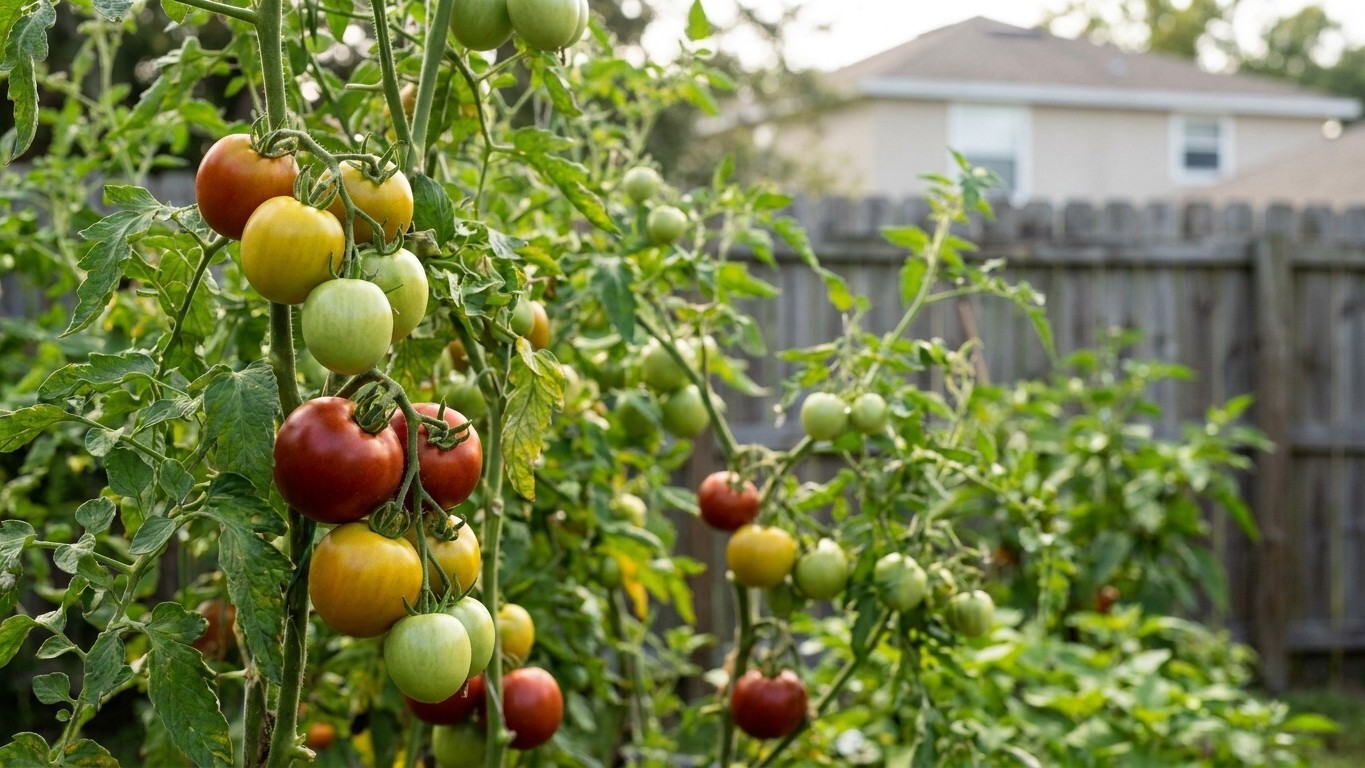

The short answer: get every tomato off the vine before the first fall frost hits, which in the Manchester airport reference records lands between October 13 and October 26. Ripe or not, a tomato left through a freeze turns to mush overnight. Pick anything showing color, and pick the mature green ones too, since they’ll finish ripening indoors just fine.
When to pick tomatoes in New Hampshire
Timing a tomato harvest comes down to two separate clocks running at once. One is the plant’s own ripening pace, fruit by fruit. The other is the calendar closing in on frost. In a normal season, both matter, but late in the year, the frost clock wins every time.
For fruit still ripening on the vine, the useful marker isn’t a date, it’s a stage called “breaker,” when a tomato’s blossom end starts shifting from green to a faint pink or yellow tinge. Once a fruit hits breaker, it has already stopped pulling sugar and flavor from the plant in any meaningful way. Leaving it on the vine another week doesn’t make it better, it just leaves it exposed to slugs, cracking, and early frost. Picking at breaker and finishing the last stretch on a counter produces tomatoes that taste close to vine-ripened, without the risk.
The frost deadline
The NOAA NCEI 1991-2020 climate normals put the first fall freeze at the Manchester airport station somewhere between October 13 and October 26, based on the 30 to 70 percent probability band for 32 degrees Fahrenheit. That’s a two-week window, not a single date, and it only describes that one station. Gardens outside the immediate airport area, especially anything rural, elevated, or tucked into a low-lying frost pocket, tend to see that first freeze arrive earlier, sometimes by a week or two. If your yard sits near a river valley or in the hills, plan around the early edge of that window, not the late one.
The state’s growing conditions cover a wide range under the USDA Plant Hardiness Zone Map, from 3b up to 6a depending on where you are. That spread reflects one variable, the average annual extreme minimum winter temperature, but it’s a decent proxy for how much earlier the northern and higher-elevation parts of the state shut down compared to the milder south. A gardener in a 3b pocket should treat the fall frost window as advisory at best and start checking overnight lows well before mid-October.
Practically, that means doing a full sweep of the plants once your local forecast shows a first frost warning, pulling everything with any blush of color plus the firm, full-size green fruit, and leaving only the small, still-growing ones that won’t make it to any usable stage anyway.
What to do with the green ones
Not every green tomato is worth saving. The dividing line is size and firmness, not color. A tomato that has reached full size, feels firm, and has a slightly glossy, pale green skin (sometimes with a whitish “star” pattern at the blossom end) is what’s called mature green. It has finished growing and will ripen off the vine. A tomato that’s still small, hard, and dull green, without that shine, hasn’t finished developing and won’t ripen properly no matter what you do with it.
Sort before you store. Lay the harvest out on a table and separate into three piles: fruit already showing color (ready for a windowsill or counter), mature green fruit (ripening candidates), and small immature fruit (better used green, fried or pickled, since they won’t turn red).
Handling mature green fruit
Skip the washing until you’re ready to eat or cook them. Water on the skin invites mold during the ripening wait. A quick wipe with a dry cloth to knock off garden dirt is enough. Check each fruit for cracks, soft spots, or insect damage, because a single damaged tomato in a box can start rot that spreads to its neighbors.
For storage during the ripening process, a few setups work:
- Single layer in a shallow cardboard box, stems up, not touching each other
- Wrapped individually in newspaper, which slows moisture loss and separates fruit
- Loosely closed in a paper bag, a few at a time, which traps the ripening gas each tomato gives off
Avoid plastic bags and sealed containers. Tomatoes need some airflow, and trapped condensation is one of the fastest routes to a moldy batch.
Ripening indoors, and how long they keep
Tomatoes ripen using a plant hormone called ethylene, which each fruit produces on its own once triggered. That’s why a paper bag speeds things along, it concentrates the ethylene the tomato is already releasing. You don’t need to add a banana or apple, though either one does produce extra ethylene and can nudge a slow batch along faster if you’re in a hurry.
Temperature controls the pace more than anything else. A spot around 65 to 70 degrees Fahrenheit, out of direct sun, ripens mature green tomatoes steadily over one to three weeks depending on the fruit. Direct sunlight on a windowsill looks appealing, but the heat it generates can soften and spoil fruit faster than it ripens it, and it does nothing to speed the actual color change, since ripening is driven by ethylene and temperature, not light.
Colder storage slows things down without stopping them. Kept around 55 degrees, mature green tomatoes will hold for roughly several weeks before starting to ripen, which is useful if you’ve pulled a large end-of-season haul and don’t want everything turning ripe on the same day. Check the batch every few days, pull out anything showing color, and move it to the counter to finish. Anything below 50 degrees is where trouble starts: tomatoes stored too cold develop a mealy texture and lose flavor even after they turn red, a condition sometimes called chilling injury. That rules out most garages and unheated porches once nighttime temperatures drop into the 40s.
Once a tomato is fully ripe, refrigeration becomes reasonable again short-term, a few days at most, mainly to slow further softening. But for the best texture and flavor, ripe tomatoes are best used at room temperature within a few days rather than held for weeks in any form.
What goes wrong here
The most common failure is simple timing: waiting too long to pick because the forecast “seemed fine,” then losing the whole late harvest to a surprise overnight dip. Because the fall frost window spans nearly two weeks even at a single reference station, and because outlying gardens often see frost earlier than that station records, a “safe” week can turn risky fast. Checking the forecast daily once October starts is worth more than any calendar date.
Rot inside a ripening box is the second big problem, and it almost always traces back to one damaged or diseased fruit packed in with healthy ones. Blossom end rot, cracking, or insect entry points give mold a foothold, and mold spreads through touching fruit quickly in the warm, enclosed conditions that ripening requires. Inspecting each tomato before storage and pulling any questionable one out immediately, rather than “watching it,” prevents most losses.
Fruit that stays hard and green for weeks without changing usually wasn’t mature enough at picking. Small, dull-skinned tomatoes lack the internal development needed to finish ripening, and no amount of warmth or ethylene exposure fixes that. This is a sorting mistake more than a storage mistake, and it’s why the mature-green test matters more than simply “picking everything before frost.”
Chilling injury shows up later and is easy to misdiagnose. Tomatoes that sat in a too-cold garage or a refrigerator set below 50 degrees for their green stage often ripen in color but stay mealy and bland. There’s no fix once that happens, only prevention: keep the ripening stock somewhere that doesn’t dip near or below 50 degrees. For questions specific to a particular county’s conditions, the state’s Cooperative Extension staff at UNH Extension field these kinds of local growing questions directly.
Common questions
Can I ripen tomatoes on the vine indoors by pulling the whole plant?
Yes, some gardeners pull entire plants before frost and hang them upside down in a garage or basement. It can work, but it takes up more space than boxing individual fruit and doesn’t ripen any faster than picking fruit separately. It’s mainly useful if you have very few tomatoes left and want to skip the sorting step.
Do green tomatoes ripen faster in a sunny window than in a dark box?
No. Ripening runs on ethylene and warmth, not light. A sunny windowsill often runs hotter than ideal and can soften fruit unevenly, while a dark box at a steady 65 to 70 degrees ripens tomatoes just as fast, if not more evenly.
How do I know if a frost warning for my area is reliable, given the airport station data covers a different location?
Treat the published NOAA NCEI window for the Manchester airport station as a general reference point, not a forecast for your yard. Local news forecasts, or a home thermometer log over a few seasons, will tell you more about your specific property, especially if you’re in a valley, at elevation, or well outside the immediate airport area.
Is it worth covering plants overnight to delay picking by a few more days?
Row cover or old sheets can buy a degree or two of protection during a light, borderline frost, which sometimes stretches the harvest by a few days. But once temperatures are solidly forecast to hit the mid-20s or lower, no cover reliably saves unprotected tomato plants, and it’s safer to finish the harvest before that point.