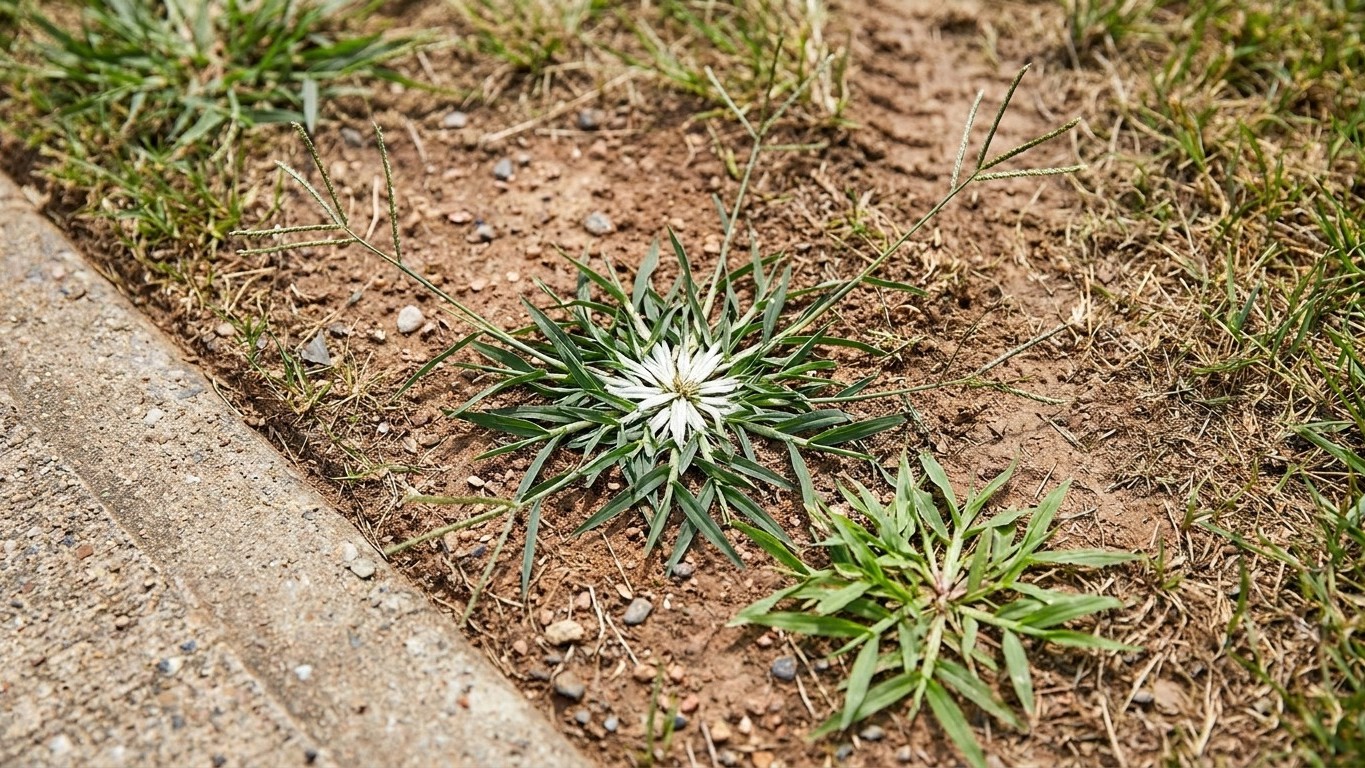

Mow tall fescue at 3 to 3.5 inches, Kentucky bluegrass at 2 to 3 inches, perennial ryegrass at 1.5 to 2.5 inches, and zoysiagrass or bermudagrass at 1 to 2 inches. New Jersey sits in the transition zone, so lawns here come from two grass families with very different needs. Find out which one you have before you set the deck. A height that suits one family can thin out the other.
The mowing height for New Jersey lawns
Blade height decides how much leaf a lawn has to collect sunlight. Taller grass feeds deeper roots and shades the soil, which keeps weed seeds from sprouting. How tall is “tall” depends on the species, because each one grows from a different point on the plant and tolerates a different amount of cutting.
What height suits each grass type?
The ranges below sit within what land-grant extension sources such as Clemson, NC State, Illinois, Missouri, Georgia and K-State publish for each species.
| Grass | Season type | Mowing height |
|---|---|---|
| Tall Fescue | Cool-season | 3 to 3.5 inches |
| Kentucky Bluegrass | Cool-season | 2 to 3 inches |
| Perennial Ryegrass | Cool-season | 1.5 to 2.5 inches |
| Zoysiagrass | Warm-season | 1 to 2 inches |
| Bermudagrass | Warm-season | 1 to 2 inches |
Mow tall fescue at 1.5 inches and you have scalped it. Leave zoysiagrass at 3.5 inches and it gets stemmy, shades itself and builds thatch.
Which grass is best in the transition zone?
None of them wins outright. A cool-season lawn (fescue, bluegrass, ryegrass) stays green through spring and fall but suffers in July. A warm-season lawn (zoysia, bermuda) handles July well but sits brown from October to April. Which problem you would rather live with depends on how you use the yard and how much you care about winter color.
If you are not sure what you have, look at the lawn in January. A green lawn is cool-season. A straw-colored one that greens up in late spring is warm-season. Tall fescue has wide, coarse blades and grows in clumps. Kentucky bluegrass spreads by underground runners and fills in gaps on its own. Mixed lawns are common, and the practical rule is to mow for the grass that dominates the turf.
For a local read on which species is thriving in your county, Rutgers Cooperative Extension is the right call. Lawns in colder climates run on different calendars, as the guides to How High to Mow a Lawn in New York and How High to Mow a Lawn in Alberta show. For the general method, see Mowing a Lawn.
Raising the deck when the heat comes
A cool-season lawn needs the top of its range in summer. For tall fescue that means 3.5 inches, and for Kentucky bluegrass 3 inches. For ryegrass, move up to 2.5. Taller blades shade the crown and the soil, so the ground stays cooler and loses less water. Warm-season grasses can stay where they are, since heat is what they want.
How much rain does a New Jersey summer bring?
Plenty, on paper. The NOAA NCEI Monthly Climate Normals for 1991-2020 at the northern New Jersey reference station near Newark show about 13.2 inches of rain across June, July and August, out of 46.6 inches for the year. June averages 4.34 inches, July 4.66 and August 4.15, which makes August the driest of the three. That is what the region can usually expect, not a forecast, and it describes one station. A slope, a city block or a rain shadow can shift it for your yard.
Why can a wet summer still leave the lawn dry?
Soil and heat change what an inch of rain does. On sandy ground, rain drains through within the day, so a lawn on sand can need water every second day even in a wet month. Clay holds the same inch for about a week. Heat matters too. Days at or above 90°F drive evaporation, and rain that falls as one summer thunderstorm mostly runs off instead of soaking in. A 1-inch downpour on baked clay may put very little into the root zone.
A cheap rain gauge staked in the yard tells you what actually fell. If a stretch passes with little rain and no irrigation, tall fescue and bluegrass will show it first. The blades turn a dull blue-gray and footprints stay pressed into the turf.
When that happens, raise the deck rather than cutting more often, and skip a mowing if growth has stalled. A mower pass over stressed turf adds damage. Keep the blade sharp, because a dull blade tears the leaf tip and leaves a gray cast across the whole lawn.
The one-third rule, and why it is not arbitrary
Never cut off more than one-third of the blade in a single mowing. The leaf is the part of the plant that makes food, and the roots depend on it. Remove too much at once and the plant has to stop growing roots while it rebuilds leaf. A lawn mowed this way thins over a season or two.
The rule turns into a schedule once you know your target height. Tall fescue kept at 3.5 inches should be mowed when it grows noticeably past that height. Kentucky bluegrass kept at 3 inches gets cut when it grows noticeably past that height. Zoysiagrass at 1.5 inches is due when it grows noticeably past that height.
That is why a fixed weekly schedule works poorly. In a cool, wet May, fescue can grow so fast that a fixed interval is too long. In a hot, dry July the same lawn may need mowing far less often. Mow when the grass reaches the trigger height, and let the calendar follow. If you come home from a two-week trip and find the grass at 7 inches, do not drop straight to 3.5. Cut it back to a little above its target height, wait a few days, then mow again at the target.
Clippings from a one-third cut fall into the turf, break down and return nitrogen to the soil. If you must bag, bag only the clumps from a catch-up mowing. Dry grass cuts cleaner than wet grass, so wait for the afternoon after dew and rain have burned off.
The first and last cut of the year
Seasonal timing depends on the grass family more than the date. The dates here come from the NOAA NCEI U.S. Climate Normals for 1991-2020, which give the 30 to 70 percent probability band of a 32°F freeze at the reference station. Last spring frost falls between March 29 and April 6, and the first fall frost between November 4 and November 16. Suburban and rural yards usually see the last spring frost later and the first fall frost earlier, often by one to two weeks, and more at elevation. Check your own county with Rutgers Cooperative Extension before you plan around either date.
When should the first mow happen?
Mow when the grass has grown enough to need it, which for most lawns arrives after the last frost. For a cool-season lawn, that is usually when blades reach the one-third trigger. Make the first cut at the lower end of the species range to clear dead leaf, then move up over the next few mowings. Warm-season lawns green up later, once the soil warms in late spring. Cutting them off early does nothing except remove straw, so wait for new green growth, then mow at 1 to 2 inches.
When is the last mow?
Keep mowing until growth stops, which in a mild fall can be past the frost window above. For cool-season lawns, step the deck down gradually through the last few mowings, staying inside the species range. Grass left too tall going into winter mats under leaves and snow and invites snow mold. Do not scalp it either. A lawn that goes into winter at the bottom of its range, with a clean cut, is in better shape than one cut to the dirt.
Warm-season grasses do not need a lowered last cut. They are dormant and brown by then, and the height they carry into winter is the height they wake up with. Keep fallen leaves off both types, and rake or bag anything that would form a mat.
Common questions
What is the best mowing height for a New Jersey lawn?
It depends on the grass. Tall fescue does best at 3 to 3.5 inches and Kentucky bluegrass at 2 to 3 inches. Perennial ryegrass wants 1.5 to 2.5 inches, while zoysiagrass and bermudagrass take 1 to 2 inches. Mow for the species that makes up most of your turf.
Should I mow shorter in spring?
A slightly lower first cut clears winter debris from a cool-season lawn, but stay inside the species range. Cutting below it exposes the crowns and gives weeds light. After the first mowing or two, move back toward the middle of the range.
Is it okay to mow wet grass?
Avoid it when you can. Wet blades bend instead of standing up to the cut, so the mower leaves an uneven edge and clumps. If a long rainy spell leaves the grass past the one-third trigger, mow anyway, at a higher setting, and bag the heavy clumps.
Do I need to bag my clippings?
Usually not. Short clippings from a regular one-third cut break down quickly and return nitrogen to the soil. Bag only after a heavy catch-up mowing.