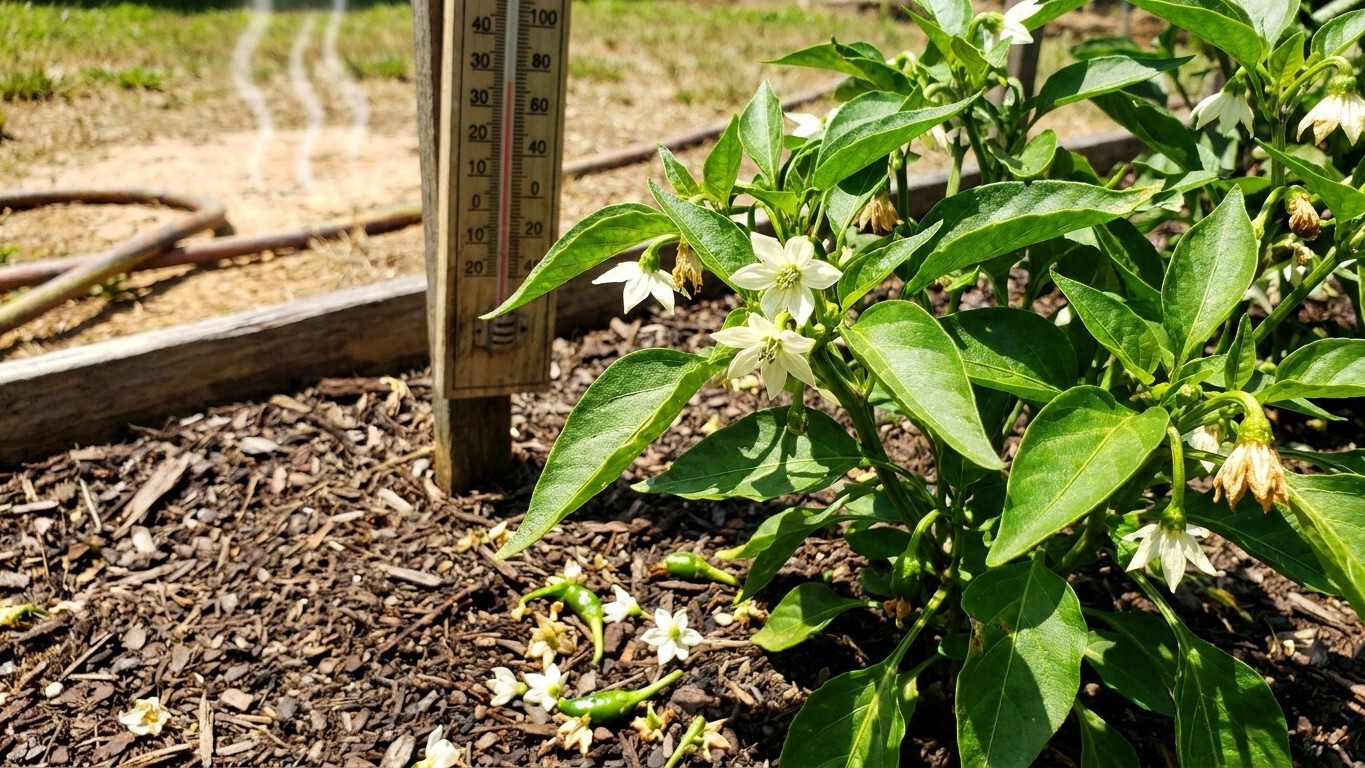

Peppers stall out in New Jersey gardens for one of two opposite reasons: the air gets too hot for pollen to stay viable, or a stretch of chilly nights knocks blossoms off before they’re pollinated. Add blossom-end rot and sunscald into the mix and a plant can look healthy all summer while producing almost nothing. Timing the transplant and reading your own thermometer, not just the calendar, is what actually fixes it.
The short answer
Start with the number that matters most for a Garden State grower: the reference station at Newark averages 20.8 days a year at or above 90°F, based on NOAA’s 1991-2020 climate normals. That’s not a handful of scorching afternoons, it’s close to three full weeks scattered across July and August when temperatures push into a range that peppers handle badly. Pepper flowers rely on pollen that stays viable in a fairly narrow window. Once daytime highs cross into the 90s, especially with humidity stacked on top, pollen grains lose viability fast and flowers that looked fine in the morning drop off the plant by evening. The plant isn’t sick. It’s just refusing to gamble on fruit it can’t support in that heat.
The other failure point sits at the opposite end of the thermometer, and it gets far less attention from gardeners who assume New Jersey summers are simply “hot.” Pepper fruit set also fails when nighttime temperatures drop below 55°F, according to Utah State University Extension. Cool nights slow pollen tube growth and cause the same blossom drop as heat stress, just through a different mechanism. This matters most in early summer, right after transplant, and again as nights start cooling in late summer.
Here’s where a gardener has to do their own homework: this site tracks days at or above 90°F for New Jersey, but it does not carry summer overnight low temperatures for the state. There’s no substitute for stepping outside at night, or checking an actual thermometer on your property, especially if you garden near the shore where nights often stay milder, or inland and at higher elevation where they can dip cooler than a regional average would suggest. Latitude alone won’t tell you this. Neither will the coldest month of the year, which reflects winter conditions, not a July or August overnight low. If your peppers are flowering but not setting, and daytime highs aren’t in the 90s, the first thing worth checking is what your thermometer read at 5 a.m., not what the forecast said for the afternoon.
When to start seed here
Getting pepper timing right in New Jersey is mostly arithmetic, and it starts from the back end, working forward from when it’s actually safe to put transplants in the ground.
- Find your last spring frost window. The Newark airport station, per NOAA NCEI’s 1991-2020 normals, places the 30-70% probability band for a 32°F freeze between March 29 and April 6. That’s a reference point, not a guarantee for your yard. Suburban and rural gardens across the state typically see their last frost run one to two weeks later than an airport station reports, and gardens at elevation or in low-lying frost pockets can lag even further behind.
- Wait for the soil, not just the calendar, to warm up. Utah State University Extension recommends transplanting peppers once soil temperature reaches 60°F and the frost risk has passed. Air temperature can feel warm on a sunny April afternoon while the soil six inches down is still cold from winter, so a soil thermometer is a better guide than a jacket-off afternoon.
- Count back 8 to 10 weeks from that transplant date to find your indoor seed-starting date. If your county’s frost-free, 60°F-soil window lands in early to mid-May, counting back 8 to 10 weeks puts seed-starting somewhere in early to mid-March. Gardeners in cooler pockets of the state, where that outdoor window slides toward late May, should push seed-starting back correspondingly, toward mid-to-late March.
- Adjust the whole sequence for your specific county. Because the Newark figures are a single-station reference, not a statewide rule, run this same three-step math using your own area’s typical last frost and soil-warming pattern. A garden in a river valley or low spot will need extra buffer on both ends.
Rushing this sequence is one of the most common reasons pepper plants sulk all June. A transplant set out before the soil hits 60°F doesn’t die outright, it just stops growing and sits stunted for weeks, often missing the ideal flowering window entirely.
What goes wrong here
New Jersey’s climate creates a specific, repeatable set of pepper problems. Here’s what tends to show up, and what actually helps.
- Blossom drop during a hot spell. When daytime highs climb into the 90s, which happens on average close to 21 days a year near Newark, flowers open and fall without setting fruit. There’s no way to cool the air, but afternoon shade cloth over the row, consistent deep watering the day before a forecast heat spike, and avoiding high-nitrogen fertilizer during hot stretches all reduce the drop rate. Plants under drought stress during a 90°F day lose flowers at a much higher rate than well-watered ones.
- Blossom drop during a cool night. Nights below 55°F cause the same symptom through a different cause: cold-slowed pollen tube growth. This is a real risk in the weeks right after transplant, before New Jersey’s nights have warmed up for good. Row cover pulled over young plants on unexpectedly cool nights, and simply holding off on transplant until nights are reliably milder, both help. Watch your own overnight readings here, since this varies significantly by county and even by yard.
- Sunscald where the sun is strong. Fruit exposed on the south and west side of the plant during New Jersey’s sunniest, hottest stretches develops pale, blistered patches where the skin essentially cooks. Full, bushy foliage that shades developing fruit is the best prevention, so avoid over-pruning leaves in midsummer just to “open up” the plant for airflow.
- Blossom-end rot. Dark, sunken patches on the bottom of the fruit come from inconsistent watering interrupting calcium uptake, not from a soil calcium deficiency in most cases. Even, regular watering, especially through the state’s dry midsummer stretches, is the fix that actually works, rather than adding calcium products to soil that likely already has enough.
Common questions
Can I still get peppers to set fruit during a New Jersey heat wave?
Existing flowers that open during a 90°F-plus stretch will likely drop, but the plant isn’t damaged. Keep it watered and shaded if possible, and it will resume setting fruit once temperatures moderate.
Does mulch help with New Jersey’s hot summer days?
Mulch keeps soil moisture more even, which matters directly for preventing blossom-end rot and reduces the heat stress that drives blossom drop during the state’s roughly three weeks a year above 90°F.
Should I Start Pepper Seed earlier because of New Jersey’s variable spring frost?
Not earlier, just measured against your own county rather than the Newark reference station. Since many yards see their last frost one to two weeks after the Newark date range of March 29 to April 6, count your 8 to 10 indoor weeks back from your actual local transplant date, not the regional one.
Why are my peppers flowering but not setting fruit even on a mild day?
If daytime highs aren’t near 90°F, check overnight lows. Utah State University Extension notes that nights below 55°F cause the same blossom drop as heat does. This site doesn’t track New Jersey’s summer night minimums, so a household thermometer left outside overnight is the only reliable check.