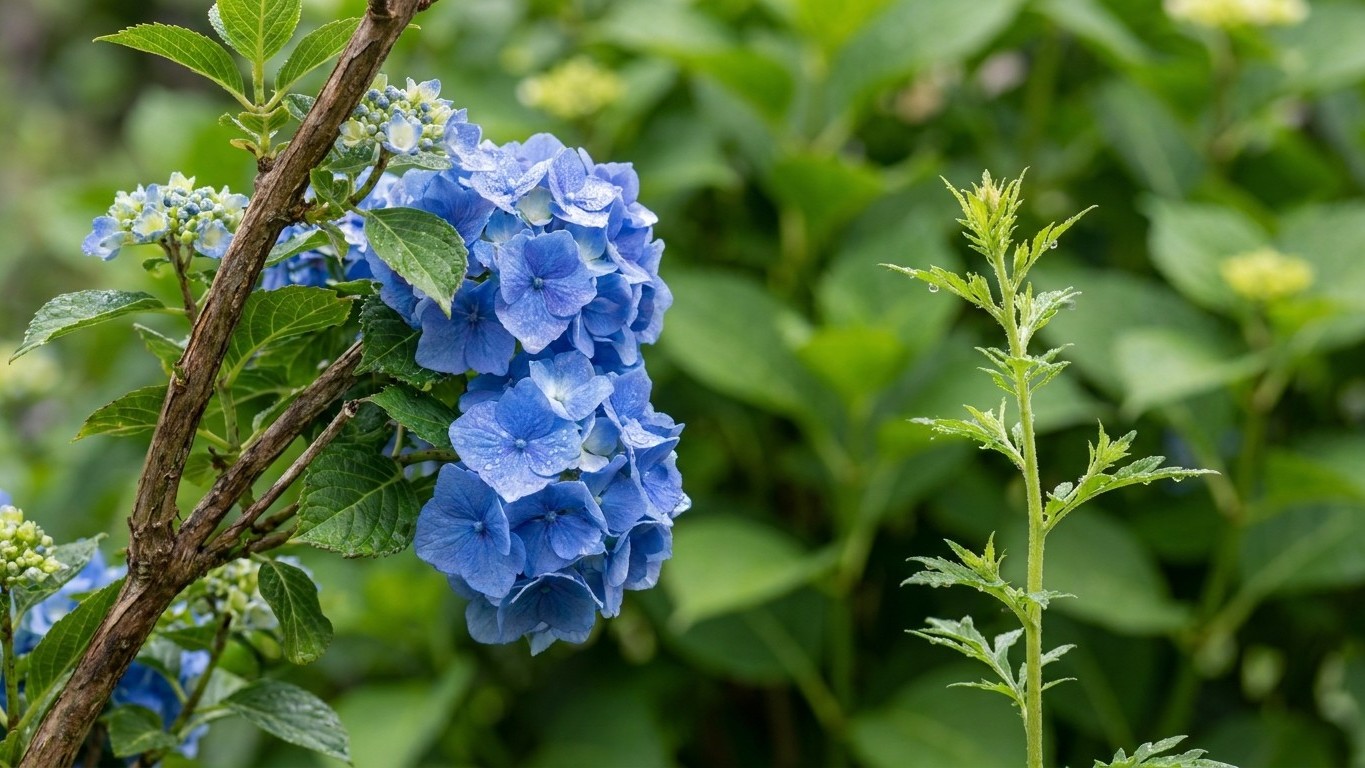

Nearly every hydrangea sold in New Jersey survives the winter, since the state falls in USDA zones 6a to 7b and most common types are rated for zone 6 or colder. What fails in a bad year is the flower, not the shrub. Smooth and panicle hydrangeas bloom on wood they grow the same spring, so winter cannot take their flowers. Bigleaf and oakleaf types set buds the previous summer, and a hard freeze or a late frost kills those buds.
What this comes down to in New Jersey

At Newark, the reference station, the last spring frost falls between March 29 and April 6, and the first fall frost between November 4 and November 16. Suburban and rural gardens usually see the last spring frost one to two weeks later and the first fall frost one to two weeks earlier, and hilly ground shifts both dates further. The shrub is rarely the problem inside that window. The question is whether the flower buds make it through, and that depends on when each type forms them. Hardiness zones are built on one number, the average annual extreme minimum temperature, and they say nothing about a warm February followed by a hard freeze in April.
The seven cultivars below run from the most forgiving of short seasons and cold winters to the most demanding. Zone ratings vary a little from one nursery tag to the next, so treat them as approximate.
Annabelle
A smooth hydrangea rated for roughly zones 3 to 9, with large white blooms on new wood. It dies back to the ground in harsh winters and still flowers every summer. The heads are heavy and tend to flop after rain, but for reliability in a cold New Jersey garden it is hard to beat.
Incrediball
Also a smooth hydrangea, rated about zones 3 to 8, with white blooms on new wood. It was bred from Annabelle for sturdier stems that hold the heads up. It shares Annabelle’s dependability and suits any county in the state.
Quick Fire
A panicle hydrangea, usually rated zones 3 to 8, blooming on new wood. White flowers open earlier than most panicles and age to pink and red. The early start helps where the growing season is shortened by elevation or a frost pocket.
Limelight
A panicle hydrangea rated about zones 3 to 8, with lime-green blooms that fade to pink and cream, borne on new wood. It tolerates cold and heat well and stands up to wind, which makes it a safe choice from the northwestern hills to the shore.
Endless Summer The Original
A bigleaf hydrangea with blue or pink flowers depending on soil acidity. It blooms on both old and new wood. In a cold year the spring flush may be lost, but new growth still produces flowers later in summer, so it is one of the more dependable bigleafs for northern gardens.
Snow Queen
An oakleaf hydrangea rated around zones 5 to 9, with white cone-shaped blooms that age to pink, on old wood. The buds are tougher than a bigleaf’s, and the leaves turn burgundy in fall. It can lose some flowers after an unusually harsh winter or a late frost, but with a zone 5 rating it handles the whole state well.
Nikko Blue
A classic bigleaf hydrangea, commonly rated zones 6 to 9, with blue flowers in acidic soil, on old wood only. Where winters sit at the cold edge of its range, buds often die and the shrub leafs out without blooming. It does best in the milder south and near the coast.
Working it out for your own garden
How do you count back from the frost window?
Start with the last spring frost at the reference station, March 29 to April 6, then add one to two weeks for a typical suburban or rural yard. That puts a safe planting start around early to mid-April. A new hydrangea wants mild weather to root before summer heat arrives, so plant while the soil is still cool and moist. For fall, count back from the first fall frost, November 4 to November 16. That points to late September through early October, and a colder garden should plan a week or two earlier.
Will a new-wood hydrangea flower after a New Jersey winter?
Take Limelight. It blooms on new wood, so the flower buds form on stems that grow in spring and early summer. Plant it in April, and it will root, grow and flower by midsummer. Even if the top freezes back in January, the crown pushes new stems in May and those stems carry the blooms. The winter cannot reach the flowers because they do not exist yet. Pruning it in late winter is safe for the same reason.
Where does an old-wood hydrangea fail?
Take Nikko Blue. Its flower buds form in late summer and sit exposed on last year’s stems all winter. A cold snap in January or a freeze after a warm spell in April can kill them. The shrub then leafs out normally, looks healthy and never blooms. The line falls roughly at the colder end of the state’s zone range: in a milder southern or coastal garden the buds usually make it, while in the colder north they often do not. An old-wood hydrangea planted in the north is a gamble every year.
How do you tell winter damage from other problems?
Wait until the shrub should be leafing out, usually May. Scratch a stem with a thumbnail. Green tissue underneath means the stem is alive. Brown and dry means it is dead. Dead stems with healthy growth at the base point to winter injury. Leaf spots, chewed foliage or wilting in summer on stems that were green in spring point to something else, and a county extension office can identify it from a photo or a sample.
What changes across the state
New Jersey spans a surprising range for a small state, which is why its hardiness map runs from zone 6a to 7b. The northwestern counties sit on ridges and in valleys at higher elevation, where winter lows are lower, spring comes later and frost pockets form in low ground. Gardens there should lean toward smooth and panicle hydrangeas and treat bigleaf types as a bonus. The south and the coast are milder. The ocean moderates temperature swings, and the Delaware Bay does something similar on the west side of the south. Bigleaf and oakleaf hydrangeas bloom there far more often.
Newark itself is a developed urban area, and pavement and buildings hold heat. Suburban and rural gardens a few miles away often run colder and see frost later in spring and earlier in fall than the airport. The Pine Barrens add another wrinkle, since sandy soil sheds heat quickly on clear nights and frost can settle in hollows even when surrounding towns stay above freezing. In short, a yard’s location inside the state can matter as much as which cultivar goes into it.
The mistakes this state punishes

Planting into cold soil after a warm spell is the classic one. A string of 60-degree days in March tempts people to plant, and then a freeze hits the new root ball. Wait until the planting start worked out above, and for a colder-than-average yard add another week or so.
Pruning old-wood hydrangeas in fall or early spring is the next. Bigleaf and oakleaf types carry next summer’s flowers on stems that look dead in March. Cut only what the scratch test shows is dead, and do any shaping right after they bloom.
Choosing the wrong bloom type for the garden is a quieter mistake. A bigleaf like Nikko Blue in the cold northwest can leaf out and never flower, and the owner blames soil or sun. Match the variety to the zone first.
Fertilizing late in summer pushes soft growth that frost kills. Stop feeding by midsummer. Fall planting too late leaves roots without time to settle before the ground freezes, so finish while the soil is still workable.
Mulch goes down after the ground has cooled in late fall, pulled back slightly from the stems. Put it on too early and mice may nest in it.
Checking this against your county
A frost window from one airport station is a starting point. Your county may run a week or two off it, and your own yard may differ again. Call your county office of Rutgers Cooperative Extension for local frost timing and zone details, and read the state guide to growing hydrangeas in New Jersey for the rest of the care routine. The frost dates above come from NOAA’s U.S. Climate Normals for the Newark station.
Common questions
Do hydrangeas die back in a New Jersey winter?
Smooth hydrangeas such as Annabelle often die to the ground and regrow each spring. Panicle types keep their woody stems in most winters. Bigleaf stems can die back partly or fully in a harsh year, and if that happens the shrub regrows but may skip flowers.
Which hydrangeas are safest in northern New Jersey?
Annabelle, Incrediball, Quick Fire and Limelight bloom on new wood and are rated to zone 3, so winter cannot cost them their flowers. Endless Summer The Original is one of the more dependable bigleafs there because it also blooms on new growth.
Why did my hydrangea leaf out but never bloom?
Most often the flower buds froze. Old-wood types such as Nikko Blue form buds the previous summer, and a cold snap or late frost kills them while the stems stay alive. Prune only dead wood, and give it until late spring before judging.
Should I wrap hydrangeas for winter?
Smooth and panicle types need no wrap. For bigleaf or oakleaf types in a colder yard, a loose cage of burlap or wire filled with dry leaves after the ground cools can protect the buds. Remove it in spring once the worst frost danger has passed.