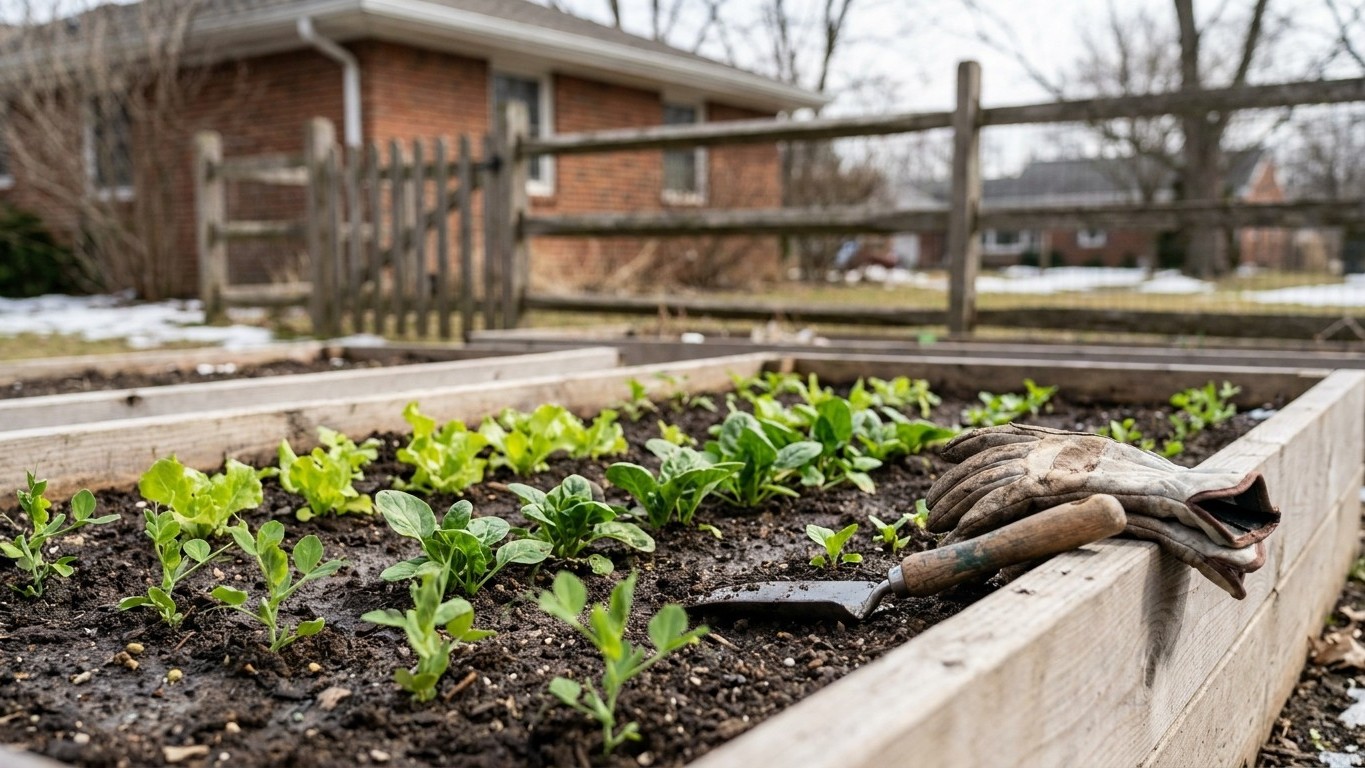

In most of New Jersey, March still sits ahead of the last spring frost, which the National Climate Normals put at March 29 to April 6 for the reference station. That means this month belongs to hardy, cold-tolerant crops going into the open ground, warm-season starts going under cover indoors, and a long list of dormant-season jobs, not to tomatoes or peppers hitting the garden bed.
What goes in the ground in March

The calendar says spring, but the soil hasn’t caught up yet. What decides whether a seed survives outdoors isn’t the date on the wall, it’s soil temperature and how close you are to that late-March to early-April frost window. A 65-degree afternoon in the second week of March can trick a gardener into planting things that die three nights later. Soil, unlike air, changes slowly, and that lag is exactly why hardy crops go in now while tender ones wait.
What’s genuinely safe: peas, sown directly as soon as the ground can be worked with a trowel instead of a shovel. Spinach, arugula, and mâche germinate at soil temperatures that feel cold to the touch. Onion sets and shallots go in early, since they need the long cool stretch ahead of them to bulb properly later. Radishes are forgiving enough to gamble on by mid-month in workable soil. If garlic wasn’t planted in fall, it’s really too late for a full crop, but a late-winter planting of softneck varieties can still produce something usable by summer in a pinch.
What’s a gamble, not a plan: anything in the squash, bean, or nightshade families. Cold, wet soil rots seed before it germinates, and a surprise frost inside that late-March window will kill seedlings outright. Frost hardy doesn’t mean frost proof, either. A hard freeze after a stretch of mild days can still damage even spinach and pea seedlings if they’re just breaking ground, so a floating row cover kept nearby is cheap insurance.
Cold frames and low tunnels stretch the window in both directions. Inside one, lettuce and brassica seedlings that would sulk in open soil grow on schedule, and it’s realistic to direct-sow baby greens under cover two to three weeks ahead of what the open bed allows. Bare-root fruit trees, cane berries, and asparagus crowns also belong on the March list, planted while they’re still dormant and before buds swell.
What to start under cover
Indoor sowing this month runs on a different clock than the garden bed, one counted backward from that late-March to early-April frost window rather than forward from a fixed date. Tomatoes typically need six to eight weeks under lights before transplanting, which puts their ideal start in early-to-mid February for most of the state. That window has often already passed by March, so anyone starting tomatoes now should expect a slightly later transplant date, not a rushed one.
Peppers and eggplant run slower and need eight to ten weeks indoors, so an early March start still lines up reasonably well with the frost window, especially in the cooler northern counties where the last frost tends to run later than the reference dates. Broccoli, cabbage, and other brassicas move faster, needing only five to six weeks before they’re ready to harden off, which makes them a solid mid-to-late March start for anyone who missed the February window.
The two ways this goes wrong both come from ignoring the arithmetic. Start too early and seedlings sit under grow lights far longer than they should, stretching into leggy, rootbound plants that struggle once they finally hit soil. Start too late and there isn’t enough runway left before the plant needs to be outside, which shortens the harvest window all season. The fix in both directions is the same: count weeks backward from your own last-frost estimate, not from a date on a seed packet written for a different climate.
Cucumbers, melons, and summer squash can also start under cover late in the month, since they only need three to four weeks indoors and transplant just after the frost risk clears.
What is ready to pick
Little comes out of an open New Jersey garden bed in March, and there’s no point pretending otherwise. But “little” isn’t “nothing,” and a well-planned fall garden is still paying off. Overwintered kale and leeks that made it through the cold months are often sweeter now than they were in fall, since cold exposure converts starches to sugars in both crops. Spinach and mâche planted the previous autumn under a cold frame or thick mulch can resume growth as soon as temperatures nudge upward, giving an early, welcome harvest.
Indoors, sprouts and microgreens fill the gap entirely on their own schedule. Mung beans, broccoli sprouts, and pea shoots go from seed to harvest in a week to ten days on a countertop, no soil temperature or frost date involved at all.
This is also the month to walk through the root cellar or basement storage and check what’s holding up. Winter squash should feel firm with no soft spots near the stem end. Potatoes that have started sprouting eyes are still edible once the sprouts are removed, but any showing green skin or a sour smell should go in the compost, not back on the shelf. Onions that have gone soft at the neck are past saving. Catching these now, before they spread rot to neighboring produce, is worth five minutes with a flashlight.
The jobs that matter this month
The tasks that don’t involve a seed at all are the ones with the tightest deadlines this month. Dormant pruning of fruit trees, grapevines, and cane berries needs to happen before buds swell and sap starts running, because cuts made after growth begins waste the plant’s stored energy and invite disease into fresh wounds. Once you see green tips, that window is closed for another year.
Seed ordering belongs here too, and it’s later than it should be for the most popular varieties. Suppliers routinely sell out of the crops that got attention the season before, so a March order is a real gamble on availability compared to one placed in January.
Soil, compost, and structure
A soil test taken now gives results back in time to amend before the main planting season, which a test taken in May does not. Turning the compost pile speeds decomposition right as the pile starts thawing and reactivating with warmer days. It’s also the moment to walk the garden and check raised bed frames, trellis posts, and fencing for winter damage, since a collapsed bed frame in June is a far bigger problem than a loose board found now.
Tool maintenance rounds this out. Pruners that cut cleanly prevent the ragged wounds that let disease into a tree during that dormant pruning window mentioned above, so sharpening them isn’t a separate chore, it’s part of doing the pruning correctly.
What not to do in March
The classic mistake is trusting the thermometer instead of the calendar’s own limits. A run of 60-degree afternoons in early March feels like spring, but the reference-station data still puts the last frost between March 29 and April 6, and soil at 6 inches deep often lags several degrees behind the air above it. Planting warm-season seed into that cold soil doesn’t just risk frost death, it risks the seed simply rotting before it ever germinates, since cold, damp soil is exactly the environment fungal pathogens favor.
A related error is pulling mulch or row covers off beds too early after a mild stretch, only to have a cold snap hit bare, exposed soil and undo weeks of protection. Mulch should come off gradually, and only once the pattern of mild weather is well established, not after a single warm weekend.
Nitrogen fertilizer applied too early is another common misstep. Feeding dormant or barely-waking plants with a high-nitrogen product before real root and leaf growth resumes tends to push soft, weak growth that’s more vulnerable to a late frost, and much of it leaches away before the plant can use it anyway. Holding off until growth is visibly underway gets far more value from the same bag of fertilizer.
Skipping the hardening-off process for indoor-started seedlings rounds out the list. Plants raised under lights need seven to ten days of gradually increasing outdoor exposure before they go into the ground permanently, or the shock of direct sun and wind can set them back weeks.
Checking this against your own county
A statewide guide is a starting point, not a set of instructions for your specific yard. New Jersey spans USDA Hardiness Zones 6a to 7b, and the frost dates cited here come from a single reference weather station, not the whole state. Elevation in the northwestern highlands, distance from the coast, and even a low-lying yard that collects cold air can all shift a local last frost by a week or two later than these figures, sometimes more.
Before committing seed to soil based on any statewide date, check the Rutgers New Jersey Agricultural Experiment Station, which publishes county-level guidance suited to conditions well beyond what one airport station can capture.
Common questions
Can I plant grass seed in New Jersey in March?
Cool-season lawn grasses can be overseeded in March once soil is workable, though many turf specialists still favor early fall as the stronger window since spring seedlings compete against summer heat and weeds soon after germinating.
Is it too early to plant tomatoes outdoors in March?
Yes. With the last frost window running March 29 to April 6 at the reference station, and often later in cooler inland or northern counties, outdoor tomato transplants belong in the garden after that risk has clearly passed, not during it.
What vegetables tolerate a light frost in New Jersey gardens?
Spinach, kale, peas, arugula, and onion sets all handle a light frost without significant damage, which is why they’re the safest direct-sow choices while the region is still inside its frost window.
When should I start hardening off seedlings started indoors in February or March?
Begin roughly seven to ten days before the intended transplant date, moving trays outdoors for a few hours at a time in a sheltered spot and increasing exposure daily, always keeping an eye on the current frost forecast before leaving them out overnight.