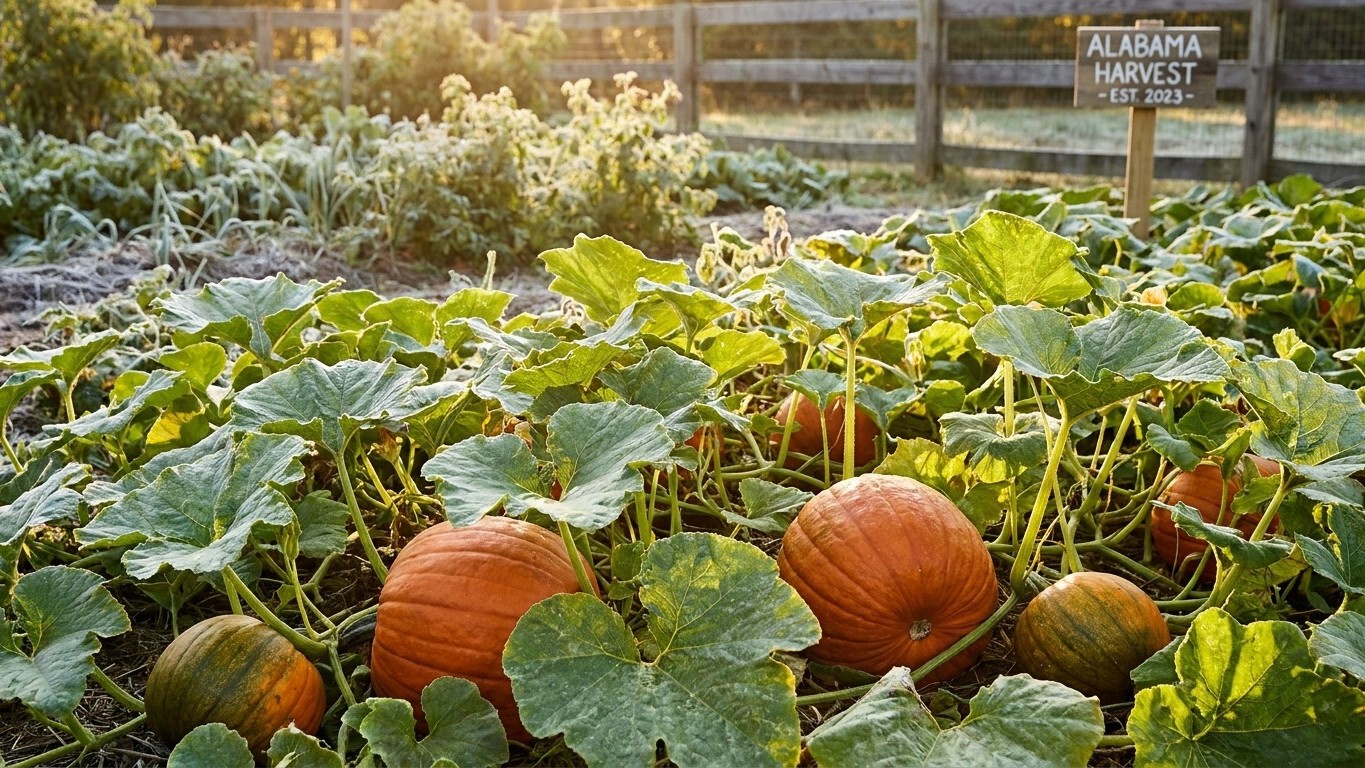

Yes, most New Jersey Pumpkins Ripen Before Frost, but the window is tighter than gardeners assume. The plant needs its flower to open by a specific late-summer date, not just its seed in the ground by a specific spring date. Miss that flowering cutoff and the vine runs out of season no matter how healthy it looked in August.
The short answer
New Jersey’s first fall frost, based on the reference weather station tracked by NOAA NCEI, lands somewhere between November 4 and November 16. That’s a real range, not a single date, and it reflects three decades of recorded freezes at one airport station, not every backyard in the state. Suburban and rural gardens often see that first frost arrive a week or two earlier than the airport does, and gardens tucked into low spots or higher elevations can see it earlier still.
Pumpkins need 45 to 55 days from the moment a flower opens, not from the day the seed goes in the ground, to reach full maturity, according to Utah State University Extension. That distinction matters more than almost anything else in this calculation. A vine can look lush and full of blossoms in early September and still fail to deliver a single ripe pumpkin, because what counts is the date the female flower actually opens and sets fruit.
Working backward from the frost window, using the 45-to-55-day maturation figure, gives a working cutoff for the latest a flower can open and still finish. Take the earliest frost date paired with the longer maturation stretch, and the cutoff lands around September 10. Take the latest frost date paired with the shorter maturation stretch, and the cutoff stretches to roughly October 2. So the honest answer is a window: flowers opening anywhere from early September through the first days of October have a real shot at ripening before frost hits this reference station. Flowers opening later than that are racing a clock they’ll likely lose.
This is why counting from the seed packet’s “days to maturity” number leads gardeners astray in New Jersey. That number usually describes days from seeding to harvest under ideal, uniform conditions, but the flowering clock is what actually determines whether frost catches the fruit green or lets it finish coloring. Two vines planted the same week can flower two weeks apart depending on heat, moisture, and how much of the plant’s early energy went into vine growth versus blossom production.
Check your own county’s frost history rather than leaning only on the reference station’s numbers. A garden in a river valley or at higher elevation inland can run a week or two ahead of the airport’s schedule, which shrinks the flowering window described above even further.
When to sow here
- Wait past the last spring frost window. At the reference station, that’s March 29 to April 6. Local gardens, particularly those away from paved surfaces and open water, often see their true last frost run a week or two later than that airport figure.
- Then wait longer, for the soil, not the air, to warm. Utah State University Extension specifies that pumpkin seed needs soil at 65 F to germinate reliably. Soil temperature lags air temperature by weeks, not days, since bare ground and topsoil hold cold long after overnight frost risk has passed. Equating the last frost date with 65 F soil is the single most common timing mistake gardeners make with this crop; the two events are not the same moment, and treating them as one pushes a sowing date too early into cold, slow-to-germinate ground.
- Use a row cover to close some of that gap. A cover trapping daytime heat over the row can buy about two weeks, meaning soil under cover reaches 65 F roughly two weeks sooner than bare, uncovered ground would on its own. That’s the practical tool for nudging a sowing date earlier without gambling on a late frost.
- Count forward from the sowing date to an expected flowering date, then check that flowering date against the September 10 to October 2 cutoff described above. If the arithmetic doesn’t leave room, an earlier sowing date, a row cover, or a shorter-season variety choice becomes necessary rather than optional.
What goes wrong here
- A flower opens too late and the fruit never colors. This is the direct consequence of missing the September 10 to October 2 flowering cutoff. The remedy is pinching off any new blossoms that open after that cutoff window, so the plant redirects its remaining energy into the fruit already set rather than starting new ones that have no chance of finishing.
- Frost catches a fruit still in progress. Once the first fall frost arrives in the November 4 to November 16 window, or earlier in colder pockets, any unripe fruit still on the vine is at risk. Harvest with the stem attached before frost hits, even if the pumpkin’s color looks a shade short of ideal; a mostly-colored fruit picked ahead of frost outperforms one left to gamble on a few extra days.
- The vine dies back before the rind hardens. A hard rind protects against rot and bruising; a soft one doesn’t. If cold or disease kills the foliage early, cut the fruit free with a length of stem attached and move it somewhere it won’t freeze. The Utah State University Extension source doesn’t publish a storage temperature or keeping-time figure, only that general guidance about protecting fruit from freezing, so treat post-harvest storage as a separate question from the ripening timeline itself.
- Squash bugs or cucumber beetles weaken the vine mid-season, shortening its productive window. Rather than re-covering pest identification and control here, see this site’s dedicated pages on squash bugs in New Jersey and cucumber beetles in New Jersey for that detail.
Common questions
Can I still get a ripe pumpkin if I sow in July?
It depends entirely on when the plant flowers, not when it was sown. A July sowing that flowers before the September 10 to October 2 cutoff has a real chance; one that flowers after that window is unlikely to finish before frost arrives at the reference station’s November 4 to November 16 timing.
Does a row cover change the flowering cutoff?
No. A row cover helps soil reach 65 F roughly two weeks sooner, which can move the sowing date earlier and give the plant more time to reach flowering before the cutoff. It doesn’t move the cutoff itself, which is set by the fall frost window and the 45-to-55-day maturation period after flowering.
What if my pumpkin is orange but the stem is still green?
Color change and stem hardening don’t always finish on the same day. Harvest with the stem attached ahead of any forecast frost regardless of stem color, since a fruit left on a dying or frozen vine won’t continue maturing further.
Is the frost date the same everywhere in New Jersey?
No. The November 4 to November 16 window comes from one reference weather station tracked by NOAA NCEI. Rural gardens, low-lying areas, and higher elevations frequently see frost arrive earlier than that station records, so checking local frost history for your specific county gives a more accurate planning figure than the state-level range alone.