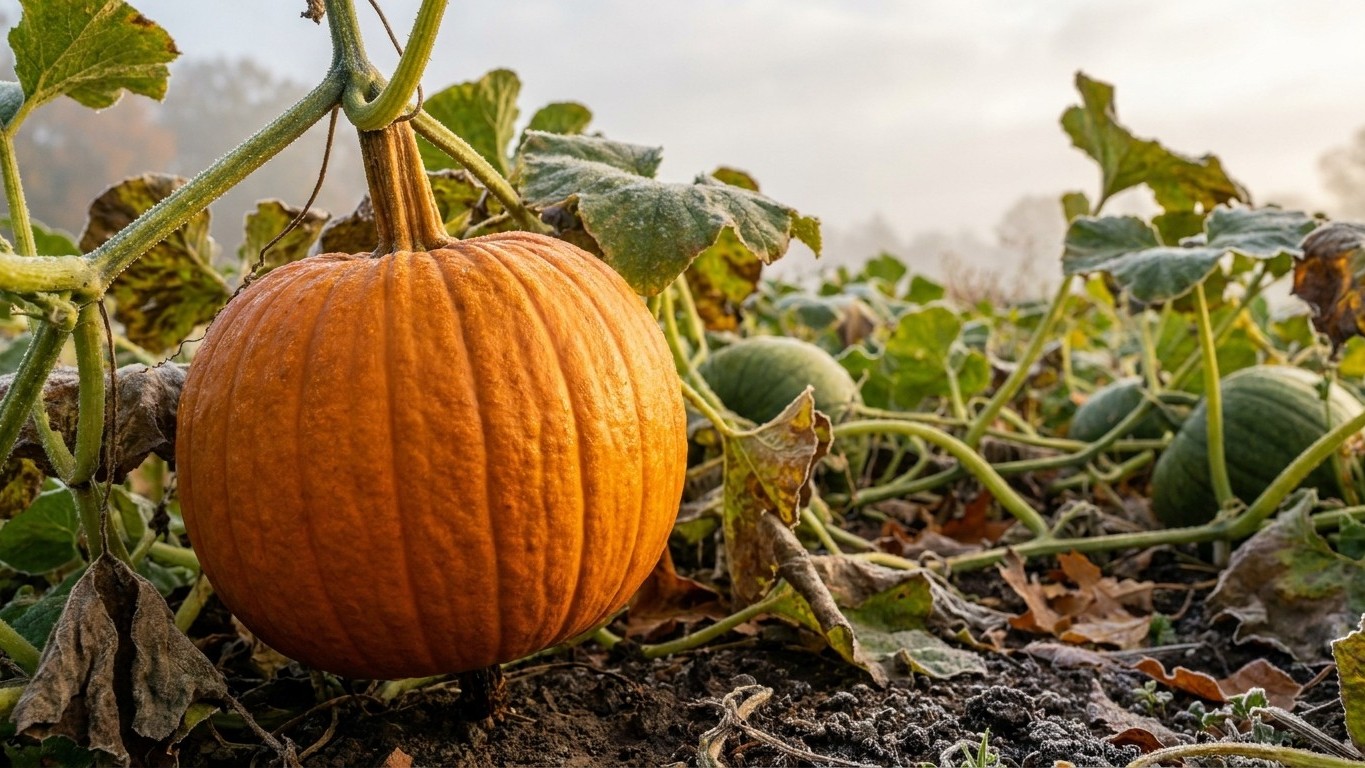

Will Pumpkins Ripen Before Frost in New Jersey? Yes, in most of the state, but only if the flowers open by roughly mid-September. The state’s first fall frost typically lands between November 4 and November 16, and a pumpkin needs 45 to 55 days from the day its flower opens to reach a rind tough enough to survive that cold. Sow too late, or grow a plant that flowers late, and the math stops working in your favor.
The short answer
New Jersey’s first fall frost, tracked by NOAA NCEI’s Climate Normals for the reference weather station, tends to arrive somewhere between November 4 and November 16. That’s the fixed end of the calendar, the point after which a pumpkin still on the vine is in real trouble. The variable end is the day the flower opens.
Utah State University Extension puts pumpkin maturity at 45 to 55 days measured from flowering, not from the day seed went into the ground. That distinction matters more than almost anything else in pumpkin math. A plant can look terrific in August, loaded with vine and leaf, and still fail if its first fruit-setting flowers don’t open until deep into September.
Run the subtraction both ways and you get a window, not a single date. Against the earliest edge of the frost range (November 4) and the longer end of the ripening clock (55 days), a flower needs to open by around September 10 to leave enough runway. Against the latest edge of the frost range (November 16) and the shorter end of the ripening clock (45 days), a flower opening as late as October 2 could still, in theory, finish in time.
That’s a gap of about three weeks, and it’s exactly why this crop rewards caution over optimism. Nobody knows in August which end of the frost window their yard will land on in any given year, so the safer target sits closer to the September end than the October one. A grower whose plants are still setting new blossoms in the first week of October is betting on a mild, late frost, and NOAA’s own freeze-probability data puts that outcome only in the 30 to 70 percent range for the reference station, not a sure thing.
None of this accounts for the fruit needing to fully harden and color once it’s fertilized, either. That process happens inside the 45-to-55-day window, not after it, so a pumpkin pulled right at the frost line while still pale or soft-skinned hasn’t actually finished the job, even if the calendar technically allowed for it. The short answer stands: pumpkins ripen in time in New Jersey for flowers opening by roughly mid-September, with late-September and early-October flowers running an increasingly thin margin depending on where in the state a garden sits and which side of the frost window that particular year happens to fall on.
When to sow here
When to Sow Pumpkins in New Jersey comes down to working backward from that mid-September flowering deadline, starting with the soil, not the frost date. New Jersey’s last spring frost, per NOAA NCEI Climate Normals, falls between March 29 and April 6 for the reference station, but that range alone doesn’t tell a grower when to put pumpkin seed in the ground.
Utah State University Extension is specific here: pumpkins go in once soil temperature reaches 65 F, not once the air stops freezing. Soil warms far slower than air, especially in the heavier, clay-leaning ground common across much of New Jersey, and it commonly takes several additional weeks after that last frost date passes before the ground itself catches up. Treating April 6 as planting day, then, often means seed going into cold, damp soil that stalls or rots before it ever sprouts.
- Mark the last frost window first: March 29 to April 6 is the reference range, and it marks when the air tends to stop freezing, not when to plant.
- Wait on the soil, not the calendar. Soil temperature needs to hit 65 F, and in most New Jersey gardens that happens well after the last frost passes, often not for a few additional weeks beyond it.
- Use row covers to close part of that gap. A row cover can buy roughly two weeks, letting seed or transplants go in earlier than bare soil would allow while still shielding young plants from the cool nights that keep soil temperatures suppressed.
- Check soil temperature directly with a simple soil thermometer, read a few inches down in the morning, rather than counting days from the frost date and hoping.
- Count forward from the actual sowing date, not backward from frost. Once seed is in warm soil, the plant still needs time to grow, vine out, and set its first flowers, and all of that has to land early enough that flowering falls inside the September window described above.
Skip the soil-temperature step and the whole downstream calculation shifts. Seed sown into soil still in the 50s doesn’t germinate faster because the frost date has technically passed; it often germinates slower, or not at all, which pushes flowering later and eats into a margin this crop barely has room to spare in New Jersey to begin with.
What goes wrong here
New Jersey’s compressed ripening window doesn’t just make timing tight. It also turns a handful of specific mistakes into the most common reasons a pumpkin patch disappoints by October.
- A late flower that never colors. When the first fruit-setting flowers don’t open until late September or October, the fruit is still green or pale when frost arrives because it never accumulated its full 45 to 55 days. The remedy is aiming the sowing schedule so flowering lands earlier in the window, and pinching off any new flowers that open after early September so the plant’s remaining energy goes into fruit that still has a real chance.
- A fruit caught by frost before harvest. Utah State University Extension recommends harvesting with the stem attached, ahead of frost, and moving the fruit somewhere it will not freeze. A pumpkin left on the vine through the first hard frost inside the November 4-to-16 window can develop soft spots and rot within days, even if it looked ripe a week earlier. Watching the forecast and cutting a little early, stem intact, beats waiting for a “perfect” final day that frost might beat you to.
- A vine that dies back before the skin hardens. Vines weakened or killed early by pests or disease leave fruit sitting on bare soil without the leaf cover that helps buffer temperature swings while the rind finishes hardening. Squash bugs and cucumber beetles are common causes of that early decline; see this site’s dedicated squash bug page and cucumber beetle page for how to catch and manage them before they take a vine down mid-season.
Checking this against your own county
The frost dates above come from a single NOAA NCEI reference weather station, and gardens across the rest of the state routinely run different from those figures. Suburban and rural properties tend to see their last spring frost arrive later, and their first fall frost arrive earlier, than the reference numbers show, sometimes by one to two weeks, and more at higher elevation or in low spots where cold air pools overnight. That gap alone can shift a flowering deadline from mid-September to something closer to Labor Day.
The most reliable way to pin down local numbers is Rutgers Cooperative Extension. Every New Jersey county has an office, and Rutgers Cooperative Extension publishes county-level frost data, soil guidance, and planting calendars tuned to specific parts of the state rather than one airport reading. Before locking in a sowing date based on the ranges in this article, a call or visit to Rutgers Cooperative Extension is worth the time, especially for anyone gardening near the coast, in the Pine Barrens, or up in the northwest highlands, where local conditions can diverge sharply from the statewide reference figures.
Common questions
What is the latest date pumpkin flowers can open and still ripen in New Jersey?
Based on the state’s frost window and the 45-to-55 day maturation clock, flowers opening by around September 10 carry the fullest margin. Flowers opening as late as early October could still finish, but only if frost holds off toward the later end of the November 4-to-16 range, which isn’t guaranteed in any single year.
Can I speed things up by sowing pumpkin seed earlier than the soil allows?
Not reliably. Utah State University Extension’s guidance is built around soil temperature, and seed sown into soil below 65 F tends to sit and stall or rot rather than germinate faster. Row covers can buy roughly two weeks of head start without forcing seed into soil that’s still too cold to support it.
Should I harvest a pumpkin that isn’t fully colored if frost is coming?
Utah State University Extension recommends harvesting with the stem attached before frost arrives, then storing the fruit somewhere it won’t freeze. A pumpkin that’s mostly, but not fully, colored generally has a better shot finishing off the vine and away from frost than one left in the ground through a hard freeze.
Does the type of pumpkin change this timeline?
Varieties differ in size, color, and vine habit, but the 45-to-55 day flowering-to-harvest window and the 65 F soil threshold come from the same Utah State University Extension guidance regardless of variety. What actually changes from county to county, and yard to yard, is the local frost window, which is why checking with Rutgers Cooperative Extension matters more than whatever variety name is printed on the seed packet.