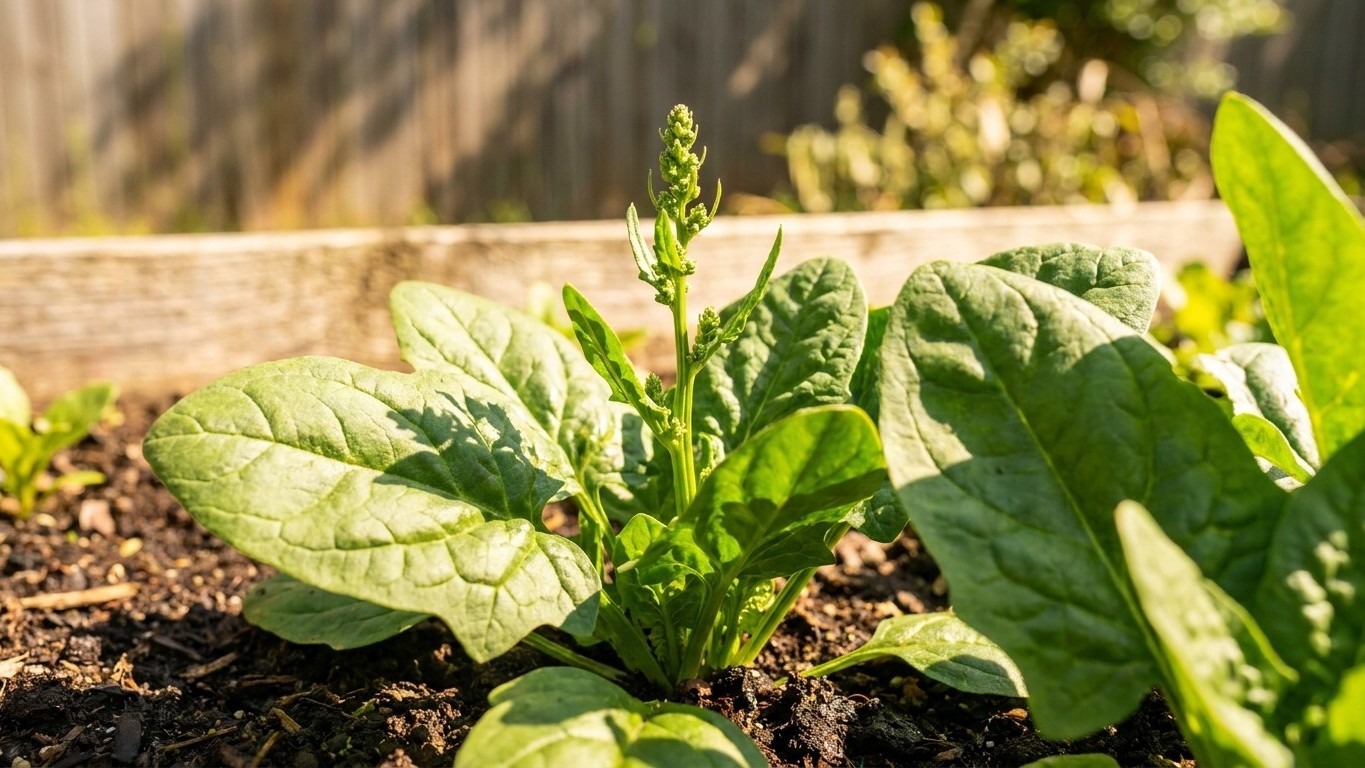

Spinach will bolt early in Albuquerque and across most of New Mexico, and it isn’t just the heat to blame. The high desert’s summer days stretch to 14 hours and 22 minutes at the solstice, long enough by themselves to push spinach into flowering. Add in 42.5 days a year that reach 90°F, and the crop faces a double trigger, day length and heat working together. That leaves a narrow spring window and a trickier autumn one, both worth planning around rather than guessing at.
The short answer
Start with the number that surprises most gardeners: on the longest day of the year, Albuquerque sees 14 hours and 22 minutes of daylight. For spinach, that single fact matters more than any thermometer reading. Flowering in spinach is triggered by long days, not just by warmth, so once the calendar pushes daylight past a certain point, the plant begins its shift toward seed production. A mild, cloudy summer will not stop that clock. There is no version of New Mexico’s climate, however cool a given June turns out to be, where the day length itself gets shorter to protect the crop.
That’s the mechanism worth sitting with for a second, because it runs backward from how people usually think about heat-sensitive vegetables. Most gardeners assume that if the weather stays mild, a cool-season crop will simply keep growing. Spinach doesn’t work that way. The plant reads day length as a signal, independent of temperature, and long days alone are enough to flip it into bolting mode. In New Mexico, where daylight climbs well past 14 hours through late spring and early summer, that signal arrives whether or not a heat wave ever shows up.
Then heat piles on top of that signal. Utah State University Extension notes that spinach grows best where temperatures stay under 75°F, and that same 75°F line marks where the leaves start turning bitter even if the plant hasn’t bolted yet. Albuquerque’s climate normals show 42.5 days a year averaging 90°F or hotter, a measure of how much summer heat load the region carries. That’s not an average summer temperature, it’s a count of how often the mercury clears a threshold that spinach can’t tolerate for long. Once those hot days start stacking up in late spring, they add a second push toward bolting on top of the day-length trigger already at work.
So the honest answer to the question isn’t day length or heat. It’s both, arriving close together on the calendar. The long days that trigger flowering show up in New Mexico at almost the same time the heat starts climbing toward that 75°F ceiling, which is why the spring crop here runs on such a tight clock and why a fall planting, timed to dodge summer altogether, tends to work better for most home gardeners.
How long the spring window really is
Working backward from the region’s own frost data gives a realistic picture of how much usable spring actually exists before the two bolting triggers take over.
- Start with the last frost date. At the Albuquerque reference station, the last spring freeze typically falls between March 31 and April 12. Sowing spinach 2 to 3 weeks ahead of that date puts seed in the ground somewhere around mid to late March, while the soil is still cool enough for good germination.
- Count the cool weeks that follow. Spinach grows best under 75°F, and the first several weeks after that mid-to-late March sowing tend to stay in that comfortable range, since New Mexico’s spring air hasn’t yet caught up to its long daylight hours.
- Watch the daylight climb. By late April and into May, day length in the region is closing in on the 14-hour range that pushes spinach toward flowering, regardless of how the thermometer behaves that particular week.
- Factor in how fast the region heats up. With 42.5 days a year averaging 90°F or better, New Mexico’s warm season doesn’t ease in gradually. Once temperatures start climbing past the mid-70s, they tend to keep going, which shortens the gap between “still productive” and “bolting.”
- Land on a realistic window. Between the sowing date and the point where both long days and rising heat converge, most New Mexico gardens get somewhere around four to six usable weeks of good spring spinach before the plants start sending up flower stalks.
Variety choice doesn’t stretch that window as much as seed packets sometimes imply. Bloomsdale, Melody, Teton, and Olympia are the four varieties named by the Extension source used for this guide, but that source publishes no data comparing their bolt resistance or days to maturity. Treat any specific claims about one variety outlasting another as unverified until you see it happen in your own garden.
The autumn crop, and when the soil lets you sow
Fall spinach avoids the spring problem of racing against rising heat, but it trades that obstacle for two different ones, and both deserve their own look.
Soil still too warm to germinate
Spinach seed germinates poorly once soil temperatures climb above 80°F, and in New Mexico, late summer soil often sits right at or above that line well into August. The same climate pattern that produces 42.5 days a year of 90°F-plus air temperatures also keeps the top few inches of garden soil warm long after the calendar says autumn is close. Sowing too early, while the ground is still holding onto summer heat, means thin, spotty germination even if the air itself has started to cool in the mornings. The practical fix is patience: wait until soil temperature drops out of that danger zone, which in most New Mexico gardens doesn’t happen until deeper into late summer or early fall, rather than sowing by the calendar alone.
The frost that ends the season
On the other end, the first fall frost at the Albuquerque reference station arrives somewhere between October 29 and November 9. That date sets the outer boundary for harvest. Utah State University Extension’s guidance for a fall crop is to sow 50 to 75 days before the date you want to harvest, without breaking that range down by variety since no such data is published. Counting back from a harvest target in late October puts the sowing window somewhere in the stretch from mid-August to late September, depending on which end of that 50-to-75-day range applies and which frost date proves accurate on the ground.
Put the two obstacles together and the real autumn window is tighter than either one alone suggests. Soil needs to have cooled below the 80°F germination threshold, which often doesn’t happen until closer to September in much of New Mexico, while the harvest clock is already counting down toward that late-October to early-November frost. Suburban and rural gardens, and anything at higher elevation, commonly see that first frost arrive earlier than the airport-station date and the last spring frost linger later, so it’s worth checking county-level frost records rather than relying on the reference city alone. That narrows an already tight fall window even further for many home gardeners.
Common questions
Does shade cloth stop spinach from bolting in New Mexico? Shade cloth can lower leaf temperature and help keep plants under that 75°F comfort range a bit longer, but it does nothing to change day length, which is the trigger that shade can’t block.
Can I just sow spinach all summer to keep a steady harvest? Summer sowing runs into both problems at once, long days already past the flowering trigger and soil temperatures well above the 80°F germination threshold, so most direct-sown summer plantings fail before they get established.
Is there a spinach variety that skips bolting entirely in hot, long-day climates? Not according to the sources behind this guide. Bloomsdale, Melody, Teton, and Olympia are named varieties, but no bolt-resistance or maturity data is published for any of them here, so treat marketing claims with caution.
Should I trust the airport frost dates for my own yard? Use them as a starting point only. Rural and suburban gardens, and anything at higher elevation, typically see the last spring frost later and the first fall frost earlier than the reference station shows, sometimes by a week or two, so local records for your own county give a more reliable planting window.