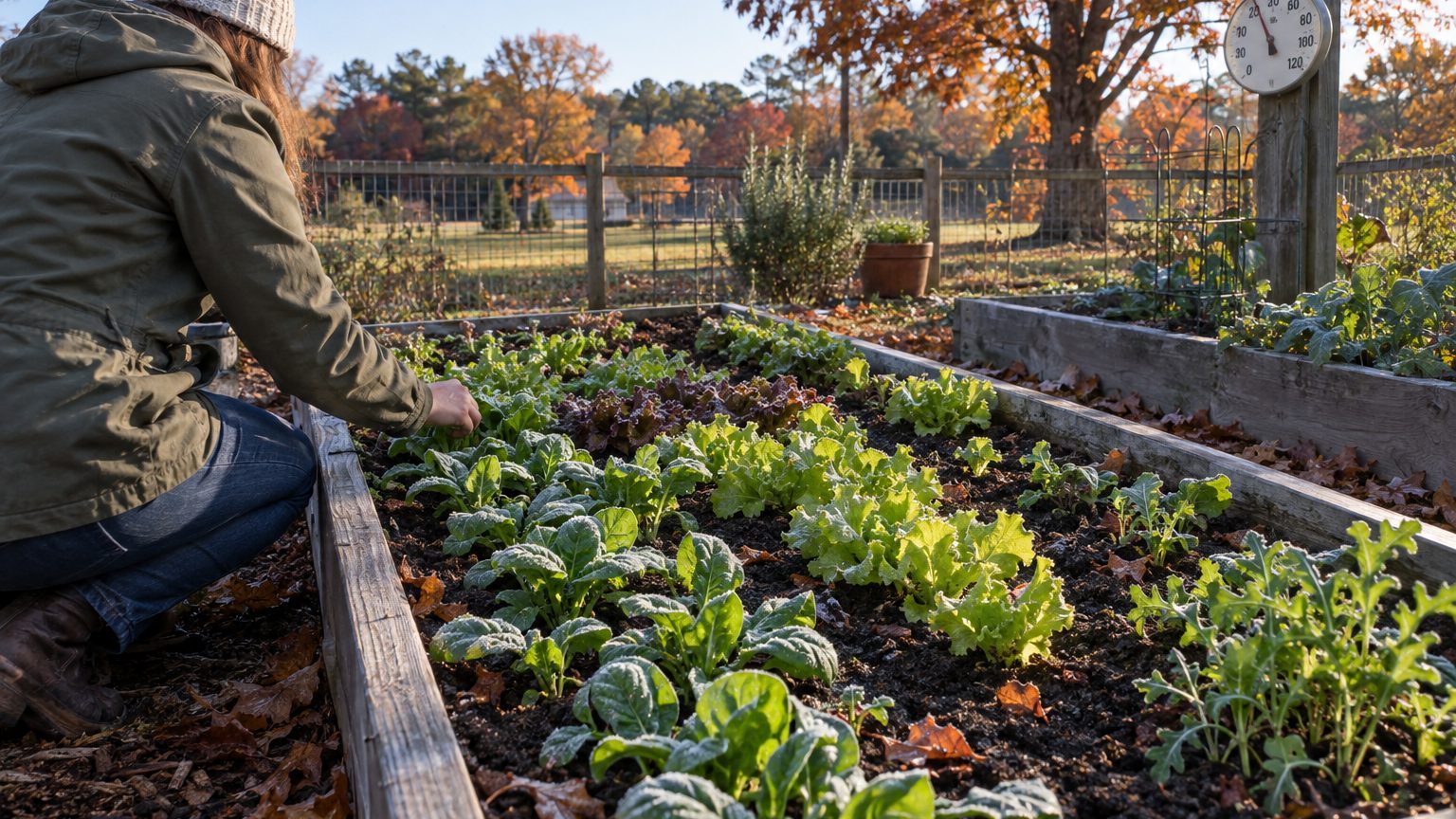

Sow winter salads outdoors in the weeks before the first fall freeze. At Albuquerque’s airport weather station, that freeze has a 30 to 70 percent chance of arriving between October 29 and November 9. Watch the forecast, so you know when the reference-city window is approaching. Sowings made after it do best under row cover or in a cold frame. A second round of sowing starts in late winter, ahead of the spring frost window.
The short answer for New Mexico
Start seeds so they have true leaves before the first fall freeze arrives. The reference-city window for that freeze is October 29 to November 9. For spring, the last freeze falls between March 31 and April 12. Both ranges come from NOAA’s 1991-2020 U.S. Climate Normals, and both measure the same thing: the dates when the chance of a 32°F freeze sits between 30 and 70 percent. They do not mark a hard killing freeze, and they do not guarantee anything about a given year.
They also describe one place. The figures come from the airport weather station in Albuquerque. Suburban and rural gardens usually see the last spring frost one to two weeks later and the first fall frost one to two weeks earlier, and the gap widens with elevation. A garden outside the reference city may already be inside its own fall frost window, so use these dates as a starting point and move them toward your own conditions.
How do the sowing windows line up by type?
The hardiest salad crops can go in closest to the freeze, and tender ones need the most lead time. For the full list of what to grow, see The Best Winter Salads for New Mexico. The broader overview is in Winter Salads for New Mexico Gardens.
| Type | Outdoor sowing in fall | Sowing in late winter |
|---|---|---|
| Spinach, mâche, claytonia | Up to the first frost window, with cover after | As soon as the soil can be worked |
| Kale, arugula, mustard greens | Several weeks before the frost window opens | A few weeks before the last frost window |
| Leaf lettuce | Early enough to be established, then cover on cold nights | Under cover first, outdoors near the last frost window |
| Heading lettuce, radicchio | Earliest of the group, and only where the season is long enough | Under cover, to finish before warm weather |
What if the window has already passed?
Sowing after the first freeze still works for baby leaves if the bed is covered. A cold frame, a low tunnel or a sheet of row cover over hoops holds in enough ground heat for the hardy types to keep growing slowly. Expect smaller harvests and a long pause in the darkest weeks. The plants resume as days lengthen, which is why a late-winter sowing and a fall one overlap.
What will not work here

Waiting for the first frost to start seeds is the most common miss. The coldest month at the reference station has a mean daily minimum of 26.4°F, so a typical night in midwinter falls well below freezing. Seedlings that have not reached true leaves by then mostly sit still until the light returns. A garden that waits for the freeze to remind it has usually waited too long.
Tender lettuce in an open bed is the second miss. The 26.4°F figure is an average, which means some nights run colder. Spinach, mâche, claytonia and kale take those nights in stride. Soft-leaved butterhead and some leaf lettuces burn at the edges without cover, particularly in a bed exposed to wind.
Weekly watering fails too. Winter air in a dry, sunny climate pulls moisture out of the top inch of soil fast, and salad seeds and seedlings live in exactly that inch. A deep soaking once a week suits established tomatoes, but a seedbed needs light moisture every day or two until the seedlings are up. Once they have a few true leaves, you can back off and water deeper and less often.
Sowing into hot soil is another trap. Early fall can still be warm, and a south-facing bed against a wall may stay hot well into the evening. Lettuce seed often refuses to sprout in warm soil. Sow in late afternoon, shade the bed with a board or cloth until seedlings show, and keep it damp. Spinach has the same habit, though it is a bit more forgiving.
Heading types that need a long stretch of cool weather to form a tight head also run into trouble. Radicchio and full-size heading lettuce can be caught by the cold or by spring warmth before they finish. Cutting baby leaves works with the season instead of against it.
The last mistake is using the airport dates at altitude. A garden at elevation reaches its first freeze earlier than the reference city, often by more than the one to two weeks that suburban sites see. Copying an Albuquerque sowing date there can mean seedlings are caught too small.
What changes across New Mexico
There is no single answer, because the state is not a single climate. The USDA Plant Hardiness Zone Map, built on the average annual extreme minimum temperature, places New Mexico anywhere from zone 4b to zone 9a. That is a spread of roughly four and a half zones, from high mountain country to the warm southern lowlands. Dated advice has to be tied to a place, which is why the dates above are tied to the reference city.
Gardeners in the north or at altitude should shift everything earlier in the fall. First freezes arrive sooner, so seeds go in sooner, and cover goes on sooner. Spring runs the other way: the last freeze comes later, so late-winter sowings move later, and starting seeds under cover helps salads finish before the warm weather arrives. Where winters are long and cold, the hardiest greens under cover are the dependable choice, and tender lettuce is a gamble.
Gardeners in the warm, low parts of the state have more room. Sowing can run later into fall, and outdoor growth can continue longer through winter. Heat is the limit there, since early-fall sowings can fail in warm soil and spring sowings can bolt as soon as days warm.
The hardiness zone says how cold the winters can get, not when to sow. It is a useful guide to what survives a winter outdoors, and it tells you little about the date a freeze first arrives. To see which zone your address falls in, look it up on the USDA Plant Hardiness Zone Map by ZIP code rather than guessing from a neighboring town.
Where to check this for your own county
Your state extension service is the best next stop. In New Mexico that is the New Mexico State University Cooperative Extension Service, which has agents and offices in the counties around the state. Look for two things: a local planting calendar for fall and winter vegetables, and any information on the varieties that have actually been grown in your county.
The calendar tells you the sowing dates for your own frost pattern. The variety information tells you which salad crops have performed in your soil, wind and elevation. If your county office has neither, call or email an agent. They field questions about local frost timing all the time and often know which neighborhoods run colder than the official numbers.
A county recommendation beats a state one. Anything written for the whole state, including the dates above, is a broad outline that cannot account for a cold valley, a windy ridge or a sunny south wall. When your county advice and the airport dates disagree, go with the county.
Checking this against your own garden
Your own observations outrank every date here, and three are easy to make with no equipment.
- Soil warmth by feel. Press a hand into the bed in early morning. If the soil still feels warm, lettuce seed may sit without sprouting, so shade the bed and sow in the evening. If it feels cold, growth will be slow and cover will help.
- When seedlings get true leaves. Check how long your sowings take to show their first true leaves, which are the ones after the rounded seed leaves. A bed that gets there slowly is cooler than the calendar suggests, and the next sowing should start earlier.
- Where frost shows up first. After the first frost, walk the yard in the morning. Frost-blackened basil or squash leaves tell you which corners run coldest. Cold air settles in low spots, while beds beside south-facing walls tend to stay milder.
Keep notes for a season. A garden that sees frost a week before its neighbor is telling you something no map can.
Common questions
Can I still sow winter salads outdoors in late October?
Yes, with protection. The reference-city first-freeze window starts October 29, and many gardens reach it sooner. Hardy greens such as spinach, mâche and claytonia can still be sown now, and a row cover or cold frame helps them establish.
When do I sow salad greens again in late winter?
Start a few weeks before the last frost window, which at the reference station is March 31 to April 12. Sow the hardy types as soon as the soil can be worked. Tender lettuce goes in under cover first and moves outdoors closer to the last frost window.
Do winter salads need protection in New Mexico?
The hardy ones often get through with little or none in milder spots. The coldest month’s mean daily minimum at the reference station is 26.4°F, so tender lettuce usually needs cover, and any garden at elevation should plan on it for most crops.
Does my hardiness zone tell me when to sow?
No. The USDA zone is based on the average annual extreme minimum temperature, so it shows what can survive winter, not when the first freeze arrives. For timing, use your county’s frost dates and your own observations.