
Count 70 to 100 days from seeding, because carrots are sown in place and never transplanted. Clemson Extension says to harvest about 65 to 75 days after planting, and the longer end of the range suits slower varieties. Pull them once the roots have reached a useful size, then cut the tops off before storage. Hold the roots at 33 °F with high humidity. Growing Carrots in New York covers the season; this page covers the pull and the keeping.
The short answer
The ground New York is known for
The soil USDA lists as representative of New York is the Honeoye series, an Alfisol. That is a forest soil of moderate fertility that holds nutrients reasonably well. USDA’s Soil Data Access records its surface horizon, across 66 mapped components, as loam to silt: 26 percent sand, 19 percent clay and 55 percent silt. Organic matter sits at about 3.0 percent, the surface pH is about 6.3 (slightly acid), and the drainage class is well drained.
Those are mapped values for the top layer of a natural soil, not a reading from a worked garden bed. They also describe one series. New York spans hundreds of them, from Hudson Valley clay to Adirondack stony till to Long Island sand. Treat Honeoye as a starting point, not a diagnosis of your yard.
Will a carrot fork in it?
Utah State University Extension describes the ideal carrot ground as deep, sandy, well-drained soil rich in organic matter, and says heavy or rocky soil makes the root fork. Set that against the Honeoye numbers and the picture is mixed, but mostly friendly. Drainage is well drained, which is the big item on the list. Nineteen percent clay is not heavy clay. The soil is not sandy, though, since silt makes up more than half of it, and 3.0 percent organic matter is modest next to what the crop prefers.
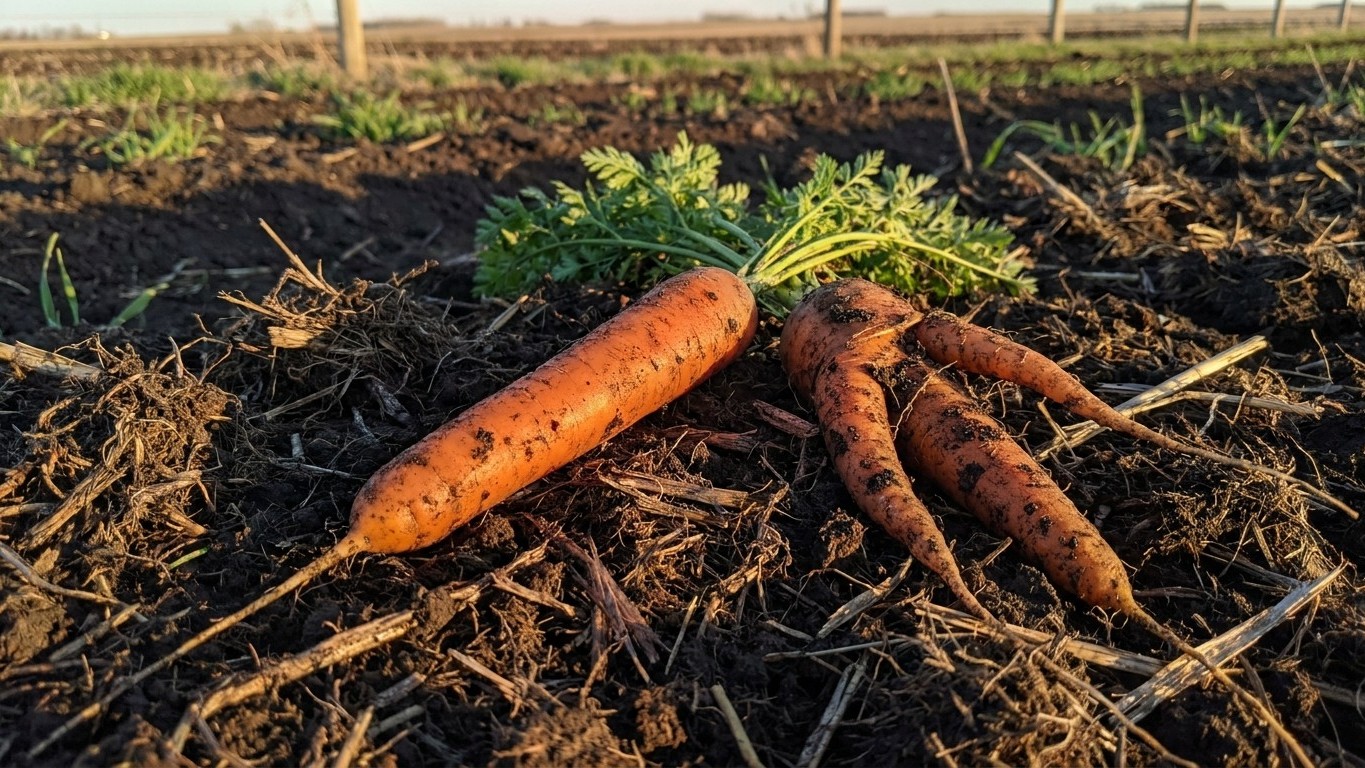
So in ground like Honeoye, forking is not the default. It shows up where the soil compacts, where stones sit in the path of the root, or where a pocket of heavier soil turns up. Silt packs down and crusts after rain, and a taproot that hits a hard layer splits into two or three legs.
The fix is to change the ground, not the seed. Where the soil is heavy, USU Extension calls for plenty of compost and double digging, which means loosening the layer beneath the topsoil as well. Where drainage is poor, or digging keeps striking stone or hardpan, a raised bed filled with loose, compost-rich soil is the cleaner route. It also makes harvest easier. A loose bed lets you ease a root out without snapping it, and the soil, not the variety, decides how deep and straight that root grows. If your yard looks more like the clay-heavy or stony end of the state, the longer treatment is in Will Carrots Fork in New York Soil?
The test that settles it in your own garden
Your bed is not the state’s representative soil. A builder may have scraped the topsoil off, a river may have laid down silt, or a hillside may have left you stones. Ten minutes with a spade tells you more than any map. Do it where you plan to sow.
- Dig a clean hole with a spade, wide enough to see into, and keep the soil you remove on a tarp so you can put it back in order.
- Read the wall of the hole. Look for where loose, dark soil gives way to something denser or paler. That change marks how far a carrot can run straight before it meets resistance. Note any stones, roots or chunks of builder’s debris, because each one is a place for a root to bend or split.
- Feel the texture. Take a moist handful from the bed and rub it between your fingers. Gritty means sand. Smooth and floury means silt. Sticky, and able to hold a polished ribbon when you squeeze it out, means clay. Do this at a couple of spots, since one bed can vary.
- Watch the water. Fill the hole with water and let it drain, then fill it again. If the second fill vanishes steadily, drainage is working in your favor. If water sits in the hole for a long stretch, think raised bed.
- Send a sample for a soil test to get your own pH and organic matter numbers, since the state figures above are not yours. Your county extension office can point you to a lab.
- Decide. Loose, deep, stone-free, draining soil can be sown in place after compost is worked in. Dense layers or heavy texture call for double digging. Standing water or stubborn stone points to a raised bed.
This page gives no depth or drainage-time cutoffs because the source does not publish any. Your eyes and hands are the measure: a hole that shows loose soil all the way down and drains steadily is a good sign.
What goes wrong here
Most carrot failures in New York trace back to soil structure, a hot stretch at sowing, or water that arrives in fits and starts. Each one has a remedy you can apply before the next row goes in.
- Forked or stubby roots in heavy or stony ground. Compaction, clay pockets and stones make the taproot split. Work in plenty of compost, double dig the bed, and pull out stones as you find them. Where the ground stays heavy or poorly drained, build a raised bed. A different variety will not solve it.
- Patchy germination in a hot spell. Carrot seed is slow to sprout, and a sown row can dry out or crust over before the seedlings break through. Because carrots are sown in place, there is no transplant to rescue a bad stand. Keep the seedbed evenly moist, lay a board or light cover over the row until the first sprouts appear, and reseed gaps rather than waiting. If a hot spell has wiped out a row, the days to harvest start over from the new seeding date.
- Cracked or split roots from uneven water. A dry spell followed by a heavy soak makes the root swell faster than the skin can stretch. Water on a steady schedule, and mulch the bed to even out moisture swings. Pull split roots first and eat them soon, since the cracks invite rot in storage.
- Roots chewed before you can pull them. Pests tunnel and scar roots in the ground. What Eats Carrot in New York, and When lays out who does it and at what point in the season.
- Roots that go soft after harvest. This is the failure that catches people after they have done everything right. Carrots stored with their tops on keep only about 10 to 14 days, because the leaves keep drawing moisture out of the root. Cut the tops off first. Trimmed carrots keep for months.
Storage temperature matters as much as trimming. Clemson Extension’s figure is 33 °F with high humidity to prevent wilting, which sits just above freezing and is well short of a cellar-warm room. A carrot held at 50 °F will sprout and soften in a fraction of the time. A refrigerator crisper drawer is the closest most households come, and a cheap thermometer tells you how close.
Common questions
How many days until I can pull carrots in New York?
Count 70 to 100 days from seeding, since carrots are sown directly in the bed and there is no transplant date. Clemson Extension puts harvest at about 65 to 75 days after planting. Calendar dates for New York sowing vary by region and are not published here, so count backward from when you want to pull, and check with your county extension office.
How long do carrots keep after harvest?
With the tops on, bunched carrots keep about 10 to 14 days, per Clemson Extension. Trimmed carrots kept cold and humid last for months. The difference comes from the leaves, which keep pulling moisture from the root.
What temperature should I store carrots at?
Clemson Extension’s figure is 33 °F with high humidity to prevent wilting. That is just above freezing. Warmer storage shortens the life of the roots sharply, with sprouting and softening arriving much sooner.
Is New York’s state soil good for carrots?
Honeoye is well drained and sits in the loam-to-silt range, at 26 percent sand, 19 percent clay and 55 percent silt. That is a workable starting point, though not the deep, sandy ground Utah State University Extension prefers. Your own yard may differ, so run the dig-and-drain test and get a soil test before you decide whether to add compost, double dig or build a raised bed.