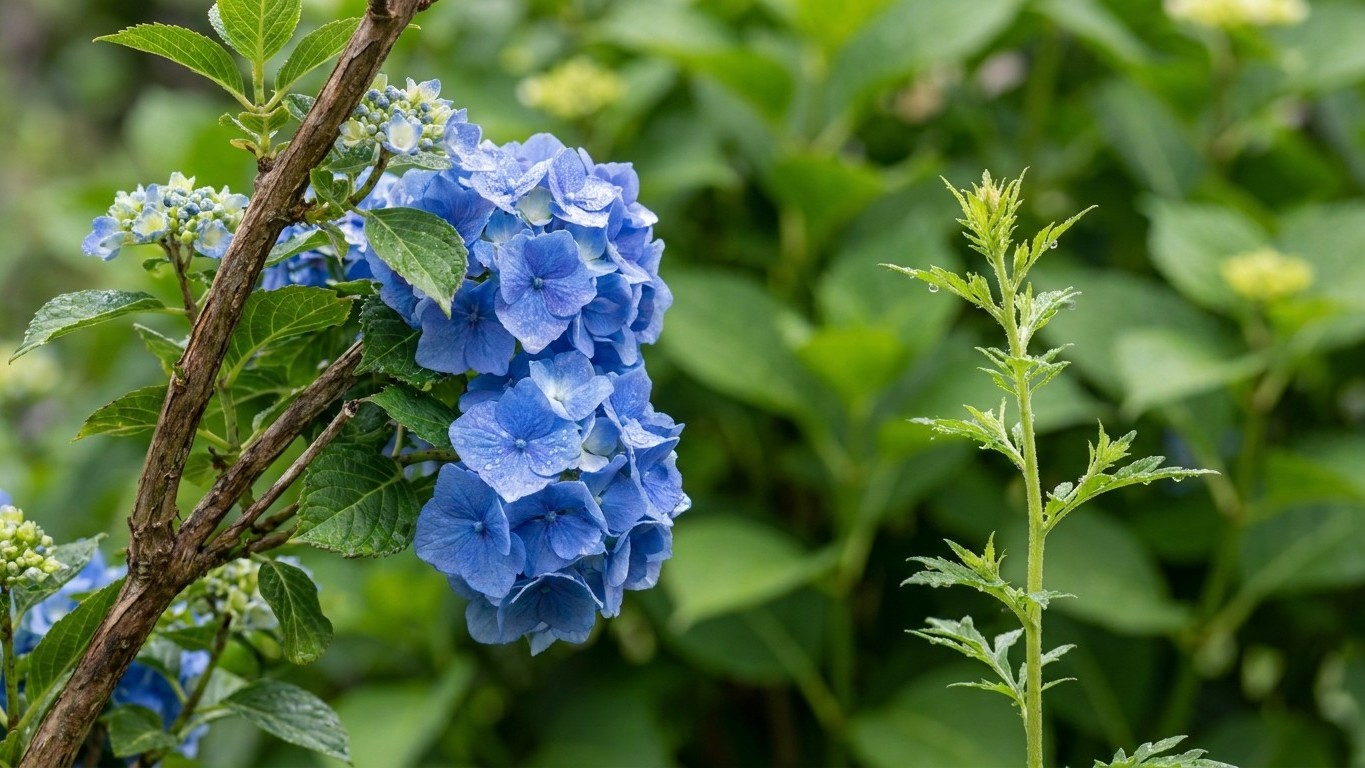

Pink hydrangeas in New York usually mean the soil is holding its aluminum out of the plant’s reach. Bigleaf hydrangeas turn blue only when the soil is acidic enough to release that aluminum. A plant that was blue in the nursery pot often drifts pink after a season in neutral ground. The fix is a soil test, a slow drop in pH, and a season or two of patience. White-flowering types ignore the whole process.
What this comes down to in New York

At the New York City reference station in Central Park, the average last spring frost falls between March 23 and April 3, and the average first fall frost between November 14 and November 27 (NOAA NCEI U.S. Climate Normals). Inside that stretch, hydrangeas in the city and its suburbs are often pink because the soil pH sits near neutral or above, which locks aluminum into a form the roots can’t absorb.
Why are hydrangeas pink in New York?
Bigleaf hydrangea sepals are pigmented by a compound that shifts color depending on whether aluminum has reached the flower. With aluminum, they go blue. Without it, they go pink. The plant doesn’t choose; the chemistry in the soil does.
Plenty of New York gardens are set up for pink. Soils over limestone in central and western parts of the state run alkaline. Suburban yards are often limed to raise lawn pH, and the lime can wash into nearby beds. Concrete foundations leach alkalinity into the soil beside them. Older city lots can hold rubble and mortar that do the same. Then there is fertilizer: a mix high in phosphorus ties up aluminum even when plenty is present, so a bag labeled for blooms can quietly push a blue plant toward pink.
Soil pH of roughly 5.5 or lower favors blue. Around 6.5 and above favors pink. In between you get purple, or a mix of both colors on a single plant, which is common in the first year of a change.
Which hydrangeas can turn blue?
Only bigleaf hydrangeas (Hydrangea macrophylla) and a few related types respond to soil chemistry. Familiar names that do include:
- ‘Nikko Blue’, a classic mophead
- Endless Summer (The Original), a reblooming mophead
- ‘Penny Mac’, another rebloomer
- ‘Mathilda Gutges’, bred for strong blue color in acid soil
White varieties such as ‘Annabelle’ (smooth hydrangea) and ‘Limelight’ (panicle hydrangea) cannot be turned blue. Panicle types sometimes blush pink in fall, but cool fall weather and flower aging cause that, not soil. Adding sulfur to a ‘Limelight’ wastes the effort and can stress the shrub.
Working it out for your own garden
Start with a soil test before buying anything. Your local Cornell Cooperative Extension office can point you to a lab, and the result tells you the pH, the number that matters most here. Guessing leads to a common failure: dosing a soil that was already acidic, or one that needs far more than a single application can deliver.
Read the plant next. Pink flowers on a bigleaf hydrangea with a test around 6.5 or higher mean you need to lower the pH. Pink flowers with a test already near 5.5 point to a phosphorus problem, so check the fertilizer you use. Purple blooms mean you’re partway there.
Then work back from bloom. Bigleaf hydrangeas in the New York City area typically flower in early to midsummer. Soil changes take weeks to reach the roots, so treatments should begin as new growth breaks in spring and continue through the weeks when flower color is developing. With a last frost between March 23 and April 3, spring growth starts shortly after, which puts the first application in roughly April to early May, and later where spring comes late. Allow several weeks from that first application before any color change shows. A full shift usually takes a season or two, as the FAQ below explains.
Take ‘Nikko Blue’ as a worked example. It flowers in early summer and sets its buds on old wood the previous year. Planted or treated in April in New York City, it has time for the roots to take up aluminum before the flowers open, and it will bloom well ahead of the first fall frost, which comes between November 14 and November 27. Expect a muddled purple the first summer and clearer blue the second.
Now take a cultivar that fails. A bigleaf that sets buds on old wood and is grown where winter cold or a late spring frost kills those buds will not bloom, whatever the pH is. In that garden, color is moot until the plant flowers. A reblooming type that flowers on both old and new wood, such as Endless Summer, gets around the problem, and then color management is worth the effort. How you prune matters too, since cutting old wood at the wrong time removes the buds. The When to Prune Hydrangeas in New York page covers that timing.
What changes across the state
New York spans USDA hardiness zones 3b to 7b, a range built on one variable: the average annual extreme minimum temperature. The Central Park figures above describe a dense urban site with a long season. Upstate and the Adirondacks frost far earlier in fall and later in spring, so the window for any color work shrinks as you go north and up in elevation.
Soil changes the picture as much as climate does. Long Island and parts of the lower Hudson Valley lean toward sandy, well-drained ground that acidifies more easily and also loses amendments faster. The Finger Lakes and much of western New York sit on limestone-influenced soils, where pink is the default and lowering the pH is a long fight against the bedrock. The Adirondacks and Catskills tend to have naturally acidic, forest-derived soils, which is good for blue, but cold there kills the flower buds of many bigleaf types before color matters.
Large lakes help in a different way. Land near Lake Erie and Lake Ontario gets lake-effect snow, and a deep snow cover insulates stems and buds from the worst cold. Gardens a few miles inland without that blanket can lose buds in the same winter. Near the coast, the ocean moderates winter lows, so bigleaf types are more reliable there than in the same zone inland.
The mistakes this state punishes

Over-treating comes first. Aluminum sulfate works fast and can burn roots when applied too heavily or to a dry plant. Water the shrub well before and after, and follow the label rate instead of doubling it to hurry the color along.
Early timing is next. A warm spell in March can tempt you to start feeding and treating, and then a late freeze catches tender new growth. Where the last frost can arrive from late March to early April in the city and later upstate, wait until the leaf buds have opened and frost danger has passed before the first application.
Another trap is planting beside a concrete foundation, walkway, or limed lawn, then fighting a rising pH for years. Give the shrub a few feet of clearance or build a raised bed with acidic mix. Container growing makes color control far easier, because you choose the soil.
Fertilizer choice also matters. Skip high-phosphorus blends on any hydrangea you want blue, and look for a balanced or low-phosphorus formula instead.
Finally, don’t expect a white or panicle hydrangea to change, and don’t prune old-wood bigleafs in fall or early spring. Either mistake costs you a bloom season. The broader care routine sits in the guide to growing hydrangeas in New York.
Checking this against your county
The frost window here comes from the New York City reference station, and the soil story changes from one county to the next. Your local Cornell Cooperative Extension office can tell you what your soil usually tests like, how to submit a sample, and when frost typically ends where you live. Use the state hydrangea guide for the general growing details, and treat any single date or pH number as a starting point to adjust against what your own plant does.
Common questions
How long does it take to turn a pink hydrangea blue?
Expect at least one full growing season, and often two. Soil pH shifts slowly, and a plant that has been pink for years has roots established in alkaline ground. The first summer usually brings purple flowers, and the blue deepens the following year.
Will coffee grounds turn hydrangeas blue?
Not reliably. Coffee grounds are a weak and inconsistent way to change pH. A soil test followed by a measured sulfur or aluminum sulfate application gives far more predictable results.
Why did my blue hydrangea turn pink?
Something raised the pH or tied up the aluminum. Common causes are lawn lime, concrete or masonry nearby, alkaline water, or a fertilizer high in phosphorus. Retest the soil and trace the change.
Can white hydrangeas change color?
No. White-flowering types such as ‘Annabelle’ don’t carry the pigment that responds to aluminum, so pH adjustments won’t alter their flowers. Only bigleaf types and a few relatives shift between pink and blue.