
Cornell University CALS Insect Diagnostic Laboratory documents ten garden pests for New York state, but almost none of them touch parsnip. Only the fourlined plant bug has a host range broad enough to land on parsnip foliage, and it does so once the plant pushes tender new leaves, several weeks after seeding. Most of what looks like pest damage on parsnip in New York gardens turns out to be soil, water, or timing instead, and the record below sorts out which is which.
Which pests attack parsnip in New York
The Cornell University CALS Insect Diagnostic Laboratory documents ten insect species active in New York gardens: apple maggot (Rhagoletis pomonella), asparagus beetles, cabbage maggot, Colorado potato beetle, fourlined plant bug, imported cabbageworm, onion maggot, squash vine borer, striped cucumber beetle, and viburnum leaf beetle.
Line them up next to a parsnip bed and most drop out immediately. Apple maggot lays eggs in apple fruit, not root vegetables. Asparagus beetles feed exclusively on asparagus spears and ferns. Cabbage maggot and imported cabbageworm are brassica specialists, tied to cabbage, broccoli, and their relatives. Colorado potato beetle targets nightshades: potato, eggplant, tomato. Onion maggot needs alliums. Squash vine borer and striped cucumber beetle are cucurbit pests, after squash, pumpkin, and cucumber. Viburnum leaf beetle only eats viburnum shrubs, an ornamental with no business near a vegetable bed.
That leaves one name. Of the ten species on Cornell’s list, only the fourlined plant bug has a host range wide enough to include parsnip foliage: it’s a generalist that feeds on the new growth of dozens of unrelated garden plants, from mint to dahlia to various vegetables, rather than sticking to one family the way the others do.
That’s a short list for a page built to answer What Eats Parsnip. It’s short because it’s accurate: the classic carrot-family pests described elsewhere, like carrot rust fly or parsnip webworm, aren’t part of what Cornell’s Insect Diagnostic Laboratory documents for this territory, so this page won’t invent them. What actually shows up on New York parsnip beds, according to the documented record, is one generalist insect and a handful of growing conditions that mimic insect damage.
When each one shows up, and what it does first
Parsnip is sown directly in the ground, not transplanted, and the timing runs off the frost calendar rather than a fixed month. In the New York City area, the last spring frost falls between March 23 and April 3, and gardeners sow parsnip two to three weeks ahead of that date, meaning seed usually goes into cold soil in early March. Upstate and Adirondack gardens frost later in spring and earlier in fall, so the same seeding math shifts later there.
Germination is the first waiting game, and it’s slow. Parsnip seed takes 14 to 21 days to come up, long enough that a bare-looking bed at day ten still isn’t a failed planting. Seedlings typically show true leaves within a few weeks after that, and it’s this flush of tender new foliage that draws the fourlined plant bug in.
What shows up first isn’t a chewed leaf edge or a hole. Fourlined plant bug feeding leaves small, dark, sunken spots on young leaflets, almost like a scorch mark, concentrated on the newest growth rather than spread evenly across the plant. The damage tends to appear in flushes that match new leaf growth through the early part of the season, then taper off as the plant matures and the canopy toughens.
Because none of the other nine species on Cornell’s documented list have any reason to be on a parsnip plant, there’s no second wave of insect activity to watch for later in the season. The bigger calendar event for parsnip in New York isn’t an insect at all: it’s the run into the November 14 to 27 first-frost window, when the crop finally gets the cold exposure it needs to taste like anything.
Telling the damage apart from everything else
Fourlined plant bug damage is cosmetic and specific: sunken spots on new leaves, not stunted growth or a dead plant. Everything else that goes wrong with parsnip in a New York garden tends to come from the soil, the water, or the calendar, and it’s easy to blame an insect for damage that has nothing to do with one.
| Symptom | Likely cause | What distinguishes it |
|---|---|---|
| Forked or twisted roots | Heavy or stony soil, or overwatering | These are two separate causes, not one: check soil texture for rocks and clay first, then check whether beds have been kept too wet, since either can fork a root on its own |
| Bland, starchy roots at harvest | Pulled before enough cold exposure | Sweetness comes from several weeks of frosty weather converting starch to sugar in the root, not from the garden’s hardiness zone alone |
| No visible seedlings two weeks after sowing | Normal germination lag | Parsnip germination runs 14 to 21 days; digging up the row to re-sow before then usually just destroys seed that was about to sprout |
| Yellowing or stunted foliage, no leaf spotting | Nutrient deficiency, drought stress, or disease | None of these match documented insect feeding; a local extension office can confirm from a photo or sample rather than a guess |
The forked-root question deserves its own mention because it’s the complaint that shows up most in New York gardens, and gardeners often assume it’s one problem when it’s really two. Heavy or stony ground blocks the taproot mechanically, while overwatering encourages the root to branch instead of driving straight down. A bed can have great soil and still produce forked roots if it’s watered too generously, so ruling out one cause doesn’t rule out the other.
What actually works here, and what is a waste of time
A physical barrier beats a spray for a cosmetic generalist like fourlined plant bug. Floating row cover set over the bed right after sowing keeps adult bugs off the seedlings through the weeks when new growth is most tender, and parsnip grown for the root doesn’t need pollinator access, so the cover can stay on for most of the season without costing anything at harvest.
Soil preparation does more work than any treatment aimed at the insect itself. Deep, sandy loam lets the taproot run straight down; heavy ground has to be double dug before sowing, per Utah State University Extension, or it produces the forked roots that get mistaken for pest damage. Watering on a steady, moderate schedule avoids the second cause of forking, since soaked beds encourage branching roots regardless of how good the underlying soil is.
Spraying for anything on Cornell’s documented list other than fourlined plant bug is wasted effort on a parsnip bed, since apple maggot, cabbage maggot, Colorado potato beetle, onion maggot, squash vine borer, striped cucumber beetle, and the rest have no reason to be there in the first place. Treating a parsnip planting for cucumber beetles or cabbageworm doesn’t protect a crop those insects were never going to touch.
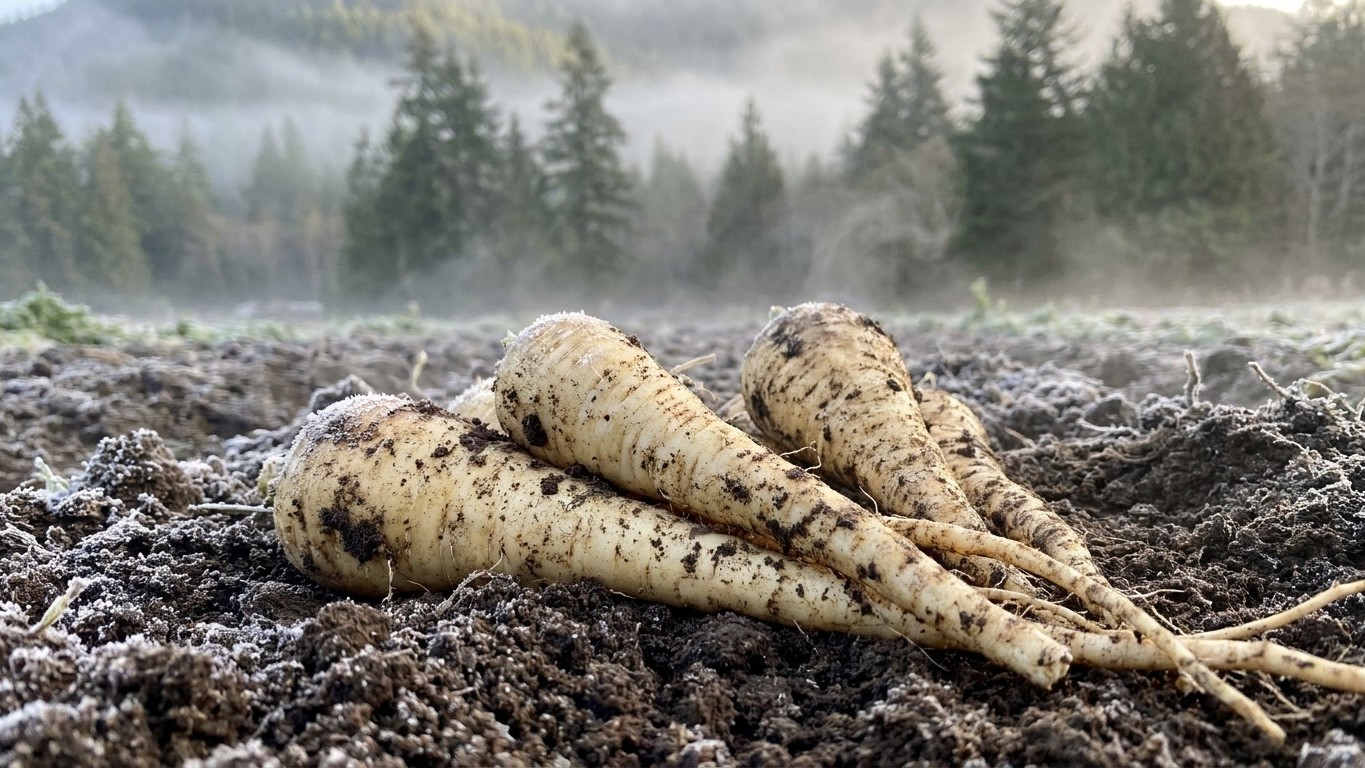
Pulling roots early and hoping they’ll sweeten in storage doesn’t work either. The starch-to-sugar conversion happens in the ground, driven by real cold exposure over several weeks, heading toward the November 14 to 27 first-frost window in the New York City area, not afterward in a root cellar.
Where to check this for your own county
Everything above comes from what the Cornell University CALS Insect Diagnostic Laboratory documents at the state level, and a statewide record doesn’t describe any single backyard. A county along Lake Ontario, a hillside garden in the Southern Tier, and a raised bed in Brooklyn don’t share the same insect pressure, soil, or frost timing, even though they’re all “New York” on a map.
The most useful next step for a specific garden is Cornell Cooperative Extension’s county office, which can take a photo or a sample of actual leaf damage and confirm whether it matches fourlined plant bug feeding or something the statewide list doesn’t cover at all. That’s a more reliable answer than matching symptoms to a description online, especially for damage that could just as easily be soil, water, or a disease not related to insects.
Frost timing is county-specific too. The March 23 to April 3 and November 14 to 27 windows referenced here are measured at a New York City station; a garden two hours north or in the Adirondacks works on a different frost calendar entirely, which shifts both the sowing date and the point at which a parsnip crop has had enough cold exposure to be worth pulling. Checking the local extension office’s frost guidance before setting a sowing date is the more useful step than adjusting these numbers on assumption.
Common questions
How long does parsnip take to germinate in a New York garden?
Fourteen to 21 days, according to Utah State University Extension. A bed that looks empty before then hasn’t failed; it just hasn’t had time.
When should parsnip seed go in the ground?
Two to three weeks before the last spring frost. In the New York City area that frost falls between March 23 and April 3, which pushes seeding into early March; gardens farther north or at higher elevation should check local frost timing rather than use that date directly.
Why do parsnips taste bland even after a full season in the ground?
They likely came out of the ground too early. The conversion from starch to sugar needs several weeks of frosty weather working on the root, not just a growing season that reached its full 100 to 120 days from seeding.
Is the fourlined plant bug actually dangerous to a parsnip crop?
Not usually. It leaves sunken spots on young leaves, which is unattractive but rarely kills an established plant or ruins the root. It’s the only insect on Cornell’s documented list for New York with any real business on a parsnip planting, and even then the damage is cosmetic more often than it’s a threat to the harvest.