
New York’s growing season gives pepper plants a workable stretch of heat, but it comes with real limits on both ends. The city sees an average of 12.2 days a year at or above 90 F, enough to stress fruit set during a July or August heat wave, while cooler nights earlier and later in the season can just as easily stall a plant before it ever sets a pod. Match variety choice and timing to those two boundaries and most pepper types, from bell to jalapeño, will ripen reliably.
The short answer

Start with the heat side of the equation, because it’s the one this data can measure precisely. The New York City reference station averages 12.2 days a year at 90 F or hotter, based on NOAA NCEI Climate Normals covering 1991 through 2020. That’s not a dramatic number compared to a desert climate, but it’s enough to matter for peppers, which are notoriously fussy about pollen viability. When daytime highs push past that 90 F line for several days running, especially with humidity locked in overnight, pepper flowers often abort before they ever become fruit. The plant isn’t dying. It’s simply protecting itself, dropping blossoms rather than spending energy on fruit it can’t properly support in that heat.
The flip side is just as important, and it’s the one gardeners tend to overlook until a fruitless plant forces the question. Pepper fruit set also fails when nights drop below 55 F, according to Utah State University Extension. Cool nighttime temperatures slow pollen development just as surely as excessive heat does, so a stretch of chilly evenings in late spring or a cold snap in early fall can leave a healthy-looking plant covered in flowers and nothing else.
Here’s where this site draws a hard line on what it can and can’t tell you. It carries daytime heat data, specifically that 12.2-day count above 90 F, for New York. It does not carry summer night minimum temperatures. That means no one can responsibly tell you, from this data alone, whether your particular yard, block, or county regularly dips below that 55 F threshold on summer nights. Urban heat pockets, low-lying valleys, and hillside gardens can all sit several degrees apart from each other on the same night, and latitude alone tells you nothing reliable about it. If cool nights are a suspect in a pepper crop that flowers heavily but sets little fruit, the fix isn’t looking up a regional average. It’s setting a min-max thermometer in the actual bed and watching it for a week or two during the suspect stretch. That single piece of homegrown data will tell you more than any statewide figure could.
When to start seed here
Working out a seed-starting date for peppers in New York is mostly arithmetic, and it holds up whether you garden in the five boroughs or two hours north in Dutchess County. The steps below walk through the logic so you can plug in your own numbers if your microclimate runs earlier or later than the reference dates.
- Find your transplant window. NOAA NCEI’s 1991-2020 climate normals put the last spring frost for New York City, using the 32 F freeze probability, between March 23 and April 3. That’s a Central Park figure from a dense urban site, and it runs earlier than what upstate New York and the Adirondacks typically see, where frost can linger well into spring and return earlier in fall. Use the local range for your county rather than the city number if you’re outside the five boroughs.
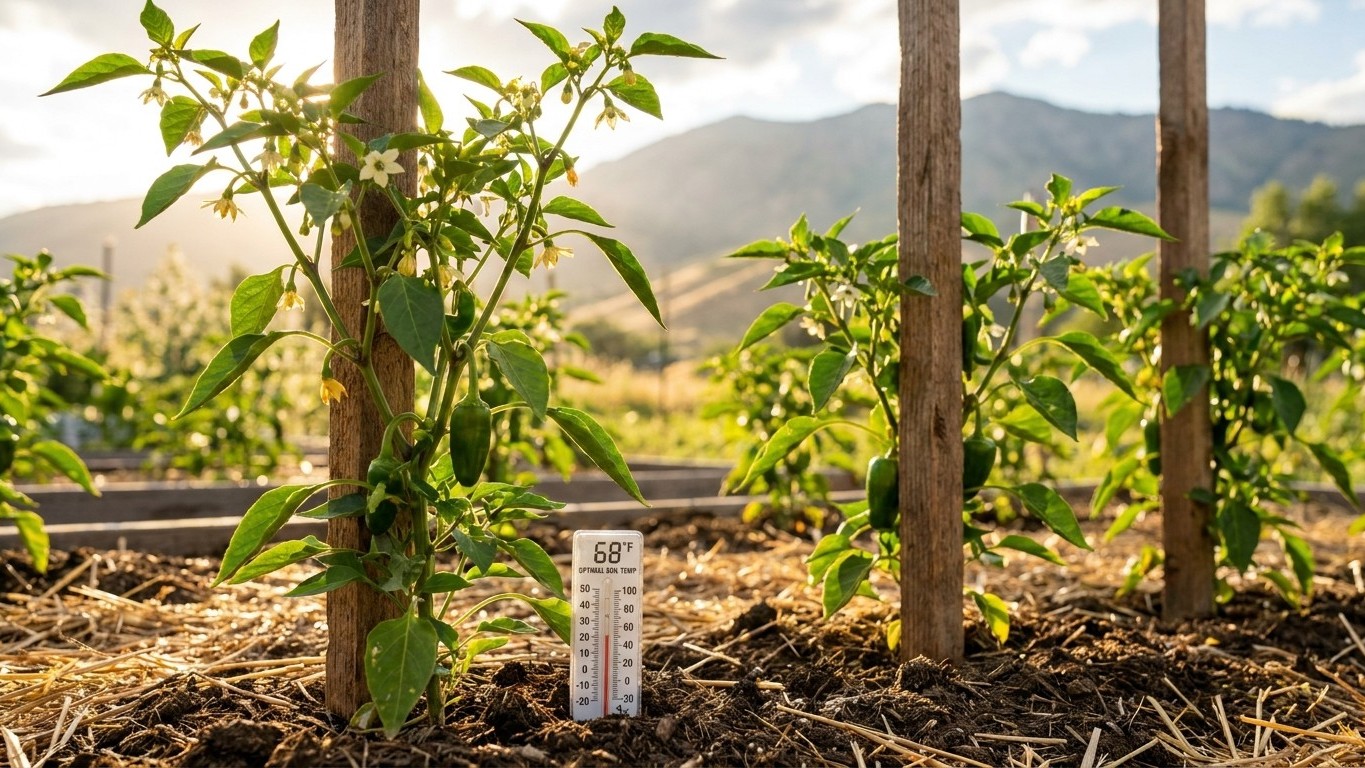
- Confirm soil temperature, not just the calendar. Frost date alone isn’t enough. Utah State University Extension advises transplanting pepper seedlings only after the soil itself reaches 60 F, since cold soil stunts root growth even on a frost-free day. A simple soil thermometer pushed a few inches into the bed, checked over several mornings, settles this faster than guessing from air temperature.
- Count backward 8 to 10 weeks from that transplant date. That’s the window Utah State University Extension recommends for starting pepper seed indoors before it goes into the ground. If your soil hits 60 F around the third week of April, for instance, working back 8 to 10 weeks lands seed-starting in mid to late February.
- Build in slack for a slow spring. Soil doesn’t warm on a fixed schedule. A wet, cloudy April can push 60 F soil back by a week or two even after the air has cleared frost risk. Starting seed at the early edge of that 8 to 10 week window, rather than the late edge, gives the seedlings time to reach transplant size without forcing them into cold ground before it’s ready.
- Track flowering, not sowing, for the countdown to harvest. Once transplants are in the ground and begin to flower, that’s the point from which fruit development is measured, not the original sowing date. Confusing the two is a common reason gardeners think their peppers are running late when they’re actually right on schedule.
What goes wrong here
Most pepper failures in a New York garden trace back to one of three predictable problems, and each has a fix that doesn’t require replacing the plant.
- Blossom drop during a heat spell or a cool snap. Flowers form, even open, and then fall off without setting fruit. This happens at both extremes: hot days that push past that 90 F mark, which New York City averages 12.2 times a year, or a run of nights that dip below 55 F. The remedy depends on which end is hitting you. In a heat spell, light afternoon shade cloth over the plants and consistent watering can reduce stress enough for the next flush of blooms to set. In a cool spell, there’s little to do except wait it out, since row covers at night can help marginally but won’t fully compensate once temperatures drop that low. Keep a simple thermometer in the bed if this keeps recurring, since this site doesn’t track night minimums for you.
- Sunscald on exposed fruit. Pale, papery patches show up on the side of peppers facing direct afternoon sun, usually after a plant has lost leaf cover from pruning, wind, or disease. The fruit isn’t rotten, just damaged skin that invites secondary rot if left in the sun. Leaving lower foliage intact rather than pruning it hard, and staking plants so they don’t flop open and expose fruit, prevents most of this before it starts.
- Blossom-end rot. A leathery, sunken brown patch develops on the bottom of the fruit, opposite the stem. It’s a calcium delivery problem tied to inconsistent watering, not a soil calcium deficiency in most home gardens. Peppers that dry out between waterings and then get soaked can’t move calcium to the fruit fast enough. Even, regular watering, mulching to hold soil moisture steady, and avoiding long dry stretches followed by heavy watering solves this in most beds without adding any amendment.
Common questions
Do all pepper varieties fail at the same heat and cold thresholds?
The published guidance from Utah State University Extension applies to peppers generally, not to a specific named variety. No source used here rates individual varieties for heat tolerance, days to maturity, or fruit size, so no such figure should be attached to a variety name.
Can I skip the indoor seed-starting step and direct-sow peppers in New York?
Direct sowing peppers outdoors in New York leaves too little season on the calendar. Between the last frost window of March 23 to April 3 in New York City and the first fall frost, direct-sown pepper seed rarely has enough warm days left to reach flowering and then finish fruit development, which is why the 8 to 10 week indoor head start matters here.
My peppers are flowering heavily but not setting fruit. Is it heat or cold?
Check the calendar first. If it’s during or right after a stretch of 90 F-plus days, heat is the likely cause, and New York City averages 12.2 such days a year. If it’s happening in a stretch of unusually cool evenings, particularly in early or late season, suspect nights under 55 F. Since this data set doesn’t track night minimums, placing a thermometer in the bed for a few nights is the only way to confirm it.
Should upstate New York gardeners use the same frost dates as New York City?
No. The March 23 to April 3 window comes from the Central Park reference station, a dense urban site that runs warmer than most of the state. Upstate New York and the Adirondacks see frost return earlier in fall and linger later in spring, so gardeners there should use their own local frost data rather than the city figure.