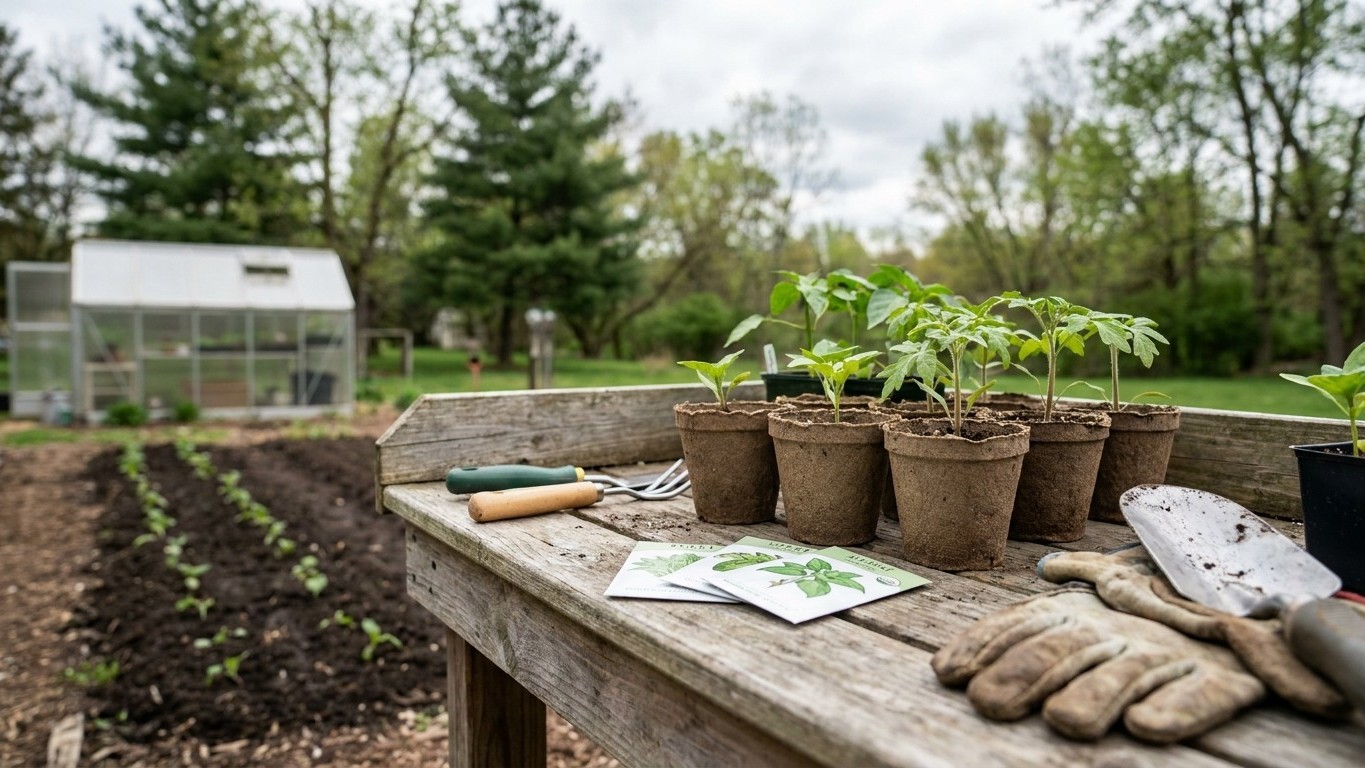

April in New York splits the garden into two speeds: cool-season crops go outdoors as soon as the soil can be worked, while tomatoes, peppers, and other warm-season plants stay under cover for weeks yet. Peas, spinach, lettuce, carrots, beets, and onion sets are the safe bets. The deciding factor isn’t the date on the calendar, it’s whether the ground has actually warmed up and dried out enough to dig.
What goes in the ground in April

Soil temperature decides more than the calendar does, and in April the gap between the two is often wide across New York. In New York City, the last spring frost falls between March 23 and April 3, according to NOAA’s 1991-2020 climate normals for Central Park. That means early April in the city sits right at the tail end of frost risk, not solidly past it. Upstate and in the Adirondacks, where the USDA Plant Hardiness Zone Map puts parts of the state as cold as zone 3b against the state’s warmer pockets near zone 7b, frost risk drags on for weeks longer than the Central Park window suggests. That upstate frost date isn’t published here, so the honest move is to treat the NYC figure as a downstate reference point only, and check a local source for anywhere north or inland.
What that means in practice: hardy crops that shrug off a light frost can go into workable soil now, while anything that dies at 32°F needs to wait. Garlic and shallots planted the previous fall keep growing through this stretch and need nothing more than a weed check. Bare-root fruit trees, cane berries, and dormant perennials can still go in while they’re leafless, since they’re not actively growing yet and won’t be shocked by a cold night.
| Category | Examples | April status |
|---|---|---|
| Frost-hardy direct sow | Peas, spinach, lettuce, radishes, carrots, beets | Safe once soil is workable |
| Alliums and bulbs | Onion sets, shallots, seed potatoes (late April) | Safe, cold tolerant |
| Hardened-off transplants | Cabbage, broccoli, kale seedlings | Safe with a cold frame or row cover on hand |
| Warm-season crops | Tomatoes, peppers, beans, squash, cucumbers | Gamble, soil is still too cold |
Low tunnels and cold frames buy an extra two to three weeks over open ground, which matters most for gardeners north of the city who are watching a much later frost window than Central Park’s.
What to start under cover
The right start date for anything indoors isn’t a fixed square on the calendar, it’s a count backward from your local last frost. For a New York City gardener working from the March 23 to April 3 window, tomatoes and peppers started six to eight weeks ahead should already be several weeks along by April, not just going into the tray. If that timing was missed, starting them now still works, it just pushes the harvest later into the season.
Squash, cucumbers, and melons need less lead time, generally three to four weeks before the last frost, which puts an early-to-mid April sowing right on schedule for downstate gardeners aiming to transplant in May. Anyone gardening upstate or at higher elevation needs to add weeks to every one of these numbers, since the local frost date runs later than the city’s and isn’t listed in the figures available here; a county extension office is the fastest way to get that number.
The two ways this goes wrong are almost opposites. Start too early and seedlings outgrow their trays before the soil is ready outside, turning into leggy, rootbound plants that sulk for weeks after transplanting. Start too late, especially with slow growers like peppers or eggplant, and the plant never catches up to a full growing season, cutting the eventual harvest short. Matching the sowing date to the actual local frost window, not a generic one, is what keeps a seedling tray from becoming either problem.
What is ready to pick
April harvests in New York lean heavily on what survived winter rather than anything freshly planted. Kale and leeks left in the ground under mulch or snow cover often taste better after a hard winter, since cold pushes sugars into the leaves. Spinach and mâche that were sown the previous fall and tucked under a cold frame or row cover are frequently the first fresh green of the season, ready to cut as soon as the cover comes off on a mild day.
Indoors, sprouts and microgreens fill the gap for households wanting something fresh weekly without waiting on the weather. A tray of pea shoots or radish microgreens is ready in one to two weeks from seed, regardless of what’s happening outside.
This is also the month to walk the root cellar or the basement shelf and be honest about what’s left. Potatoes that have started sprouting eyes, onions gone soft at the neck, and winter squash with a sunken or wrinkled patch on the skin are all on borrowed time. Use them first, and compost anything with soft rot rather than risk it spreading to the rest of the stored crop. In the warmer parts of the state, rhubarb crowns are often the first thing to send up new stalks this month, worth checking every few days once the ground has thawed.
The jobs that matter this month
April rewards gardeners who get ahead of growth rather than react to it. Soil prep tops the list: working beds while they’re workable but not soaking wet protects the structure of the soil, and turning in compost now gives it weeks to integrate before seedlings go in. Digging or tilling wet clay-heavy soil, which is common on a lot of New York ground after snowmelt, compacts it into something closer to concrete than garden bed.
Dormant pruning of fruit trees and cane berries has a hard deadline: it needs to happen before buds swell and break, which is happening or about to happen across most of the state by this point. Pruning after growth starts costs the tree stored energy it needed for the season’s first push. Ordering seed, if it hasn’t happened yet, is also a now-or-never task, since the popular varieties of tomatoes, peppers, and heirloom vegetables sell out from seed companies earlier every season.
A few other jobs pay off specifically because of the timing: staking and trellis prep for peas and early climbers before they sprawl and tangle, a soil test if beds haven’t been checked in a couple of seasons, and a pass through the tool shed to sharpen pruners and clean anything that touched diseased wood last year. Fencing and raised bed frames that took winter damage should get repaired now, before they’re loaded with plants and harder to fix without disturbing roots.
What not to do in April
The most common mistake this month is planting by air temperature instead of soil temperature. A run of 70-degree afternoons feels like permission to put tomatoes or peppers outside, but the soil several inches down is still cold from winter, and a warm-season transplant dropped into it simply stalls, sometimes for weeks, sometimes permanently. Wait for the soil itself to warm, not just the air.
Pulling mulch and row covers off perennials too early after a mild stretch is the second trap. A week of warm weather can trigger new growth on strawberries, asparagus, or perennial herbs, and then a frost within the March 23 to April 3 window, or later upstate, can burn that tender growth right back. Leave protection in place a little longer than feels necessary, especially north of the city.
Nitrogen-heavy fertilizer applied too early is the third classic error. Feeding dormant or barely-growing plants with high nitrogen pushes soft, leafy growth before the plant has roots or a season ahead of it to support that growth, leaving it weak and more attractive to pests. Wait until active growth is visibly underway before feeding, and favor a balanced or lower-nitrogen amendment for anything planted this early.
Checking this against your own county
A statewide month is a starting point, not an instruction. New York’s USDA hardiness zones span 3b to 7b, and that range alone tells you elevation, lake effect near Lake Erie and Lake Ontario, and simple latitude can shift planting windows by weeks between the northern counties and Long Island. The frost dates cited here are for New York City specifically, and they don’t hold once you’re upstate or at higher elevation.
Cornell Cooperative Extension is the most reliable place to get a county-specific frost date and planting calendar before finalizing any date on this page: https://cals.cornell.edu/cornell-cooperative-extension.
Common questions
Is it too early to plant tomatoes outside in New York in April?
Yes, for nearly all of the state. Tomatoes need soil that’s reliably warm, well past the last frost window, which runs March 23 to April 3 in New York City and later upstate. April is for hardening off indoor-started tomato seedlings, not transplanting them.
Can I still plant garlic in April in New York?
Garlic is best planted the previous fall for full-size bulbs, but if fall planting was missed, garlic set in early spring can still produce, usually as smaller bulbs or green garlic harvested young.
What vegetables can handle a late frost in New York?
Peas, spinach, lettuce, kale, and onion sets all tolerate a light frost and are the safest direct-sow choices while the last frost window is still in play.
When should warm-season seedlings go outside in New York?
Not until well after the local last frost date has passed and soil has warmed, which for New York City means comfortably after the March 23 to April 3 window; upstate gardeners should confirm their own later date through Cornell Cooperative Extension before transplanting.