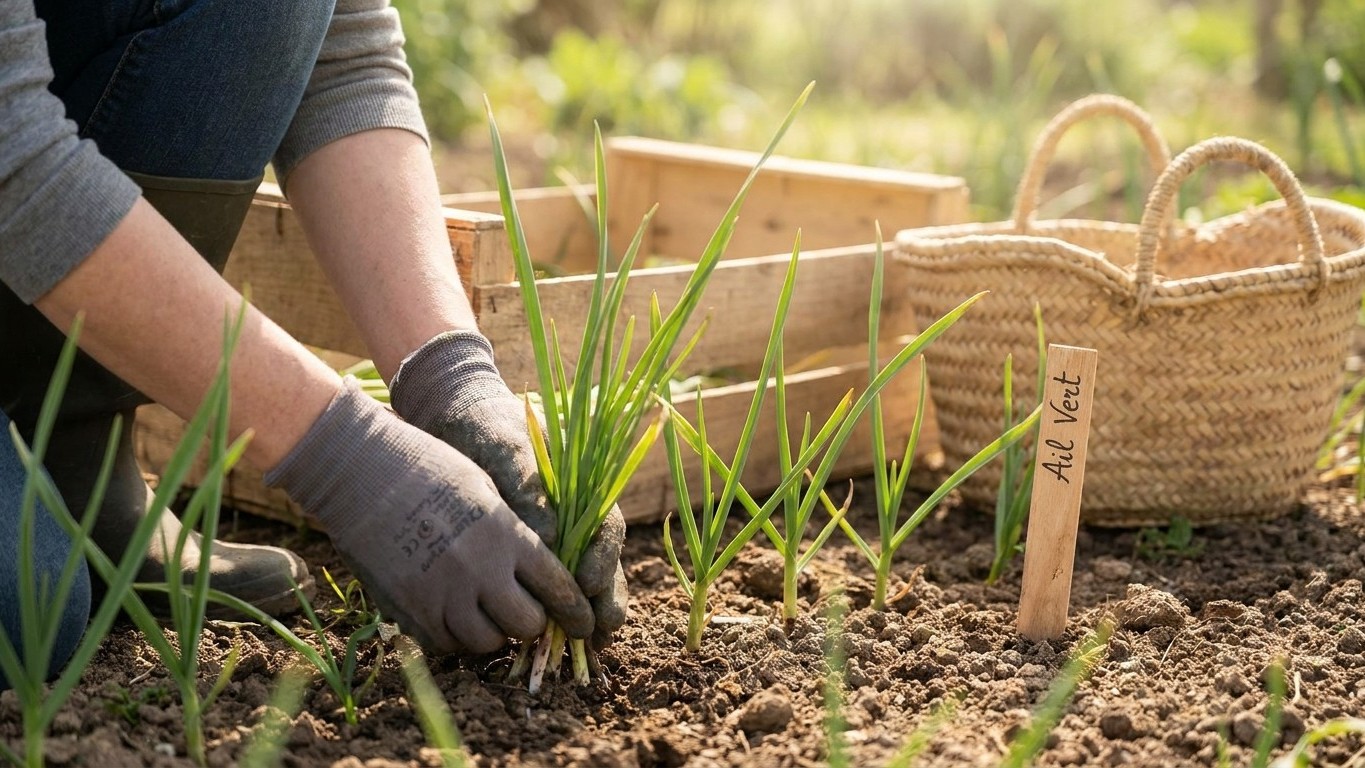

Green garlic is simply garlic pulled before the bulb has divided into cloves, at the stage when the plant still looks like a fat scallion with slender green leaves. The flavor is milder and grassier than cured garlic, with none of the sharp bite that develops as the bulb matures. To check if a plant is ready, pull one and look at the base: if it’s a single unswollen or barely swollen stem with no papery skin, it’s green garlic.
Why this matters for garlic

Pull green garlic at the wrong stage and you lose one of two things. Pull too early, before the plant has built any real stem, and you get a wisp of leaf with almost no flavor payoff for the effort. Pull too late and you’ve lost green garlic altogether, because the bulb has already divided into cloves and started forming the papery wrapper that means it’s now just a small, undercured head of regular garlic.
The bigger risk is thinning too heavily from a bed you’re also counting on for a full-size crop later in the season. Garlic occupies the same ground for roughly nine months, from planting through to full bulb maturity, and every plant you pull as green garlic in spring is a plant that won’t be there to cure and store in summer. That tradeoff doesn’t show up as a problem until harvest day, when a grower who thinned too enthusiastically in April finds a much shorter row of curing bulbs than they expected. If you’re working from a bed you prepared with this in mind, see Soil for Garlic: What to Add in Autumn, and What to Leave Out for how much room a full crop actually needs.
The upside is that green garlic harvest costs you almost nothing if you plan for it. A bed planted a bit more densely than a pure bulb crop requires gives you a spring thinning to eat while the remaining plants space out and bulb up normally.
When to do it
There’s no calendar date for this, because it’s tied to growth stage, not the month. Green garlic is ready any time after the shoots have several true leaves and a visible stem, and before the bulb has started to divide and firm up into cloves. That window opens once the plant resumes active growth in spring and closes as the days lengthen and warm, which is also roughly when hardneck varieties send up a scape.
Sources disagree on how long that window actually lasts. Some extension guidance treats green garlic as anything pulled up to about a third of the way through the growing season, judged by leaf count and stem thickness rather than weeks on a calendar. Other growers treat it as a narrow spring-only harvest that ends the moment they see the first scape curl on a hardneck plant, since scape formation is a reliable visual cue that bulbing has begun in earnest.
The safest approach is to pull and check one plant before you commit to harvesting a whole row. Slice the base lengthwise. If you see the faint outline of individual cloves starting to separate, you’re at the very end of the green garlic window and should either harvest immediately or leave the rest to mature as a full bulb crop. If the base is uniform and unsegmented, you still have time.
How to do it
Green garlic harvest is really a thinning operation, and the goal is to take out the weakest or most crowded plants first so the ones left behind have room to bulb properly.
Thinning the bed
Walk the row and look for plants that are stunted, growing in a tight cluster, or clearly outcompeted by their neighbors. Loosen the soil beside the plant with a hand trowel or fork rather than yanking straight up, since garlic roots hold on tighter than you’d expect and a hard pull can snap the stem and leave the bulb base in the ground. Lever gently under the base and lift the whole plant, roots and all.
Take no more than a fraction of the row at any one thinning pass if the bed is meant to also produce a full crop. This is where the earlier tradeoff matters most: every plant pulled here is one that won’t be there in summer, so thin in stages and reassess rather than clearing a long stretch in one go. If you planted this bed following the general spacing guidance in Growing Garlic, you’ll already have a sense of how tightly the cloves went in and how much thinning the row can absorb without leaving obvious gaps.
After you pull it
Once out of the ground, green garlic needs almost none of the curing that a mature bulb requires. Trim the roots close to the base, rinse off any clinging soil, and trim the top of the leaves if they’re ragged or yellowing at the tip. Unlike cured garlic, there’s no drying period. It’s meant to be used fresh, within a few days, and stored the way you’d store scallions or spring onions: loosely wrapped and refrigerated.
Cooking and storing the same day
The whole plant is usable, not just the swollen base. Slice the white and pale green portions the way you would a leek or scallion, and use the tender upper leaves the way you’d use chives. The flavor is much softer than cured garlic, which is why green garlic works well raw in dressings or lightly cooked into soft scrambled eggs, where a clove of mature garlic would overpower the dish.
| Feature | Green garlic | Scallion | Cured garlic bulb |
|---|---|---|---|
| Base | Slim, unswollen or barely swollen white stem | Slim white bulb, no clove division | Papery-skinned bulb divided into cloves |
| Flavor | Mild, grassy, garlicky | Mild, oniony | Sharp, pungent |
| Storage life | A few days, refrigerated | About a week, refrigerated | Months, cured and stored dry |
| Harvest stage | Before bulb divides into cloves | Any time before bulbing | After tops die back and skins set |
What goes wrong
The most common mistake is treating green garlic harvest as free thinning with no cost to the summer crop. Pull a third of a row without thinking about it and you won’t notice the mistake until the bulbs you left behind come in smaller than expected, because the row was still more crowded than it should have been for the remaining plants to size up properly. That problem is invisible in spring and only shows up at full harvest, months later.
A second failure is waiting too long and getting neither green garlic nor a good cured bulb. Plants pulled right at the edge of the window, after the base has started to firm and segment but before it’s fully cured, are tough, fibrous, and disappointing both raw and cooked. If you’re unsure, slice one open before pulling the rest.
A third issue that trips up new growers is mistaking pest or disease damage for normal early growth. Yellowing or streaked leaves in spring can be a sign of thrips or other early-season pests rather than a garlic being simply young, and it’s worth comparing what you’re seeing against Garlic Pests: The Few That Matter, and What They Look Like before you decide the plant is fine to eat or leave in the ground.
Finally, growers sometimes confuse volunteer garlic, plants that sprouted from a missed clove the previous season and are scattered rather than in a row, with the crop they meant to thin. Volunteers are fine to eat as green garlic too, but pulling them at random can leave odd gaps in a bed you’re trying to manage deliberately.
How this changes across the country
The biology behind green garlic doesn’t change by region, but the window in which it’s available does, because it’s tied to how early and how fast the plant resumes growth after winter.
In places with long, hard winters, such as much of Minnesota, Vermont, or the interior of the Mountain West, garlic spends more of the year dormant or barely growing, and the green garlic window opens later relative to the calendar year but tends to be compressed once it starts, since warm weather arrives quickly and pushes plants toward bulbing fast.
In milder winter regions, such as coastal California, the Gulf Coast states, or much of the Southeast, garlic often keeps growing slowly through winter with little true dormancy, and the green garlic window can open earlier in the year and stretch out longer, giving growers more flexibility about when to thin.
Because these differences depend on local frost timing and how fast spring warms up, check the current guidance from your state’s cooperative extension service or NOAA’s regional climate data for how garlic behaves in your specific area rather than relying on a national rule of thumb. The stage-based checks described above, leaf count, stem thickness, and slicing the base to check for clove division, work the same everywhere regardless of when the calendar says spring starts where you live.
Common questions
Will pulling green garlic hurt my main crop?
It can, if you thin too heavily. Removing a small number of the weakest or most crowded plants from a bed usually helps the rest size up, but stripping a large section of the row reduces how many bulbs you’ll have to cure later in the season.
Can I use the scapes the same way as green garlic?
No, scapes are a different part of the plant and come later, once a hardneck variety has already started bulbing. Green garlic is the whole young plant pulled before that stage. If you see a scape forming, the plant next to it has likely moved past the green garlic window.
How is green garlic different from the spring onions at the store?
They look alike but aren’t related in flavor. Green garlic has flatter, more solid leaves than the hollow, round leaves of a true onion or scallion, and it carries a distinct garlicky taste even before the bulb has formed, where a scallion tastes like a mild onion throughout.
Can I grow green garlic from a grocery store clove?
Yes, since it’s being pulled young rather than left to cure and store, a supermarket clove works fine for this purpose even if it wouldn’t be your first choice for a full season’s crop. Just know that store garlic is sometimes treated to slow sprouting, which can make it slower to get going than seed garlic sold specifically for planting.