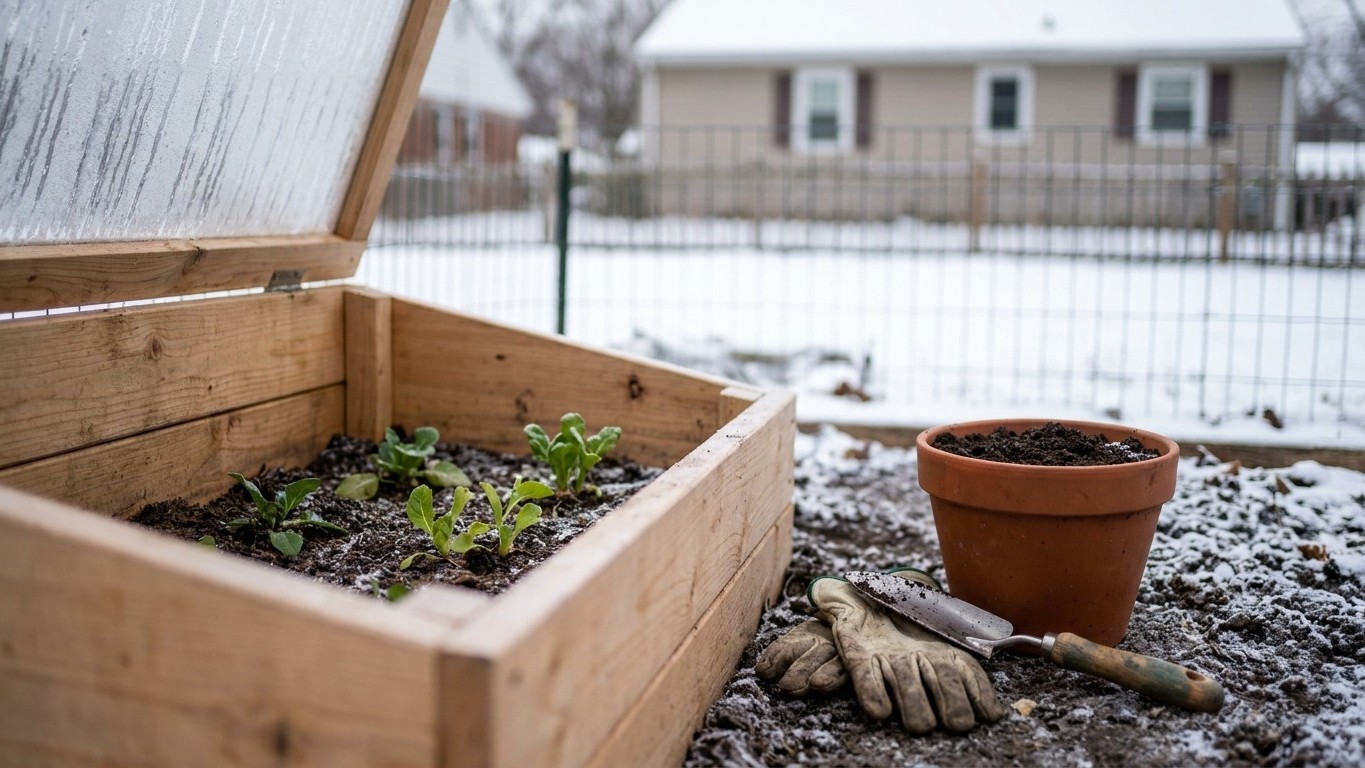

In January, open ground planting is off the table across nearly all of New York. Soil is frozen or saturated, and the state sits three to four months from its last frost. What actually happens this month is indoor seed starting for the earliest long-season crops, dormant pruning, forced rhubarb and chicory, and the seed-catalog decisions that shape the whole growing season ahead.
What goes in the ground in January

Across most of New York, nothing goes into open ground this month, and there is no point pretending otherwise. The state spans USDA Hardiness Zones 3b to 7b, and even in the milder pockets, soil is frozen solid or locked under snow. New York City’s last spring frost typically falls between March 23 and April 3, and upstate counties run weeks to a month behind that. January sits well outside any usable planting window for direct sowing or transplanting.
That does not mean the garden is idle. In the mildest coastal parts of the state, Long Island and the lower Hudson Valley in particular, a stretch of unfrozen soil can occasionally still take garlic cloves or shallot sets if the fall planting window was missed and the ground has not locked up. This is the exception, not the plan, and it depends entirely on that year’s weather rather than the calendar.
Cold frames and low tunnels installed the previous fall keep working through January, protecting hardy greens that are already established rather than hosting new seed. Bare-root fruit trees and cane fruit are best held off until the ground opens up closer to spring; planting them into frozen or waterlogged soil damages roots and wastes stock.
The one true “planting” job available to everyone this month happens indoors: forcing rhubarb crowns and witloof chicory roots in a dark, warm space produces tender stalks and chicons within a few weeks, giving fresh homegrown food while the outdoor garden sleeps.
| Zone | January soil condition | What’s realistically possible |
|---|---|---|
| 3b-4b (Adirondacks, North Country) | Frozen solid, often under deep snow | Nothing outdoors; indoor forcing and seed starting only |
| 5-6 (most of upstate) | Frozen, intermittent thaw rare | Cold frame maintenance only; no new sowing |
| 7a-7b (NYC, Long Island, lower Hudson) | Usually frozen, occasional workable spells | Late garlic/shallots if ground opens; cold frame greens |
What to start under cover
Seed starting math works backward from the last frost, not forward from a date on a calendar. Onions, leeks, celery, and celeriac need 10 to 12 weeks indoors before they go outside, and they tolerate an early start better than most crops. For a New York City grower working from a last-frost window of March 23 to April 3, counting back 10 to 12 weeks lands squarely in January, which is why this month is when serious onion and leek growers get their trays going under lights.
Growers farther upstate, where frost lingers into May in the coldest zones, have more room and less urgency. Starting these same crops in January still works, since it simply buys extra margin before transplant rather than risking a rootbound seedling.
Peppers are the other January candidate, needing 8 to 10 weeks before they can safely go outside and germinating slowly in cool conditions. Starting them now, even for NYC’s earlier frost date, keeps the timeline realistic without pushing transplant into cold soil.
The two ways this goes wrong are worth naming plainly. Start too early, and by the time the ground and air are actually warm enough to plant out, the seedlings are leggy, rootbound in their cells, and stressed before they ever hit soil. Start too late, particularly with onions and leeks, and the plants never bulk up enough before the season’s heat and daylength shift against them. January is the sweet spot for exactly these two crop families, and for little else.
What is ready to pick
Very little comes out of a New York garden in January, and outdoors the honest answer for most of the state is nothing at all. Where snow cover is light, overwintered kale, leeks, and Brussels sprouts left in the ground can still be harvested, since hard frost sweetens rather than ruins them. Once snow buries the bed deep enough, digging becomes impractical and the harvest waits for a thaw.
Cold frames change the picture. Spinach, mâche, and claytonia sown the previous fall keep producing small harvests through January in a well-sited frame, especially in the milder southern parts of the state.
Indoors is where most January food actually comes from. Sprouts and microgreens on a windowsill or under lights are ready within a week or two of sowing, and forced witloof chicory, grown in darkness from dormant roots, produces tight pale chicons in three to four weeks.
Stored crops need active checking this month, not just storage. Squash with a soft spot near the stem, potatoes that have started sprouting eyes, and onions gone soft at the neck should come out of storage and get used first, before they spread rot to the rest of the bin.
The jobs that matter this month
January carries real weight for the season ahead, even with nothing growing outdoors. Dormant pruning of apple and pear trees, along with raspberry and blackberry canes, should happen before buds swell, since cuts made once sap is moving stress the plant and invite disease. This is also the window to remove any cane or branch that broke or split under snow load before it tears further.
Ordering seed now, rather than waiting until the ground thaws, matters more than it sounds. Popular onion, pepper, and tomato varieties routinely sell out by late winter, and a grower who waits until March is choosing from what’s left, not what they actually wanted.
Soil testing fits naturally into January’s slower pace. A sample sent through Cornell Cooperative Extension gives time to get results and order lime or amendments before the ground is workable, instead of guessing after planting season has already started.
Planning next season’s crop rotation on paper, while beds are still frozen, costs nothing but time and prevents the same disease-prone family from landing in the same soil two years running. Turning compost, if it hasn’t frozen into a solid block, keeps the pile breaking down rather than stalling until spring.
Cleaning and sharpening tools, repairing raised bed frames and fencing damaged by frost heave or a fallen branch, and checking stored crops weekly for the rot mentioned above round out a list that has nothing to do with a garden that “isn’t doing anything.” It’s doing plenty; it’s just not doing it outside.
What not to do in January
The classic January mistake is starting warm-season crops, tomatoes, cucumbers, squash, far too early because a seed catalog arrived and cabin fever set in. These crops need only 5 to 8 weeks indoors before transplant, and starting them in January for a last frost that doesn’t arrive until late March or beyond means weeks of leggy, overgrown seedlings sitting under lights with nowhere to go.
A mild stretch in the middle of winter tempts gardeners to pull mulch off beds or open up cold frames, assuming spring has arrived early. It hasn’t. New York’s freeze-thaw pattern means a 50-degree afternoon can be followed within days by a hard freeze, and any growth that got encouraged by the warm spell takes the hit when temperatures drop back.
Feeding nitrogen to anything right now works against the plant rather than for it. Dormant trees, shrubs, and any overwintering crops aren’t taking up nutrients in any meaningful way in frozen or near-frozen soil, so the fertilizer either sits unused or leaches away with snowmelt before roots are active enough to use it.
Working or tilling soil that’s frozen, half-thawed, or waterlogged does lasting damage to its structure, compacting what should be loose and workable once real spring arrives. If the ground squelches or crunches, it’s not ready, no matter how tempting a stray warm day makes it look.
Checking this against your own county
A single January page for the whole state is a starting point, not a set of instructions to follow blindly. New York’s range from Zone 3b to 7b means elevation in the Adirondacks, lake effect near Buffalo and Rochester, and the basic north-south divide can shift frost windows by weeks in either direction from the New York City dates cited here. A garden in the Finger Lakes or the Tug Hill Plateau operates on a very different clock than one on Long Island.
Cornell Cooperative Extension maintains county-level offices and planting guidance built for exactly this kind of local variation, and it’s worth checking their county resources against anything read here before committing seed or money to a date.
Common questions
Can I plant garlic in New York in January?
Garlic is best planted in fall, but in the mildest coastal areas, like Long Island or the lower Hudson Valley, cloves can occasionally still go in during January if the ground hasn’t fully frozen. Elsewhere in the state, the soil is locked up and garlic planting has to wait until it thaws.
What vegetables can I start indoors in January in New York?
Onions, leeks, celery, and celeriac are the main candidates, since they need 10 to 12 weeks indoors before transplant and this timing lines up with New York’s frost windows. Peppers, needing 8 to 10 weeks, can also go in toward the end of the month.
Is it too early to start tomato seeds in January?
For most of New York, yes. Tomatoes only need 5 to 8 weeks indoors before transplant, and with the last frost not arriving until late March at the earliest in New York City, and later upstate, a January start produces overgrown, stressed seedlings by planting time.
What can I harvest from a New York garden in January?
Outdoors, only overwintered crops like kale, leeks, and Brussels sprouts under light snow cover, plus whatever survives in a cold frame. Most January harvests actually come from indoor sprouts, microgreens, and forced rhubarb or chicory rather than the garden itself.