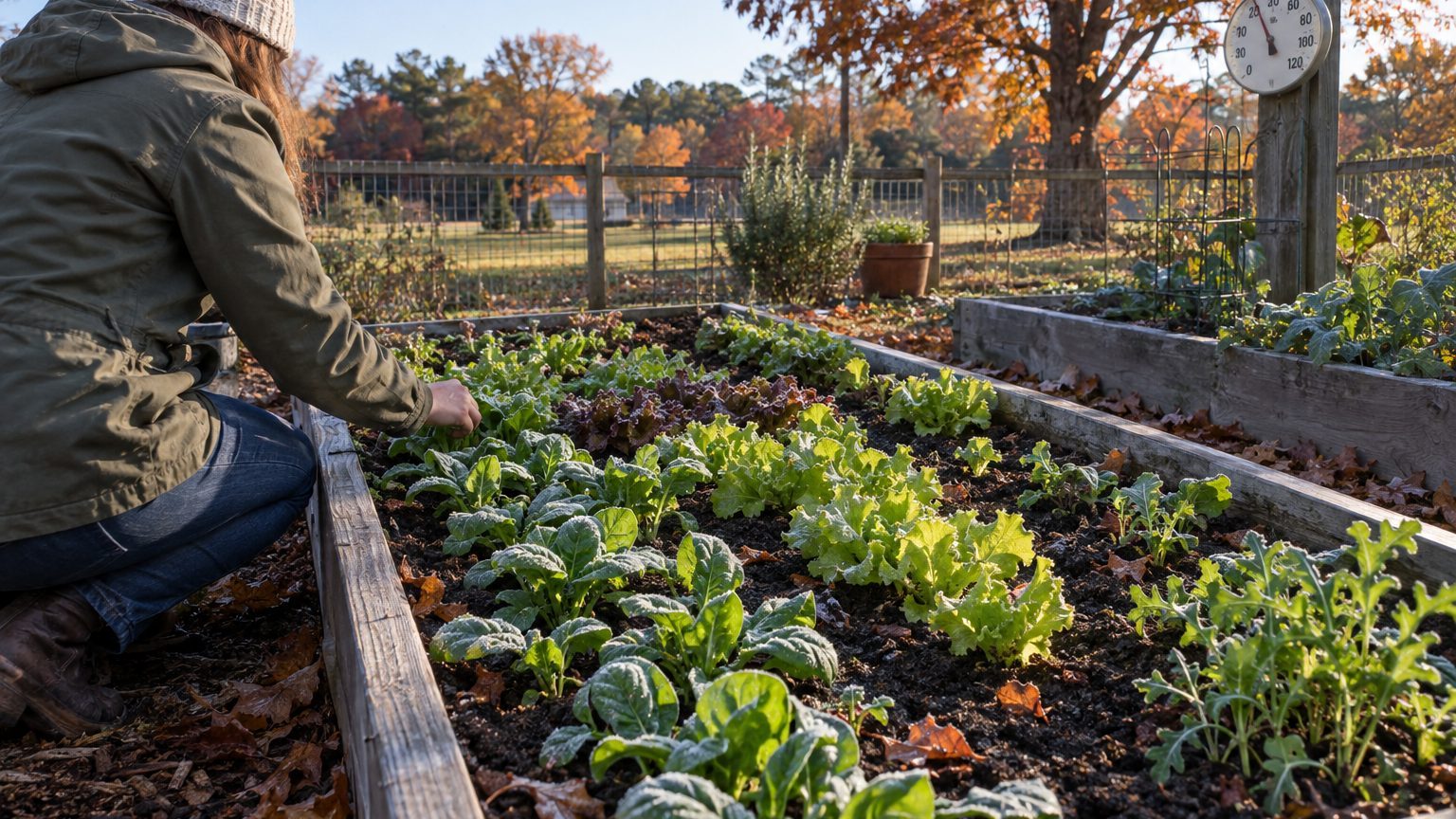

In New York City, sow winter salads from late summer into early fall, and finish outdoor sowing well before the first fall frost, which arrives between November 14 and November 27. Upstate New York and the Adirondacks run earlier, so the same crops go in weeks sooner there. The dates below describe New York City, not the whole state.
The short answer for New York
Sow hardy winter salad greens between late August and early October, then stop sowing outdoors and switch to covered beds. The New York City reference station (Central Park) puts the last spring frost between March 23 and April 3 and the first fall frost between November 14 and November 27. Those are NOAA 1991-2020 normals, and each date marks a probability of a 32°F freeze. The dates in each pair mark the band in which the chance of that freeze runs from 30 to 70 percent.
How do the frost dates shape the sowing window?
Fall growth slows as days shorten, long before the first hard freeze arrives. A seedling sown in October may sit nearly the same size in December as it did the day it sprouted. So the aim is to have plants close to full size by the time the first fall frost window opens, then let them hold in the cold and be harvested leaf by leaf. Counting back from November 14 to November 27, the window opens in late summer for the slower crops and closes in early October for outdoor sowing.
Winter salads are a fall-sown, early-spring-harvested crop here. Once the last spring frost window passes, overwintered greens head toward flowering, and the bed is ready for the next crop.
When do you sow each type of winter salad?
Sorting by speed is the easiest way to plan. The slow, heavy crops go in first, and the quick baby-leaf crops go in last.
- Late August to mid-September: loose-leaf and small-heading lettuces, plus any chicory or endive you want to size up before the cold.
- September to early October: spinach, mâche (corn salad), and claytonia. These tolerate cold well and mostly need to be established before growth stops.
- Early to mid-October, under cover: arugula, mizuna, and other quick baby-leaf greens in a cold frame or low tunnel.
The coldest month at the reference station has a mean daily minimum of 27.9°F. That is a typical night, not the record low, and it sits below freezing. Hardy greens ride out nights like that with little more than a cover on top. The variety list in The Best Winter Salads for New York goes crop by crop, and Winter Salads for New York Gardens covers the wider setup.
What will not work here

Sowing in late October with no cover is the most common failure. A seed that sprouts that late makes a few small leaves, then sits through the darkest weeks with almost no growth. By the time the days lengthen, the plant has little root and little leaf to restart from.
Why do late-summer sowings fail in hot soil?
The opposite mistake comes from eagerness. Lettuce seed sown in a bed that still holds the summer heat often fails to sprout, or sprouts patchily, then bolts early. Soil under mulch or against a south wall can stay warm into September. If the soil feels hot when you press your palm into it at midday, wait a few days or shade the row with a board or burlap until it cools.
What goes wrong with close spacing in a damp fall?
Fall in New York is often damp, with long stretches of fog, dew, and slow-drying leaves. Seedlings sown thick enough to form a continuous canopy hold moisture against their stems, which invites damping off, gray mold, and downy mildew. A thin stand with air moving through it holds up better, even though a crowded row looks more promising in September. Thinning early pays off all winter.
Which crops stall in the shorter seasons upstate?
Frost arrives far earlier upstate and in the Adirondacks, and those regions have a much shorter stretch of usable growth. Heading chicories, large-hearted lettuces, and anything that needs a long run before the cold have no time to size up there if sown on the New York City schedule. Mâche, claytonia, and spinach sown early enough to establish are far more reliable. In the coldest parts of the state, hardy greens left unprotected may not survive the winter at all. They need a tunnel or cold frame, and a thick layer of snow can actually help by insulating the row.
What changes across New York
New York has no single answer. The USDA Plant Hardiness Zone Map (2023 edition, built on 1991-2020 normals) lists the state’s zones from 3b to 7b. That spread is wide, and the map is based on one variable, the average annual extreme minimum temperature. Coastal and city sites sit at the warm end of it, and the high Adirondacks sit at the cold end.
The practical rule is that colder places sow earlier and protect more. The table lays out the shifts in plain terms.
| Where you garden | Sowing shift | What to add |
|---|---|---|
| New York City and the coast | The window described above, late summer into early October | A light cover for the coldest nights |
| Hudson Valley and lower elevations inland | Start a little earlier, finish outdoor sowing sooner | Row cover, plus a cold frame for lettuce |
| Upstate, Finger Lakes, and the Southern Tier | Earlier again, with the slow crops going in by late summer | A cold frame or low tunnel for anything you want to harvest in midwinter |
| North Country and the Adirondacks | Earliest of all, with frost arriving far earlier than in the city | A tunnel or cold frame as standard, and a hardy crop list limited to the toughest greens |
Elevation matters as much as latitude. A garden in a valley bottom collects cold air on clear nights and frosts earlier than one on a slope a few hundred feet higher, even a few miles away. A reader in the north or at altitude should shift every date earlier and expect to rely more on covers. To see which zone your own garden falls in, use the USDA zone map and look up your address rather than guessing from the state average.
Where to check this for your own county
A county recommendation beats a state one, and this is a state-level guide. Frost dates, soil, and elevation vary enough from county to county that a single statewide calendar can only be a starting point.
The best next stop is Cornell Cooperative Extension, the land-grant extension service for New York. Each county has its own local office, staffed by horticulture educators and often by trained Master Gardener volunteers who know your area’s microclimates. When you reach your county’s page, look for two things:
- A local planting calendar, with sowing and transplanting dates set for your county’s frost dates rather than the statewide average.
- The varieties trialled in your county, meaning the lettuces, spinach, and greens that have actually been grown through a local winter.
If a calendar for winter salads specifically isn’t posted, call or email the office. They can usually say which sowing dates have worked for local growers, and what the last two winters did to unprotected beds.
Checking this against your own garden
Your own observations outrank every date here. A calendar tells you what usually happens, but the garden tells you what is happening this season, and three signs are enough to read it without any equipment.
What does soil warmth by feel tell you?
Press your hand flat into the bed at midday in late August or September. If the soil feels hot, lettuce and spinach seed will struggle, so wait. If it feels pleasantly warm or cool, sow. Test a few spots, such as a sheltered corner by a wall and an open bed. The difference between them shows you where seeds will sprout first in fall and where the soil will cool first as winter sets in.
What do the first true leaves show?
The first pair of leaves on a seedling are seed leaves. The true leaves that follow show that the roots are working and the plant is established. Watch how long that takes. If seedlings sown in September have true leaves before the nights turn cold, they have enough of a start to overwinter. If they are still bare when the first frost window opens, your site is slower than the average and next year’s sowing should move earlier.
When do male flowers appear on spinach?
Spinach plants are either male or female, and the male ones flower first as spring days lengthen. When the first flowering stalks show, the bed’s harvest is ending. If that happens in your garden well before the late March window, the bed is warm, sheltered, or sunny. If it comes later, the site is cool, and you can sow a bit later in fall without losing the harvest.
Common questions
Is it too late to sow winter salads in New York in November?
For outdoor sowing in an open bed, yes, in most of the state. The first fall frost reaches New York City between November 14 and November 27, and upstate it arrives earlier. A cold frame or low tunnel can stretch the window a little for baby greens, but germination and growth are slow.
When is the last spring frost in New York City?
The Central Park normals give a range of March 23 to April 3. Those dates mark the band in which the chance of a 32°F freeze runs from 30 to 70 percent, so a frost after that range is still possible. Upstate dates fall later.
Which winter salads are the hardiest?
Mâche, claytonia, and spinach are among the most cold-tolerant. Quick baby-leaf greens like arugula and mizuna do well in a cold frame, and lettuce generally needs more shelter. The full list is in The Best Winter Salads for New York.
Do I need a cold frame in New York?
In New York City, hardy greens can often get by with a light row cover, since the coldest month averages a daily minimum of 27.9°F. In colder zones upstate and in the Adirondacks, a cold frame or tunnel is the safer choice, especially for lettuce and anything you plan to harvest in midwinter.