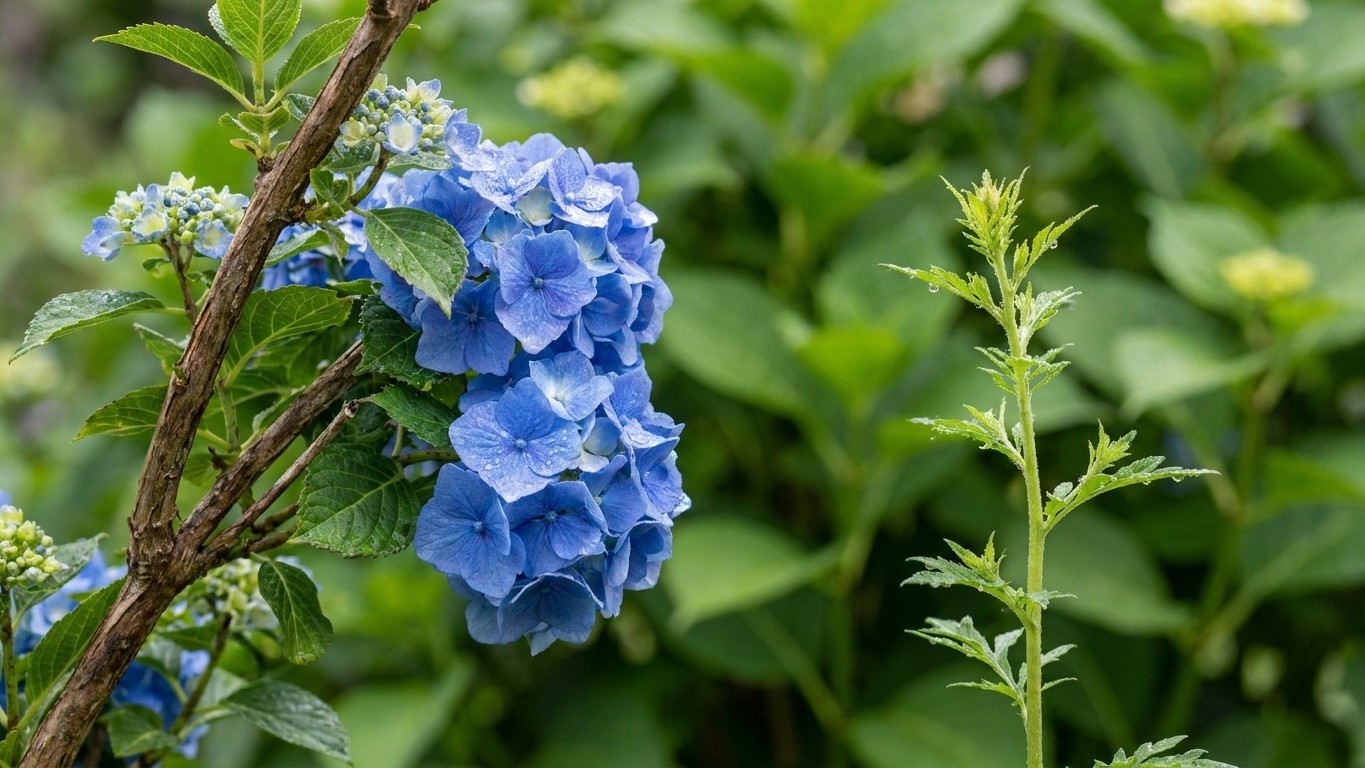

Smooth hydrangeas such as Annabelle and panicle hydrangeas such as Limelight come through Iowa winters reliably, because they bloom on wood grown the same season. Bigleaf types are the gamble, and oakleaf hydrangeas fall in between. The USDA Plant Hardiness Zone Map puts Iowa at 4b to 6a, a wide spread. Where a hydrangea blooms on the stem matters as much as the zone number.
What this comes down to in Iowa

Around Des Moines, the reference city for the NOAA NCEI climate normals, the last spring freeze falls between April 12 and April 24, and the first fall freeze between October 14 and October 25. Hydrangeas that flower on new growth ignore most of what happens between those two windows, so they are the safe bet statewide.
Old-wood bloomers are the problem. Bigleaf hydrangeas set next year’s flower buds on this year’s stems, in late summer. Those buds then sit exposed through a Midwestern winter, and a hard freeze in April after the buds have swollen can finish them off. The shrub usually survives and leafs out from the base, but it gives you green foliage and no flowers. New-wood types skip that risk, because the buds form after the danger has passed.
A note on the dates: Iowa State Extension county figures run about 4 days later in spring and 10 days earlier in fall than this airport station. Treat the Des Moines numbers as the optimistic end, and expect a shorter season in colder counties. The cultivars below are ordered from most dependable to least dependable in an Iowa winter. The hardiness ratings come from nursery catalogs, so use them as a guide.
Annabelle
A smooth hydrangea (Hydrangea arborescens) with big white snowball blooms. It blooms on new wood, so a winter that kills every stem to the ground changes nothing. The weakness is floppy stems, which bend under rain and heavy blooms.
Incrediball
Another smooth hydrangea, bred for stiffer stems than Annabelle. The flower heads are just as large and white, and the cold tolerance is the same. It is a good swap if your Annabelle keeps falling over.
Limelight
A panicle hydrangea (Hydrangea paniculata) that grows into a large shrub, with cone-shaped blooms that open lime green, turn white, and blush pink in fall. It flowers on new wood. Wind and a cold northern exposure rarely bother it.
Bobo
A compact panicle hydrangea that stays near three feet tall. It has the same cold tolerance as its larger relatives and suits foundation beds and containers sunk into the ground. A potted shrub above ground is a different matter, because roots in a pot freeze much harder than roots in soil.
Quick Fire
A panicle type that blooms earlier than most, with white flowers that age to pink and red. It blooms on new wood. The early start helps in northern Iowa, where the season ends sooner.
Endless Summer
A bigleaf hydrangea (Hydrangea macrophylla) that blooms on both old and new wood. In a hard winter the old stems die back, and flowers come from new growth later in summer. Expect a smaller, later show than the catalog photographs suggest, especially in the northern half of the state.
Snow Queen
An oakleaf hydrangea (Hydrangea quercifolia) with white cone blooms and red fall color. It does best in southern Iowa and in sheltered spots elsewhere. Old-wood flower buds mean a cold winter or late freeze can cost you the blooms, though the foliage still earns its place.
Working it out for your own garden
The method works for any hydrangea you meet at a garden center, in Iowa or after a move. You need three pieces of information: where the plant blooms, what zone the label rates it for, and when your last spring freeze usually falls.
How do you test a hydrangea against an Iowa winter?
Start with the bloom wood. Smooth and panicle hydrangeas bloom on new growth, so winter damage matters little to them. Bigleaf, oakleaf, and climbing hydrangeas rely on old wood to some degree, so a winter that kills stems also kills flowers. Then compare the label’s zone to your own. A rating of zone 3 leaves room to spare in a zone 4b county. A rating of zone 5 in that same county means the plant is working at its limit.
Last, check your spring window. Take the Des Moines range of April 12 to April 24, add about four days for county figures, and assume buds that break in early April face a real chance of a freeze afterward. Old-wood types are the ones that pay for that.
Does a bigleaf hydrangea finish its season in Iowa?
Work through two examples. Limelight forms its flower buds on growth made after spring. If the stems freeze to the ground, it regrows and still blooms in summer. The plant finishes its cycle before the first fall freeze, which arrives from October 14 to October 25 at the Des Moines station and somewhat earlier in county records.
A classic bigleaf mophead that blooms only on old wood runs the cycle the other way. The buds form in late summer and then have to survive the entire winter and the April freezes. In a zone 4b winter, the stems often fail that test, and the plant stays green and flowerless that year. That is where the line falls for old-wood bloomers in cold parts of the state.
Before you cut anything in spring, scratch a stem with a thumbnail. Green underneath means live wood, and brown means dead. The timing of that cut is covered in When to Prune Hydrangeas in Iowa.
| Type | Blooms on | Winter outlook in Iowa |
|---|---|---|
| Smooth (Annabelle, Incrediball) | New wood | Reliable statewide |
| Panicle (Limelight, Bobo, Quick Fire) | New wood | Reliable statewide |
| Bigleaf reblooming (Endless Summer) | Old and new wood | Dependable foliage, flowers vary |
| Oakleaf (Snow Queen) | Old wood | Best in south and sheltered sites |
What changes across the state
Des Moines sits near the middle of Iowa, so its frost window is a midpoint rather than a rule for everyone. The state spans USDA zones 4b to 6a, and that span is the biggest reason two Iowa gardeners can follow the same advice and get different results.
How different are northern and southern Iowa?
Northern counties have colder winters, a later spring, and an earlier fall. Those are the places where a rating of zone 4 or 5 starts to feel like a gamble. Southern Iowa is milder, with spring arriving sooner and the season running longer. That helps oakleaf hydrangeas and gives bigleaf types a better chance. But earlier spring growth also means buds can break before the last freeze has passed, so the milder south is not automatically safer for old-wood bloomers.
Do river valleys, cities, and open prairie change the picture?
Yes, and by enough to matter. Open ground in western and northwestern Iowa gets steady wind, which dries stems and burns buds even when the temperature is fine. Wind also blows snow off beds, and snow is a good insulator. Gardens near river bluffs, in town, or next to a south-facing wall tend to run warmer than the open country around them. A foundation planting on the east side of a house can be a full zone milder than the same shrub in a windy field. For protection tactics, see Protecting Hydrangeas Through a Iowa Winter.
The mistakes this state punishes

Planting an old-wood hydrangea in an exposed yard is the most common one. A bigleaf mophead on an open west-facing slope gets wind, deep cold, and a swing in temperature that buds do not tolerate. If you love bigleafs, give them a spot on the east or south side of the house, and choose a reblooming type so the new wood can carry the show.
Trusting a warm spell is another. A stretch of mild weather in late March makes buds swell, and then the last freeze, which can come as late as April 24 at the reference station and later inland, catches them. Hold off on removing mulch or winter wrap until the freeze window has passed, and keep covers on hand for the nights that follow a warm week.
Pruning at the wrong time costs flowers too. Cutting an oakleaf or old-wood bigleaf back in fall or very early spring removes the buds you were waiting for. New-wood types forgive almost any timing, but old-wood types do not.
Feeding late in summer encourages soft new growth just before the first fall freeze, which arrives from October 14 to October 25 at Des Moines and earlier in many counties. That growth does not harden off in time and dies back, sometimes taking buds with it. Stop feeding by midsummer and let the plant slow down on its own.
Finally, don’t judge a plant on a single winter. One cold year can wreck the flowers on an old-wood hydrangea that does fine in an average year. If you keep losing blooms to cold, switch to a smooth or panicle type rather than adding more protection.
Checking this against your county
The Des Moines dates are a starting point, and your own yard may run a week or more off them. Your county office of Iowa State University Extension can tell you what frost dates and winter damage look like locally, and which hydrangeas have done well nearby. For the general growing basics, from soil and light to watering, go to growing hydrangeas in Iowa.
Common questions
What is the toughest hydrangea for Iowa?
Panicle and smooth hydrangeas are the toughest. Limelight and Annabelle both bloom on new wood, so they flower even after a winter that kills the stems to the ground.
Will bigleaf hydrangeas bloom in Iowa?
Sometimes. Reblooming types such as Endless Summer have a better chance because they also flower on new growth. Classic old-wood mopheads often grow well but fail to flower after a hard winter or a late freeze.
Can oakleaf hydrangeas grow in northern Iowa?
They can, in a sheltered spot, but expect more trouble than in the south. Flower buds are the first thing to go in a cold winter, while the foliage usually survives.
When is it safe to uncover hydrangeas in spring?
Wait until the last freeze window has passed. At Des Moines that window runs from April 12 to April 24, and county records run about 4 days later. Once buds are swelling and nights stay above freezing, take the covers off, and keep them close in case a cold night returns.