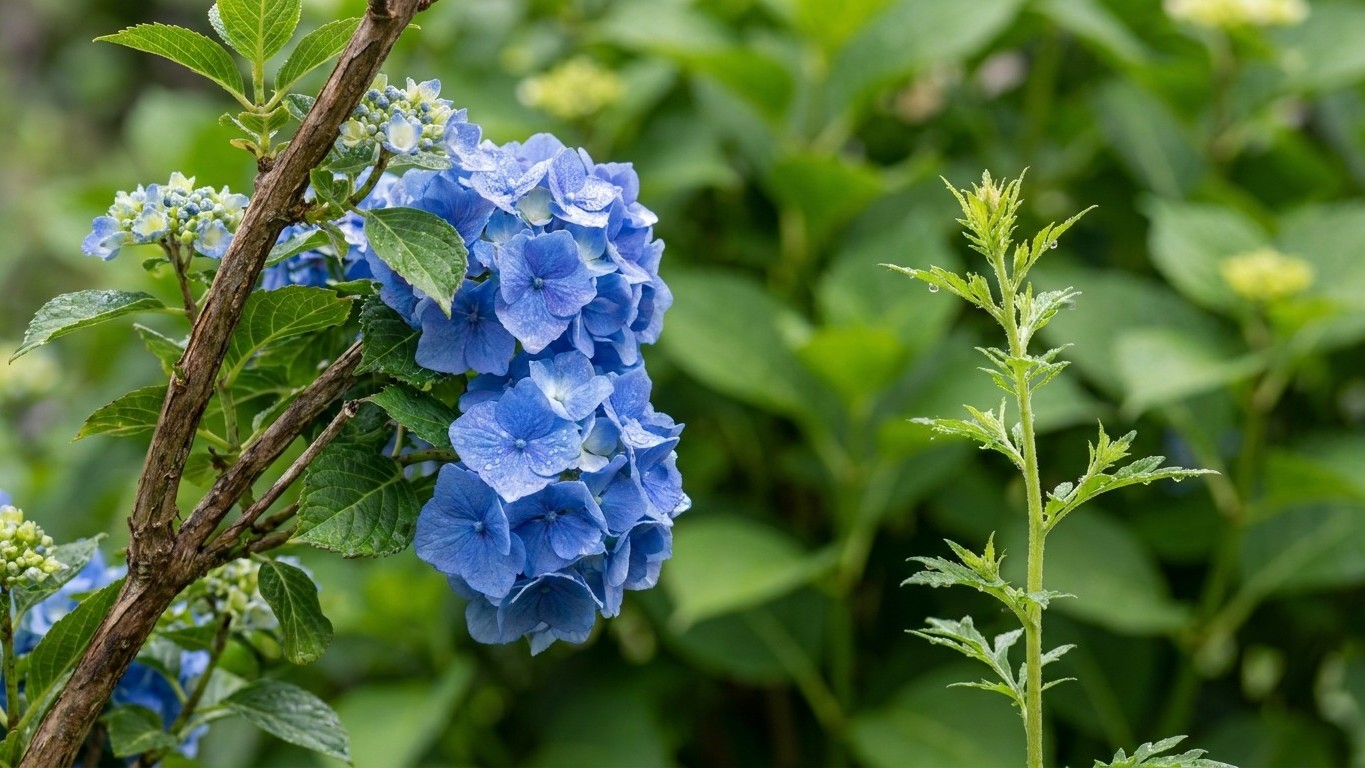

Hydrangeas get through an Iowa winter when three things go right. Old-wood types are left unpruned in fall, the root zone is mulched once the ground begins to freeze, and any cover stays on until the spring frost window has nearly closed. Panicle and smooth types barely need help. Bigleaf types lose their flower buds without it, even though the roots usually survive. Timing the cover matters more than the material.
What this comes down to in Iowa

At Sioux City, the reference station, the first fall freeze arrives between October 14 and October 25, and the last spring freeze falls between April 12 and April 24 (NOAA NCEI climate normals, 32°F freeze probabilities in the 30 to 70 percent band). Winter protection runs between those two ranges: it starts after the shrub has gone dormant and ends once the danger of a late freeze is mostly past.
Those airport numbers are the optimistic end. Iowa State Extension county records run about 4 days later in spring and about 10 days earlier in fall. In many yards the real season is shorter than the station range suggests, so a freeze can hit in early October and a hard frost can still show up in late April. The USDA Plant Hardiness Zone Map, which rates zones only by the average annual extreme minimum temperature, puts the state between zone 4b and zone 6a. A zone rating tells you how cold the worst night gets. It says nothing about how long the cold lasts or how often it swings.
Which hydrangeas need winter protection in Iowa?
It depends on where the flower buds sit. Types that set buds on last season’s stems carry next summer’s bloom through the winter, exposed above the snow line. Types that bloom on new growth lose nothing if the stems freeze back. The table sorts the main groups by how much help they need. For a full ranking by hardiness, see Which Hydrangeas Survive a Iowa Winter.
| Type | Where flower buds form | Winter help needed |
|---|---|---|
| Bigleaf and mountain | Old wood (some reblooming forms also bloom on new wood) | Most: mulch, wire cage filled with leaves, wind shelter |
| Oakleaf | Old wood | Moderate: mulch, some shelter in exposed spots |
| Panicle | New wood | Little: mulch for first-year plants |
| Smooth | New wood | Little: mulch for first-year plants |
When should you cover hydrangeas for winter?
Wait. Cover after the shrub is dormant and the soil surface starts to firm up, which usually means several hard freezes after the first one. Covering in early October, when a warm spell can still follow, traps heat and moisture around the stems and invites mice to nest. Fall freezes in the station range arrive from mid October, and the right time to build a cage is often some weeks after that, in November.
Working it out for your own garden
You can run the timing yourself with your own county’s frost dates. Find the first fall freeze and last spring freeze for your county from Iowa State Extension. Compare them with the Sioux City ranges and shift your plan by the difference. If your county runs earlier in fall, as the extension records suggest for many places, start watching the shrub sooner.
Here is the fall arithmetic in words. A first-freeze range of October 14 to October 25 at the station means your county might see its first freeze in early to mid October. Add the wait for dormancy, which is a few weeks of freezing nights and fallen leaves, and your covering window opens in roughly early to mid November. The cage and mulch go up then, with enough time to finish before the ground is frozen too hard to work.
Spring runs the same way in reverse. The station range for the last freeze is April 12 to April 24. Add about 4 days for the county figures and the danger lasts into late April in many yards. Plan to loosen the cover in stages as buds swell, and keep a sheet or frost cloth on hand for a cold night after the cage is off.
A simple fall sequence works for most beds:
- Stop fertilizing in midsummer so no soft new growth is caught by the first freeze.
- Keep watering through dry autumns, then stop once the ground is about to freeze.
- Leave the stems uncut and let the leaves drop on their own.
- After several hard freezes, pile shredded leaves or straw around the base a few inches deep.
- For bigleaf types, wrap a wire cylinder around the shrub and fill it loosely with dry leaves.
Other fixes, such as changing bloom color through soil pH, belong to the growing season and have no bearing on winter survival.
What changes across the state
Iowa runs from zone 4b to zone 6a on the USDA system, which means the same hydrangea faces different winters depending on where it stands. The northern counties get longer, colder winters and a shorter growing season. The southern counties are milder, with fewer deep freezes and a longer stretch of open weather in both fall and spring. The Sioux City station sits in the west, so its range is a reference point and not a statewide average.
Snow cover changes the picture more than gardeners expect. A steady blanket of snow insulates the lower stems and roots, and in snowy winters the buds low on a shrub often survive. Open, windy winters with little snow, which are common on the western and northwestern prairie, strip that insulation and dry out exposed stems. A planting on the south side of a house, out of the wind, can carry bigleaf buds that would die in an open yard a few miles away.
Land near the Mississippi and Missouri river valleys often runs a bit milder than the high, open ground between them, and towns and cities hold more heat than farm country. Low spots collect cold air on still nights, so a hydrangea at the bottom of a slope can see a freeze before one at the top. These differences are why the county figures and your own yard’s microclimate matter more than the state range.
The mistakes this state punishes

Mulching too early after a warm fall. Iowa Octobers swing between frost and mild weather. Heavy cover in early October holds moisture against the stems and gives voles and mice a shelter. Wait for dormancy and a run of hard freezes.
Pruning old-wood types in fall. Cutting bigleaf or oakleaf stems before winter removes the buds that carry the next summer’s flowers. Leave them alone until you can see which stems are alive in spring. Panicle and smooth types are the exceptions and can be pruned in late winter or early spring.
Wrapping in plastic. Plastic traps heat on sunny winter days and then lets the stems freeze hard at night. Use burlap, breathable cloth or a leaf-filled cage, and put them up only after the shrub is dormant.
Removing the cover on the first warm spell. A warm stretch in the first half of April is common, and a hard freeze can follow it. The station range for the last freeze runs to April 24, and the county figures run later. Open the cage gradually and keep frost cloth ready until the window has passed.
Planting new shrubs too late in fall. A hydrangea planted close to the first freeze has little time to root. Wait until spring or, if you must plant in fall, mulch it well and expect it to need extra help its first winter. Newly planted shrubs of any type should get the same mulch treatment as bigleaf types.
Checking this against your county
The Sioux City ranges are a starting point. Your county’s frost dates, your slope and your wind exposure will shift the timing by days or weeks. Call or visit your county office of Iowa State Extension for local frost dates and for advice on hydrangea problems in your area. For planting, siting and general care, the broader guide to growing hydrangeas in Iowa covers the rest.
Common questions
Do hydrangeas need to be covered every winter in Iowa?
Bigleaf and mountain types do, if you want flowers every summer. Oakleaf types benefit from mulch and a sheltered spot. Panicle and smooth types usually flower on new growth and need little more than mulch over the roots, especially in their first year or two.
Should I cut hydrangeas back before winter?
Not the old-wood types. Cutting them in fall removes next summer’s buds. Panicle and smooth types can be cut in late winter or early spring, before new growth starts. Leaving the dead stems standing through winter also gives some protection to the crown.
Can I use plastic or a bucket to cover hydrangeas?
Avoid plastic and sealed buckets. They trap heat on sunny days and can cook buds or let moisture build up. A wire cage filled with dry leaves, or burlap on stakes, lets air move through and still blocks wind.
How do I protect hydrangeas in pots?
Roots in a pot freeze harder than roots in the ground. Once the plant is dormant, move it to an unheated garage or shed that stays cold but out of the wind, and water it lightly now and then so the root ball never dries out completely. Bring it back outside after the last spring freeze range has passed, and harden it off for a few days.