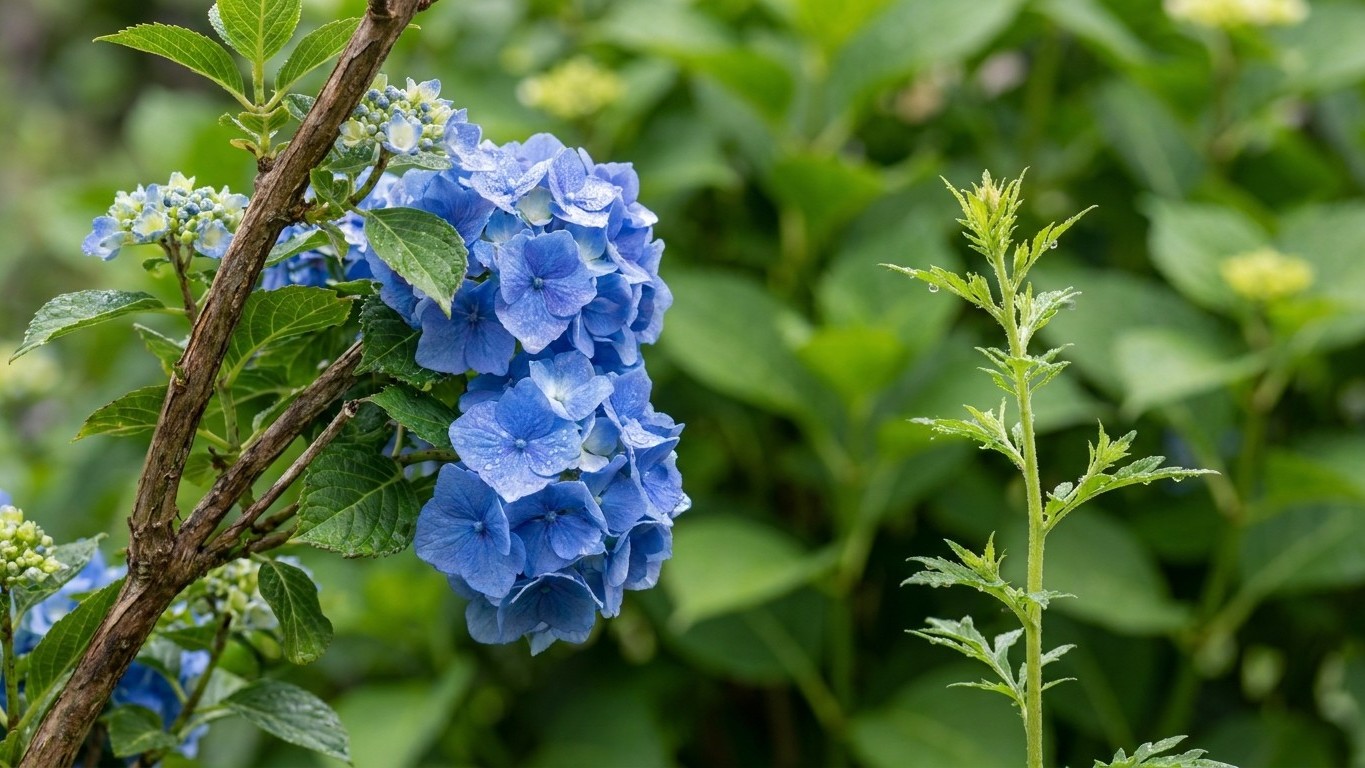

Hydrangeas turn pink in North Carolina when the plant cannot take up aluminum, and that usually traces back to soil that has been limed, fed heavily with phosphorus, or watered with alkaline water. Blue needs the opposite: acidic soil with aluminum available to the roots. You can shift a pink bigleaf hydrangea toward blue, but it takes a full season or two and a soil test to start.
What this comes down to in North Carolina

Gardeners around Charlotte can typically expect the last spring freeze between about March 23 and April 5 and the first fall freeze between about October 30 and November 8, though freezes outside those windows do occur (NOAA NCEI U.S. Climate Normals, 32°F freeze probabilities), and a color-change program has to fit between those two windows. Pink flowers mean the aluminum in the soil is locked up, and blue flowers mean the plant is taking it in.
Why do hydrangeas turn pink in North Carolina soil?
Much of the Piedmont sits on red clay that is naturally acidic, so pink flowers can look like a puzzle. The aluminum is usually there. The plant can’t use it. Aluminum becomes available to roots as the soil gets more acidic, and it drops out of reach as the soil moves toward neutral. Anything that nudges pH upward pushes the blooms toward pink.
In a typical yard, that anything is rarely the native clay. It is lime spread on the lawn, concrete and mortar leaching alkalinity at the foundation, a bag of fertilizer high in phosphorus, or irrigation from a well with hard water. Phosphorus ties up aluminum inside the soil and the plant, which is why a bloom-booster fertilizer can turn a blue shrub pink within a season or two.
Which hydrangeas can change color at all?
Some hydrangeas respond to soil chemistry, but not all of them do. Classic mophead types like ‘Nikko Blue’ are the best-known color shifters, and reblooming types such as ‘Endless Summer’ react the same way. White varieties stay white. Panicle hydrangeas, smooth hydrangeas and oakleaf hydrangeas ignore aluminum entirely, so adding sulfate to a ‘Limelight’ or an ‘Annabelle’ accomplishes nothing.
Some bigleaf cultivars are bred for pink or red and resist blue even in acidic soil, while others shift easily. If a plant refuses to budge after a year of good treatment, the cultivar may simply be a stubborn pink.
What does blue actually need?
Three things have to line up: acidic soil, available aluminum, and low phosphorus. Fix only the first and you often get a muddy purple, with some blooms blue and others pink on the same plant. That mixed look is common, and it means you are partway there.
For deeper background on siting and care, see our guide on growing hydrangeas in North Carolina.
Working it out for your own garden
The method matters more than any single recipe, because the right dose depends on your soil, and a cold or warm year can shift timing by a couple of weeks. Start with a soil test, then build a calendar backward and forward from the frost windows.
How do you find out why your hydrangeas are pink?
Collect soil from the root zone of the shrub, a few inches down, from several spots around the drip line. Send it to the NC Department of Agriculture (NCDA&CS) soil testing lab; your county extension office can supply sample boxes and information. The report gives pH and shows phosphorus levels, and those two readings tell you which problem you have. High pH means you need to acidify. High phosphorus means you need to stop the fertilizer you are using. Both is common in beds near a house with a lawn program.
Leave the lime out of that bed from now on. If the lawn next to it gets lime, shield the hydrangea bed from the spreader.
When do you apply aluminum sulfate in North Carolina?
Work from the frost window. The average last spring freeze at Charlotte runs March 23 to April 5. Bigleaf hydrangeas push new growth as the weather warms, and that is when roots are active and can take up a treatment. Plan the first application for a few weeks after that window opens, once leaves have started to expand. Watch the soil and the new growth, and time the first dose by the local frost pattern for a typical Piedmont garden. Follow the label rate, water it in well, and never apply it to dry soil or to a shrub under drought stress, because aluminum salts can burn roots.
Plan a second application later in the season, and stop well before the first fall freeze window of October 30 to November 8. Late-season feeding pushes soft growth that cold can damage. Elemental sulfur is a slower option that works over months rather than weeks, so apply it earlier, in late winter or at the start of the spring window.
How long before the flowers change?
The buds that open this summer were set the previous year on old wood, so the first season after treatment often shows only a partial shift. Expect the full color over time as the plant settles in. A nursery plant that arrives already blue was colored by the potting mix, and it will drift back toward pink in your native soil if you do nothing to hold the acidity. Pine bark or pine needle mulch helps a little, and rainwater beats hard tap water for irrigation.
A plant that repeats pink after a full season of treatment points back to the soil test: either the pH is still too high, or phosphorus is still tying up the aluminum.
What changes across the state
Charlotte is a Piedmont reference point, and the state looks different on either side of it. The 2023 USDA Plant Hardiness Zone Map spans roughly zones 6a to 9a across North Carolina, which is a wide spread for one state, and soil chemistry varies almost as much as winter cold.
In the mountains to the west, spring arrives several weeks later than at Charlotte, so the whole treatment calendar slides later. Mountain soils are often acidic and rich in organic matter, and many gardeners there get blue flowers with little effort. The Blue Ridge areas that sit over limestone or have been heavily amended are the exceptions, and those yards tend to run pink.
On the coastal plain, spring comes earlier, so treatments can start sooner. Sandy coastal soils hold little buffering capacity, which means pH can move quickly in either direction. A dose of sulfate acts faster there, but so does the creep back toward pink. Shell fragments, oyster-shell driveways and alkaline well water can keep coastal beds pink despite acidic native sand. The Piedmont sits in between, with heavy clay that resists change and then holds it once it shifts.
Your own yard can differ from its region. A bed beside a concrete patio in the mountains can be more alkaline than a pine-shaded bed on the coast, so trust the soil test over the map.
The mistakes this state punishes

Many failures come from timing and from guessing without a test. These are common ones.
- Treating a plant that cannot change. Panicle, smooth and oakleaf hydrangeas do not respond to aluminum. Confirm the species before you buy a bag of anything.
- Applying treatments into cold or dry soil. A warm spell in March can tempt you to start, and then a freeze inside the March 23 to April 5 window hits new growth that has been pushed too soon. Wait until the window has passed, the forecast is clear of freezes, and the soil is moist and warming.
- Using high-phosphorus fertilizer. Bloom-booster formulas undo the work. Choose a fertilizer with low phosphorus.
- Applying too much too fast. Heavy doses of aluminum sulfate can burn roots, and summer heat in the Piedmont makes stressed plants more vulnerable. Split the dose into smaller applications and water thoroughly.
- Feeding late in the year. Anything that stimulates growth after summer exposes soft shoots to the first fall freeze, which can arrive between October 30 and November 8 around Charlotte.
Another common mistake is expecting a one-summer fix. Because flower buds form the year before, a plant treated in April will show its new color mostly the following year. Gardeners who give up after one pink summer stop right before the change would have appeared.
Finally, watch the lime. Dolomitic lime is commonly applied to lawns and vegetable beds in the state when a soil test calls for it, and it drifts. Keep it off hydrangea beds unless you want pink.
Checking this against your county
The Charlotte frost windows and the soil rules above are a starting point. Your county’s soil, water and elevation decide the rest. Your local NC State Extension office can point you to the NCDA&CS soil test, help interpret the report and tell you how your water supply and local soils will behave. Our hydrangea guide covers care, siting and pruning in more depth.
Common questions
Can I turn pink hydrangeas blue in one season?
Rarely. A spring treatment usually gives a partial shift in the first summer and a fuller one the next. Mixed purple blooms are a sign the change is underway.
Do coffee grounds or rusty nails make hydrangeas blue?
They are weak fixes. Grounds are a minor acidifier and do not supply meaningful aluminum, and nails add iron, which is a different element. A soil test followed by aluminum sulfate or sulfur, as the report directs, is a more dependable route.
Why are my hydrangeas pink when North Carolina clay is acidic?
Acidic clay does not guarantee blue. Lime from the lawn, mortar and concrete near the foundation, alkaline irrigation water or phosphorus-rich fertilizer can raise the pH or tie up aluminum right at the root zone. The bed can be pink even when the yard at large is acidic.
Will white hydrangeas turn blue if I acidify the soil?
No. White varieties lack the pigment that reacts to aluminum, and panicle, smooth and oakleaf types do not respond to soil chemistry. Only bigleaf and mountain hydrangeas that carry pink or blue pigment can shift.