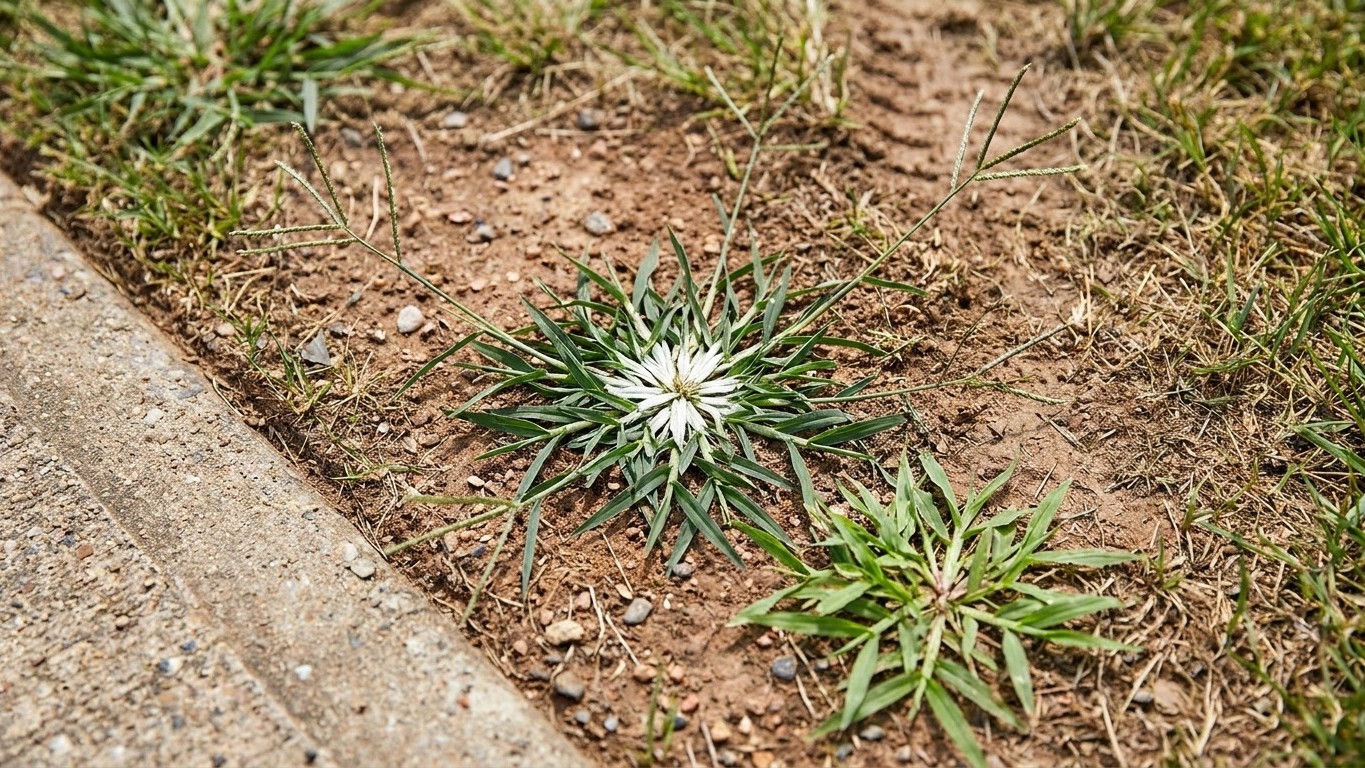

North Carolina sits in the turfgrass transition zone, so the right month depends on what is growing in your yard. Cool-season lawns (tall fescue, Kentucky bluegrass, perennial ryegrass) get aerated in fall, while the grass is still growing and well ahead of the first freeze. Warm-season lawns (bermudagrass, zoysiagrass) get aerated in summer, when they grow hardest. The extension rule behind both comes from Nebraska, so the principle carries over but the months do not.
When to aerate a lawn in North Carolina
Start with what actually grows here. Clemson Cooperative Extension’s lawn-selection guide (HGIC 1214) lists tall fescue, Kentucky bluegrass, perennial ryegrass, zoysiagrass and bermudagrass for the region. Read against Charlotte’s climate normals, that mix puts Charlotte in the transition zone. That label belongs to Charlotte, in the Piedmont. The Blue Ridge mountains to the west and the coastal plain to the east can land in a neighboring zone, so treat it as a starting point, not a state-wide verdict.
In the transition zone, neither type of grass wins outright. A cool-season lawn suffers in July. A warm-season lawn is brown from October to April. Which one you have, or inherited, decides your aeration window. (If you are still choosing, The Best Grass Seed for North Carolina Lawns lays out the trade-offs.)
The guiding rule comes from University of Nebraska-Lincoln Extension: “Cool season grasses, including Kentucky bluegrass, fescues, and perennial ryegrass, can be aerated in spring from early April through the end of May and again in fall from late August through the end of October.” For warm-season turf it says: “Warm season grasses, such as zoysia and buffalograss, should also be aerated when they are growing actively, which is late May though late August.” Those months are Nebraska’s. North Carolina’s springs arrive sooner and its summers run hotter, so copying them would be a mistake. What transfers is the condition: aerate when the grass is actively growing and has time to recover.
Cool-season lawns: fall, before the freeze
For tall fescue, Kentucky bluegrass and perennial ryegrass, the target is fall, while the grass is still growing, finished ahead of the October 30 to November 8 first-freeze window. That range comes from NOAA NCEI’s 1991-2020 U.S. Climate Normals for Charlotte, covering the 30 to 70 percent probability band for a 32°F freeze. Finishing early gives the lawn time to knit the holes shut before growth slows. Spring aeration is allowed by the extension rule, but it leaves less runway before July, the month these grasses struggle most.
Higher ground runs colder. In the mountains the first freeze arrives earlier than that window, so pull the job earlier too. The First and Last Frost Dates in North Carolina page shows how the dates shift by region.
Warm-season lawns: summer
Zoysiagrass and bermudagrass want the opposite season. Aerate them in summer, once they have greened up fully and are growing hard. A warm-season lawn aerated in fall is heading toward dormancy and has little growth left to heal the wounds.
| Lawn type | Grasses | Aerate during |
|---|---|---|
| Cool-season | Tall fescue, Kentucky bluegrass, perennial ryegrass | Fall growth, finished before the October 30 to November 8 freeze window |
| Warm-season | Zoysiagrass, bermudagrass | Summer active growth |
Core aeration, not spikes
Why spikes fall short here
A spike pushes a hole into the ground and, in doing so, presses the soil around it tighter. A core aerator pulls out a plug and leaves an actual void, which is the whole point. The Nebraska extension article is blunt: solid-tine or spike aeration is “not effective in clay/silt soil,” and core aeration is the method for compacted ground.
North Carolina’s state soil makes the case stronger. USDA lists the Cecil series, an Ultisol, as the soil that represents the state. Ultisols are old, heavily weathered and leached, naturally acid and low in nutrients. USDA NRCS Soil Data Access (queried August 29, 2026) gives representative surface values of about 68 percent sand, 13 percent clay and 20 percent silt, with organic matter near 0.8 percent and a pH around 5.5. It is well drained.
That sandy surface sheds water readily, so compaction in a typical yard usually comes from mowers, foot traffic and construction, not from the soil type itself. Thin organic matter means little cushion against all that. Still, this is the soil that represents the state, not the soil in your backyard. A lot scraped or filled by a builder can be far clayier and tighter than those numbers suggest. A soil test will give you your own pH and texture clues.
What good cores look like, and the right soil moisture
Good cores are intact plugs of soil with some thatch riding on top, scattered across the lawn. Leave them where they land. They crumble back into the turf within a few mowings and rain cycles. If the machine leaves shallow dimples or crumbs instead of plugs, the soil is wrong for the job.
Moisture decides that. Aerate when the soil is moist but not wet: soaked ground smears, clogs the tines and makes a mess, while bone-dry ground is hard enough that tines skip across the surface. A screwdriver pushed into the lawn should slide in without a fight. If it will not, water the day before, or wait for a soaking rain to pass and the surface to firm up.
Aerating and overseeding together
Cool-season lawns: seed goes into the holes
Fall aeration and fall overseeding belong on the same day for cool-season lawns. The open holes give seed direct contact with soil, shelter from drying out, and a spot to germinate without competing with a thick mat of turf. Run the aerator first, then spread the seed so it drops into the holes, and keep it moist.
The timing logic is the same as for aeration alone. New seedlings need growing weather to establish before the October 30 to November 8 freeze window, so both jobs belong early in the fall season, not squeezed in at the end. Our guide on When to Overseed a Lawn in North Carolina covers seed timing, rates and care in more detail. For tall fescue, Kentucky bluegrass and perennial ryegrass, aerate and overseed on the same fall day.
Warm-season lawns: a different calendar
The pairing does not fit zoysiagrass or bermudagrass. Their growth peaks in summer, and the extension rule places their aeration in that season. Fall is when they start sliding toward the brown stretch that runs from October to April, so opening the turf then gives them nothing to recover with. These lawns also fill gaps by spreading, which means they do not need seed dropped into the holes to benefit from aeration.
If you are tempted to push cool-season seed into a warm-season lawn, remember the trade-off from the start: that mix gets you green in winter and tired grass in the heat. It is a deliberate choice, not a default, and it needs its own plan.
What goes wrong
Dormant turf is the most common trap. A cool-season lawn browned out by July heat, or a warm-season lawn that went tan in October, is not growing, so open holes just sit there. Weeds move in first. Wait until the grass is actively growing, whichever type you have.
Cutting it too close to the first freeze comes next. A fescue lawn aerated and seeded just as the October 30 to November 8 window arrives has almost no time to recover. Seedlings stall, and the holes stay open through winter. Mountain yards need extra margin, because their first freeze comes before the Charlotte window, not after it.
Soil moisture mistakes look different. Waterlogged ground leaves smeared, muddy cores that clump and compact again. Bone-dry soil gives you shallow, broken stubs, or none. Both are easy to avoid with the screwdriver test described earlier.
The last mistake is trusting spikes (or spiked sandals, a gadget that never delivers) to loosen tight ground. On clay or compacted subsoil they give a cosmetic polka-dot pattern and little else, which is why the extension source calls them ineffective. Rent or borrow a core aerator, or hire a crew that uses one.
Common questions
Can I aerate a fescue lawn in spring?
The Nebraska extension rule allows spring aeration for cool-season grasses, but its months are Nebraska’s. In North Carolina, spring leaves less time before July, when fescue struggles. Fall is the better window.
Should I aerate bermudagrass or zoysiagrass in fall?
No. Both are warm-season grasses and do best when aerated during summer active growth. By fall they are heading toward the brown months of October through April.
Do the dates change in the mountains or on the coast?
Yes. The October 30 to November 8 freeze range is from Charlotte, in the Piedmont. Higher ground freezes earlier, so do fall work earlier there. Check First and Last Frost Dates in North Carolina for how timing shifts, and see The North Carolina Lawn Care Calendar, Month by Month for where aeration fits among other jobs.
Where can I read more about general lawn upkeep?
Start with Lawn Care for the basics, then use a soil test to learn your own pH and texture before you decide what amendments, if any, make sense.