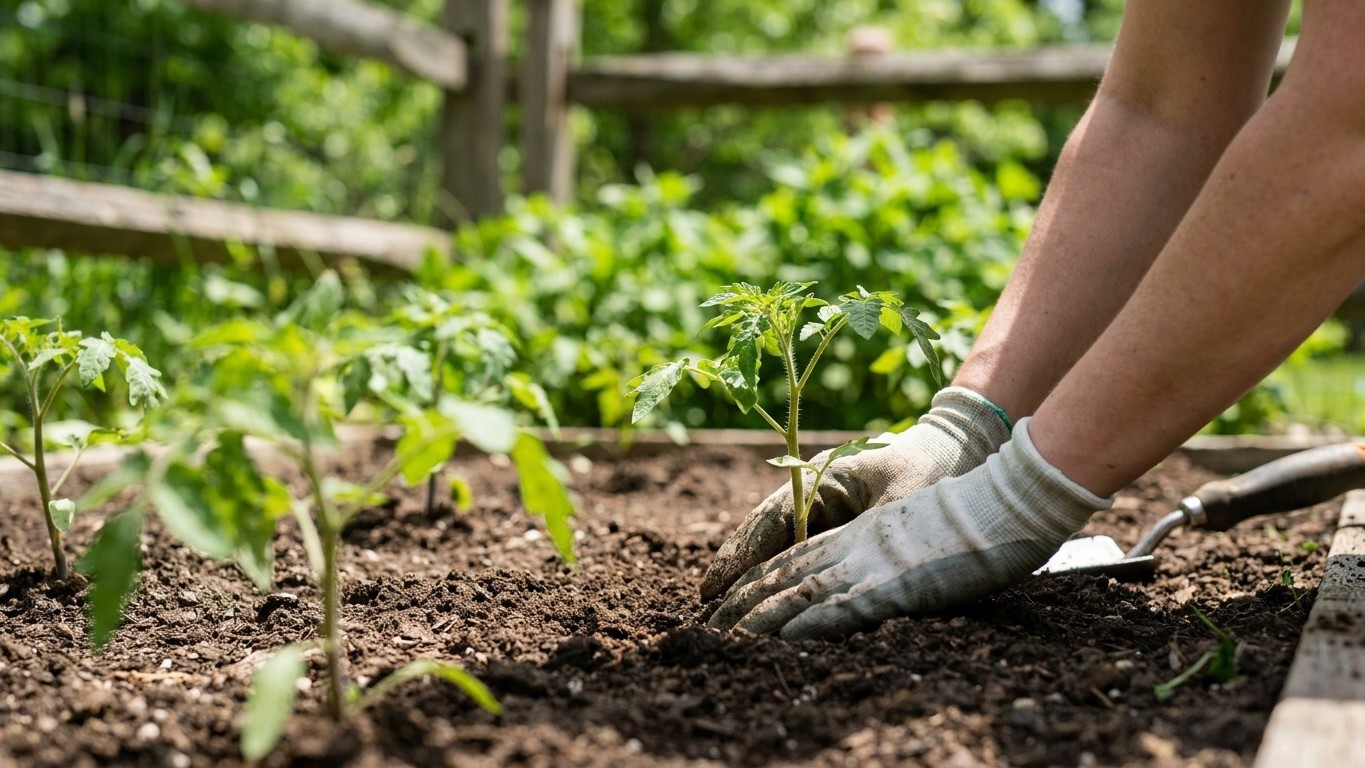

By June, North Carolina’s Piedmont is squarely in warm-season territory: safe to direct-sow beans, squash, melons, okra, and sweet potato slips, since the March 23 to April 5 last-frost window closed weeks ago and the next frost risk doesn’t arrive until October 30 to November 8. Tomatoes and peppers that missed their May transplant date can still go in early in the month with extra watering to ease the shock.
What goes in the ground in June

Soil temperature, not the date on the wall, decides what survives. By early June, Piedmont soil has typically warmed well past the 60-65°F threshold that bush beans, squash, and cucumbers need to germinate reliably, and it keeps climbing from there. This is the safest stretch of the whole growing season for direct-sowing heat lovers: okra, southern peas, corn, cantaloupe, watermelon, and winter squash all go in the ground now without hesitation.
Sweet potato slips are a June staple across the state. They root fast in warm soil and need the long stretch of heat still ahead before the October frost window arrives. Bush beans and sweet corn can be sown in waves every couple of weeks through the month to spread out the harvest instead of getting it all at once.
Tomatoes, peppers, and eggplant transplants ideally go in during May, but early June is not too late in the Piedmont. Water them in deeply and shade them for a few days if the forecast turns brutally hot, since a young transplant can wilt hard in a sudden 90-degree stretch even with no frost anywhere near the picture.
What doesn’t belong in the ground now: lettuce, spinach, and other cool-season greens. They’ll germinate poorly in warm soil and bolt to seed within weeks if they do come up. Save those for late summer sowing aimed at a fall harvest.
Elevation changes this picture more than most gardeners expect. The Blue Ridge counties run several weeks behind the Piedmont in spring, so a garden at 3,000 feet may still be finishing its frost-sensitive planting in early June rather than moving into peak heat crops. The coastal plain runs the opposite direction, often several weeks ahead, which means okra and southern peas may already be well established there by the time Piedmont gardeners are just getting them in.
What to start under cover
June is when fall-garden planning starts, and the math runs backward from the first fall frost window of October 30 to November 8, not forward from today’s date. Broccoli, cabbage, and Brussels sprouts for a fall crop typically need 70 to 90 days from transplant to harvest, plus a few weeks of seedling growth before that. Counting back from early November, seeds started under cover in June, protected from the worst heat with shade cloth, give transplants enough size to go into the garden in August while there’s still enough season left to mature before frost.
The tricky part is starting these seedlings in a month when outdoor heat is exactly wrong for cool-season crops. Indoors under lights, or under shade cloth outside, keeps the soil cool enough for germination and prevents the leggy, heat-stressed stretch that happens when broccoli and cabbage seedlings sit in 85-degree afternoons. Starting too early in June means transplants get rootbound and stressed waiting out the remaining summer heat before the soil temperature test they need. Starting too late, closer to July, and there isn’t enough runway left before frost to finish a full head of cabbage or a decent broccoli crown.
Quicker crops don’t need this backward math at all. Bush beans, summer squash, and cucumbers can simply be direct-sown again in mid-to-late June for a second wave, since they mature fast enough to still finish well before any frost risk in October.
What is ready to pick
June is one of the more generous harvest months in North Carolina gardens. Garlic and onions planted the previous fall are usually ready to pull, with the tell being garlic’s lower leaves browning and onion tops flopping over on their own. Both should be cured in a warm, airy, shaded spot for a couple of weeks before storage.
Summer squash and zucchini start coming in fast once they begin, and the trick is picking them small, around 6 to 8 inches, before they turn woody and the plant slows down trying to finish oversized fruit. Bush beans follow a similar rule: pick young and often, and the plant keeps producing longer.
Spring-planted lettuce, spinach, and peas are usually wrapping up by June as the heat pushes them toward bolting or bitterness, so this is the last window to get anything useful out of them before pulling the bed for a summer crop. Blueberries begin ripening in June across much of the state, and early strawberry plantings are often finishing their run.
The first tomatoes of the season, if plants went in during April or early May, can start showing color toward the end of June in the Piedmont, though most of the tomato harvest is still ahead in July and August.
The jobs that matter this month
Mulching is the single job with the biggest payoff in June. Rising heat pulls moisture out of bare soil fast, and a 2 to 3 inch layer of straw or shredded leaves around squash, tomatoes, and beans cuts watering needs and keeps weed pressure down at the same time. Skip it now, and July’s heat turns into a constant watering chore that mulch would have solved cheaply.
Staking and caging need to happen before plants sprawl, not after. Tomato branches loaded with fruit snap easily once they’ve flopped over, and trying to lift and tie a plant that’s already sprawled across the bed does more damage than doing it early with a cage or stake in place from the start.
Watering rhythm matters more in June than volume. Deep, infrequent watering (aiming for roughly an inch to an inch and a half per week, delivered in one or two soakings rather than daily sprinkles) trains roots to grow deep and handle heat stress better than frequent shallow watering ever does.
Pest scouting starts in earnest this month. Japanese beetles, squash vine borers, and tomato hornworms all become active in June across the state, and catching squash vine borer eggs at the base of stems before they hatch is far easier than dealing with a collapsed vine later. Side-dressing corn and fruiting tomatoes with nitrogen once they set their first fruit gives a useful boost, but that timing matters, which the next section covers.
What not to do in June
The most common mistake is planting cool-season crops out of habit or leftover seed packets. Lettuce, spinach, and spring broccoli sown in June bolt or turn bitter within weeks because the heat pushes them straight to seed production instead of leafy growth. Hold those seeds for a late-summer sowing timed for fall instead.
Skipping mulch is the second big one. Bare soil in June heat can lose moisture fast enough to stress shallow-rooted seedlings within days, and gardeners who mulch in July after the damage is done are just playing catch-up on wilted plants.
Overdoing nitrogen once fruiting begins is a quieter mistake. Nitrogen pushes leafy growth, which is exactly what tomatoes, squash, and peppers don’t need once they’ve set fruit. Heavy nitrogen at that stage produces lush green plants with disappointing yields, since the plant’s energy goes into leaves instead of filling out fruit. A lighter feeding, or one aimed at phosphorus and potassium instead, serves fruiting plants better at this point.
Ignoring early pest signs is the last one worth naming directly. A small hole and sawdust-like frass at the base of a squash stem in early June is squash vine borer damage starting, and waiting until the whole vine wilts means the plant is usually already lost.
Checking this against your own county
A state-wide planting month is a starting point, not an instruction sheet. North Carolina spans a hardiness range of 5b to 8b under the USDA Plant Hardiness Zone Map, and elevation moves frost dates by weeks in either direction: the Blue Ridge counties trail the Piedmont into warm-season planting, while the coastal plain often runs ahead of it. The frost windows cited here (March 23 to April 5 for last spring frost, October 30 to November 8 for first fall frost) are Piedmont figures and shift with elevation and distance from the coast.
For county-specific planting calendars and frost guidance, North Carolina State University’s Cooperative Extension Service maintains regional resources worth checking before locking in a planting date.
Common questions
Is it too late to plant tomatoes in June in North Carolina?
No. Early June transplants still have plenty of season ahead before the October 30 to November 8 frost window, though extra watering helps them establish through the early heat.
Can I still direct-sow beans and squash in June?
Yes, and June is actually one of the best months for it, since soil is consistently warm enough for fast, even germination.
Why did my June-planted lettuce bolt so fast?
Lettuce and other cool-season greens respond to rising heat by shifting into seed production. June soil and air temperatures in North Carolina are past what these crops tolerate for leafy growth.
When should I start seeds for a fall garden?
Count backward from the first fall frost window (October 30 to November 8) minus the days a crop needs to mature. For broccoli or cabbage, that generally means starting seeds under cover in June for transplanting in August.