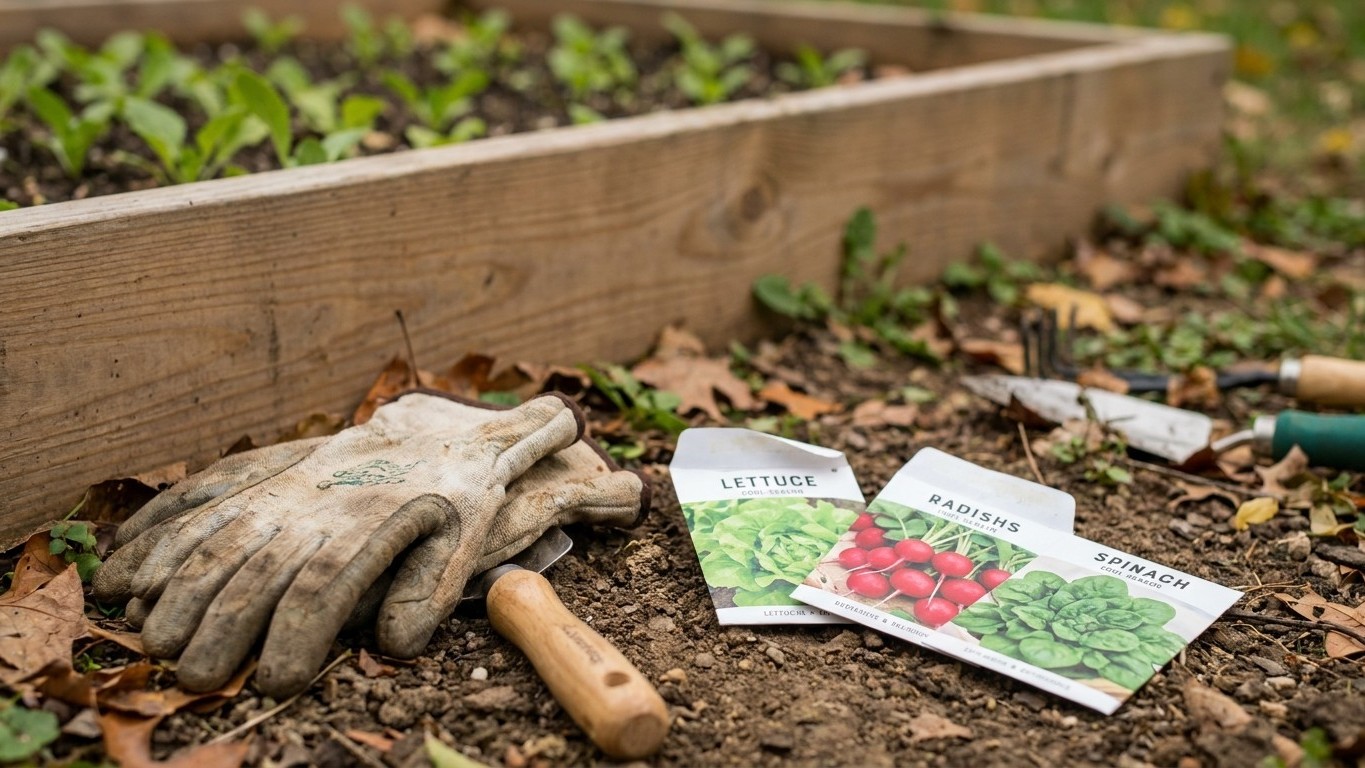

September in the North Carolina Piedmont means the fall garden window is wide open. With roughly 60 to 70 days left before the first frost, gardeners can direct-sow cool-season greens, root crops and transplant brassicas now, while it’s already too late to start anything that needs a full summer to mature.
What goes in the ground in September

The number that matters this month isn’t the calendar, it’s the countdown to the first fall freeze. NOAA’s 1991-2020 climate normals put that freeze, measured at the 30-70% probability band for 32°F, between October 30 and November 8 for the Charlotte area. That gives a Piedmont gardener roughly two months of open-ground growing left, which is exactly why September behaves like a second spring rather than a wind-down.
Direct-sown crops that finish fast are the safe bet. Radishes, turnips, mustard greens, arugula and spinach all mature in three to six weeks, meaning a seed dropped in early September is out of the ground well before any frost risk shows up. Lettuce works too, though seed germinates poorly once soil temperatures sit above 80°F, so early-month sowing benefits from a bit of afternoon shade until the heat breaks. Peas sown now for a fall crop can work in the Piedmont, though they’re racing the clock more than the greens are.
Transplants are the other half of the picture. Broccoli, cabbage, collards and kale started from seed in August should go into the ground as transplants early this month, because they need the head-forming weeks before a hard freeze locks them down. Wait past mid-September to set these out and the plants may never size up properly.
Garlic is the crop gardeners always ask about, and the honest answer is: not yet. Garlic wants cooler soil and typically goes in closer to the first frost or just after, not while soil is still summer-warm. Treat September as prep time for garlic, not planting time.
What to start under cover
Counting backward from that October 30 to November 8 frost window changes what makes sense to start indoors or under row cover right now. A lettuce or spinach transplant started in a flat in early September and set out under a low tunnel in October can keep producing weeks past the point an exposed planting would freeze out. That’s the real value of starting under cover this month: it isn’t about beating the heat, it’s about buying extra weeks on the back end of the season.
Onion seed for a spring harvest is worth starting under cover late in the month in the milder parts of the Piedmont and coastal plain, since fall-sown onions overwinter as small plants and take off again once days lengthen. This only works where winters stay mild enough that seedlings survive outdoors or in a cold frame, so it’s a bigger gamble the closer a garden sits to the mountains.
Two failure modes show up every year. Start brassica or lettuce transplants too early in September heat and they bolt or go leggy before they ever reach the ground. Start them too late, past the third week of the month, and there simply isn’t enough daylight and warmth left for them to size up before that first freeze arrives. The window is real but it’s narrow, and it moves earlier the further west a garden sits toward the mountains.
What is ready to pick
Late summer crops are still producing hard in September, and that’s easy to miss when the mind jumps straight to fall planting. Peppers, eggplant, okra and the last of the tomatoes keep coming as long as nights haven’t turned genuinely cool. Figs and muscadine grapes hit their peak this month across most of the state, and both are easy to check for readiness: fruit that separates from the stem with a light tug, rather than resisting, is ripe.
Sweet potatoes are the crop to watch toward the back half of the month. They’re ready when the vines start yellowing, and digging too early sacrifices size while waiting too long into cold, wet soil invites rot in storage.
Quick crops sown back in August are also coming out now. Radishes and turnips planted three to four weeks ago should be pulled as soon as they hit usable size, since both turn woody or overly sharp if left too long in warm soil. Sweet corn from a late planting and edamame round out what’s typically coming off Piedmont plots this month.
The jobs that matter this month
Soil preparation for the fall beds pays off disproportionately right now, because every bed turned and amended in September gets a full season of cool-weather crops out of it before winter. Testing pH and adding compost before transplanting brassicas beats trying to correct a struggling planting later.
Mulching matters more in September than most gardeners assume. A two to three inch layer around new transplants holds soil moisture through the tail end of summer heat and moderates the first cool snaps, buying young plants time to establish roots before growth slows with shorter days.
Succession sowing is the job that slips first when gardeners get busy, and it’s the one with the shortest deadline. A round of radishes or spinach sown in the first week of September has a real shot at a second round sown two weeks later; wait past mid-month and there’s no time left for a second cycle before frost.
Pest scouting deserves real attention right now too. Fall armyworm and cabbage worms move into new brassica transplants fast, and checking the undersides of leaves weekly catches an infestation while hand-picking or a targeted treatment still works, rather than after a planting is already stripped.
Watering rhythm needs adjusting as September wears on. Late-summer heat still pulls moisture out of the soil fast early in the month, but cooler nights later on mean beds dry out slower, and overwatering fall transplants at that point invites root rot rather than helping them along.
What not to do in September
The most common mistake is planting warm-season crops because the weather still feels like summer. Tomatoes, peppers, squash and beans started now simply don’t have enough growing days left before that October 30 to November 8 frost window closes in on them. Warm air temperature says nothing about how many weeks of season remain; only the calendar countdown to frost does.
Direct-sowing fine seed like lettuce or spinach in full afternoon sun during the first two weeks of September is another common misstep, since soil temperatures above 80°F suppress germination in both. Shading the row with shade cloth or timing the sowing for early morning soil temperatures solves it without waiting out the whole month.
Heavy nitrogen feeding is the third trap. Pushing nitrogen on fall transplants late in the month encourages soft, leafy growth right when plants should be hardening off ahead of cooler nights. That lush new growth is exactly what gets hit hardest by the first cold snap. A balanced feed at transplanting, then easing off nitrogen as the month progresses, serves fall crops far better than a steady heavy hand.
Uncovering row-covered transplants too early after a warm stretch is a smaller but real mistake too, since a single mild week in September doesn’t mean the cool nights won’t return before the month is out.
Checking this against your own county
A statewide September guide is a starting point, not an instruction for a specific backyard. North Carolina’s hardiness zones range from 5b in the highest parts of the Blue Ridge Mountains to 8b along the coast, and that spread of USDA zones alone signals how much the frost timing shifts across the state. A garden in the mountains can see its first freeze weeks earlier than the Piedmont dates cited here, while the coastal plain often runs later. Elevation, not just latitude, is doing most of that work.
Before locking in September planting dates, check them against NC State Extension, which publishes county-level guidance and planting calendars tuned to local frost data rather than a single statewide average.
Common questions
Can you plant tomatoes in September in North Carolina?
Not for a real harvest. With the first fall frost landing between October 30 and November 8 in the Piedmont, tomatoes started in September don’t have enough time to flower, set fruit and ripen before cold shuts them down.
What vegetables should I plant in North Carolina in September?
Direct-sow radishes, turnips, spinach, arugula, mustard greens and lettuce, and set out broccoli, cabbage, collard and kale transplants early in the month so they have time to size up before frost.
Is garlic planted in September in North Carolina?
Not usually. Garlic wants cooler soil and typically goes in closer to the first frost or after it, so September is better spent preparing the bed than planting the cloves.
When does the first frost typically hit North Carolina’s Piedmont?
NOAA’s 1991-2020 climate normals put it between October 30 and November 8 for the Charlotte area, though mountain gardens see it earlier and coastal gardens later.