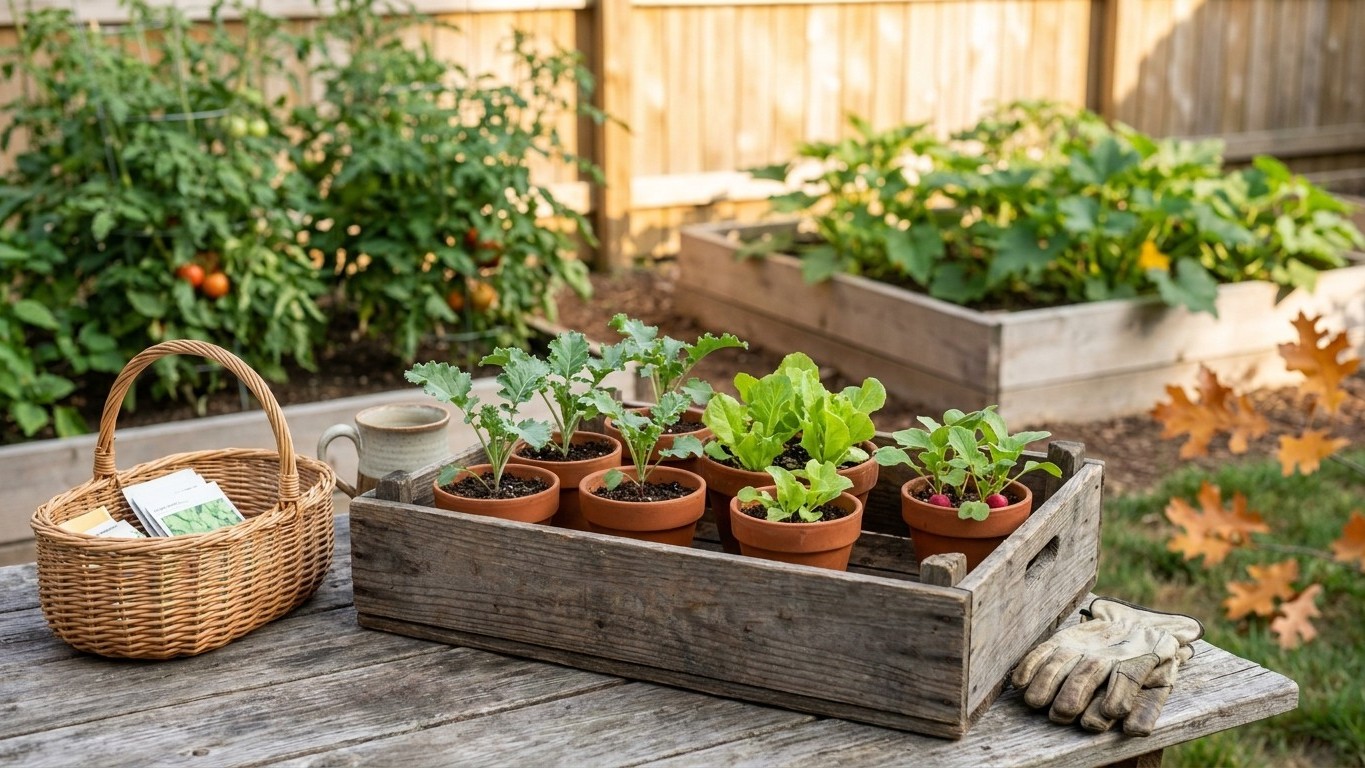

August in the North Carolina Piedmont sits roughly 90 to 100 days ahead of the first fall frost (October 30 to November 8), which makes it one of the best windows of the whole year to start the fall garden. Quick warm-season crops, fall brassicas, and a wave of root vegetables all still have time to mature before the cold arrives.
What goes in the ground in August

The math that matters here is simple: count backward from the first fall frost window of October 30 to November 8, not forward from the last spring frost. A crop that needs 60 to 70 days to mature still has room if it goes in by mid-August. One that needs 90-plus days is cutting it close unless it tolerates a light frost once it gets there.
Bush beans planted in the first week or two of August will often produce one more full crop before the cold shuts things down, since most varieties mature in 50 to 60 days. The same window works for a last round of summer squash and cucumbers, both of which mature fast enough (50 to 65 days) to beat the frost if seed goes in early in the month rather than late.
This is also transplant season for the fall brassica family. Broccoli, cabbage, and collard starts set out in early to mid-August have 70 to 90 days to size up, and all three shrug off a light frost once temperatures start dropping in October, which actually improves flavor in collards and kale.
Direct-sown carrots and beets need 60 to 70 days and do best sown by the middle of the month, in soil kept consistently moist since August heat can crust the surface and stop germination cold. Hold off on garlic. Despite what gardeners in cooler states do this time of year, garlic in North Carolina goes into the ground in October or November, not August, timed to the same fall frost window rather than the summer one.
What to start under cover
Counting backward from the first fall frost window again: a transplant that needs four to six weeks in a tray before it’s ready for the garden should be started under cover, out of direct sun and blistering soil temperatures, by early to mid-August at the latest. That gives cauliflower and a second round of broccoli enough runway to go into the ground by mid-September and still mature before hard frost.
Brussels sprouts are the exception worth naming. They need 90 to 100 days from transplant, which means seed started under cover now, moved to the garden in early September, will still be sizing up when frost arrives in late October. That’s fine. Brussels sprouts tolerate frost well and often taste better after one, so the slower timeline isn’t a failure, it’s the plan.
The two ways this goes wrong both come from ignoring the arithmetic. Start too early in the month and the seedlings sit in trays through the worst of the heat, getting leggy and rootbound before the soil cools enough to receive them. Start too late and the plant runs out of daylight and warmth before it can size up, even with a floating row cover buying an extra week or two at the tail end.
A shaded spot, or a spot that gets cover from afternoon sun, matters more for germination success under cover in August than it does at any other point in the year. Seeds that would sprout without issue in April can simply refuse to germinate in soil that’s baked past 85 degrees.
What is ready to pick
August is peak output month in most North Carolina gardens. Tomatoes, peppers, okra, sweet corn, summer squash, cucumbers, eggplant, and southern peas are all coming in steadily, and the difference between a good week and a wasted one usually comes down to picking on schedule rather than picking when convenient.
- Okra: pick pods at 2 to 3 inches; anything longer turns woody fast in this heat
- Tomatoes: pull at the first blush of color and let them finish ripening on the counter if birds or splitting from sudden rain are a problem
- Watermelon: check the tendril nearest the fruit; a brown, dried tendril is the reliable sign, not thumping
- Cantaloupe: ready when it “slips,” separating from the vine with light pressure
- Summer squash and cucumbers: pick small and often; oversized fruit signals the plant to slow production
Basil, if it’s flowering, needs a hard pinch back now or the leaves turn bitter and the plant bolts. Regular harvest is the job here, not a one-time event. Skipping a few days on beans, okra, or squash doesn’t just mean bigger vegetables, it tells the plant to stop setting new fruit.
The jobs that matter this month
Watering rhythm decides more outcomes in August than any other single task. Deep, infrequent watering (aiming for the equivalent of an inch a week, delivered in one or two soakings rather than a daily sprinkle) keeps root systems deep and plants more resilient when a dry stretch hits, which it usually does at some point in a Piedmont August.
Mulch, stakes, and succession
A two- to three-inch mulch layer around tomatoes, peppers, and the fall brassica transplants going in this month does double duty: it holds soil moisture through the heat and keeps soil temperatures down enough for root crops to germinate. Staking and caging should already be done for tomatoes and pole beans, but if it slipped, do it now before the extra weight of a full crop load snaps unsupported stems.
Succession sowing keeps the harvest coming rather than crashing all at once. A short row of bush beans or a patch of salad greens sown every two weeks through the month means fresh pickings well into fall instead of one glut followed by nothing.
Pest scouting
Squash vine borer damage shows up as sudden wilting in an otherwise healthy-looking squash plant; checking the base of the stem for a sawdust-like frass is the way to catch it early. Japanese beetles peak in August on beans and roses alike, and hand-picking into soapy water in the early morning, when they’re sluggish, beats most sprays for a small garden. Tomato hornworms are easiest to spot by the damage first (stripped stems) and the insect second, often on the underside of the affected branch.
What not to do in August
The most common mistake is treating hot weather as permission to plant anything warm-season, regardless of how much season is left. A tomato transplant going into the ground in mid-August has almost no realistic path to a harvest before frost; that effort is better spent on fall brassicas or a quick bean crop instead.
The second mistake runs the other direction: giving up on direct-sown seed too early because germination looked poor in the first week. August soil can be too hot on the surface for carrot and beet seed to sprout even when the underlying moisture is fine. A light shade cloth over the row for the first week, or watering in the evening rather than midday, often fixes what looks like a failed planting.
Heavy nitrogen fertilizer on tomatoes and peppers this late in their season pushes leafy growth at the exact point the plant should be putting energy into ripening fruit. If a feed is needed, a lower-nitrogen, higher-phosphorus and potassium product supports fruit development instead of working against it.
Skipping garlic entirely because it “feels like the wrong season to think about it” is understandable but worth correcting: North Carolina garlic goes in during October or November, and August is the month to order seed garlic before the good varieties sell out, not to plant it.
Checking this against your own county
A statewide answer for August is a starting point, not an instruction. The USDA Plant Hardiness Zone Map places North Carolina anywhere from 5b to 8b, and that spread alone explains why a planting date that works in Charlotte can be off by weeks in the mountains or along the coast. The Blue Ridge counties to the west run cooler and see frost arrive earlier in fall than the Piedmont reference dates above, while the coastal plain tends to stay frost-free longer into November.
Elevation shifts these windows by more than most gardeners expect, sometimes by two to three weeks over a relatively short distance. For a planting calendar tuned to a specific county, the North Carolina Cooperative Extension is the reliable next stop.
Common questions
Is it too late to plant tomatoes in North Carolina in August?
For a full-season crop, yes. With 90 to 100 days left before the first fall frost window and tomatoes needing 60 to 85 days depending on variety, an August transplant has very little margin left for a meaningful harvest, especially with the extra stress of transplanting into peak summer heat.
Can I still plant a fall vegetable garden in North Carolina in August?
Yes, and August is the best month to start one. Broccoli, cabbage, collards, kale, carrots, and beets all have enough time to mature before frost if they go in by mid-month.
Why won’t my carrot or beet seeds germinate in August?
Surface soil temperature is the usual culprit. Seeds can sit fine in moist soil but refuse to sprout once surface temperatures push past the mid-80s. Shading the row for the first week and watering in the evening usually solves it.
When should garlic actually go in the ground in North Carolina?
October or November, timed to the fall frost window rather than the summer growing season. August is the right month to order seed garlic, not to plant it.