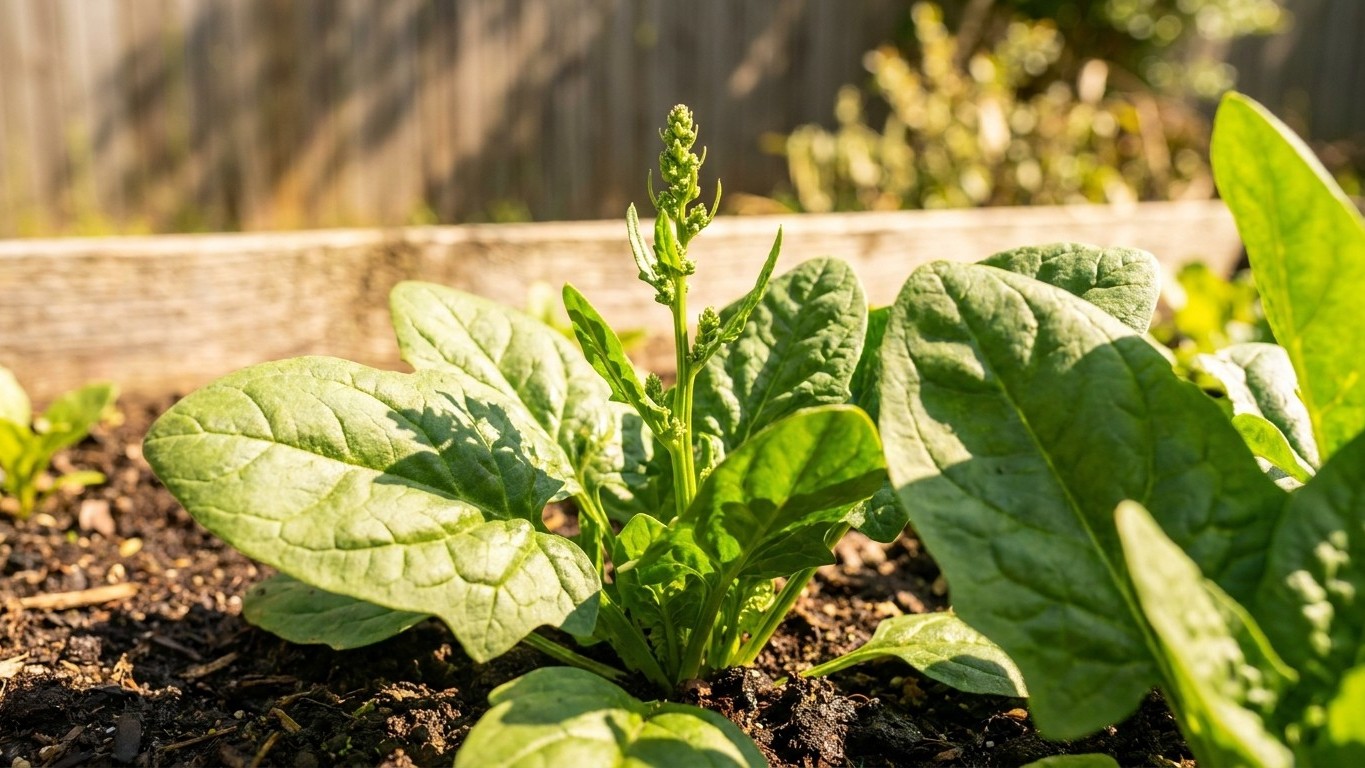

In North Carolina, cut spinach in the cool stretches on either side of summer: the weeks after a March sowing in spring, and the weeks between a late-summer sowing and the first fall frost. Reference figures here come from Charlotte, in the Piedmont. Once cut, spinach is a short-lived crop, with a two-week ceiling in a fridge held at 32°F. In a typical home fridge it fades much sooner.
The short answer
On the longest day of the year, Charlotte gets 14 h 23 of daylight. That number matters because spinach flowers in response to long days as well as warm temperatures, according to Utah State University Extension. Long days alone are enough to push a plant toward a seed stalk. So a mild summer, or a cool snap in June, does not buy extra weeks. The calendar is already working against the crop.
Which one limits you here, day length or heat? Both. The day length is long for much of the warm season, and the heat arrives on top of it. Spinach grows best where temperatures stay at or below 75 F, and that same number marks where leaves turn bitter. Charlotte averages 35 days a year that reach 90 F or more, so the heat load is real and it comes right when the days are longest. Our guide to Will Spinach Bolt Early in North Carolina? goes deeper into the flowering side. For the full growing calendar, start with Growing Spinach in North Carolina.
Put together, that gives two cutting seasons. Spring runs from a March sowing until afternoons settle above 75 F or the plants start sending up a stalk. Fall runs from a late-summer sowing until the first freeze. Cut when the leaves are full-sized and before any center stalk shoots up. A bolting plant has already spent its sweetness on flowers.
Then there is the question of how long the harvest lasts once it is on your counter. UC Davis Postharvest Technology Center says spinach is highly perishable and will not maintain good quality for more than 2 weeks. That is a ceiling, not a plan. It applies at 32°F with 95 to 98 percent relative humidity, and wilting, yellowing and decay rise after 10 to 14 days. At the 41 to 50°F typical of common distribution conditions, the same source says the decline comes faster. A home fridge door sits right in that warmer band. The coldest, steadiest spot is the back of the bottom shelf, so keep the bag there, not in the door (UC Davis Postharvest, spinach). Plan on eating it within days, and treat anything past ten as a bonus.
How long the spring window really is
Spring spinach is a race between the last frost and the first stretch of warm afternoons. NOAA NCEI climate normals put the last spring freeze in Charlotte between March 23 and April 5. Spinach goes in the ground 2 to 3 weeks before that date. Both ends of that rule are worth working through, step by step.
- Find the sowing band. Three weeks before March 23 is about March 2. Two weeks before April 5 is about March 22. The practical sowing window is therefore roughly March 2 to March 22, a band only about three weeks wide.
- Add the growing time. The Utah State source publishes no days-to-maturity for spinach, so there is no honest number to add here. The first cutting comes sometime after the seedlings are up and the leaves are full-sized, and you judge that by looking at the plants.
- Watch for the ceiling. Growth stops being good above 75 F. The figures behind this article carry no date for when Charlotte’s afternoons settle past that line, so the end of the window is one number you read from your own thermometer, not from the calendar.
- Count what is left. The usable part of spring is the stretch between your first harvestable leaves and the first run of afternoons above 75 F. Sowing late in the band shortens that stretch from the front, so the weeks are fewer than they look.
A cool, wet April stretches that window. A warm one shrinks it. The 35 days a year at 90 F or more tell you how hard the Piedmont heat arrives once it starts, and the long days at the solstice mean the flowering trigger is building long before the hottest weather does. That is why the spring crop here is a matter of weeks, not months.
Location shifts the whole sequence. The Blue Ridge mountains to the west run several weeks later in spring, and the coastal plain runs earlier. A gardener in the mountains sows later and may get a bit more cool weather at the front, but the day-length trigger still applies. Anywhere in the state, the smart move is to sow as early as the soil is workable and start cutting as soon as the leaves are big enough to use. Waiting for a bigger harvest is how spring spinach ends up as a flower stalk.
The autumn crop, and when the soil lets you sow
Fall is the better season in many North Carolina yards, but it starts with a puzzle. The cool weather you want is weeks away when you need to sow. Utah State University Extension advises planting 50 to 75 days before the date you want to harvest. That count is the only maturity guidance the source gives, and it rules the whole schedule.
Obstacle one: the soil is still too warm
Seed germination is reduced when soil is above 80 F. Notice what blocks the autumn sowing: heat in the ground, not cold. In North Carolina, soil stays warm long after the nights start to cool, so a packet of seed sown on the first day you feel fall in the air can still sit there and fail. In a hot region, the window opens when the soil falls, not when the calendar says so.
The figures here include no date for when Charlotte soil drops under 80 F, so I will not invent one. A cheap soil thermometer pushed 2 inches down at midday gives the real answer. Shaded beds cool first, which is why some gardeners tuck fall spinach on the north side of taller crops.
Obstacle two: the frost that ends the season
The other end of the schedule is the first fall freeze, which NOAA NCEI places between October 30 and November 8 in Charlotte. Treat that as the end of the harvest for planning purposes, and count backward. If you want your last cutting on October 30, the earliest date in that band, 75 days earlier is about August 16 and 50 days earlier is about September 10. If you can wait until November 8, the same count runs from roughly August 25 to September 19.
Those windows sit right on top of the warm-soil problem. August 16 is far too early for most of the state’s soil, so in practice the later half of each band is where seed actually comes up. The earlier dates are the theoretical edge, and the soil thermometer decides how much of it you get. Early sowings also face a steady line of caterpillars and other chewers, which we cover in What Eats Spinach in North Carolina, and When.
Fall has one advantage over spring: the days are getting shorter, not longer, so the flowering trigger fades as the crop grows. Temperatures also drift down toward the 75 F line instead of racing up past it. That is why a well-timed fall planting usually gives a longer cutting season than the spring one, even though the sowing date takes more patience.
Common questions
Can I let spinach keep growing through a cool North Carolina summer?
No. Long days trigger flowering on their own, and Charlotte gets 14 h 23 of daylight at the June solstice. A cool summer is not enough to hold the plants back. Heat adds to the problem, with about 35 days a year reaching 90 F or more.
How long does cut spinach last in the fridge?
UC Davis says it will not keep good quality for more than 2 weeks, and only at 32°F and 95 to 98 percent humidity. At 41 to 50°F it declines faster. Store it at the back of the bottom shelf, not in the door, and plan on using it within days.
Which spinach variety should I grow?
The Utah State source names four: Bloomsdale, Melody, Teton and Olympia. It publishes no data about any of them, so I can’t tell you which bolts later or grows faster. Try one or two in small plantings and keep notes on your own beds.
Why didn’t my fall spinach seed come up in August?
Warm soil is the usual cause. Germination is reduced above 80 F, so seed sown into hot ground may sprout poorly or not at all. Wait until the soil cools, then sow, keeping the 50 to 75 day count back from the first fall freeze in mind.