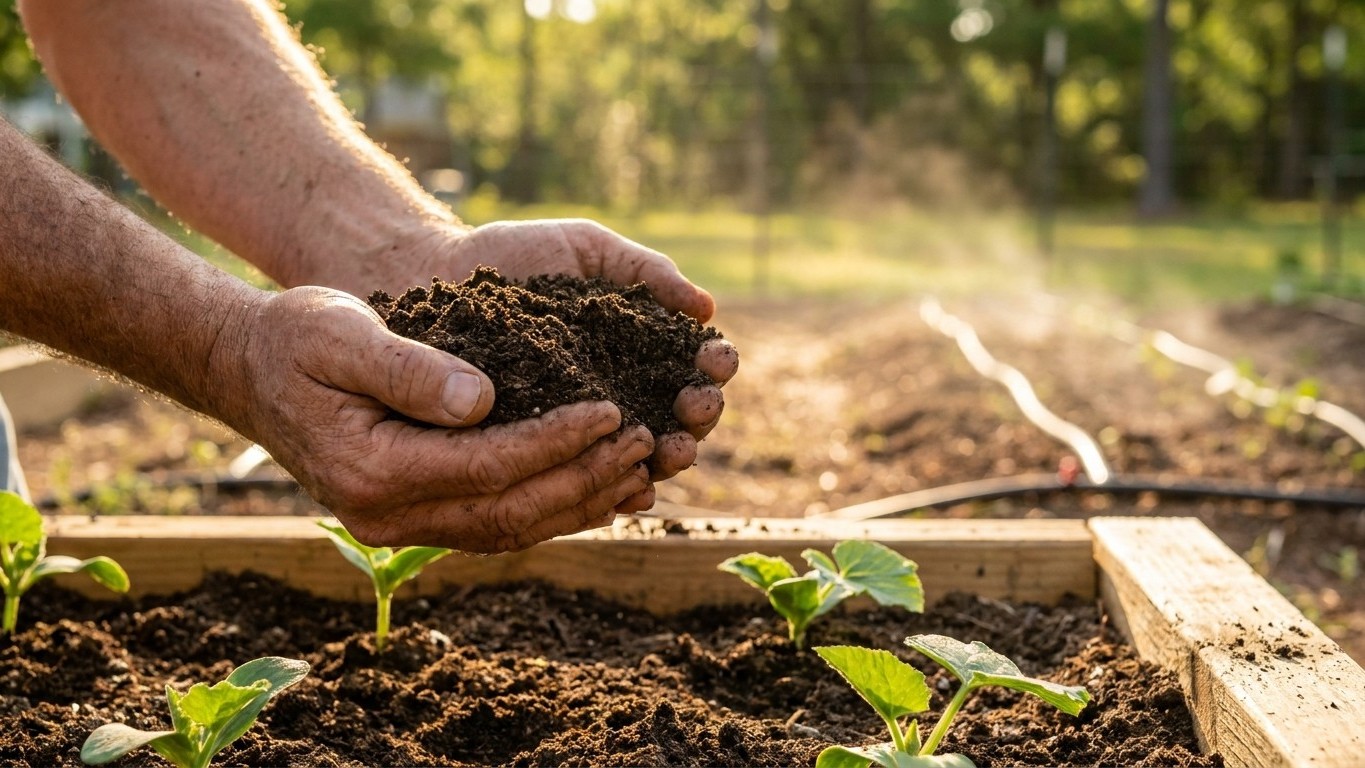

Summer squash needs soil at least in the 60s F to germinate reliably, which in North Dakota usually means waiting until the last week of May or later, well past the average frost date. The growing window then runs roughly 19 to 20 weeks before fall frost shuts it down, and heat, not cold, becomes the bigger threat by midsummer.
When the soil is warm enough in North Dakota
At the reference station used for North Dakota’s federal climate normals, the last spring frost falls somewhere between May 4 and May 15, according to NOAA’s 1991-2020 Climate Normals (32F freeze probabilities, 30-70% band). That’s a probability window, not a promise, and it comes from an airport weather station. Gardens in low-lying rural spots, river bottoms, or higher elevations typically see their own last frost run later, sometimes by a week or two, so treat this date as a starting reference and check your own county’s pattern before you commit.
Here’s the part that trips people up: frost date and planting date for summer squash aren’t the same thing. Squash seed sits and rots in cold, wet soil. It wants the ground itself warm, not just the air frost-free. That means waiting until soil temperature has climbed into the low 60s F at a couple inches deep, which in a place with North Dakota’s climate history often lags the last frost by a week or two. Direct-seeding too early doesn’t just delay germination, it can kill seed outright before it sprouts.
Because the frost date is a probability and not a guarantee, a lot of North Dakota gardeners hedge by starting seed indoors three to four weeks before their expected transplant date, then hardening off young plants before setting them out once soil has warmed. This isn’t about beating the frost so much as buying a few extra weeks of growing time in a short-summer state.
Variety choice matters here too, but not in the way seed catalogs sometimes suggest. Rather than chasing a specific cultivar name, talk to your local county extension office about which types have actually performed well in trials near you. The NDSU Extension Service tracks regional performance data that a national seed catalog simply can’t match for a state with this much climate variation between the Red River Valley and the western Badlands.
Skip any pest management approach that relies on a specific commercial product name or a fixed application rate pulled from outside sources. Squash bugs and cucumber beetles respond well to row covers removed at flowering, and to simply checking the undersides of leaves for egg clusters early in the season, a practice that costs nothing and doesn’t depend on a product label.
How long the season lasts here
Subtract the two dates from the FACTS and North Dakota’s frost-free window runs from roughly May 4-15 to September 25-October 5, which works out to somewhere between 19 and 20 weeks depending on where in that band your specific year and location fall. That’s a modest season by national standards, and it shapes almost every decision a squash grower here makes.
A window this length changes the succession-sowing math. In warmer states with a six-month season, gardeners often Plant Summer Squash twice, once in spring and again in midsummer, to keep fresh plants coming as older ones decline from pests or powdery mildew. North Dakota’s compressed season makes that second sowing a much tighter bet. Sow squash in July here and you’re racing the October frost with young plants that may not reach full production before the season ends. It can still work with fast-maturing types, but the margin for error shrinks fast.
That reality pushes the single spring sowing to the top of the priority list. Get it right the first time, because there may not be a comfortable second chance. It also tilts the transplanting decision. Direct-seeding saves the root disturbance that squash, with its sensitive taproot, doesn’t love, but transplanting buys two to three weeks of head start that a short-season gardener often needs more than the plant needs undisturbed roots. Using biodegradable or peat pots that go into the ground intact minimizes that root check while still capturing the early start.
For gardeners who want to test whether a second planting makes sense in their specific microclimate, the succession sowing guide on this site walks through how to calculate whether your remaining frost-free days after a given sowing date leave enough runway for a crop to mature. In a state where the season length varies this much between the Red River Valley and higher, more northern counties, that calculation is worth doing before assuming a July planting will pay off.
The short season also argues for choosing types known for reaching harvest quickly rather than long-season varieties bred for regions with an extra month or two of warmth to spare. That’s a conversation to have with your local extension office rather than a specific seed packet, since what performs quickest depends on more than the days-to-maturity number printed on the packet.
Heat and water in North Dakota
North Dakota isn’t a hot-climate squash state, and the numbers back that up plainly. The reference station at Fargo averages just 11.7 days a year above 90F, according to NOAA’s 1991-2020 Climate Normals. That’s a modest heat load compared to states further south, and it means blossom failure from extreme heat, a real problem where squash pollen loses viability above the high 90s, is a minor risk here rather than a defining one.
Rainfall tells a more mixed story. Summer months bring roughly 10 inches of rain across June, July, and August combined, with June the wettest at 4.29 inches, July at 3.07, and August the driest at 2.6 inches. That’s a reasonable amount of moisture by national standards, and it doesn’t scream drought stress the way a hot southern summer with little rain would. But it isn’t evenly spread, and August’s dip toward 2.6 inches lands right when squash plants are typically sizing fruit fastest and demanding the most water.
The bigger risk in North Dakota’s climate profile isn’t underwatering from heat and drought, it’s the opposite pattern: cooler, damper stretches that favor powdery mildew and other fungal issues on squash’s broad leaves. With low heat load and rain arriving in real quantity rather than as isolated thunderstorms, foliage that stays wet for extended periods becomes the more realistic threat than a shriveled, heat-stressed plant. Spacing plants generously for airflow, watering at the base rather than overhead, and watching for the telltale white dusting on leaves early matter more here than shade cloth or drip irrigation aimed at desert-level heat.
None of this means irrigation is pointless. August’s rainfall dip, combined with the fact that squash’s shallow, spreading root system draws moisture from the top foot of soil rather than deep reserves, means a dry stretch in late summer can still stress plants even without extreme heat behind it. A rain gauge on your own plot, not the regional average, is what actually tells you whether that August dry spell has arrived in your yard. Soil type matters just as much: a sandy garden in the Red River Valley drains that same rainfall in a day, while heavier clay elsewhere holds it for a week, so two North Dakota gardens under the same summer rainfall total can need very different watering schedules.
Which summer squash suit North Dakota
Three of this state’s own numbers point toward the same answer. The short frost-free window, running from that May 4-15 start to the September 25-October 5 finish, rewards types known to reach harvest quickly rather than those bred for a longer growing season. The low heat load, just 11.7 days above 90F most years, means heat tolerance isn’t the priority it would be further south. And the summer rainfall pattern, generous overall but capable of extended damp stretches, makes resistance to powdery mildew and other fungal pressure the more relevant trait to look for than drought hardiness.
That combination describes a profile, not a product. Early-maturing types bred with airflow and disease resistance in mind fit this climate better than late-season, heat-loving selections developed for longer, hotter summers elsewhere in the country. But naming a specific variety here would be a mistake, and not a small one. Seed performance varies by region in ways a general gardening article can’t responsibly predict, and a variety that thrives in a trial garden in one state can underperform in North Dakota’s particular combination of short season, cool nights, and USDA hardiness zone 3a-4b conditions.
The USDA Plant Hardiness Zone Map, built on average annual extreme minimum winter temperatures rather than summer growing conditions, places North Dakota across zones 3a to 4b, a wide range that itself signals how much the state’s growing conditions shift from the Red River Valley to its western reaches. That range is a reason to lean on local data rather than a national seed catalog’s generic recommendation.
The honest next step is contacting NDSU Extension directly, or your specific county office within that system, and asking which summer squash types have performed well in trials near you this decade. Extension trial data reflects actual local performance across real growing seasons, not marketing copy or a catalog’s national average. Refusing to substitute a guessed variety name for that local knowledge isn’t a gap in this article, it’s the correct answer for a state where growing conditions swing this widely between counties.