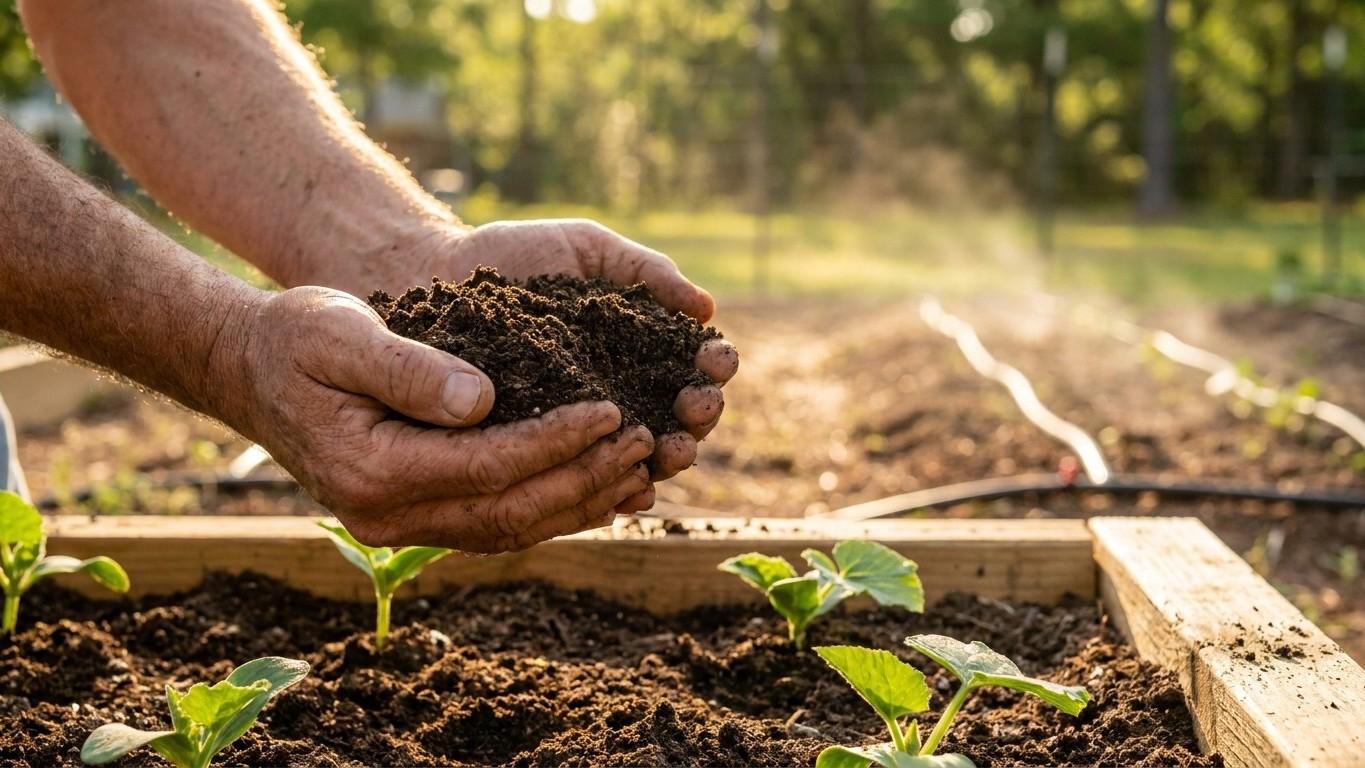

Western Washington gardeners can set out summer squash once nighttime soil temperatures hold above 60°F, typically from mid-May through early June near Seattle. The state’s long, mild maritime season allows a first sowing and often a second, but low summer rainfall and cool, damp air matter more here than heat.
When the soil is warm enough in Washington
The calendar question everyone asks first: what date can squash go in the ground? Around Seattle, NOAA’s 1991-2020 Climate Normals put the last spring frost, measured at station USW00024233, somewhere between February 27 and March 18. That’s a probability window, not a promise: some years the freeze risk clears earlier, some later, and the 30-70% band NOAA reports is exactly that, a band of likelihood rather than a fixed line on a calendar.
But frost is only a proxy. Summer squash doesn’t care about the thermometer reading 32°F. It cares about soil temperature, and soil in the Pacific Northwest warms slowly. Low spring light, frequent cloud cover, and soil that stays cold and wet well into April mean the last-frost date and the actual squash-planting date are two different things. A gardener who plants the week after the “last frost” in a Seattle-area yard is usually planting into soil that’s still too cold for squash seed to germinate reliably. Waiting two to four weeks past that frost window, until the soil itself has warmed, is the more useful rule.
One state, two climates
These dates come from a station representing western Washington’s mild, maritime pattern. Everything east of the Cascades is a different world: high desert, shorter frost-free stretches, and a planting calendar that doesn’t map onto the Seattle numbers at all. Applying this frost window to Spokane or Yakima would be a mistake, and the facts available here don’t include a station east of the mountains, so this page won’t invent one. If you garden in eastern Washington, your local WSU Extension office holds the frost data for your county.
Washington’s USDA Hardiness Zone range spans 4a to 9a statewide, a spread built on a single variable, average extreme minimum winter temperature, and it says nothing about summer growing conditions. For a specific planting decision, the Seattle-area reference point matters more than the statewide range, since a zone 8b coastal garden and a zone 5 mountain valley behave nothing alike come squash season.
How long the season lasts here
Subtract one frost date from the other and western Washington’s growing window runs long by national standards. Using the earliest possible last spring frost (February 27) against the latest possible first fall frost (November 30), the frost-free stretch can reach roughly 276 days. Even in a stingier year, last frost on March 18 and first fall frost on November 13 still leaves close to 240 days. Either way, that’s a season most of the country would envy.
What that length actually buys the gardener is the real payoff. A window this generous supports more than one planting of summer squash. Sow a first round once the soil has warmed in late May or June, and there’s still enough calendar left to put in a second round in July for a fresh harvest running into fall, well ahead of that November frost. This is where a succession sowing strategy earns its keep rather than being an optional extra; the site’s succession sowing guide walks through spacing those plantings so the second batch isn’t competing with an aging first crop for light and water.
A short-season territory forces a grower’s hand: one sowing, no do-overs, and every decision about starting seed indoors versus direct-seeding outside gets weighed against the calendar. Western Washington doesn’t impose that pressure. The season is long enough that transplanting, with its brief root check while plants adjust, costs little relative to the total growing time available. A gardener here can afford to start seedlings indoors for an earlier first harvest and still have room for a second direct-sown round later, something a six-week growing window elsewhere simply won’t allow.
Heat and water in Washington
Summer squash is famously heat-loving, but Washington’s Seattle-area normals tell a different story: only 3.0 days a year reach 90°F or higher, based on the 1991-2020 Climate Normals at the reference station. That’s not a typo and not a range, it’s the actual count. Compare that to inland or southern territories where dozens of 90-degree days are routine, and it’s clear this is not a heat-stress climate. Pollen doesn’t cook here the way it does where afternoons regularly clear the high 90s, and squash blossoms aren’t losing viability to scorching air.
The catch is water, not heat. Summer rainfall across June, July and August totals only about 3.0 inches, out of an annual 39.3 inches that mostly falls in the cooler months. July is the driest stretch of the year here, averaging just 0.6 inches, sandwiched between June’s 1.45 inches and August’s 0.97 inches. That’s a garden that goes dry exactly when squash plants are pushing out their biggest leaves and setting the most fruit. Big squash leaves lose moisture fast, and a shallow, spreading root system can’t always keep pace even without extreme heat pulling water out of the soil.
So the practical read for this territory: skip the shade cloth and the heat-stress worry that a Southern gardener deals with, and put the attention into consistent watering through July and August instead. A cool, damp spring, on the other hand, brings its own headache: slow early growth and a longer runway for powdery mildew and other fungal issues to establish themselves before the plant gets vigorous enough to outgrow them. Spacing plants for airflow and watering at the soil line rather than overhead does more good here than anything aimed at beating the heat.
Which summer squash suit Washington
Given a long frost-free window and a summer that’s cool rather than blazing, the priorities for choosing a squash type in Washington look different than they would in a hot, short-season state. Earliness isn’t the constraint it is elsewhere, since 240-plus frost-free days leaves room for even a slower-maturing type to finish comfortably, with time left for a second sowing behind it.
Heat tolerance, similarly, isn’t the deciding factor when the reference station logs an average of three 90-degree days a year. What matters more is disease resistance, given the cool, damp spring conditions and a summer that, despite low total rainfall, still carries the marine layer and overcast stretches typical of western Washington. A type bred with resistance to powdery mildew and other common fungal pressures has a real advantage in this climate, more so than one selected purely for speed or heat endurance.
This page won’t name a specific variety, and that’s a deliberate choice rather than an oversight. Seed catalogs list dozens of summer squash types, and the ones that actually perform well change from year to year based on trials run in real Washington conditions, not on a generic description written for a national audience. Washington State University Extension runs exactly those trials and publishes results specific to the state’s growing regions, both the mild maritime west and the high-desert east. That’s the source that carries weight, because it reflects what’s actually been grown and tested here, not a name picked to fill a paragraph.