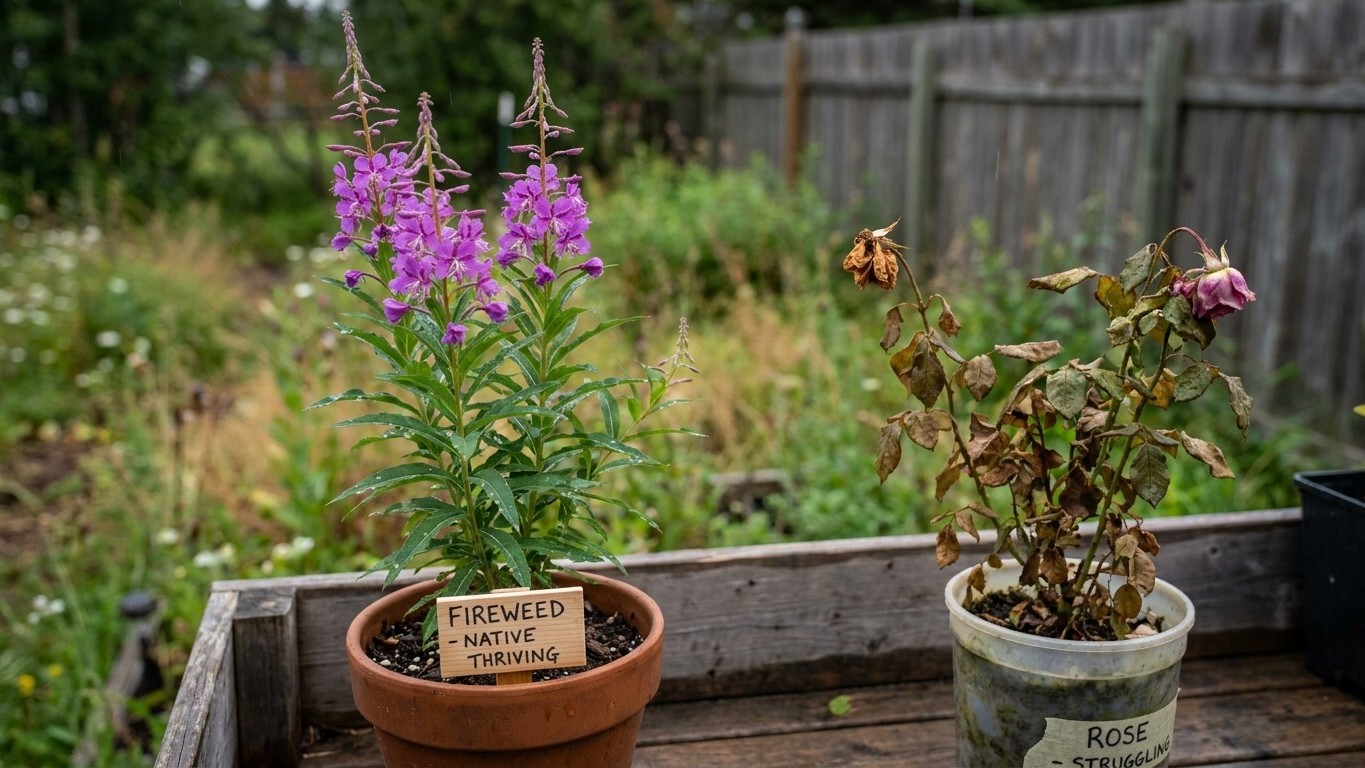

Flowers that thrive in the Northwest Territories are the ones built to shrug off a coldest-month average low of -29.5 °C, the figure Environment and Climate Change Canada’s 1981-2010 climate normals record for the Yellowknife station, in a season that averages zero days above 90°F. That rules out anything that needs a long stretch of real heat and rewards hardy perennials and fast, cold-tolerant annuals instead. Before you buy a packet or a pot, check its days-to-maturity against the average frost-free window at Yellowknife, roughly May 25 to September 18 per ECCC, and treat any variety needing more than about 90 days from seed as a gamble.
Putting a border together

A border here is built around two facts working against each other: a winter cold enough to kill most catalog perennials outright, and a summer too short and too cool to finish anything that needs real heat units. Everything you choose, from the tallest plant at the back to the edging at the front, gets tested against those two limits before it gets tested against how it looks.
Start with what has to survive winter
Any perennial you plant has to tolerate a coldest-month average minimum of -29.5 °C at Yellowknife, per ECCC’s 1981-2010 normals, and that figure is a mean, not the record low, so treat it as the floor and expect colder snaps some winters. Catalog-listed extreme-cold-hardy perennials commonly rated to Canadian plant hardiness zone 1 or 2 are the ones worth trying: Siberian iris (Iris sibirica), peony (Paeonia lactiflora), daylily (Hemerocallis hybrids bred for northern zones), Russell hybrid lupine (Lupinus polyphyllus), columbine (Aquilegia canadensis), hardy geranium (Geranium sanguineum), and bergenia (Bergenia cordifolia). A tag that only says “hardy perennial” without a zone number is not enough information to plant on. Look for the published zone rating on the tag or in the catalog description and treat anything rated warmer than zone 3 as an annual here, even if the garden center sells it as a perennial.
Layering by height
Set your tallest plants at the back or center of the bed, your mid-height plants in front of them, and low edging plants at the front where nothing blocks them. Delphinium and lupine can reach three to four feet and belong at the back. Peony and Siberian iris sit in the two-to-three-foot middle layer. Pansies, calendula, and sweet alyssum stay low and go along the front edge or the border of a path. Leave enough space between plants for their mature spread, not their nursery-pot size, because a border planted tight looks full for two weeks in July and then turns into a tangle by August.
Succession of bloom across a short season
With a frost-free window that runs on average from May 25 to September 18 at Yellowknife per ECCC, that’s roughly 116 days from mean date to mean date, and both dates are means rather than guarantees, so treat the real window as narrower most years. Stack bloom times so something is flowering the whole way through rather than betting everything on a single midsummer peak. Pansies and violas often start flowering within days of going in the ground and tolerate a light frost on either end. Peony, iris, and lupine carry the early-to-mid-summer show. Calendula and nasturtium keep going into early fall because both shrug off the first light frosts rather than collapsing at the first cold night.
| Variety | Type | Catalog days to maturity | Fit to a short season |
|---|---|---|---|
| Calendula ‘Pacific Beauty’ | Hardy annual | 45-50 days | Tolerates light frost at both ends, direct-sowable |
| Nasturtium ‘Alaska’ | Annual | 50-60 days | Direct sow after last frost, self-sows readily |
| Bachelor’s button ‘Blue Boy’ | Hardy annual | 65-70 days | Very cold tolerant, reseeds on its own |
| Sweet pea ‘Old Spice’ | Annual vine | 60-70 days to bloom | Needs cool soil to germinate, start as early as possible |
| Snapdragon ‘Rocket Mix’ | Short-lived perennial grown as annual | 90-100 days from seed | Start indoors, transplant out once frost risk drops |
Catalog days-to-maturity figures are almost always counted from transplant, not from seed sown outdoors in cold soil, and they vary by a week or two depending on the season regardless of where you garden. Cross a variety’s figure against the local frost window yourself rather than trusting the number alone. A snapdragon rated at 90 to 100 days from seed will not reliably finish if you direct-sow it after the mean last frost date of May 25. Start it indoors instead, six to eight weeks ahead, so the plant is already budding by the time it goes outside.
Repeating color and leaving room
Repeat the same color or the same cultivar in at least two or three spots along the border rather than scattering one of everything. A single clump of blue delphinium reads as an accident. Three clumps spaced along the bed read as a plan. Plant in odd numbers, three or five of a kind, and leave real gaps at planting time. A short growing season means plants often don’t reach the full mature spread printed on the tag in a single year, so a bed that looks sparse in June can still fill in properly by August without needing extra plants crammed in to compensate.
What struggles here and why
Some garden-center favorites are a poor match for a summer with essentially no days above 90°F at the Yellowknife reference station, per ECCC, and a growing season that runs on average about 116 days between frosts.
- Dahlias need a long, warm season to build tubers big enough to bloom well, and the tubers won’t survive winter in the ground at a coldest-month low near -29.5 °C.
- Gladiolus corms need sustained warmth to mature after flowering, which a short cool summer rarely provides in full.
- Canna lily and tuberous begonia are tropical by origin and stall out without consistent heat, not just warmth on the odd sunny afternoon.
- Zinnias germinate slowly in cool soil and are prone to powdery mildew in a damp, cool summer, so they need to go in as started transplants, not direct seed.
- Morning glory rarely gets enough sustained warmth to flower reliably before the average first fall frost on September 18.
Gardeners further south with a longer frost-free season have an easier time with these. In Flowers That Actually Thrive in Nova Scotia, and the Ones That Struggle, dahlias and gladiolus are a realistic bet rather than a stretch. The same is true further inland with a longer, hotter summer, covered in Flowers That Actually Thrive in Montana, and the Ones That Struggle, where heat-loving annuals get the season length they actually need.
Local help
For plant lists suited to your specific district rather than the Yellowknife averages used here, contact the Northwest Territories agriculture extension service through the territorial Department of Industry, Tourism and Investment. Community garden clubs and Master Gardener groups across Canada often maintain their own trial lists for short-season climates, and they’re worth asking about locally before you commit a border to an untested variety. For more on planning around the territory’s growing season, see our Northwest Territories guides.
Common questions
Can I direct-sow flower seeds outdoors, or do I need to start everything indoors?
Some flowers direct-sow fine here, including calendula, nasturtium, and bachelor’s button, all of which tolerate cool soil and a short window. Anything with a catalog days-to-maturity figure much past 70 days, like snapdragons or many dahlias, should be started indoors and transplanted out once frost risk has passed, or it simply won’t finish.
Do dahlias and gladiolus work at all in the Northwest Territories?
They can flower in a good year, but neither survives winter in the ground here. If you want to grow them, treat the tubers or corms as an annual purchase, or dig and store them indoors over winter the way gardeners further south do with tender bulbs, and expect a shorter, later bloom than catalog photos taken in warmer regions.
How do I know when it’s truly safe to plant outside, since the frost date is just an average?
The average last frost date at Yellowknife, May 25 per ECCC, means frost falls later than that in roughly half of all years, not that it’s guaranteed safe on that date. Watch the actual forecast in the two weeks around it, keep row cover or a cold frame on hand for tender transplants, and hold off on anything frost-sensitive until you’ve seen a clear stretch of nights.
Siberian iris, peony, daylily, columbine, and hardy geranium are commonly rated to Canadian plant hardiness zone 2 or 3 in catalogs, which puts them well within the region’s coldest-month average minimum of -29.5 °C recorded by ECCC. A perennial rated only to zone 5 or warmer is not a safe bet even if a garden center sells it locally as one, since retail plant tags don’t always match the actual winter here.
Related guides
- Flowers That Actually Thrive in Yukon, and the Ones That Struggle
- Flowers That Actually Thrive in Nunavut, and the Ones That Struggle
- Flowers That Actually Thrive in Nova Scotia, and the Ones That Struggle