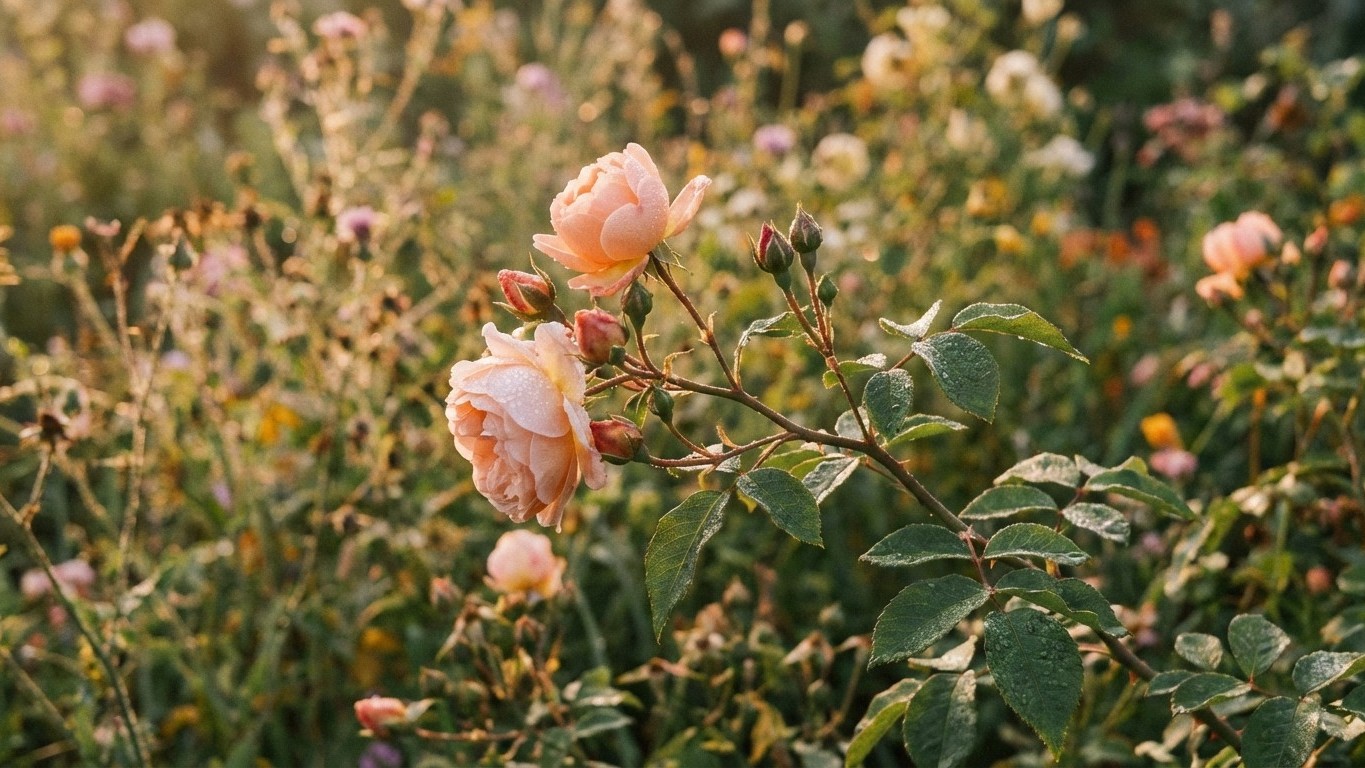

Choose roses bred for the Canadian prairies and northern gardens: rugosas such as Hansa, Therese Bugnet, and the Explorer and Parkland series, on their own roots. Yellowknife sits in Canadian hardiness zone 1b, and few roses sold across North America are rated that cold. Hybrid teas, tree roses, Knock Out, and climbers like New Dawn all need protection or a different plan. The sections below sort the shelf. For the basics of care, see growing roses in Northwest Territories.
Which roses survive a Northwest Territories winter
What does Canadian hardiness zone 1b mean for a rose?
The reference city, Yellowknife, falls in Canadian hardiness zone 1b. That is the Canadian system, built on seven climate variables, and it does not convert to a USDA zone. Natural Resources Canada says plainly that no simple conversion exists between the two. A rose tagged “zone 3” could be using either scale, so check which one before you trust the number.
Zone 1b is colder than the 2 or 3 ratings printed on most hardy-rose tags. That does not rule those roses out. Snow cover makes a large difference. A deep, early snowpack insulates the base of the plant, and a rose rated one or two zones milder than its site will often lose its canes above the snow line and push up new ones from the crown in spring. Plan on that outcome rather than hoping to avoid it.
The growing season is short as well. The mean last spring frost at the Yellowknife A station is May 25, and the mean first fall frost is September 18. That works out to about 115 frost-free days between the two. These are midpoints, so in one year out of two the last frost falls later than May 25 and in one year out of two the first frost arrives earlier than September 18. Communities farther north or in more exposed country run weeks behind the station.
Which types of rose clear zone 1b?
At the cold end of the rose family you find the species and their closest relatives. Rugosas, hybrid rugosas, and the Canadian-bred Explorer and Parkland series are the groups that tolerate a Northwest Territories winter best. They were bred for prairie and northern conditions, where canes freeze and the plant has to recover from the base.
Hybrid teas, floribundas, and grandifloras sit at the other end. Their tags usually rate them for zone 5 or 6, several steps milder than 1b. Here they need deep mounding, wrapping, or lifting to survive, and even then many will not. Treat them as a gamble.
The flowering habit matters too. A rose that blooms on old wood loses its first flush when the canes die back. One that blooms on new growth still flowers, just later in summer. In a season this short, new-wood bloomers are the safer bet.
Named roses that hold up here
Here is what a gardener can order today, with what to expect in a cold winter. Ratings are what sellers commonly print, usually zone 2 or 3. Zone 1b is colder, so dieback to the snow line is normal for all of them.
| Rose | Type | What to expect in zone 1b |
|---|---|---|
| Hansa | Rugosa | Very tough, with fragrant double magenta flowers and large orange hips. Canes die back above the snow, and it suckers freely from the base. |
| Therese Bugnet | Hybrid rugosa | Bred in northern Alberta. Pale pink flowers on reddish canes with few thorns. Rebuilds from the base after a hard winter. |
| William Baffin | Explorer climber | Among the hardiest climbers. Grow it as a free-standing shrub here, because canes left on a trellis above the snow will die. |
| John Cabot | Explorer climber | Similar habit to William Baffin, with deep pink flowers. Same rule applies: let it sprawl low. |
| Morden Blush | Parkland shrub | Compact, pale pink, and repeat-blooming. A good choice where snow cover is reliable. |
| Prairie Joy | Parkland shrub | Pink, taller than Morden Blush, with strong recovery from dieback. |
Hansa and Therese Bugnet are two of the most dependable choices on this list. Both are rugosa-based, with the leathery, wrinkled foliage that rugosas are known for. They shrug off wind, which is useful in open lots near Yellowknife where the snow blows off.
Then there is the rose already growing here. Rosa acicularis, the prickly wild rose, is the floral emblem of the Northwest Territories. It has single pink flowers and needle-like prickles, and it grows along roadsides and in open woods. A garden center will not always stock it, but nurseries that sell native plants often do. Buy nursery-grown stock rather than digging from the bush.
Whichever of these you pick, the habit to build is to expect canes to die back to the snow line and to prune the dead wood out in spring once you can see which buds are alive. Green under the bark means the cane is living. Brown and dry means cut it.
Sold here, but not for this zone
Which roses on the shelf will not come through without work?
Garden centers in the territory often stock nationally, so what lands on the shelf is chosen for markets far milder than Yellowknife. That means plenty of roses in bloom in May that were never bred for zone 1b.
Knock Out is a well-known example. It is an excellent landscape rose where winters are milder, but its tag typically gives a USDA rating around zone 5, which is a different scale from Canadian zone 1b. In Yellowknife expect it to die to the ground in many winters, and in a bad one to die outright. New Dawn, the pale pink climber, is usually rated to a similar mild zone, and a climber is especially exposed because its long canes stand high above the snow.
Other shelf roses carry the same risk. Hybrid teas and grandifloras are bred for large single blooms, not for cold. Many English-style shrub roses are rated for zone 5 or 6. Tree roses, which are a bloom-head grafted atop a bare trunk, put the most vulnerable part of the plant in the coldest air. Even a “hardy” tag on any of them is hard to trust without checking the scale.
What if you buy one anyway?
Gift-shop miniature roses are a common trap. They are forced into bloom in a greenhouse and sold as houseplants. A pot left outdoors freezes solid, and roots in a pot are exposed on every side. If you buy a rose of this kind, treat it as a one-summer plant and enjoy it on the deck, or give it a cold but frost-free spot indoors if you want to try keeping it.
Gardeners who still want a hybrid tea can bury it deeply in fall and cover the mound, but it is a hobby project with a high loss rate. Spend the same effort on a rugosa and you will get a healthy bush.
What to check on the label before buying
Read the tag before you read the picture. Three details decide how a rose does in a cold climate, and the photo tells you none of them.
- Grade: ask the seller which grade you are getting. Lower grades are smaller and slower to establish, which costs you in a short growing season.
- Rootstock: the tag or catalog should say “own root” or “grafted.” A grafted rose has a swollen knob at the base where the named variety was joined to a different root.
- Zone system: look for whether the rating is Canadian or USDA. Those numbers do not line up, and a bare “zone 3” tells you little.
Own-root roses matter more the colder the winter gets. When a grafted rose freezes to the ground, whatever regrows comes from the rootstock, which is usually a tough but ordinary rose and not the one you paid for. You end up with a vigorous plant that blooms in a plain color you never chose. An own-root rose that dies back to the crown regrows as the same variety, because the roots and canes are one plant. In zone 1b, dieback is likely in some winters, so choose own-root plants and skip grafted ones unless the seller has a good reason.
Most Explorer, Parkland, and rugosa roses sold by prairie nurseries are grown on their own roots already. That is one more reason to buy from those sources, and to ask when a plant will ship so it arrives dormant and does not sit in a warm store.
Checking this against your own community
The Yellowknife figures here describe one reference city. The territory spans very different country, and a garden in Fort Smith, Hay River, or Inuvik has its own frost dates and its own snow. The Northwest Territories has no county system or land-grant extension office, so the place to ask is the territorial government’s agriculture program at Industry, Tourism and Investment agriculture services. Staff there know which crops and ornamentals have been tried in your community.
Before you spend money on plants, ask the agriculture office which roses have survived in your community, and compare what you hear with the mean frost dates above. Neighbors who have kept a rose alive for several winters are an equally good guide.
Common questions
Can Knock Out roses grow in Yellowknife?
They can grow for a summer, but survival through winter is unlikely in many years. The tag rating is on the USDA scale and sits a few steps milder than Canadian zone 1b. If you try one, plant it where snow piles deepest and expect it to die back to the ground.
Does a rose labeled zone 3 survive here?
It may, if snow protects the base. Zone 1b is colder than zone 3 on the Canadian scale, and a tag that gives only a number might be using the USDA scale instead. Check which system the seller uses and treat the rating as a minimum, not a guarantee.
Are own-root roses really better in the north?
Yes, for winters this cold. If the canes freeze to the ground, an own-root rose regrows as the variety you bought. A grafted one regrows as its rootstock, which is a different rose.
Can I dig up a wild prickly rose and move it?
Transplants from the bush often fail because the roots run deep and wide, and wild plants on public land are not yours to take. Buy nursery-grown Rosa acicularis, or ask the territorial agriculture office where to find one.