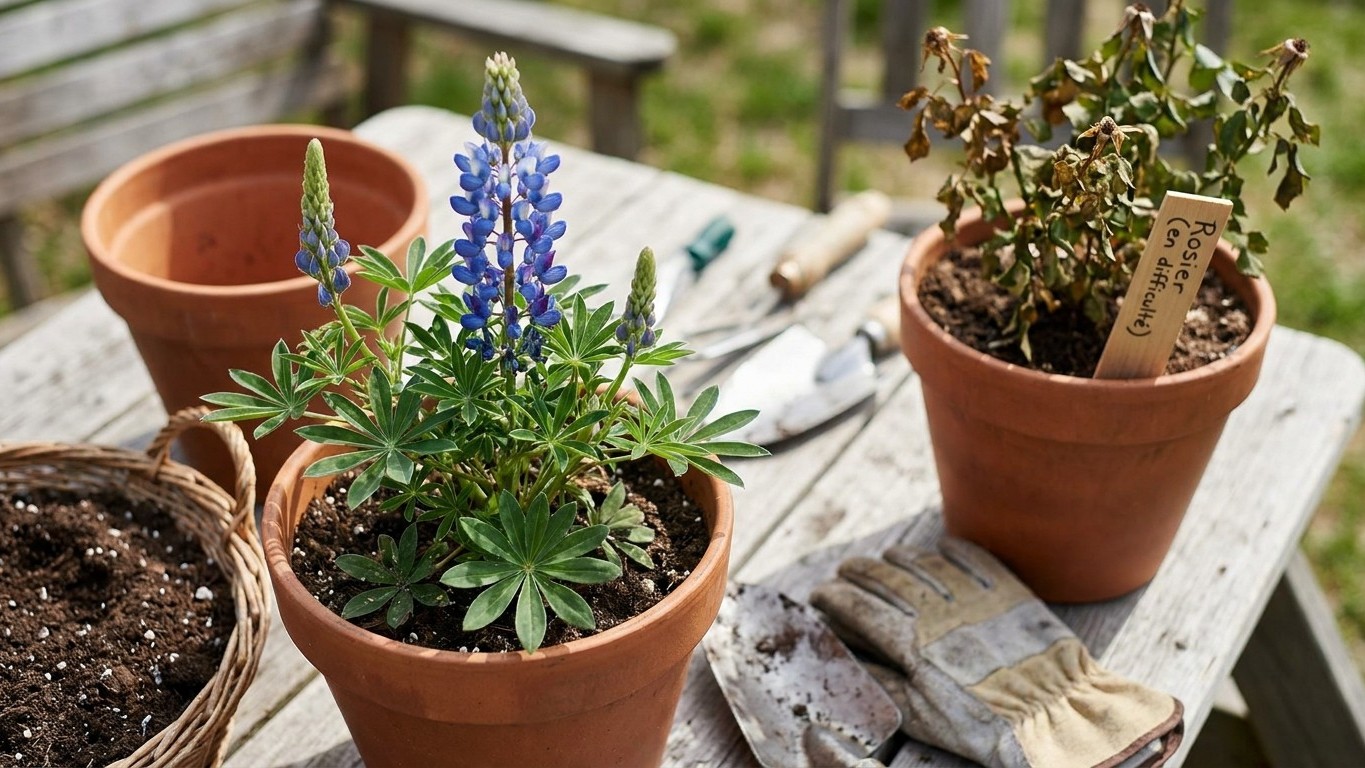

Flowers that thrive in Nova Scotia are the ones built for a short, cool summer and a hard winter: peonies, lupins, Siberian iris, and asters bloom reliably year after year, while heat lovers like tropical hibiscus and lantana sulk, because Halifax averages zero days a year above 90°F according to Environment and Climate Change Canada’s 1981-2010 climate normals. The same normals put the coldest month’s average nightly low at -10.4 °C, and that figure is what actually decides whether a perennial survives to flower again. Match a plant’s hardiness rating against that number before you buy it, not after.
Putting a border together

A Nova Scotia border runs on the same rules as any other border. It just gets less time to do its job. The frost-free stretch runs from an average last spring frost of May 7 to an average first fall frost of October 18, both from Environment and Climate Change Canada’s 1981-2010 normals for the Halifax Stanfield station, which works out to roughly 164 days start to finish. Both dates are means, not guarantees. In one year out of two the real frost falls later than the mean date at either end, so a border planned around a single calendar day gets caught out about as often as it doesn’t.
Layering by height
Put the tallest plants at the back of a bed viewed from one side, or in the middle of an island bed viewed from all sides. In a Nova Scotia border that usually means delphinium, hollyhock (Alcea rosea), and filipendula holding the 4 to 6 foot line, with peonies, phlox paniculata, daylilies (Hemerocallis), and Siberian iris filling the 2 to 3 foot middle ground. Keep the front 12 to 18 inches for lower, spreading plants: creeping phlox, dianthus, and hardy geranium all take the cold well and hide the bare stems of the taller plants behind them.
Resist the urge to crowd the front row in year one. A perennial bought in a one-gallon pot looks lonely in May and crowded by its third August. Space it at the mature width printed on the tag, not the pot width, and fill the gap for the first season or two with an annual like calendula or cosmos that you won’t mind pulling out later.
Succession of bloom across the season
With only about five and a half months of growing season on average, a Nova Scotia border earns its keep by overlapping bloom times rather than stretching any single plant’s season. Spring bulbs, tulips and daffodils, don’t wait on the last frost date at all. They’re hardy enough to push through a late snow and bloom before the average frost has even cleared. Peonies, lupins, and Siberian iris follow in early summer, right around when the frost risk from that May 7 average finally eases off. Phlox paniculata, daylilies, and coneflower (Echinacea purpurea) carry midsummer. Asters and sedum ‘Autumn Joy’ close out the season, often still blooming past the October 18 average first frost in years when the real frost runs late, which happens about half the time.
| Flower | Bloom period | Mature height | Why it holds up here |
|---|---|---|---|
| Peony (Paeonia lactiflora) | Late spring to early summer | 2 to 3 ft | Needs a real winter chill to set flower buds, which Halifax’s cold winters supply |
| Siberian iris (Iris sibirica) | Early summer | 2 to 3 ft | Tolerates wet spring soil and heavy clay better than bearded iris |
| Garden phlox (Phlox paniculata) | Midsummer | 2 to 4 ft | Flowers well without the sustained heat that stresses it further south |
| New England aster (Symphyotrichum novae-angliae) | Early to mid fall | 3 to 5 ft | Blooms right up to the first frost and shrugs off cool, damp fall weather |
Repeating color and leaving room to grow
Pick two or three colors and repeat them at least three times through the length of the border. A single purple lupin looks like an accident. Purple lupin in June, purple Siberian iris a few weeks earlier, and a purple aster in September reads as a plan instead. The repetition is what makes a border look designed rather than collected, and it costs nothing extra since you’re choosing which plants to buy anyway.
Most herbaceous perennials take two to three years to reach the spread printed on the tag. A border planted at final spacing in year one will look sparse through that first season and probably the second, and that’s normal, not a sign of failure. Gardeners further north in Nunavut work with a much shorter list of options and an even tighter season, and the same patience-over-instant-fullness rule matters there too, as covered in our guide to flowers that thrive in Nunavut.
What struggles here, and why
The flip side of zero days above 90°F is that anything bred for sustained heat spends the whole Nova Scotia summer waiting for a warmth that never really arrives. Annual vinca (Catharanthus roseus) is a common disappointment: it wants hot, humid nights to perform and instead sulks, often developing stem rot in the cool, damp conditions typical of a Maritime summer. Tropical hibiscus, bougainvillea, and lantana fall in the same category. They can be grown in pots and treated as houseplants over winter, but they will never fill a Nova Scotia border the way they fill one in a genuinely hot climate.
- Dahlias and gladiolus bloom fine through summer, but their tubers and corms cannot survive a Nova Scotia winter in the ground and need lifting each fall
- Canna lilies need more sustained heat than a Nova Scotia summer provides to reach full size, and their rhizomes also need lifting
- Moss rose (Portulaca grandiflora) wants baking-hot, dry soil and tends to stay stunted in a cool, damp bed
- Moonflower (Ipomoea alba) rarely opens more than a handful of blooms before the season runs out
Gardeners in Nevada have the opposite complaint, where the challenge is too much heat rather than too little, and the flower list that holds up there looks almost nothing like this one, as our guide to flowers that thrive in Nevada lays out.
Local help
Nova Scotia doesn’t run one province-wide Master Gardener certification, but several county garden clubs offer volunteer training and public plant clinics through the growing season, and a face-to-face opinion on your actual yard beats any national seed catalogue. Start with the provincial extension service at novascotia.ca/agri for pest bulletins and variety information specific to the province, since conditions on the South Shore, in the Annapolis Valley, and on Cape Breton’s highlands differ enough that a single blanket recommendation rarely fits all three. For frost dates and planting timing for the rest of the province, the Nova Scotia guides hub collects that information by region in one place.
Common questions
Can I grow dahlias in Nova Scotia?
Yes, dahlias flower well through a Nova Scotia summer, but the tubers cannot stay in the ground over winter. Halifax’s coldest month averages a nightly low of -10.4 °C according to Environment and Climate Change Canada, cold enough to kill dahlia tubers left in the soil. Lift them once frost blackens the foliage and store them somewhere cool, dark, and frost-free until spring.
Why didn’t my hydrangea bloom this year?
If it’s a bigleaf hydrangea (Hydrangea macrophylla), the most likely cause is winter damage to the flower buds, which that species sets on the previous year’s wood. A cold winter, or even one hard late-spring frost after the buds have started to swell, can wipe out that year’s flowers while leaving the plant itself alive. Panicle hydrangea (Hydrangea paniculata) and smooth hydrangea (Hydrangea arborescens) both flower on new wood each year, which makes them a more dependable choice for this reason.
What hardiness zone is Nova Scotia for choosing perennials?
There isn’t one single answer, and that’s the point: a province is not one climate. Coastal areas near Halifax run milder in winter than inland valleys and highland districts a short drive away, so a perennial’s tag rating needs to be checked against local conditions rather than a province-wide guess. The provincial extension service at novascotia.ca/agri is a better source for that comparison than a generic hardiness map.
When is it actually safe to plant annuals outside?
Later than the average date suggests. Environment and Climate Change Canada puts the average last spring frost at Halifax at May 7, but that’s a mean date from the 1981-2010 normals, not a guarantee. Frost falls later than that mean in roughly half of all years, so many gardeners in the region wait a further week or two past it before setting out tender annuals, and watch the forecast rather than the calendar in the meantime.
Related guides
- Flowers That Actually Thrive in New Brunswick, and the Ones That Struggle
- Flowers That Actually Thrive in Nunavut, and the Ones That Struggle
- Nova Scotia Soil
- Nova Scotia Planting Calendar
- Planting Spring Bulbs in Nova Scotia