
Peppers can ripen in the Northwest Territories, but only with help. The territory’s climate record shows zero days a year at or above 90 F, so heat stress isn’t the obstacle here. The real risk is the other end: cool nights and a short window between frosts. Start seed early indoors, choose a fast variety, and be ready to cover plants when nights turn cold.
The short answer

The reference station at Yellowknife averages 0.0 days a year at or above 90 F, according to Environment and Climate Change Canada’s Climate Normals for 1981-2010. For pepper growers, that’s actually good news on one front: fruit set doesn’t fail from heat here. Pepper blossoms drop when daytime temperatures push past 90 F, because pollen turns sterile and the plant aborts flowers rather than push new fruit through a heat wave. With effectively no days that hot in a typical Yellowknife-area summer, that particular failure point almost never applies.
But pepper fruit set fails at both ends, and the cold end is the one that matters in this territory. Utah State University Extension’s guide to growing peppers notes that flowers also drop, or never set at all, when nights fall below 55 F. Pepper plants are tropical natives at heart. They tolerate a lot, but chilly nights during flowering stall pollen development just as surely as extreme heat does, and the plant responds the same way: fewer pods, or none.
This is where the data runs out, and it’s worth being direct about that. This site tracks days at or above 90 F for the territory, but it does not carry summer night minimum temperatures. There’s no published figure here for how many nights in a Yellowknife-area July or August dip below 55 F, and guessing based on the territory’s high latitude would be irresponsible. Latitude alone doesn’t predict a given night’s low; local terrain, water bodies, cloud cover and elevation all shift it, sometimes by ten degrees or more between two spots twenty miles apart.
The practical move is to watch your own thermometer through the pepper flowering window rather than relying on a regional average. If you’re logging nights consistently in the mid-50s or lower during the weeks your plants are setting flowers, that’s very likely why pods aren’t forming, heat load isn’t the culprit in this territory. Row cover pulled over plants in the evening, a cold frame, or simply picking a sheltered microclimate against a south-facing wall can buy several degrees on a cool night. None of that shows up in a climate normal, but it’s the difference between a handful of ripe peppers and an empty stalk come the first fall frost.
When to start seed here
Utah State University Extension recommends starting pepper seed 8 to 10 weeks indoors before transplanting, and transplanting only after the danger of frost has passed and soil has warmed to 60 F. In the Northwest Territories, that arithmetic starts with the frost date and works backward. Here’s how to run the numbers for a Yellowknife-area garden, and how to redo them for wherever you actually live.
- Start with the average last spring frost. At the Yellowknife A station, Environment and Climate Change Canada’s 1981-2010 normals put the mean last spring frost at May 25. That’s a midpoint, not a guarantee: in roughly half of all years on record, frost arrived after that date. Treat May 25 as the center of a window, not a safe line to plant on.
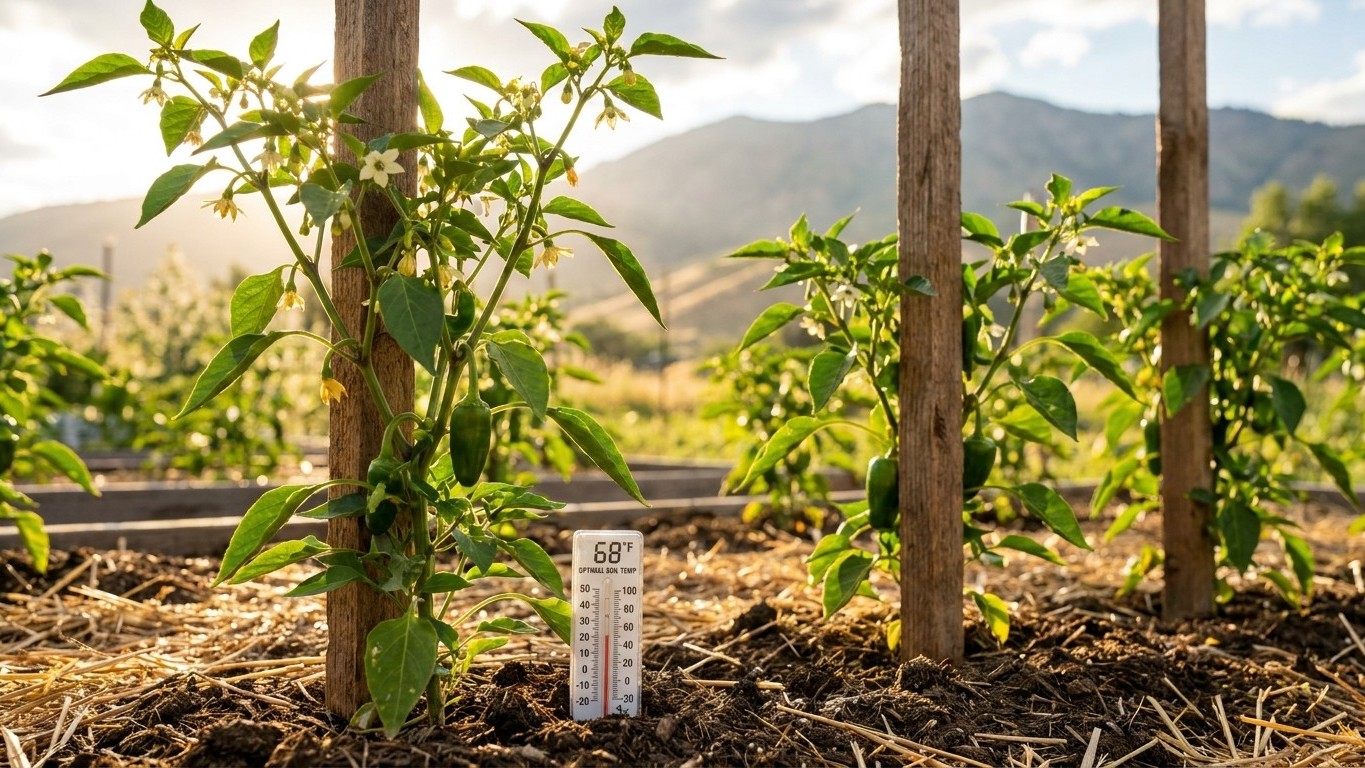
- Wait for 60 F soil, not just a frost-free date. Even after the air stops freezing, cold ground stalls pepper roots and can stunt transplants for weeks. A simple soil thermometer pushed a few inches into the bed, checked over several mornings, tells you more than any calendar date. In much of the Northwest Territories, soil often lags well behind air temperature into June.
- Count back 8 to 10 weeks from your realistic transplant date. If soil and frost risk suggest transplanting in early to mid-June, an 8-to-10-week head start indoors means starting seed in early to mid-April. Given how variable that May 25 average can run, many Northwest Territories gardeners lean toward the 10-week side rather than the 8-week side, and hold transplants a little longer indoors under grow lights if the ground is still cold.
- Build in a buffer for a late spring. Because the frost date is a mean and not a floor, a cautious approach starts seed on schedule but delays transplanting by a week or two if a cold snap is forecast, keeping young plants indoors or hardening them off gradually in a cold frame rather than setting them straight into open ground.
- Recheck the math every year against your own site. A garden in a low-lying frost pocket, or one several hundred feet higher than the reference station, can run a week or more behind the territory-wide normal. Keep a simple log of your own first and last frost dates over a few seasons, and use that instead of the regional average once you have it.
What goes wrong here
Even with a good start date, several pepper problems show up repeatedly in short, cool-summer climates like this one. Most trace back to the same root cause: temperature swings the plant isn’t built to handle.
- Blossom drop from a cool night. Flowers form, then fall off without setting fruit, usually after a stretch of nights under 55 F. Since this territory’s summer night lows aren’t published here, the fix is to track your own overnight temperatures during flowering and cover plants with row fabric or move containers to a sheltered spot when a cold night is forecast.
- Blossom drop from a heat spell. Less common in a territory averaging zero days at or above 90 F, but a single unusually hot, dry stretch can still trigger the same flower drop. Afternoon shade cloth and consistent watering during any short heat spike reduce the stress that causes it.
- Sunscald on exposed fruit. Pods that ripen with little leaf cover develop pale, blistered patches on the side facing direct sun, especially once a plant has lost lower foliage. Leave more foliage in place when pruning, and avoid stripping leaves for the sake of “opening up” the plant.
- Blossom-end rot. A leathery, sunken patch forms at the fruit’s blossom end when the plant can’t move enough calcium to developing fruit, usually because watering has been uneven, heavy one week, dry the next. Consistent soil moisture from a mulch layer and a regular watering schedule prevent it far more reliably than any calcium spray.
Common questions
Can peppers ripen outdoors in a Northwest Territories garden without any protection?
It’s possible in a warm, sheltered pocket in a favorable year, but the combination of a short frost-free window and cool nights during flowering makes it unreliable without season-extension help such as row cover, a cold frame, or a greenhouse.
Does the lack of days above 90 F mean peppers grow faster here?
No. Zero days at or above 90 F removes one failure point, heat-triggered blossom drop, but it says nothing about growth speed. Peppers still need consistent warmth through the growing season to size up and ripen fruit fully.
How do I know if my nights are too cold for pepper flowers to set?
Watch a thermometer at your own garden site through the flowering period. If pods aren’t setting despite healthy-looking plants and nights are regularly running below 55 F, that’s the likely cause, not a soil or watering problem.
Should I plant on May 25 since that’s the average last frost?
No. May 25 is a mean date from a 1981-2010 climate normal, meaning frost has historically arrived after that date in roughly half of all years. Use it as the center of your planning window, and confirm with a local forecast before moving transplants outside.