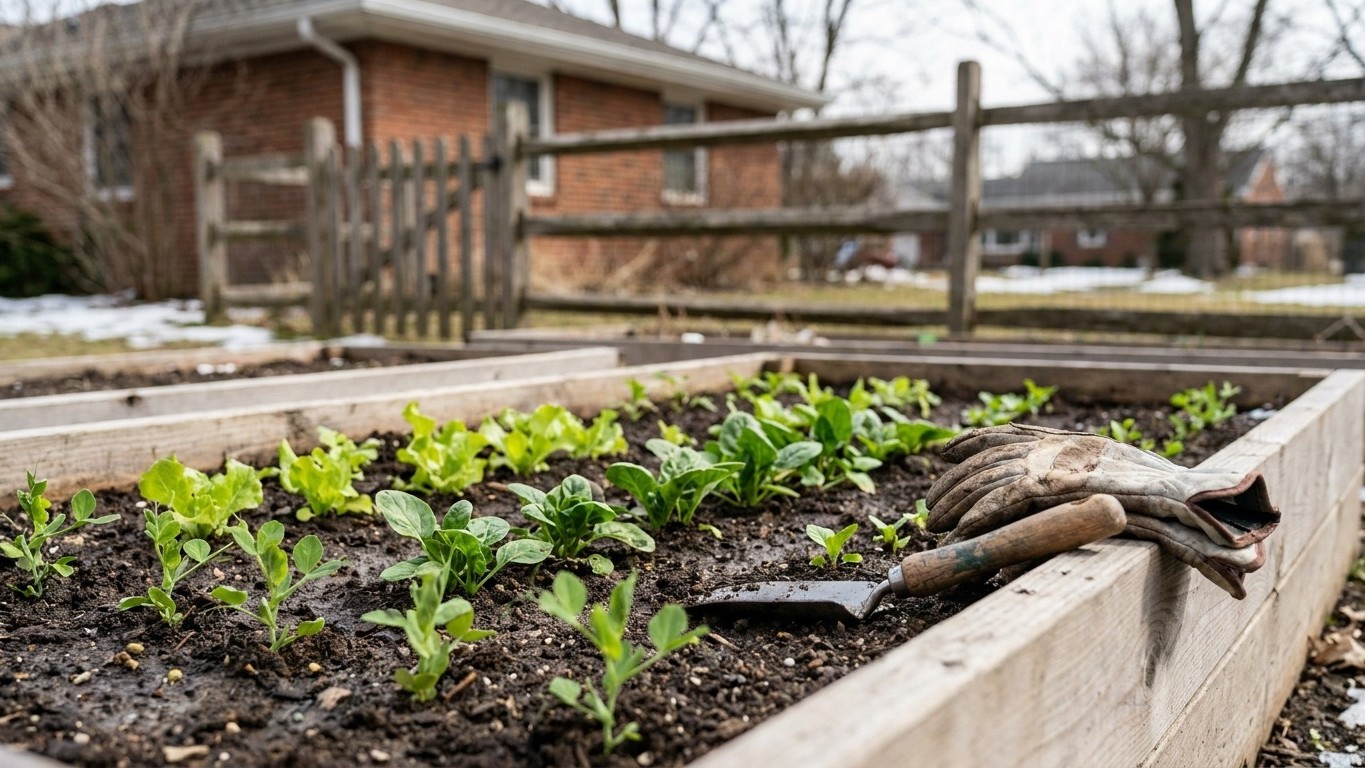

In the Northwest Territories, March means the garden stays closed. The ground around Yellowknife is still frozen solid under a snowpack that won’t fully clear for weeks, and the average last frost doesn’t arrive until May 25. Nothing goes into open soil this month. The real work happens indoors: starting seeds under lights, forcing a few plants for an early harvest, and getting the season’s plan in order before the thaw finally starts.
What goes in the ground in March

Say it plainly: no outdoor planting happens in the Northwest Territories in March. The soil around Yellowknife is frozen to depth, snow cover is often still substantial, and the average last spring frost doesn’t land until May 25. That figure comes from Environment and Climate Change Canada’s 1981-2010 climate normals for the Yellowknife A station, and it’s a mean date, not a promise. In one year out of two, the last frost actually falls later than May 25. Treat that date as the midpoint of a window that can stretch well into June, not a line you can plan against.
Garlic and shallots, which in milder parts of the country still go into workable soil this time of year, simply aren’t an option here in March. The ground won’t cooperate. Cold frames and low tunnels can start doing useful work later in the month if the site gets direct sun and the snow has been cleared back, but they’re warming the air above frozen ground, not creating plantable soil.
What does make sense this month is indoor forcing. Rhubarb crowns lifted and brought into a dark, cool space will push tender stalks within weeks. Chicory roots dug the previous fall and forced in a box of sand, kept dark, will produce pale, sweet chicons that give the household something fresh to cut while the outdoor garden is still months away. Bare-root fruit stock and dormant perennials, if they arrive by mail this month, should be potted up and held in a cool, frost-free space rather than left waiting for ground that won’t be ready for a long while yet.
What to start under cover
The arithmetic that matters this month runs backward from that May 25 average, and because it’s an average, the safer habit is to count from a date a few weeks later than that, not from it directly. Onions and leeks, which generally want 10 to 12 weeks of growth under lights before they’re hardened off and moved outside, line up well with a March start if the goal is transplanting once the soil has genuinely warmed, likely well into June in most years. Celery follows a similar timeline and rewards an early start because it’s slow and easily stalled by a cramped pot.
Peppers and eggplant, which need a long runway and don’t tolerate any chill once they’re outside, can also begin indoors this month, but they carry more risk of the first failure mode gardeners run into here: starting too early and ending up with rootbound, leggy stems by the time the ground is finally fit to receive them in June. A six- to eight-week head start on tomatoes, by contrast, timed toward late spring rather than March itself, avoids that same trap.
The second failure mode matters just as much in a climate this short: starting too late and running out of growing season before the first fall frost, which averages September 18 at the Yellowknife station. Between the two average dates there’s roughly four months of frost-free growing, and in a region with a Canadian hardiness zone rating of 1b for Yellowknife, that’s not much room to waste. Seedlings that go out a week late in June can still lose weeks of harvest by September. Starting under cover this month, rather than waiting, is what buys back that margin.
What is ready to pick
Outdoors, the honest answer is nothing. No garden bed in the Northwest Territories is producing in March, and there’s no point pretending otherwise. What keeps a household fed this month comes from what was put up the previous fall and from a handful of things grown on purpose indoors.
Sprouts and microgreens are the fastest return going: a tray of pea shoots or radish microgreens sown on a windowsill will be ready to cut in one to two weeks, giving fresh, crunchy greens with almost no equipment. The forced rhubarb and chicory started earlier in the month will begin to yield toward its end, a small but real addition to the table.
Stored crops need attention now more than almost any other point in the year. Squash held since fall should be checked for soft spots near the stem, the earliest sign of rot spreading inward. Potatoes kept in a dark, cool space should be sorted for any that have started to sprout or shrivel, since one soft potato left in a bin will take its neighbors down with it. Onions stored in mesh or crates deserve the same check, with any that feel soft at the neck pulled and used first rather than left to spoil the rest.
The jobs that matter this month
March carries real deadlines even without a single seed going into outdoor ground, and skipping them costs the season later rather than now.
Pruning, ordering, and planning
Dormant pruning of fruit trees and berry canes should be finished before buds swell, and in a climate this cold that window often runs later than gardeners further south expect, but it’s worth getting the cuts made while the plant is still fully asleep. Seed ordering matters this month too: short-season varieties bred for a quick finish sell out first in a territory where every grower is chasing the same narrow window between May 25 and September 18, so a delayed order can mean settling for a variety that won’t mature in time.
Soil, tools, and stored crops
Where soil samples can be pulled from a stored bag or a raised bed that isn’t fully frozen through, testing now gives time to order lime or amendments before the ground opens up. Compost bins that have gone dormant over winter can be turned on a mild day to keep the pile from going anaerobic once it thaws in earnest. Tools deserve a proper cleaning and sharpening now, since a dull hoe or blunt pruner is a small annoyance in a long season but a real time cost in one this short. Bed frames, cold frame glazing, and fencing damaged by snow load or wildlife should get repaired before the thaw brings a rush of other tasks competing for the same hours. And that stored-crop check described above isn’t a one-time job: doing it every couple of weeks through March catches rot before it spreads.
What not to do in March
The most common mistake in a climate like this is trusting a mild afternoon. A stretch of unusually warm air in late March can feel like spring, but the soil temperature that actually governs seed germination and root growth lags weeks behind air temperature, especially with snow still on the ground. Direct-sowing anything warm-season based on how the air feels rather than on the calendar’s real frost math is a near-guaranteed loss.
Uncovering cold frames, removing winter mulch, or pulling protective wrap off young fruit trees during a mild spell is another version of the same error. The average last frost of May 25 means half of all years see frost even later than that, so a warm week in March tells you almost nothing about what April or early May will bring. Anything exposed too early can be hit hard once temperatures swing back down, which they reliably do.
Feeding nitrogen to anything overwintering outdoors or to dormant perennials this month is also a mistake. Nitrogen pushes soft new growth, and soft new growth has no defense against the cold snaps that are still guaranteed to come before the season’s frost-free window opens. Better to hold off on feeding until growth is already underway and the plant can actually use what’s applied.
Checking this against your own county
A territory-wide picture of March is a starting point, not a set of instructions for any one yard. The Northwest Territories cover an enormous range of latitude and terrain, and elevation, lake effect, and simple distance from Yellowknife can shift these frost windows by weeks in either direction. A community further north or at higher elevation should expect both dates to move later in spring and earlier in fall, shrinking the frost-free season even further than the roughly four months implied by the May 25 and September 18 averages.
For a planting calendar built around actual local conditions, the Government of the Northwest Territories agriculture services page is the place to check before committing seed money or bench space to any particular timeline.
Common questions
Can anything actually be planted outdoors in the Northwest Territories in March?
No. The ground is frozen and typically still under snow across the territory in March, and the average last frost doesn’t arrive until May 25. Nothing goes into open soil this month; the useful work is indoors, under cover, or with dormant stock held in pots.
Why does the last frost date matter so much for a March planting calendar?
Because it sets the backward count for everything started indoors this month. Onions, leeks, and celery started now are timed to be ready for transplant once the soil has genuinely warmed, and because May 25 is only an average, in one year out of two the real frost falls later, so it pays to plan toward early June rather than the average date itself.
What does Canadian hardiness zone 1b actually mean for a gardener used to USDA zones?
It isn’t a USDA zone at all, and the two systems don’t convert cleanly. The Canadian system is built from seven climate variables rather than one, and a single Canadian zone can span several USDA zones. Zone 1b for Yellowknife signals a very short, cold growing season; it shouldn’t be read against USDA zone charts used elsewhere on this site.
What’s the biggest risk to avoid this month specifically?
Trusting a mild March afternoon. Air temperature warms up long before soil temperature does, and uncovering cold frames or direct-sowing based on how the air feels, rather than on the real frost window, is the single most common way gardeners here lose seedlings before the season has even started.