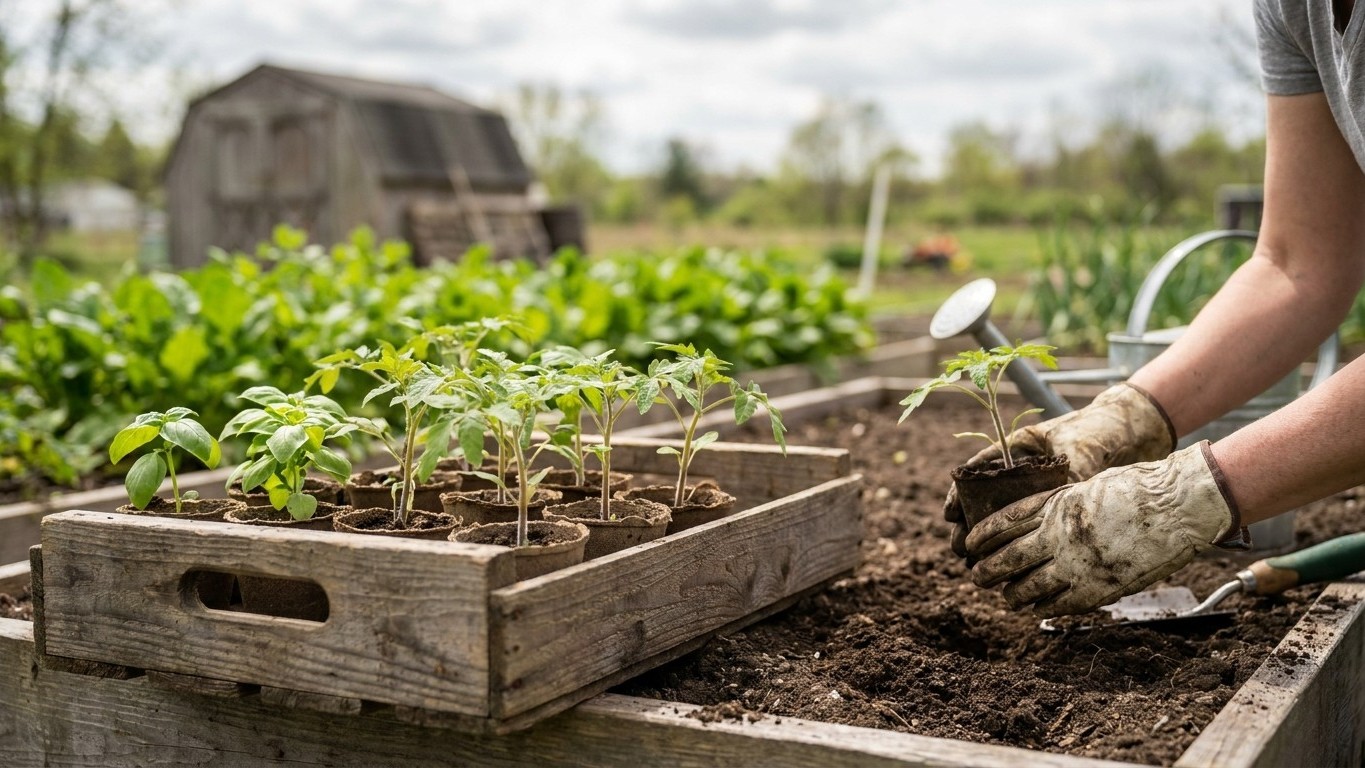

May in the Northwest Territories still belongs to winter’s tail end more than to the garden. With Yellowknife’s mean last spring frost landing May 25, only the toughest crops go into open ground this month: peas, spinach, and other cold-hardy greens once the soil thaws and drains. Everything else waits under cover or on a windowsill.
What goes in the ground in May

Why May still means frost risk
The number that matters here isn’t the calendar, it’s the soil. Yellowknife A’s climate normals put the average last spring frost at May 25, and that figure is a midpoint, not a guarantee. In roughly half the years on record, frost arrives after that date. So a warm afternoon in early or mid-May tells you nothing about what’s happening six inches down, where seeds actually germinate. Ground that was frozen solid weeks earlier can still be cold and waterlogged well into the month, especially in low-lying or shaded plots.
That reality rules out anything warm-season. Tomatoes, peppers, squash, beans, and corn have no business in open soil in May here. They rot before they sprout, or they sprout and die the first cold night.
What can safely go in
What does work is the short list of plants built for cold, wet starts. Garlic and shallots can still go in where the ground has thawed enough to dig, if they weren’t planted the previous fall. Peas tolerate cool soil and light frost once they’re up, and they’re one of the few direct-sown crops worth the gamble late in the month. Spinach, arugula, and other hardy salad greens germinate at lower soil temperatures than most vegetables and can handle a cold snap after emergence. Onion sets are another reasonable bet once the bed is workable.
A cold frame or low tunnel buys real time here, letting these same crops go in a week or two earlier than open ground would allow, and protecting seedlings if a late frost does show up.
| Crop | Direct-sow in May? | Frost tolerance once up |
|---|---|---|
| Peas | Yes, late month if soil is workable | Good |
| Spinach, arugula | Yes | Good |
| Garlic, shallots, onion sets | Yes, if not planted in fall | Good |
| Tomatoes, peppers, squash, beans | No | None |
What to start under cover
Counting backward from a moving target
Because the mean last frost falls near the end of May, and because that date can slip well into June in a given year, the safer approach is to count backward from a working transplant date of mid-to-late June rather than from May 25 itself. Slow growers that need a long head start, like tomatoes and peppers, should already be well underway indoors by this point, six to eight weeks ahead of that transplant window, and May is mostly a month of hardening them off gradually rather than starting them from seed.
What does make sense to start fresh under cover in May are the shorter-cycle crops: cucumbers, summer squash, and quick brassicas like bok choy, which need only four to five weeks indoors before they’re ready to move out once the ground and air have both warmed.
Two mistakes show up every season. Start too early and you end up with tall, rootbound plants sitting in small pots for weeks, stressed and stunted before they ever see outdoor soil. Start too late, given a frost-free season that on average runs from May 25 to September 18, and there isn’t enough calendar left for a full harvest before fall frost returns. A second, smaller cold-frame sowing of hardy greens is worth doing too, as insurance against anything lost to a late cold spell outdoors.
What is ready to pick
What’s left from last season
Little to nothing comes out of open ground in the Northwest Territories in May, and there’s no point pretending otherwise. The growing season hasn’t really started, and anything sown this month is weeks from harvest. What feeds the household right now comes from what was put by or protected earlier.
A cold frame that carried hardy greens through the shoulder season may still be giving spinach, arugula, or kale leaves worth picking. Indoors, sprouts and microgreens are the fastest fresh food available, ready in a week to ten days from seed with no outdoor risk at all.
Stored crops need attention now more than at any other point in the season. Potatoes, squash, and onions held since fall are approaching the end of their storage life, and warmer indoor temperatures as the weather turns speed up sprouting and rot. Check bins and root cellars for soft spots, sprouted eyes, or anything that smells off, and use those first. Squash with a soft neck or a sunken spot won’t hold much longer and is worth cooking down or freezing rather than composting outright.
The jobs that matter this month
Pruning, planning, and prep
May is the last practical window for dormant pruning on fruit trees and cane fruit like currants or raspberries, before buds break and sap starts moving in earnest. Pruning after growth starts costs the plant more energy and slows fruiting later, so this is a deadline, not a suggestion.
Seed orders for anything still needed should go in now if they haven’t already. Short-season and cold-hardy varieties suited to a zone 1b climate sell out fastest, and a late order often means settling for whatever’s left.
Soil work belongs here too. As beds thaw and drain, this is the month to test pH and amend with compost or lime where needed, since amendments need weeks to work into the soil before anything goes in for good. Turning the compost pile, once it’s thawed enough to work, speeds it toward usable finished compost by early summer.
Checking stored crops and fixing what winter broke
Snow melt reveals what needs fixing: sagging fence sections, raised bed frames heaved by frost, tool sheds that need airing out. Cleaning and sharpening pruners, shears, and hoes now means they’re ready the moment soil is workable, instead of losing days to a dull blade mid-planting. And circle back to those stored potatoes and squash one more time before the month ends. Anything turning soft now won’t make it to the next check.
What not to do in May
The cold-soil trap
The single most common mistake is trusting the air instead of the soil. A run of 60-degree afternoons feels like summer, but soil six inches down can still sit in the 40s, and that’s cold enough to rot tomato and squash seed before it germinates. Wait for the soil itself to warm, not just the forecast, and when in doubt, start those crops indoors instead of direct-sowing.
Uncovering perennial beds or removing winter mulch too early after a mild stretch is the second trap. A week of warmth can trigger new growth on strawberries or perennial herbs, and that tender growth has no defense against the frost that, on average, doesn’t clear until May 25 and sometimes lingers past it.
Nitrogen-heavy feeding early in the month pushes soft, fast growth on anything that’s up, and soft growth is exactly what a late frost kills first. Hold off on nitrogen until plants are established and the frost risk has genuinely passed, and lean on compost or a balanced feed instead if soil test results call for it.
Finally, resist hardening off transplants too fast. Moving indoor-grown seedlings straight into full sun and open wind for a full day can scorch or snap them; a gradual introduction over a week protects the head start already invested in them.
Checking this against your own county
Every date and zone figure here comes from a single reference station, Yellowknife A, and the Northwest Territories covers a vast range of elevation, latitude, and lake-effect microclimates that shift frost windows by weeks in either direction. A community north of the treeline or at higher elevation should expect a later last frost and an earlier first fall frost than Yellowknife sees on average. Before committing seed or transplants to the ground, check current conditions and local guidance through the Northwest Territories agriculture services page, which tracks conditions specific to the territory rather than one southern station.
Common questions
Is it too early to plant vegetables outside in the Northwest Territories in May?
For most vegetables, yes. The mean last spring frost is May 25, and that’s a midpoint, not a safe date. Only cold-hardy crops like peas, spinach, and onion sets should go into open ground this month; everything warm-season waits.
What hardiness zone is the Northwest Territories?
Yellowknife falls in Canadian hardiness zone 1b, based on Natural Resources Canada’s system, which uses seven climate variables rather than the single winter-minimum measure the USDA system uses. It doesn’t convert directly to a USDA zone number.
When does the growing season end in the Northwest Territories?
The mean first fall frost at Yellowknife A falls September 18, giving an average frost-free stretch of roughly four months. That window narrows further north or at higher elevation.
Can you grow a full vegetable garden in the Northwest Territories?
Yes, within limits. Short-season, cold-hardy varieties, cold frames, and indoor starts stretched to their transplant date make a real harvest possible, but crops needing a long, hot summer rarely succeed without season-extension tools like tunnels or greenhouses.