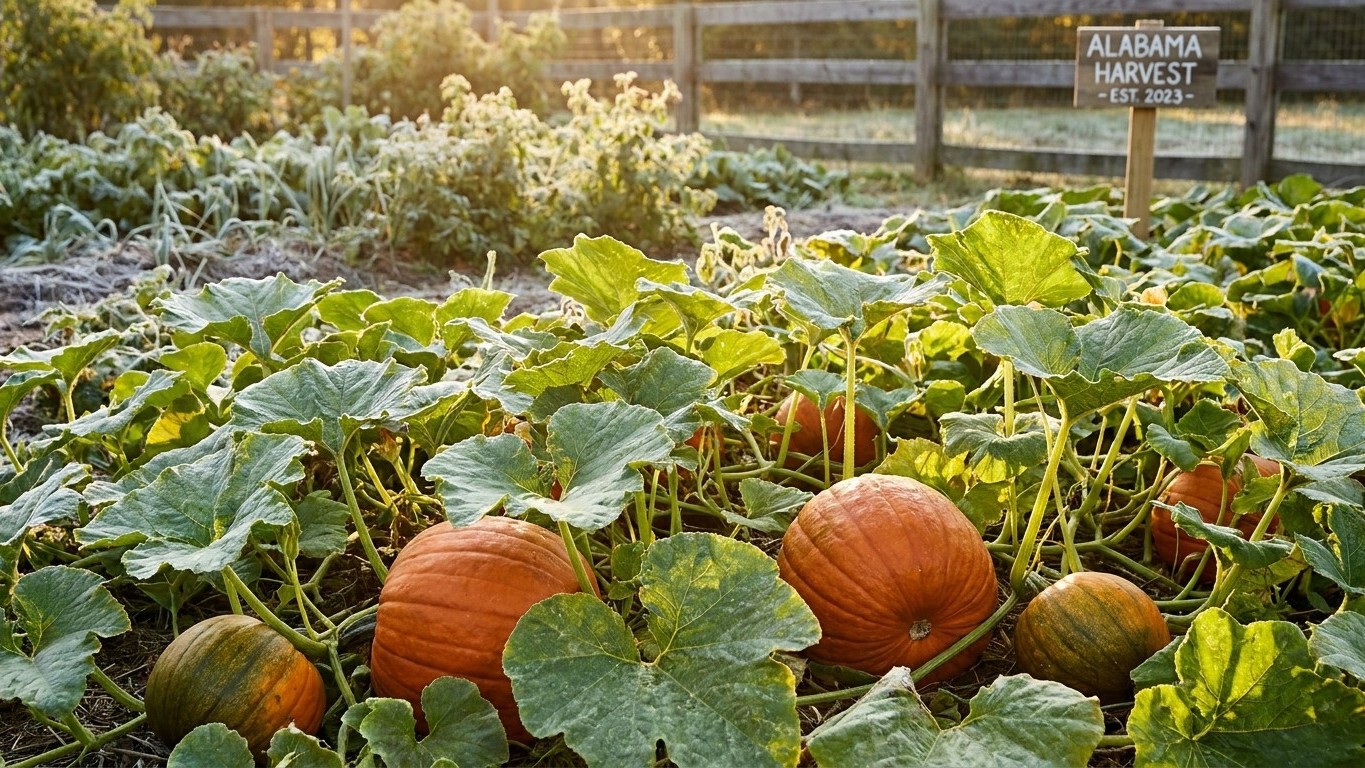

in Northwest Territories, the average first fall frost lands around September 18, and the average last spring frost around May 25. Pumpkins need 45 to 55 days from the moment a flower opens, not from the day you sow, to finish ripening. Run that math backward from September 18 and the window gets tight fast: a flower opening later than early August is a real gamble here.
The short answer
Start with the frost date everyone in the territory watches: September 18, on average, at Yellowknife A. That’s the mean date pulled from the official Canadian Climate Normals, and it’s worth repeating that a mean is not a guarantee. In one year out of two, frost arrives later than September 18. In the other half, it arrives earlier. Treat that date as the middle of a moving window, not a line you can plant your calendar against.
Now subtract the 45 to 55 days a pumpkin needs to mature after its flower opens. Fifty-five days back from September 18 lands you at July 25. Forty-five days back lands you at August 4. That gives a flowering window of roughly July 25 to August 4 as the latest point a female flower can open and still have a real shot at a ripe, hard-skinned pumpkin before the average frost shuts things down.
Miss that window and the arithmetic turns against you. A flower that opens August 10 needs until roughly September 24 to September 29 to finish, which is after the average frost date, and well into the half of years where frost comes even sooner. That’s not a small miss. It’s the difference between a pumpkin you carve and a green one you compost.
Why the frost date isn’t a safe line
Because the September 18 figure is an average, not a forecast, gardeners at higher elevation or further from Yellowknife A should expect their own local frost to run later in the fall calendar than this station suggests, sometimes by weeks. The Yellowknife A station is one point in a territory with enormous climate variation, so use September 18 as a planning midpoint and build in a safety margin rather than treating it as a deadline you can bank on.
Put together, the short answer is this: pumpkins can Ripen Before Frost in Northwest Territories, but only if flowering happens by the first days of August, and only in years where frost cooperates and arrives on schedule or later. Push flowering past early August and you’re relying on a later-than-average frost to bail you out.
When to sow here
Sowing date is a separate calculation from the flowering math above, and conflating the two is the most common mistake gardeners make. The last spring frost, on average, is May 25. Soil temperature reaching 65 F, which is what pumpkin seed needs to germinate reliably, is a different milestone entirely, and it happens later than the frost date, not on it.
- Let the last frost pass first. May 25 is the average last spring frost at Yellowknife A. As with the fall date, this is a mean: in half the years, frost lingers past May 25, so treat it as a floor, not a green light.
- Wait for the soil, not the air, to warm. Air temperature climbs faster than soil temperature, especially in a climate this far north where the ground stays cold under lingering snowmelt and short daylight gains. In practice, soil in Northwest Territories often doesn’t climb into the mid-60s until several weeks after that last frost has passed, sometimes not until deep into June.
- Check the soil directly rather than guessing. A simple soil thermometer pushed a few inches down beats counting days on a calendar. Pumpkin seed sown into soil colder than 65 F germinates slowly, unevenly, or not at all, which only eats further into an already short season.
- Use row covers to buy roughly two weeks. A row cover traps solar heat near the soil surface, which can warm that top layer faster than bare ground exposed to the region’s still-cool air. That gain, banked early, can be the difference between a flower opening in late July and one opening in mid-August.
- Sow as soon as the 65 F threshold holds, not just touches. A single warm afternoon doesn’t count. Look for the soil to sit at or above 65 F consistently before committing seed, since a cold snap right after sowing can stall germination for days that this climate simply doesn’t have to spare.
What goes wrong here
- A late flower that never colours up. When the season runs short, growers often let vines set fruit from flowers that open in mid-to-late August, past the July 25 to August 4 window. The fruit sizes up but frost hits before the rind hardens or the colour finishes developing. The remedy is blunt: pinch off new flowers appearing after early August so the plant’s remaining energy goes into fruit that already has a chance, rather than starting more that don’t.
- A fruit caught by frost while still soft. Even a fruit that started on schedule can get caught by an early frost in the half of years when September 18 doesn’t hold. Watching the forecast in the first two weeks of September and having row cover or an old blanket ready to throw over vines on a predicted cold night can protect fruit for a few more critical days of ripening.
- A vine that dies back before the skin hardens. Cool nights stress pumpkin vines well before an actual frost kills them outright, and a stressed, dying vine stops feeding the fruit the sugars and structure it needs to finish. If vines are visibly declining in early September, harvest what’s there rather than gambling on more ripening time that may not come, since a pumpkin that’s cut too early with the stem intact and cured properly often beats one left on a dying vine.
- Fruit harvested too early out of frost anxiety. Utah State University Extension’s guidance is to harvest with the stem attached, and to store fruit somewhere it will not freeze, but pulling pumpkins the moment nights turn cool, before the rind has actually hardened, locks in a soft, thin skin that won’t keep. Press a thumbnail into the rind; if it doesn’t dent easily, the fruit is ready to come off the vine.
Pests add their own pressure on a season already stretched thin. If squash bugs or cucumber beetles show up on Northwest Territories vines, both have dedicated pages on this site covering identification and control specific to this territory, worth checking before assuming cool weather alone is the problem.
Common questions
Can I still get a ripe pumpkin if my flowers opened in mid-August?
It’s a stretch. Mid-August flowering pushes maturity into late September or beyond, past the September 18 average frost date. It’s possible only if frost arrives later than average that year, which happens roughly half the time, but it’s not something to plan around.
Does soil reaching 65 F mean frost season is over?
No. The 65 F soil threshold and the last frost date are two separate milestones, and soil typically reaches that temperature well after air frost risk has passed. Check soil temperature directly rather than assuming one follows automatically from the other.
How much time can a row cover actually save me?
Row covers can effectively buy about two weeks by warming soil and protecting young plants earlier in the season, which can shift both sowing date and, in turn, flowering date earlier into that critical July 25 to August 4 window.
Should I harvest early if frost is forecast, even if the pumpkin looks unfinished?
Harvest with the stem attached and move fruit somewhere it won’t freeze, per Utah State University Extension guidance. A fruit that’s close but not fully hardened has a better chance stored properly than one left on a vine through an actual freeze, but a fruit picked too green with no rind hardening at all generally won’t finish ripening off the vine.