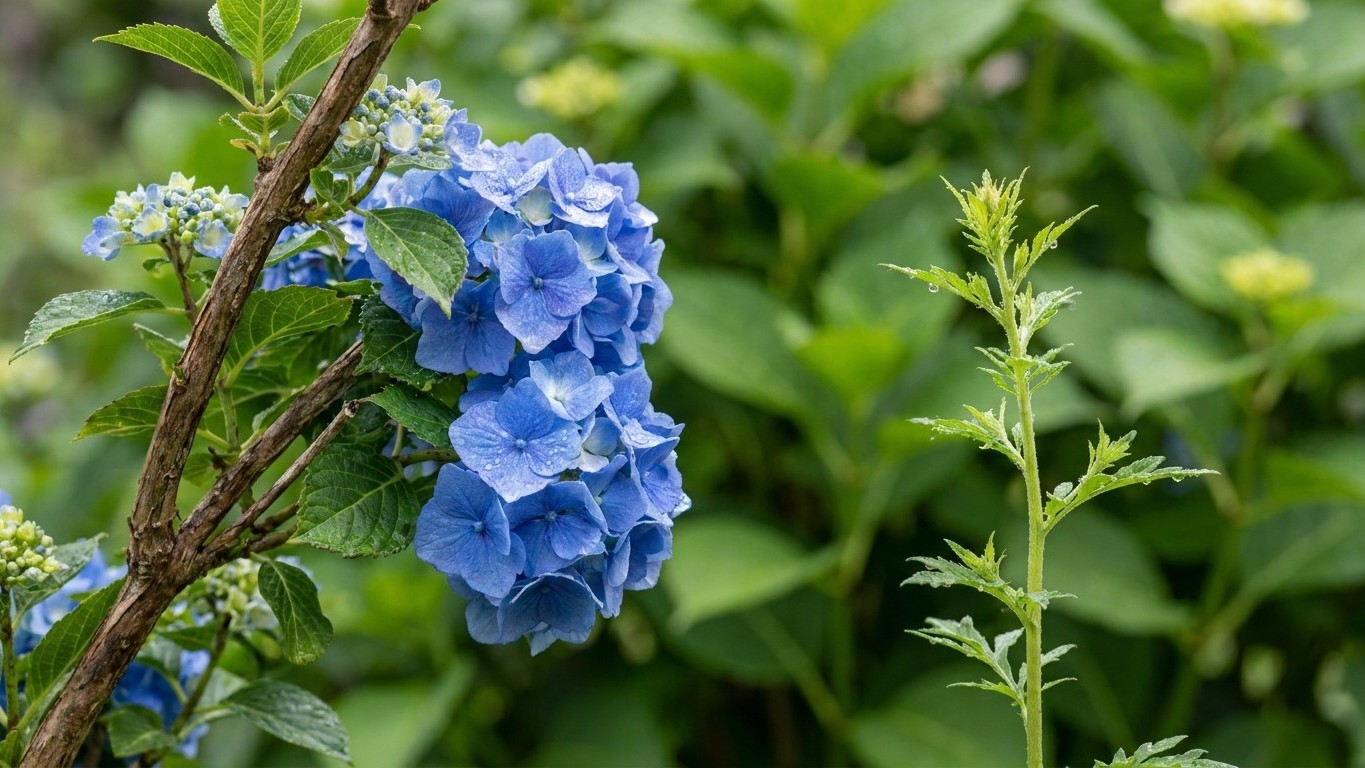

Hydrangeas turn pink where the soil holds little available aluminum, and many northern garden beds and bagged potting mixes fit that description. Blue flowers need acidic soil, usually a pH near 5.5 or lower, and only bigleaf and mountain hydrangeas change color at all. A pink plant can be turned blue fairly easily in a pot and with more effort in the ground. None of it matters if the flower buds do not live through the winter.
What this comes down to in Northwest Territories

Around Yellowknife, the reference city for these numbers, the mean last spring frost falls on May 25 and the mean first fall frost on September 18. Hydrangeas here get a short run to open their flowers, and what opens is usually pink because the soil or potting mix has aluminum locked up. Both dates are midpoints, so in one year out of two the last frost comes later than May 25 and the first fall frost arrives earlier than September 18.
The reference station has about 116 frost-free days between those two dates. That is a little under four months, and a bigleaf hydrangea needs a large share of it to go from bare stems to open flowers.
Why do hydrangeas turn pink instead of blue?
The color comes from one pigment reacting with one metal. When aluminum ions are available to the roots, the pigment shifts blue. When they are not, the same pigment reads pink or red. Most soils contain plenty of aluminum. The question is whether it dissolves, and it only does in acidic ground. Around pH 5.0 to 5.5 the flowers lean blue. Around 6.0 to 6.5 and higher they turn pink, and the in-between range gives purple or mixed heads on a single shrub.
Several things push northern gardeners toward the pink side. Thin native soil over limestone-rich ground tends to run alkaline, while soil over granite is usually more acidic, so one town’s bed can differ from the next. Imported topsoil and raised-bed mixes are often limed to sit near neutral. Hard tap water raises pH over a season of watering, and concrete foundations leach lime into the soil beside them. Nursery plants are also grown in mixes that favor pink, which is why a tag showing a blue flower on a plant that just arrived can be misleading. Without a soil test, that plant will probably bloom pink next summer.
Do bigleaf hydrangeas survive the cold here?
The hardiness zone for Yellowknife is 1b in the Canadian system. That is not a USDA zone and does not convert to one, because the Canadian system weighs seven climate variables and the USDA system weighs one. What matters for color is that bigleaf and mountain hydrangeas set next year’s flower buds on this year’s stems. In a climate this cold, those stems usually die back, often to the snow line or the ground, and the buds go with them.
Many of the pink hydrangeas seen in northern homes are potted plants that spent winter indoors or in a greenhouse. Outdoors, a deep snow cover can protect the lowest buds, but it is not something to count on. White-flowering panicle and smooth hydrangeas do not respond to soil chemistry, so the pink-or-blue question applies only to the two species that carry the pigment shift.
Working it out for your own garden
A single color recommendation will not hold up after a move or a cold spring, so it helps to know the method. Two numbers drive it: how long the plant needs to bloom, and the pH of the root zone.
How long from budbreak to bloom?
Bigleaf hydrangeas typically take roughly eight to twelve weeks from budbreak to open flowers. Budbreak itself waits for the end of hard frost, so near Yellowknife watch the plant rather than the calendar. If budbreak comes around the mean last-frost date, the mean first fall frost on September 18 leaves roughly one to two months of margin; a late budbreak shrinks it, and half of all years the frost arrives sooner.
Take a reblooming bigleaf that also flowers on new wood and is planted once soil has warmed after the last frost. Its new stems can reach flower within that window in a typical year, though a cold June or an early frost will cut it short. Now take a bigleaf that flowers only on old wood. If its buds die back over winter, it makes leaves and no flowers however long the season runs. Between those two cases is where most gardeners here find their line: new-wood bloomers have a chance outdoors, and old-wood types belong in containers that come inside.
How do you turn a pink hydrangea blue?
Start with a pH test, using a home kit or a lab sample from the root zone. If the reading is above about 6.0, the goal is to drop it toward 5.0 to 5.5 and make aluminum available. Aluminum sulfate does both at once and works fast. Elemental sulfur acidifies more slowly, over months, and needs soil bacteria that are sluggish in cold ground. Follow the label rate, because too much burns the roots, and water it in well.
Two habits help. Choose a fertilizer low in phosphorus, since phosphorus ties up aluminum. Water with rainwater where you can, since hard tap water undoes the work. In a pot, a peat-based acidic mix can shift color within a season. In the ground, expect the next year’s flowers to show the change, and retest every few weeks so the pH does not drift back.
What changes across the territory
The territory stretches from the Alberta border to the Arctic coast, so Yellowknife’s numbers describe one spot on the north shore of Great Slave Lake. The lake slows the spring warm-up but softens the fall, which is part of why the frost window near the shoreline looks the way it does. Communities farther north run weeks behind in spring and see frost earlier in fall. Southern communities generally have a longer, warmer season, and the bloom range shifts with them.
Elevation matters in the mountain country to the west, where cold air pools in valleys and a few hundred feet can change the frost date. Soil changes just as much as climate. Granite-based Canadian Shield areas lean acidic and favor blue with less effort. Areas with limestone and carbonate-rich deposits lean alkaline and push toward pink, and lime in the water supply makes it worse. Permafrost also affects drainage and root-zone temperature, so a bed that stays cold and wet late into June will delay budbreak, which in turn pushes bloom later.
The practical takeaway is to treat the Yellowknife dates as a starting point and adjust by watching your own plants. When leaves unfold and when the first hard frost blackens a tender leaf tell you more than any territory-wide average.
The mistakes this territory punishes
Planting into cold soil after a warm spell is a common one. A week of warm May weather feels like permission, but the soil stays cold below the surface, and a late frost can still follow. Wait until the ground has warmed and the stretch of frost risk has clearly passed. Remember that May 25 is a midpoint, so half of years run later.
Choosing a variety the season cannot finish is the second. An old-wood bigleaf in the ground rarely flowers where winters kill the stems, so putting it in a pot you can move indoors makes more sense than hoping for a mild year. Reblooming new-wood types suit the short window better.
Skipping the soil test costs gardeners in a different way. Dumping aluminum sulfate on a bed without knowing its pH can burn roots, and it still may not produce blue if lime keeps leaching in from concrete, hard water or imported soil. Test first, treat in stages, and test again.
Then there is leaving potted plants out too long in fall. A frost around the mean first-frost date can arrive earlier in a cold year. Bring pots into a cool, bright spot once nights start dropping toward freezing, and watch for blackened leaf edges as the signal. Finally, do not expect white hydrangeas to change. Panicle and smooth types will stay white or fade to pink with age whatever you do to the soil.
Checking this against your community
The dates and zone above describe Yellowknife, and your own garden may differ by weeks. Soil pH can change from one lot to the next within the same community. For local frost timing and soil advice, contact the agriculture services of the Northwest Territories Department of Industry, Tourism and Investment, and compare the Canadian hardiness zone for your community on Natural Resources Canada’s plant hardiness site. For planting, winter protection and the rest of the basics, see our overview of growing hydrangeas in Northwest Territories.
Common questions
Can I turn a pink hydrangea blue in a single season?
In a pot, often yes, if you acidify the mix and use low-phosphorus fertilizer early in the season, because buds already formed may have their color set. In the ground, plan on the following year’s flowers showing the change, since soil pH moves slowly.
Will a white hydrangea turn blue if I acidify the soil?
No. White panicle and smooth hydrangeas do not carry the pigment that reacts with aluminum. Only bigleaf and mountain hydrangeas shift between pink and blue.
Do hydrangeas bloom outdoors near Yellowknife?
Types that flower only on old wood usually lose their buds over winter in zone 1b of the Canadian system. New-wood bloomers have a better chance, but the roughly 116 frost-free days between the mean frost dates leave little room, and half of years the first fall frost comes earlier than September 18.
How do I check my soil pH?
A home test kit gives a rough reading. For a firmer number, send a sample from the root zone to a soil lab. Test again several weeks after any treatment, since lime in water or nearby concrete can push the number back up.