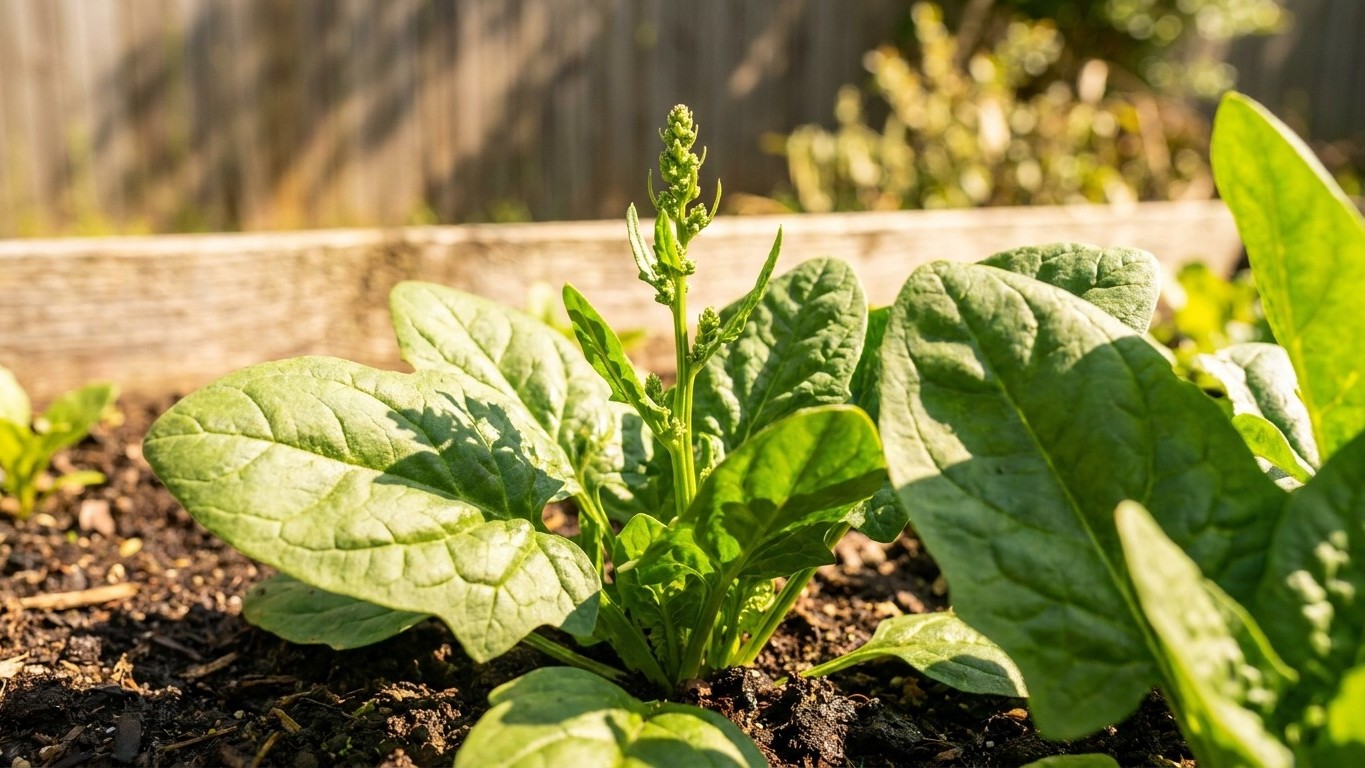

Spinach in the Northwest Territories bolts fast, and the reason has almost nothing to do with heat. The territory’s short, intense growing season pairs with some of the longest daylight hours in North America, and that daylight is the trigger that pushes spinach from leaf to flower stalk. Gardeners here get a real harvest, but it’s a narrow, early one, bookended by a short spring and a soil-driven fall window.
The short answer
On the longest day of the year, Yellowknife sees 19 hours and 30 minutes of daylight. That’s not a typo, and it’s not a fluke of one bright week, it’s the baseline for the entire month around the June solstice. For a crop like spinach, which flowers in response to long days as much as to warm temperatures, that number matters more than anything on a thermometer.
Here’s the part that surprises a lot of transplants to the territory: the summer isn’t hot. The reference station records an average of 0.0 days a year at or above 90 F. Zero. There’s no heat wave pushing spinach into bolt mode, no string of 90-degree afternoons cooking the soil. If this were a heat problem, a gardener could chase shade, mulch heavily, and buy a few extra weeks. That workaround doesn’t exist here, because heat isn’t the limiting factor.
Day length is. Spinach reads the calendar through its leaves, and once daylight stretches past a certain point, the plant shifts its energy from making leaves to making a flower stalk and seed, whether the air is 65 F or 95 F. In the Northwest Territories, daylight climbs toward that 19-hour-30-minute peak fast, and it stays elevated for weeks on either side of the solstice. A cool summer, which this territory has in abundance, doesn’t cancel that signal. It just means the plant bolts in comfortable weather instead of a heat wave.
So the honest answer is this: yes, spinach will bolt early here, and the driver is day length, not heat. The territory’s mild summer temperatures are a genuine advantage for almost every other cool-season vegetable, but they don’t buy spinach any extra time once the days get long. Gardeners who treat this as a heat problem and respond by watering more or adding shade cloth will be disappointed, because the plant is responding to light duration, not soil or air temperature.
That reframes the whole growing strategy. Instead of trying to outlast the bolt trigger, the practical approach is to work around it: sow early enough to harvest a crop of leaves before day length peaks, then wait for daylight to shorten again in late summer before sowing a second round. Both windows are real, but both are short, and both are dictated by the calendar and the clock more than by the weather.
How long the spring window really is
- Start with the mean last frost. Environment and Climate Change Canada’s 1981-2010 climate normals put the average last spring frost at Yellowknife A on May 25. That’s a midpoint, not a guarantee, so in roughly half of all years frost arrives later than that date.
- Back up two to three weeks for sowing. Spinach seed goes in the ground before the last frost, not after it, which puts the realistic sowing window between about May 4 and May 11.
- Count forward to the solstice. From early May to June 21, when daylight peaks at 19 hours and 30 minutes, is roughly six to seven weeks. That’s the entire stretch during which day length is climbing toward its most intense bolting pressure.
- Recognize that the ceiling isn’t heat. With an average of 0.0 days a year above 90 F, and spinach growing best below 75 F, temperature is rarely what shuts down growth in this window. The plant has cool, comfortable air the whole time, it just runs out of “short day” conditions.
- Treat the harvest as front-loaded. Because day length keeps rising right up to the solstice, the safest strategy is to sow as early as soil and frost risk allow, then harvest young leaves promptly rather than waiting for full-size plants, since the plant’s internal clock is already counting down toward bolting from the day it germinates.
That six-to-seven-week stretch is the real spring window, and it’s worth remembering that the May 25 frost date is only an average. In years when frost lingers into early June, the window compresses further, since sowing still has to wait for safer soil and air conditions even while daylight keeps climbing regardless.
The autumn crop, and when the soil lets you sow
A fall crop of spinach in the Northwest Territories has an easier time with one obstacle and a harder time with the other, which is the reverse of what gardeners farther south usually deal with.
Soil that’s too warm to germinate
Utah State University Extension notes that spinach seed germination drops off once soil temperature climbs above 80 F. In much of the Lower 48, that’s the obstacle that delays fall sowing for weeks, since gardeners have to wait for scorching midsummer soil to cool before seed will even sprout. In the Northwest Territories, this is barely a factor. With an average of 0.0 days a year reaching 90 F in the air, soil rarely gets anywhere near that 80-degree germination ceiling in the first place. Gardeners here aren’t waiting out a heat wave, they’re simply timing sowing around the calendar and the frost that follows it.
The frost that ends the season
The bigger constraint is the other end of the calendar. The same climate normals that give the May 25 mean last frost also put the mean first fall frost at September 18, again a midpoint rather than a promise, since about half of all years see frost arrive later. Utah State University Extension’s guidance for a fall crop is to sow 50 to 75 days before the date you want to harvest. Counting back from a realistic harvest target in mid-September, that puts fall sowing somewhere between early July and late July, depending on how much buffer a gardener wants ahead of that September 18 average frost date.
That’s a workable window, but it’s a tight one, and it leaves little room for a second attempt if the first sowing fails to germinate evenly or gets set back by an early cold snap. Four named spinach varieties turn up in general extension references, Bloomsdale, Melody, Teton, and Olympia, though no seed-company or performance data on any of them is published in the source used for this page.
Common questions
Does shade cloth slow down bolting in the Northwest Territories?
Shade cloth reduces heat and light intensity, but it doesn’t shorten the number of daylight hours the plant experiences. Since bolting here is driven by day length rather than heat, shade cloth is unlikely to meaningfully delay flowering once the days are already long.
Is there any point sowing spinach in midsummer?
Midsummer sowing lands right in the stretch of longest daylight, which is the least favorable timing for leaf production before bolting. The two workable windows are the early spring sowing described above and the early-to-late July sowing aimed at a September harvest.
Why doesn’t the region’s cool summer help spinach the way it helps lettuce or peas?
Cool temperatures help crops that bolt mainly from heat stress. Spinach bolts from day length as well as warmth, so a summer with an average of 0.0 days above 90 F removes the heat trigger but does nothing to the daylight trigger, which keeps climbing regardless of the thermometer.
How reliable are the May 25 and September 18 frost dates for planning?
Both are mean dates from Environment and Climate Change Canada’s 1981-2010 climate normals for the Yellowknife A station, meaning frost falls later than each date in roughly half of all years. They’re a useful midpoint for planning, not a guaranteed safe date, and gardeners in more northern or upland parts of the territory should expect their own frost dates to run later or earlier than this single reference station.