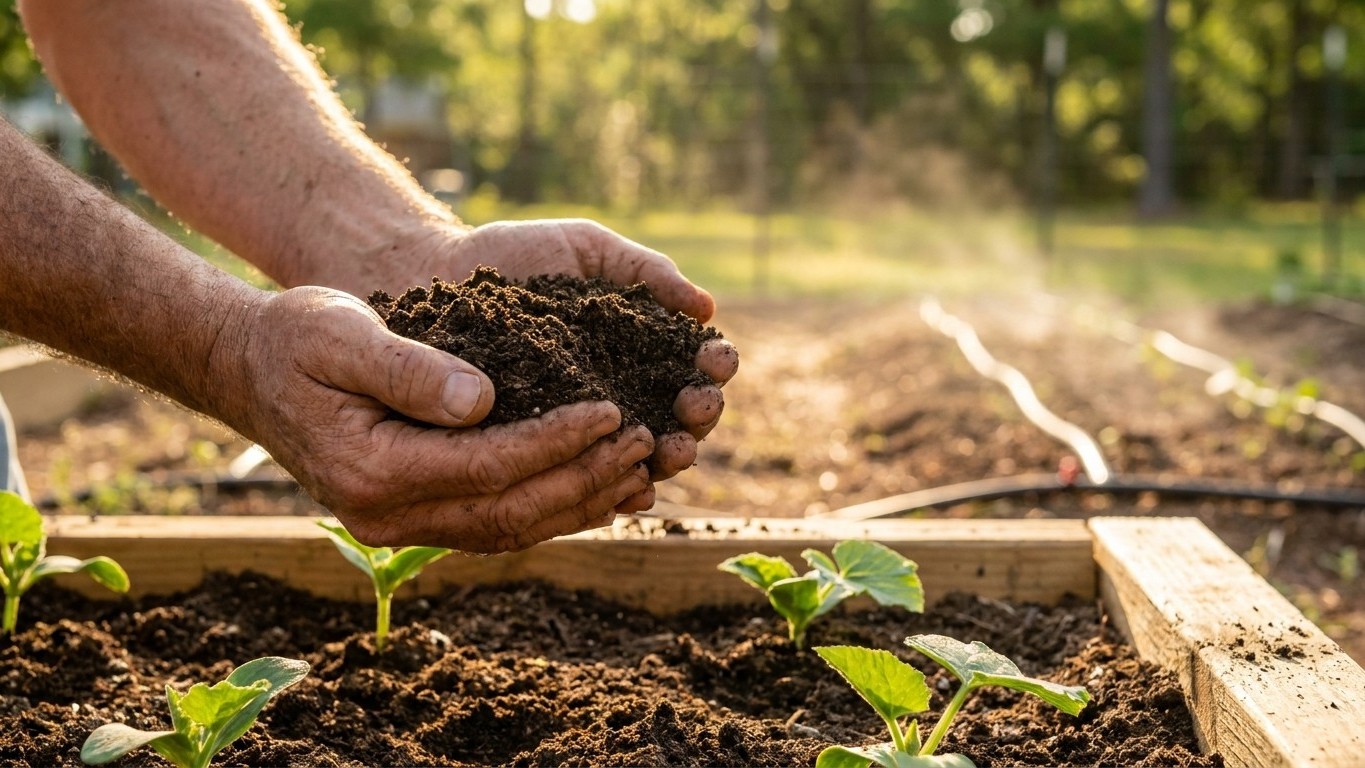

Summer squash can be grown outdoors in the Northwest Territories, but the window is short and unforgiving: soil needs to warm past the point of average last frost, the frost-free stretch runs under four months, and disease from cool, damp air matters more than heat stress ever will here.
When the soil is warm enough in Northwest Territories
Gardeners fixate on the last frost date, but frost is only a stand-in for the number that actually matters: soil temperature. Summer squash seed rots in cold, wet ground long before the air feels warm enough to plant. At Yellowknife A, Environment and Climate Change Canada’s 1981-2010 normals put the average last spring frost at May 25. That figure is a mean, not a guarantee. In roughly half of all years on record, frost has arrived after that date, sometimes well after. Treat May 25 as the midpoint of a window, not a green light.
Soil takes longer to catch up than air does. Even once the frost risk has genuinely passed, bare mineral soil in this region is often still cold enough to stall squash germination for days or weeks. That lag is the real reason growers here lean on techniques that push soil temperature up ahead of schedule: black plastic mulch laid a couple weeks before sowing, raised beds that drain and warm faster than flat ground, and clear or floating row cover to trap daytime heat over the row.
Why the hardiness zone number needs a caveat
The Northwest Territories reference city sits in Canadian hardiness zone 1b, according to Natural Resources Canada’s Plant Hardiness Site using 1991-2020 normals. That’s the Canadian system, built from seven climate variables, and it does not translate to a USDA zone number found on seed packets from US suppliers. Natural Resources Canada is explicit that there’s no clean conversion between the two scales, so don’t use this figure to cross-reference an American planting chart.
Given how tight the margin is, most successful squash crops here start as transplants raised indoors four to five weeks before the soil is expected to be workable, then hardened off and moved outside only once nighttime lows have stopped threatening frost. Direct-seeding is possible but shaves precious growing days off an already short season. For the varieties actually trialled in this climate, the Government of the Northwest Territories agriculture program is the right first stop.
How long the season lasts here
Subtract the two anchor dates from Yellowknife A and the frost-free window comes out to about 116 days, running from the average last spring frost on May 25 to the average first fall frost on September 18. Both figures come from the same station and the same 1981-2010 normals period, so the subtraction holds together. Sixteen and a half weeks sounds workable on paper. In practice, it’s tight for a crop that dislikes cold soil at the start and stops setting fruit the moment frost returns at the end.
That length changes the strategy more than it changes the crop choice. A 116-day window doesn’t leave room for a second sowing partway through summer the way a five- or six-month season further south might. Once transplants go in after the soil has genuinely warmed, most gardeners here are committed to that single planting carrying the harvest through to the September frost. There’s no real slack for a failed first attempt followed by a do-over sown from seed in July.
What this means for transplanting versus direct seeding
Because the season offers so little margin, the decision between transplants and direct-sown seed carries more weight than it would in a longer-season territory. Transplants started indoors gain several weeks that the outdoor soil simply doesn’t offer yet, but summer squash resents root disturbance, so starting them in individual biodegradable pots that go straight into the ground, rather than bare-root transplanting, avoids a setback right when the plant can least afford one. Anyone weighing whether a second, staggered sowing makes sense at all should read the site’s succession sowing guide, which lays out how much frost-free length a true second planting actually requires, and why a 116-day window generally falls short of it.
Heat and water in Northwest Territories
Here’s where this territory diverges sharply from most of the country: the reference station records 0.0 days a year above 90°F. None. Summer squash elsewhere often struggles when daytime highs push into the high 90s, because pollen loses viability in extreme heat and fruit set drops off even when the plant looks healthy. That failure mode simply doesn’t apply in the Northwest Territories. Heat stress is not the risk here.
The risk runs the other direction. Cool summer air slows every stage of the plant’s development, from germination through fruit sizing, and a season with essentially no heat load means fruit takes longer to bulk up between one picking and the next. Combine that with rainfall and the picture sharpens: summer precipitation at Yellowknife A averages about 4.3 inches across June, July, and August, out of 11.4 inches for the full year. June is the driest of the three summer months.
| Month | Average rainfall |
|---|---|
| June | 1.14 in |
| July | 1.61 in |
| August | 1.55 in |
None of those totals amount to heavy rainfall, but paired with zero days of extreme heat and generally cool air, the moisture that does fall tends to linger on leaves and soil surfaces rather than evaporate quickly. That combination, cool and just damp enough, favors powdery and downy mildew more than it favors drought stress. The practical response looks different from what a hot, dry territory would need: space plants for airflow between rows, water at the soil line rather than overhead to keep foliage dry, and avoid working around wet plants, since fungal spores spread easily on damp leaves. Watering by rain gauge readings on the actual plot, rather than by these regional averages, is still the more reliable approach, since a rain shadow or a sheltered yard can run noticeably drier or wetter than the reference station.
Which summer squash suit Northwest Territories
Every decision in this climate points toward the same priority: earliness. With a 116-day frost-free window and soil that’s slow to warm even after the frost risk passes, the types of summer squash that make sense here are the fastest-maturing ones within each category, not necessarily the highest-yielding or most novel. That generally means favoring:
- Yellow straightneck and crookneck types, widely available in early-maturing selections
- Green zucchini types bred for shorter seasons
- Scallop or patty pan types, which often mature quickly and stay compact
Disease resistance matters more than heat tolerance in a selection here, given the cool, damp summer conditions described above rather than any risk from extreme temperatures. Types bred with resistance to powdery mildew are worth prioritizing over types selected for drought tolerance or heat set, since the latter traits address a problem this territory doesn’t have.
This page deliberately stops short of naming a specific variety. Days-to-maturity claims on seed packets are measured under conditions nothing like Yellowknife’s cool soil and short window, and a variety that performs well in a trial garden further south can behave very differently here. The Government of the Northwest Territories agriculture program is positioned to know which specific squash selections have actually been trialled and performed under local conditions, current pricing and seed availability change season to season, and a recommendation made once and left online tends to age badly. Starting with the type that matches this climate’s real constraints, early maturity and disease resistance over heat tolerance, and then checking locally trialled options against that shortlist is the more durable approach.