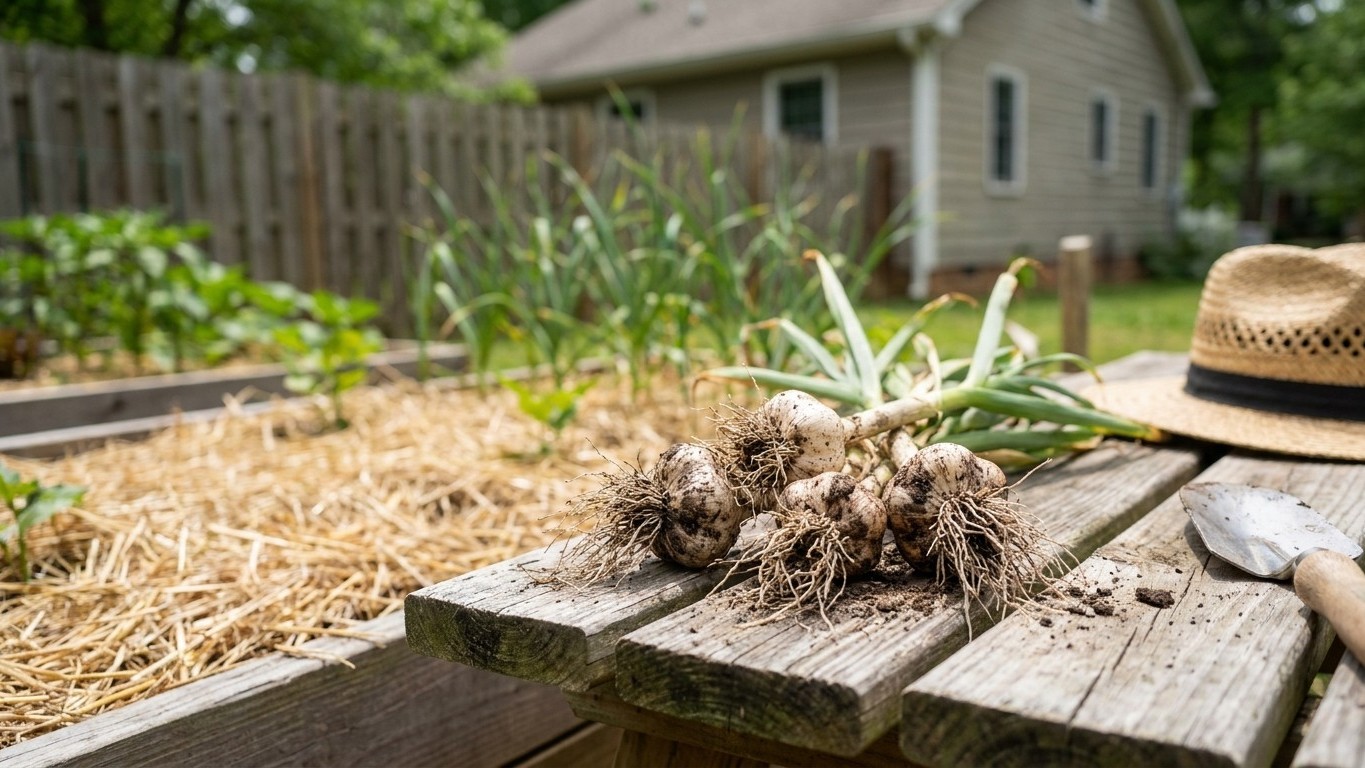

In Ohio, garlic planted the previous fall is ready to lift in early to mid-summer, once the bottom third to half of the leaves have browned while the upper leaves stay green. Cure it for several weeks in a shaded, airy spot before trimming and storing it somewhere cool, dark, and dry through the winter.
When garlic is ready to lift in Ohio
The clock on this crop actually starts the previous autumn, not in summer. Garlic goes into the ground before the ground itself turns hostile, and in Ohio’s zone 6a that means planting ahead of the first fall frost, which lands somewhere between October 5 and October 15, according to Ohio State University Extension’s Ohio Gardening Calendar. That’s a midpoint, not a guarantee. In roughly half of all years, the actual frost arrives later than that window, sometimes weeks later, so gardeners who plant by that date are working from an average, not a deadline carved in stone.
What that autumn planting sets up is a long, quiet stretch underground through winter, followed by a spring flush of growth once soil temperatures climb. By the time summer arrives, the plant has done its work below the surface, and the leaves start telling you when it’s finished. The classic signal is a split appearance: the lower leaves turn yellow, then brown, while four to six leaves up top stay green. That’s the plant’s way of saying the bulb has stopped adding layers and started tightening its wrapper.
Why timing the lift matters
Pull too early, while most leaves are still green, and the bulb hasn’t finished sizing up. It will be small, the cloves loosely formed, the wrapper thin. Wait too long, until nearly all the foliage has collapsed, and the outer wrapper can split or the cloves can separate inside the skin, which shortens how long the bulb keeps in storage later. Neither mistake is dramatic on its own, but both cut into the harvest you actually planned for months earlier.
Soil condition matters as much as the calendar. A garlic bed that’s bone dry can make bulbs hard to lever out without tearing roots or bruising cloves, while a bed that’s been soaked recently makes for muddy, fragile skins that don’t cure well. A light watering a day or two before digging, followed by a dry stretch, tends to make the job cleaner. Loosening the soil with a garden fork well outside the bulb’s footprint, rather than yanking on the stalk, keeps the bulb intact and the wrapper leaves attached, both of which matter for the curing stage that follows.
Curing it, and where to hang it here
Curing is the step that turns a freshly dug bulb, still damp and vulnerable, into something that can sit in a pantry for months without rotting. It’s a drying process, not a cooking one, and it happens slowly, out of direct sun, with air moving around the bulbs rather than trapped and stagnant.
The basic setup is simple: bundle a handful of plants together by the stalks, or lay them out in a single layer on a screen or slatted shelf, and get them somewhere shaded with decent airflow. A garage with the door cracked, a covered porch out of direct light, or a barn with cross-ventilation all work. What doesn’t work is a closed, humid basement or a spot where afternoon sun bakes the bulbs through a window. Heat and trapped moisture invite mold before the wrappers have a chance to dry down.
Local conditions to watch
Ohio summers bring stretches of high humidity, particularly in July and August, which is exactly when most home gardeners are pulling garlic. That humidity slows curing down compared to a dry climate, so airflow becomes the variable that matters most. A box fan set to run for a few hours a day in the curing space, angled so it moves air past the bulbs without blasting them directly, helps push moisture out faster than still air ever will.
Resist the urge to wash the bulbs before hanging them. Soil brushed off gently once they’re dry does far less damage than a rinse that reintroduces moisture right when you’re trying to remove it. Leave the roots and stalks attached during curing too; trimming them too early opens cut surfaces that invite rot before the bulb has sealed itself off. The trim comes later, once the wrappers have gone papery and the neck where the stalk meets the bulb has tightened and dried through.
Storing it through a Ohio winter
Once cured, garlic wants three things in storage: darkness, dry air, and cool but not cold temperatures. Light encourages sprouting, humidity invites mold and soft rot, and warmth speeds up both. A pantry shelf, a closet away from a furnace vent, or a garage that doesn’t freeze solid can all work, provided the space stays reasonably dry and out of direct light.
What to avoid is just as specific. The refrigerator, while it seems like an obvious cool spot, tends to be too humid for long-term whole-bulb storage and can actually trigger sprouting faster than a dry pantry shelf would. Plastic bags and sealed containers trap moisture around the bulbs and accelerate rot; mesh bags, paper bags with a few holes, or open baskets let air keep circulating around each bulb.
Sorting before you store
Not every bulb from the harvest deserves the same treatment. The biggest, cleanest bulbs with tight wrappers are worth setting aside as seed stock for the next fall planting, since they tend to produce the most vigorous plants. Bulbs with any bruising, soft spots, or damaged wrappers should go into the kitchen rotation first, since they won’t hold as long as the pristine ones. Checking through the stored bulbs every few weeks and pulling any that show softness or mold keeps a single bad bulb from spreading trouble to its neighbors, since rot in storage tends to move outward from wherever it starts.
Ohio’s winter swings, mild stretches followed by hard cold snaps, mean an unheated garage or shed can occasionally dip low enough to affect stored bulbs if they’re pressed against an exterior wall or a concrete floor. Keeping the storage container up on a shelf, away from direct contact with cold concrete or an outside wall, adds a buffer against those swings without requiring anything more elaborate than a piece of scrap wood or an old crate underneath.
What goes wrong here
Most of what damages an Ohio garlic crop happens before harvest, in the field, not in the curing shed. Ohio State University Extension (Ohioline) documents several pests affecting garden crops in the state, and the ones relevant to garlic growers include:
- Aphids
- Cutworms
- European earwig
- Japanese beetle
- Slugs
- Spotted cucumber beetle
- Squash vine borer
- Striped cucumber beetle
- Twospotted spider mite
Not every one of these targets garlic bulbs directly, some are broader garden pests that show up in the same beds, but their presence matters because damaged or stressed foliage during the growing season often shows up later as smaller bulbs or wrappers that don’t cure as cleanly. A plant that’s been chewed on by cutworms early in spring, for instance, has less leaf surface left to feed the bulb through the rest of the season.
After harvest, the failures shift from pests to moisture and airflow mistakes. Bulbs cured in a spot with poor ventilation often develop mold at the neck first, since that’s where moisture lingers longest inside the wrapper layers. Bulbs stored in a sealed plastic bag, even a cured one, tend to sweat and soften within weeks rather than months. And bulbs left in a spot that gets even brief direct sunlight, like a windowsill, will often sprout green shoots well before winter is over, which pulls energy out of the clove and makes it soft and less useful in the kitchen.
For growing-season questions specific to a county or a particular pest outbreak, Ohio State University Extension maintains local offices across the state that can help identify what’s actually damaging a specific bed, since pest pressure varies quite a bit between northern Ohio’s clay soils and the sandier ground further south.
Common questions
How do I know if I’ve waited too long to harvest?
If nearly all the leaves have collapsed and browned rather than just the bottom third to half, the bulb has likely been sitting too long, and wrappers may already be splitting underground.
Can I still plant if I miss the typical fall frost window?
Since the October 5 to October 15 frost date is a midpoint and frost often arrives later than that in any given year, there’s usually some flexibility, though planting very late into cold, wet soil makes root establishment harder before winter.
Is it normal for garlic to take weeks to cure?
Yes, curing is a gradual drying process rather than a fixed countdown, and it finishes when the neck and wrappers feel dry and papery rather than on a specific day.
Why did my stored garlic sprout in the pantry?
Sprouting usually points to light exposure or temperatures that are warmer than ideal; moving bulbs to a darker, cooler, more consistent spot usually slows this down.