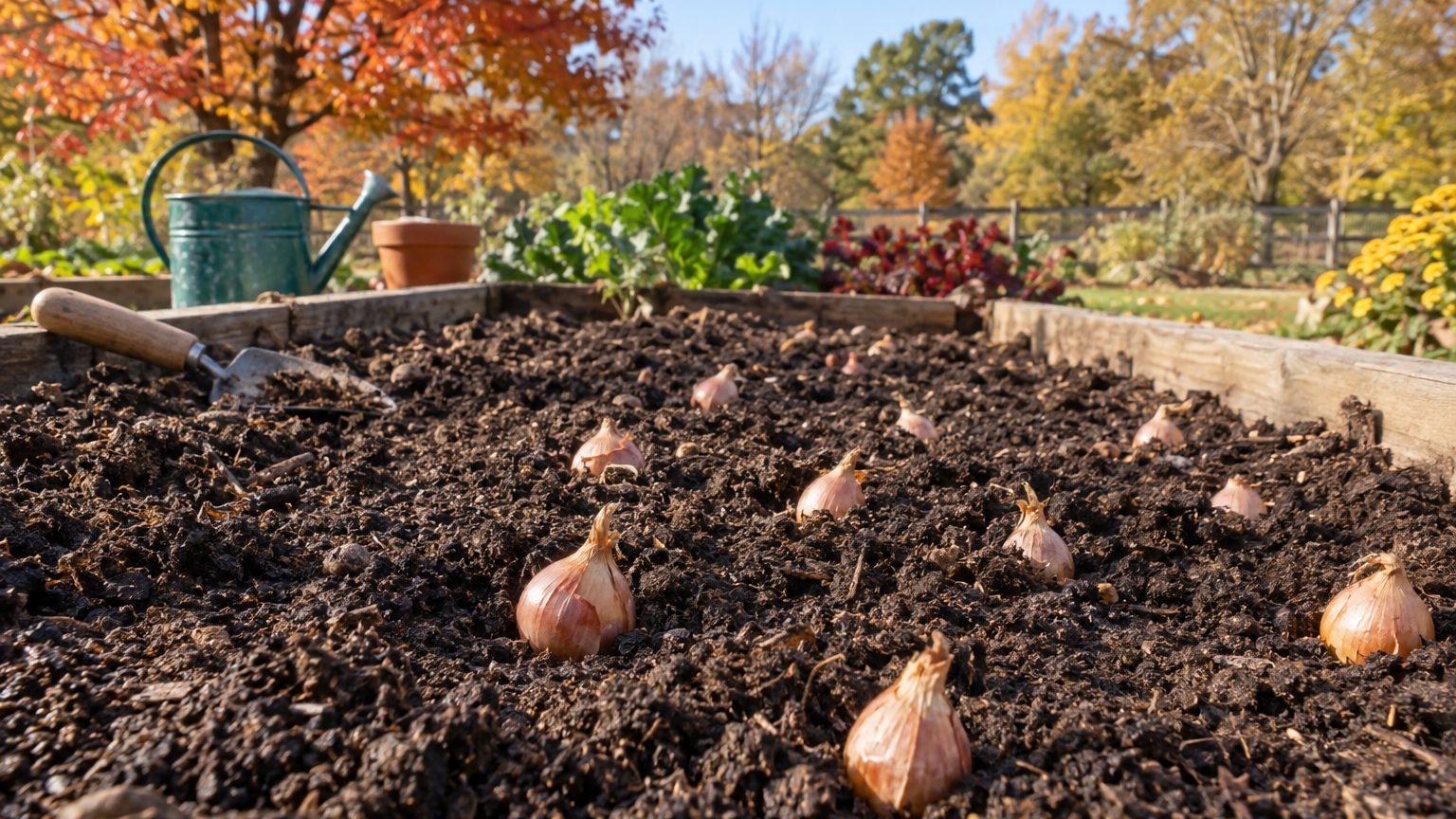

Plant shallots in Ohio in fall, after the first frost window of October 5 to October 15, or in early spring as soon as the soil can be worked. Fall planting wants mulch and a bit of nerve. Spring planting is safer but gives smaller margins. For the broader picture, start with Growing Shallots in Ohio.
The short answer for Ohio
Plant shallots in Ohio from mid-October into the weeks before the ground freezes, or in spring once the soil is workable, which in most years means before the last frost has finished. The reference dates come from the Ohio State University Extension Ohio Gardening Calendar, for zone 6a: last spring frost May 5 to May 15, first fall frost October 5 to October 15.
Those dates are a probability of frost, not a schedule the weather follows. They describe when the last freezing night of spring and the first of fall usually arrive. A cold night after May 15 or before October 5 can still happen. Shallots shrug off a light frost, which is why the window works for them and not for tomatoes.
The gap between the two sets of dates is about five months of frost-free growing. That is the stretch a spring-planted shallot has to use. It has to make leaves, then bulb, then cure, all before fall. A fall-planted shallot starts the clock earlier, roots in cool soil, sits through winter, and takes off the moment spring warms up.
| Planting | Anchor in the facts | What to do |
|---|---|---|
| Fall | First fall frost: October 5 to October 15 (zone 6a) | Set cloves or bulbs after that window opens, so roots form but green tops do not race ahead. Mulch after planting. |
| Spring | Last spring frost: May 5 to May 15 (zone 6a) | Plant as soon as the soil is workable, which usually falls before this window, not after it. |
One gap to be upfront about: this page has no county-level planting date and no soil-temperature threshold to give you, because neither is in the verified data. What it has is the frost calendar and a winter number. The mean daily minimum of the coldest month at the Columbus reference station is 22.0°F (NOAA NCEI Climate Normals 1991-2020). That is an average low, not a record low and not the coldest night of the decade. It tells you winter is cold enough to matter but not so severe that a mulched fall planting is a gamble.
Why fall is the first choice for many Ohio gardeners
Fall planting uses the cool, damp stretch when nothing else is competing for the bed. Roots establish, then the plants go dormant. The cost is exposure: a bare bed in a wet, freeze-thaw winter can heave bulbs out of the ground. A loose layer of straw is the usual fix.
What will not work here
Planting in the first week of September will not work. It sits before the October 5 to October 15 first fall frost window, so the soil is still warm and the shallots respond by pushing green top growth. That growth then meets a winter with a 22.0°F average low in the coldest month, and soft, leafy plants take a beating that dormant ones avoid. Wait for the window.
Planting after the ground is frozen solid fails for the opposite reason. Without time to root, the bulbs have nothing anchoring them when the soil thaws and refreezes. Ohio winters swing around freezing often enough that a shallow, unrooted planting is the one most likely to be lifted out.
Spring planting runs into a different wall. If the bed is not planted until late May or June, you are using a tight slice of the roughly five-month frost-free season, and shallots planted late have less time to size up before the leaves begin to yellow. The result is small bulbs. A cold, wet April tempts people to wait for perfect conditions, but waiting often costs more than planting into slightly cool soil. Shallots tolerate that. They do not tolerate a short summer.
Humidity is the other local problem. Ohio summers are humid, and shallots packed tightly hold moisture in the foliage and at the neck. Crowded rows, heavy mulch pulled up against the stems, and overhead watering late in the day all invite fungal trouble. Spacing generously and watering at the soil line is more useful here than a precise number on a tape measure.
Heavy clay is common across much of the state, and a bed that stays wet over winter rots shallots no matter how well the dates are timed. If water pools in your bed after a normal rain, raise the bed or choose another spot. Variety choice matters too, because some types handle winter better than others. The guide to The Best Shallots to Grow in Ohio covers that side.
What changes across Ohio
Ohio is not one climate. The USDA Plant Hardiness Zone Map 2023 (based on 1991-2020 normals) puts the state in zones 5b to 6b. That is a spread of two half-zones, and there is no single answer for the whole state. The zone is built on one variable, the average annual extreme minimum temperature, so it says how cold the worst nights get, not how long your season runs.
The frost dates quoted here are for zone 6a, and the 22.0°F winter figure comes from Columbus. Treat both as reference points. A garden in the colder parts of the 5b range should lean toward the later end of any window: plant fall shallots toward the front of the fall window so roots get a head start, mulch more heavily, and expect spring growth to begin later. A garden in the milder 6b range has more room, and its fall planting can slide a little later without much risk.
Local features move things further. Low spots collect cold air, so a frost can hit them on a night when the hilltop stays clear. Land near Lake Erie behaves differently from inland fields, and a south-facing slope warms earlier than a shaded north side. None of that shows up in a state map.
The zone map will not tell this page which zone you are in, and I will not guess. Look up your own location on the USDA Plant Hardiness Zone Map, then compare it with the 5b-6b range described above. If you land at the cold end, shift toward the earlier fall planting and heavier mulch. If you land at the warm end, the standard window holds with more slack.
Where to check this for your own county
Your state extension service is the next stop. For Ohio, that is Ohio State University Extension, which runs the Ohio Gardening Calendar where the frost dates on this page come from. It also maintains county offices staffed by people who know what your local soil and weather actually do.
When you get there, look for two things. First, the local planting calendar, ideally one that lists frost dates for your county rather than a statewide average. Second, any variety trials run near you. A shallot that performed well in a trial garden in your county is better evidence than any general recommendation, because it has already survived your winters and your humidity.
A county recommendation beats a state one, and this page is the state one. It is built from a single zone 6a calendar, a Columbus winter figure, and a hardiness range that spans 5b to 6b. That is enough to tell you the shape of the season, but not enough to name the Tuesday you should plant. If the extension office gives you a date that differs from the one implied here, go with the office.
If you cannot find a shallot-specific entry, ask the county office about onions or garlic. Those crops share planting logic with shallots, and the staff can usually tell you which applies better to your site.
Checking this against your own garden
Your own observations outrank every date above. A calendar is an average of many years and many gardens. Your bed is one place, and it has habits. Three things are worth watching, and none needs equipment.
- Soil warmth by feel. Push your hand into the bed in early spring. If the soil crumbles and feels cool but not icy, it is workable. Compare a sunny corner with a shaded one. The gap tells you which part of your yard wakes up first.
- The first flush of male flowers. Many trees and shrubs in your neighborhood release pollen as the season turns. Note the date it first shows up and compare it year to year. It tells you whether your spring runs early or late relative to the statewide pattern.
- The first true leaves. When shallot shoots or neighboring plants push their first real leaves, that is your actual start of growth. If fall-planted shallots show green early, your microclimate is milder than the map suggests, and heavier mulch is worth the effort.
Keep a few notes from one season. A written date for the first hard frost in your yard is worth more than any average, and it makes next year’s decision easy.
Common questions
Is fall or spring better for shallots in Ohio?
Both work. Fall planting gives the plants a head start and uses the cool weather, but it needs mulch and a bed that drains. Spring planting is lower risk for beginners and for wet or heavy soil, as long as it goes in early.
What is the last spring frost in Ohio?
For zone 6a, Ohio State University Extension’s Ohio Gardening Calendar gives May 5 to May 15. That is a likelihood based on past years, so a later frost is possible.
Will 22.0°F kill fall-planted shallots?
That figure is the mean daily minimum of the coldest month at the Columbus reference station, not the lowest temperature on record. It describes a normal cold winter, which mulched, rooted shallots generally handle. Colder spots in the 5b part of the state deserve extra mulch.
Does this page give an exact planting date for my county?
No. It has the zone 6a frost dates, the Columbus winter figure, and the 5b-6b hardiness range, but nothing at the county level. Your local Ohio State University Extension office is the place to get that.