
When the soil is warm enough in Ohio

Ohio State University Extension’s Ohio Gardening Calendar puts the last spring frost at May 5 to May 15 for zone 6a. A frost date is a probability, not a promise, so a late cold snap after the window is always possible. But the date is only a stand-in for what these crops actually need, which is warm soil. Soil lags the air. Once the frost risk ends, the ground still needs days of mild weather to catch up, and seed or transplants set into cold, wet soil sit still or rot.
A cheap soil thermometer settles the question better than the calendar. Push it a few inches down in the morning, when the ground is at its coolest, and check a few mornings in a row. Hardy sowings like turnips and rutabagas tolerate cooler ground than celeriac does, and kohlrabi falls somewhere in between. Celeriac is the fussy one. Cold snaps after transplanting can trigger bolting in celery relatives, so most gardeners wait until the weather has really settled.
Turnip and rutabaga are brassicas. They share their pests and diseases with cabbage, kale and mustard, and so does kohlrabi. A gardener who moves them into a bed that held cabbage last year has rotated nothing. Count the whole brassica family as one group when you plan beds, and see the rotation page on this site for how to space them.
Siting Jerusalem artichokes first
Decide where Jerusalem artichokes go before you decide anything else about them. Once planted, they are effectively permanent. Every fragment of tuber left in the soil regrows, and digging them out only scatters more pieces. This is the planting gardeners most often regret. Give them a bed or a bordered corner you will never want back for anything else, ideally one edged by a mower strip, a paved path or a deep barrier. Do not put them in the middle of a vegetable plot.
The tubers also carry inulin instead of starch, and in many people it causes digestive discomfort. That is just a fact of the vegetable. A small first portion is the sensible way to find out how you react. Neither cooking nor frost can be counted on to remove it.
Horseradish is the other long-term resident. It is easier to contain than Jerusalem artichoke but still persistent, so choose its spot with the same care. Whichever roots you grow, remember that the dates here describe zone 6a. The USDA Plant Hardiness Zone Map (2023, built on 1991-2020 normals) places Ohio in 5b to 6b, so the northern and southern edges of the state will not match these dates exactly. Your county extension office can tell you which side of the line you are on.
How long the season lasts here
Take the same Ohio State University Extension calendar and set the last spring frost (May 5 to May 15) against the first fall frost (October 5 to October 15). Between matching ends, from May 5 to October 5, that is 153 days. Stretch it to the extremes and the window runs from about 143 days (May 15 to October 5) to 163 days (May 5 to October 15). Both frost dates are probabilities, so treat these as a working range, not a guarantee.
That is a respectable stretch for a northern-leaning state. It means a second sowing is realistic for quick crops. Turnips and kohlrabi, which mature faster than the rest of the group, can follow an early crop in the same bed or go in again in midsummer for a fall harvest. The succession sowing guide on this site walks through how to stagger those plantings.
The window also changes how you handle celeriac. It is the slowest of the group, and a seed packet’s days-to-maturity count usually starts from transplanting, not sowing. With 143 to 163 days between frosts, you can start seed indoors well before the last frost and transplant once the soil has warmed, and still have time to finish the crop. Direct-sowing celeriac in May would eat too much of the season. Transplanting is worth the root disturbance here, but handle the seedlings gently and do not let them dry out.
For the faster roots, the question flips. Direct sowing works well, and thinning matters more than transplanting. Because turnips and rutabagas dislike root disturbance, sow them where they will grow.
For comparison, Growing Unusual Root Crops in Pennsylvania covers a neighboring state with a similar calendar, while Growing Unusual Root Crops in Florida shows how different a nearly frost-free window looks. For the whole group at a glance, start from Celeriac, Kohlrabi, Horseradish and Jerusalem Artichokes.
Heat and water in Ohio

For local numbers, check NOAA climate normals for the station nearest you, or ask your county extension office.
What can be said honestly is that two facts do most of the governing. The first is season length. Celeriac, the long one, depends on that 143 to 163 day window, and it is the crop that tells you whether your site can finish it at all. A cool, late spring that delays transplanting eats into the margin, and a cold early fall can end the season before the roots have sized up.
The second is the winter low. NOAA NCEI Climate Normals for 1991-2020, at the Columbus reference station, give a mean daily minimum of 22.0 F in the coldest month. That is the average nightly low, not the record cold, and real winters will dip below it. It sits comfortably within the 5b to 6b range of the USDA Plant Hardiness Zone Map, a system built on the average annual extreme minimum temperature.
Those numbers favor the perennials. Horseradish and Jerusalem artichoke are hardy enough that they can stay in the ground through an Ohio winter, and a layer of mulch helps hold the soil steady. Hardy roots such as turnips and rutabagas can also be left under mulch for a while, but how far you can push that depends on how hard the ground freezes at your site. Snow cover, drainage and exposure all matter. Celeriac and kohlrabi are less forgiving, and the safer habit is to lift them before the soil freezes.
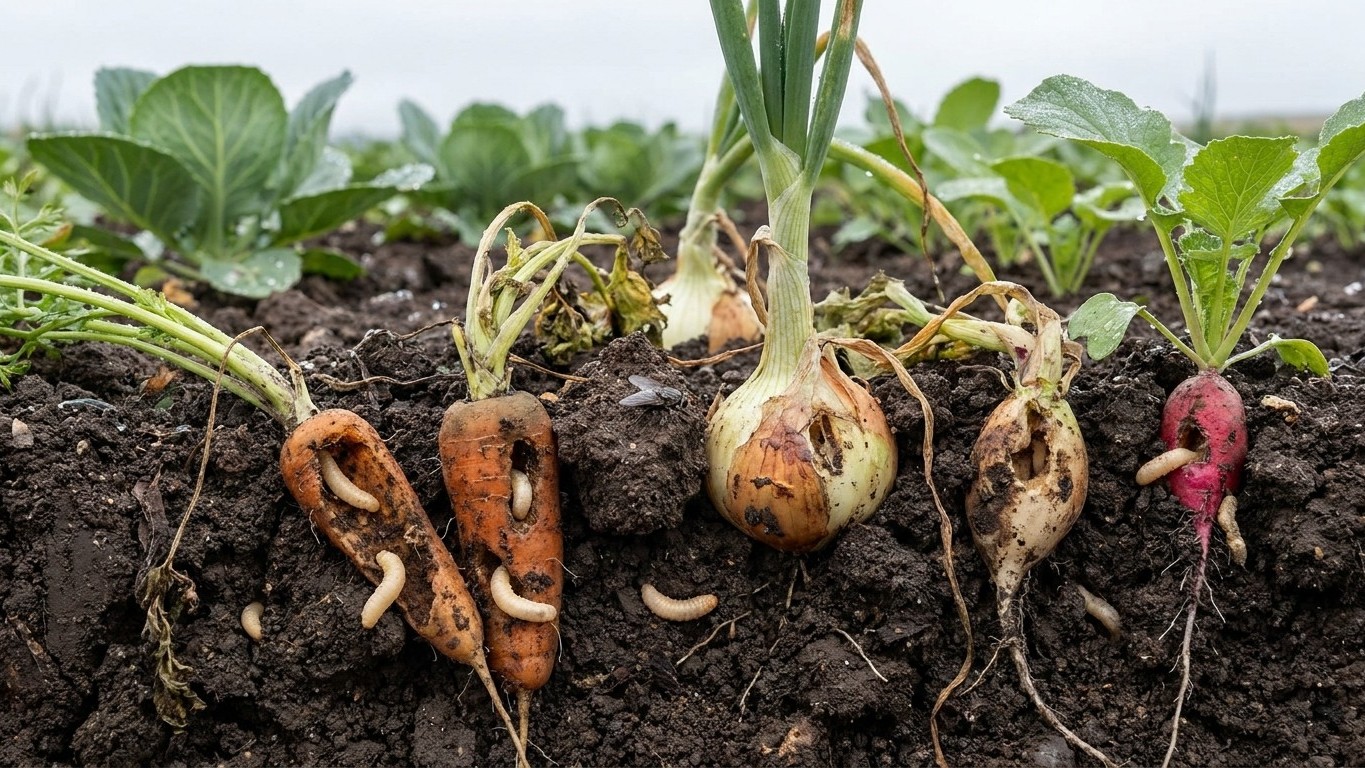
Stored roots deserve a careful look. Before anything goes into storage, inspect each root. A soft patch, a weeping spot or a moldy crown ends the question, and that root should be discarded. A root that looks sound is not proof that it is safe, so keep checking the stored ones on a regular basis. Keeping duration depends on how the roots are handled and held.
Where summers run cool and damp rather than hot, the trouble shifts. Powdery and downy mildew, slow ripening and root diseases become the main worries. Airflow between plants, good drainage and avoiding overhead watering late in the day do more to protect a crop than any extra feeding.
Which these root crops suit Ohio
The choice here is by type, not by variety name. The only recommendation that means anything comes from Ohio State University Extension, which can tell you what has actually performed in your county. Ask there before you buy seed or tubers.
What the facts do support is a way of reasoning. Ohio has a window of roughly 143 to 163 days, cold winters, and a climate where cool, damp spells can bring mildew and disease. That points to a handful of priorities:
| Ohio condition | What it favors |
|---|---|
| Moderate season length | Quick types (turnip, kohlrabi) for succession sowing; early-maturing types of the slower roots |
| Cold winter lows | Hardy perennials left under mulch; tender roots lifted before the ground freezes |
| Humid or damp spells | Disease resistance as the first criterion, plus airflow at the root |
In practice, that means checking the seed or tuber description for stated disease resistance and for how early the type matures. Spacing matters too. Crowded roots stay damp and invite trouble.
If you grow horseradish, a note on preparation. Grating the fresh root releases compounds that burn the eyes and airways, and that is a genuine irritant, not a quirk. Work with good ventilation, such as an open window or a fan, and keep your face and eyes well away from the bowl.
For a first-year plan, a sensible mix is a quick sowing of turnips or kohlrabi, a small bed of celeriac started indoors, and one carefully sited perennial. That spreads your risk across the season and gives you a feel for your own soil.
Common questions
Can I plant Jerusalem artichokes in my regular vegetable bed?
It is better not to. Any tuber fragment left in the soil will regrow, so the plant tends to take over. A dedicated, edged corner is the safer choice.
Is the last frost date the right day to sow?
Ohio State University Extension lists May 5 to May 15 for zone 6a, but that is a probability. These crops want warm soil, which arrives after the frost risk ends. Check the soil, not just the calendar.
Can turnips or rutabagas follow cabbage in the same bed?
No. They are brassicas and share their diseases and pests with cabbage, kale and mustard. Treat the whole family as one group when you rotate.
Do celeriac and kohlrabi need to be lifted for winter?
The safer habit is to lift them before the soil freezes. With a coldest-month mean minimum of 22.0 F at Columbus (NOAA, 1991-2020), Ohio winters are cold enough to threaten them, while horseradish and Jerusalem artichoke can usually stay put under mulch.