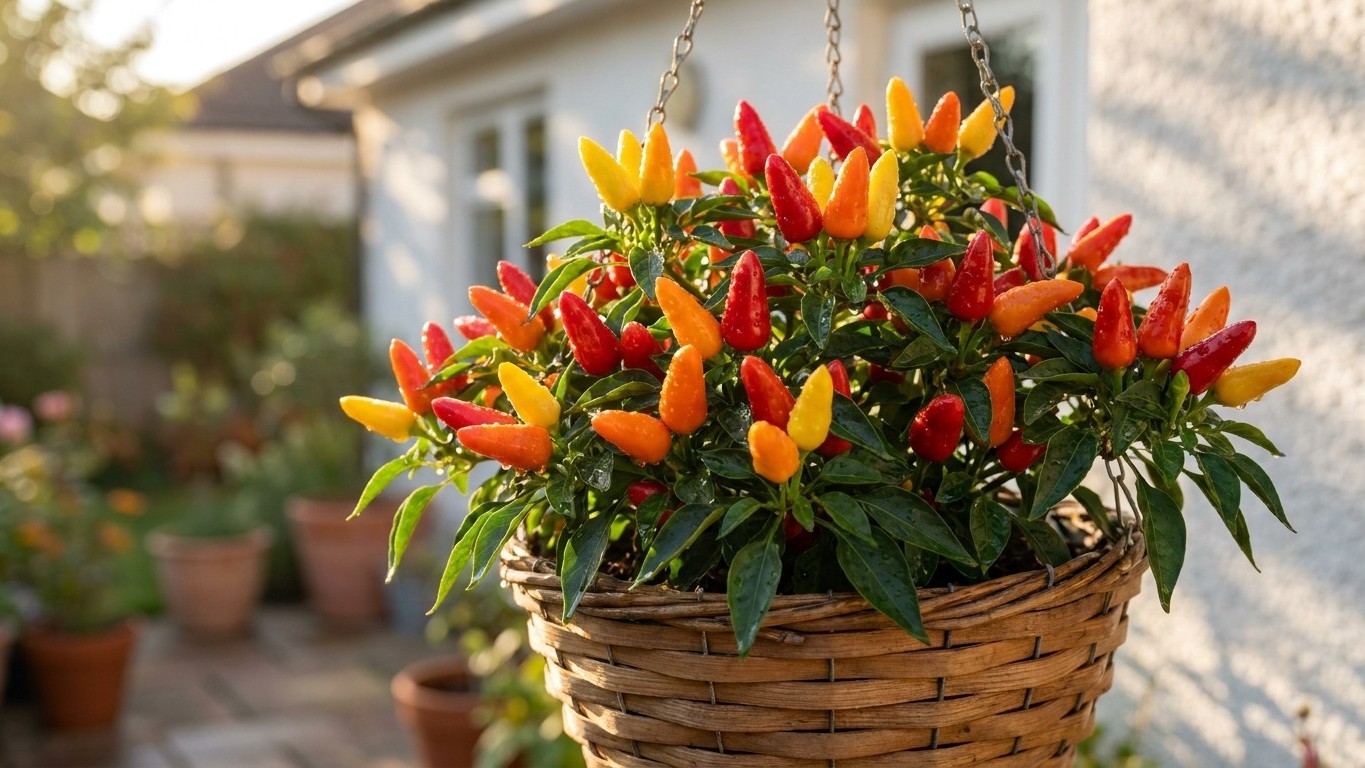

Pick peppers once they reach full size and feel firm and glossy. In Wyoming that usually means August into September, and before a hard frost ends the season. Then keep them out of the refrigerator. Peppers store best at 45 to 50 °F, and below about 45 °F they pit and soften. Most gardeners find that out the hard way, with a bag of slimy fruit a week later. For the full season plan, see Growing Peppers in Wyoming.
Keeping them, and for how long
How do you know a pepper is ready to pick?
Clemson Cooperative Extension says peppers should be ready for harvest in about 70 to 85 days after transplanting. That count starts when the plant goes into the garden, so the calendar depends on when you set it out. Utah State University Extension says transplants need 8 to 10 weeks indoors and should go out when the soil reaches 60 F, after frost. In Wyoming, the mean last spring frost falls between May 7 and May 18, based on NOAA NCEI climate normals for a 30 to 70 percent freeze probability band. Soil usually warms later than that. A transplant set out in late May lands its first ripe fruit in early to mid August, as a rough guide.
The window is short. The reference station has about 130 frost-free days at 6,000 feet, and frost is possible in any month at higher elevations. Row covers or low tunnels at both ends of the season are part of the plan here, not an extra.
The clock for the fruit itself starts at flowering, and flowers are the weak point. According to Utah State University Extension, pepper fruit set fails at both ends: nights below 55 F or days above 90 F. The heat end is the smaller worry in most of the state, since Cheyenne averages 10.4 days a year at 90 F or more. The cool end depends on your own spot, and nothing substitutes for a min-max thermometer outside through July. If blossoms drop, Why Peppers Fail to Set Fruit in Wyoming walks through the causes.
Judge the fruit by hand and eye. A ready pepper has reached the full size for its type, with firm walls and glossy skin. Cut it with pruners and leave a short piece of stem, because branches snap easily. Peppers left to turn red, yellow or orange need more time on the plant. When a frost is coming, a full-size green pepper in the basket is worth more than a color change you may not get. Fruit with bite marks or scarring from insects should be eaten first and never stored, and What Eats Pepper in Wyoming, and When helps you tell what did the damage.
How long do picked peppers last?
Clemson’s Home & Garden Information Center puts it this way: “The optimal conditions for storage are temperatures of 45 to 50 °F and 80- to 90-percent relative humidity for two to three weeks.” Write that down. It is the target for any spot you pick.
Treat “two to three weeks” as a ceiling, because it describes the best case. It assumes sound fruit picked at the right stage and held in conditions that stay steady. A pepper that was nicked by a pruner, bruised in the basket, or touched by frost will break down much sooner. Plan on using the oldest ones first and checking the stash every few days.
The refrigerator is the usual mistake. A domestic fridge is set colder than that range, and below about 45 °F peppers develop chilling injury. The skin pits, the walls go soft, and the fruit rots faster than it would on a kitchen counter. Peppers come from warm climates and the cold hurts the tissue itself. A fridge feels like the right place for any fresh vegetable, but peppers are one of the exceptions.
Where in the house that actually is
Which room comes closest to 45 to 50 °F?
Start by ruling things out. The refrigerator is too cold, as above. Any heated living space, including the kitchen counter, is too warm for storage that lasts weeks. The counter works for a few days, but not for the fall’s whole harvest. An attached garage swings with the weather. In Wyoming, a fall day can be mild and the following night can drop low enough to freeze the fruit, so a garage is a gamble from September on.
The best candidates are the cool, steady spots: an unheated interior room, a basement corner away from the furnace and water heater, a cellar, or a pantry against an outside wall that gets little sun. A basement is often the closest match because the ground keeps the temperature from jumping around. Humidity matters too. A loosely closed paper bag or a perforated plastic bag in a cardboard box holds in moisture and keeps the air from drying the fruit out. A sealed bag with no airflow traps too much and invites mold.
How do you check the spot with a thermometer?
Guessing does not work, because a room that feels cool to you may sit a few degrees outside the range. Put a thermometer in the exact spot for two or three days before the harvest comes in, and read it morning and late afternoon. If it holds between 45 and 50 °F, you have a storage spot. A cheap hygrometer in the same place tells you whether humidity falls in the 80 to 90 percent band. Skipping this step is how a whole harvest ends up in a spot that is a few degrees too cold or too warm.
If every spot reads too warm or too cold, there are workable compromises. Hold the peppers at the cooler end of what you have and use them within a few days. Slice and freeze the surplus, dry hot types, or pickle them. These all preserve far better than a fridge drawer does. And because the season here ends abruptly, it pays to have the spot ready before the first frost forecast, not after.
Common questions
When is the first harvest in Wyoming?
Counting from transplanting, peppers need about 70 to 85 days to be ready. With plants set out in late May after soil reaches 60 F, that points to early or mid August for the first fruit, and the harvest runs until frost. Counting is the easy part. The harder part is getting flowers to set fruit, since the fruit clock begins at flowering. A cool stretch in July can push everything back by weeks, so the dates are a guide and the plant has the final say.
Can I store peppers in the refrigerator?
You can, but you will pay for it. The best storage range is 45 to 50 °F, and a refrigerator runs colder than that. Below about 45 °F, peppers pit and soften from chilling injury. If a fridge is your only option, use the peppers within a few days. For anything you want to keep longer, use a cool room, a basement or a cellar that measures in the right range.
What if I have no spot at 45 to 50 °F?
Use the coolest place in the house that stays above freezing and eat the peppers quickly, within days instead of weeks. You can also stretch the harvest by preserving it. Peppers freeze well sliced, they dry, and they pickle, and none of those methods needs a precise temperature. Keep the fruit dry until you are ready to wash and use it, because trapped moisture speeds up rot.
Why do my plants bloom but never make peppers?
Blossoms drop when nights fall below 55 F or days rise above 90 F, according to Utah State University Extension. Wyoming’s days above 90 F are few (Cheyenne averages 10.4 a year), so cool nights are the usual suspect. Watch your own nights with a thermometer, since local conditions vary a lot between a sheltered yard and an open field. Covers on cold evenings and a warm, sunny spot help. The full explanation is in Why Peppers Fail to Set Fruit in Wyoming.