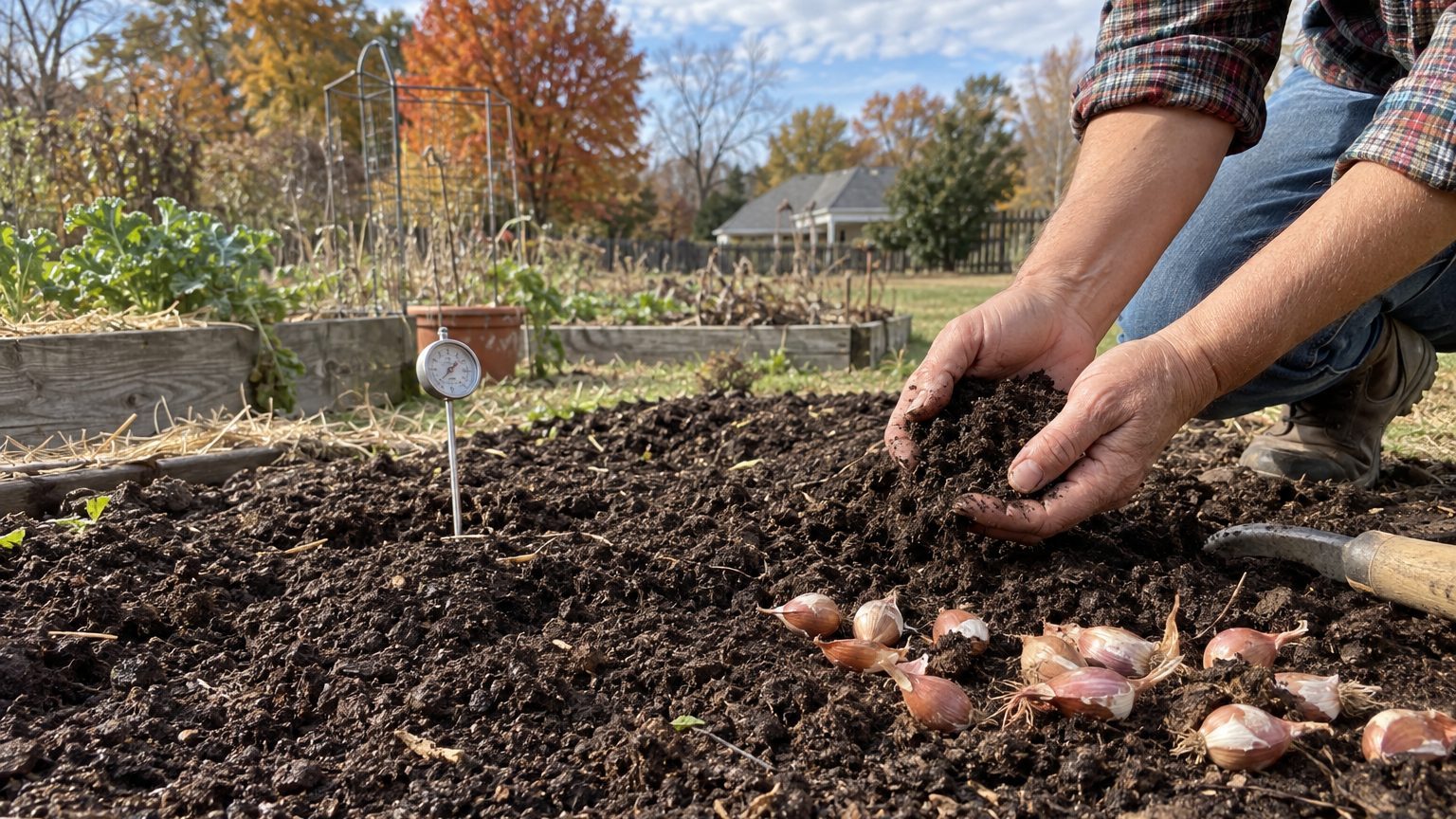

Most Oklahoma gardeners plant shallot sets in late winter to early spring, as soon as the soil is workable. Where winters are milder, a fall planting is also an option and gives earlier, larger bulbs. Frost dates, summer heat and winter cold all shape that choice, and each is easier to plan around once you know what the shallot is doing underground.
When the soil is warm enough in Oklahoma
At the Oklahoma City reference station, the last spring freeze falls between March 28 and April 10, according to the 30-70% probability band for a 32F freeze in the NOAA NCEI U.S. Climate Normals 1991-2020. Those dates are odds, and a freeze can still turn up after them. Suburban and rural gardens typically see the last freeze one to two weeks later than the airport, and more than that at elevation, so check your own county before you mark a calendar.
Shallots are hardy once their roots are in, so the frost date marks the end of the spring planting window rather than the start. Soil warms after the frost risk ends, and by then you want the sets already rooted and pushing green tops. Sets that go in late, into warm soil, start making tops while the bulbing clock is already running. They finish small.
A simple test beats the calendar. Squeeze a handful of soil from planting depth. If it crumbles, plant. If it smears into a wet ball, wait a few days. Oklahoma’s red clay holds water after spring storms, and sets pushed into saturated ground are the ones that rot.
Plant each set with its tip at or just below the surface, and firm the soil lightly so a robin can’t pull it out. One set divides into a cluster of bulbs, a habit covered in Growing Shallots: One Bulb In, a Handful Out.
Should you plant shallots in fall or spring in Oklahoma?
Both work, and the winter decides which is safer for your ground (the next sections cover that). Fall planting follows the same logic as garlic, and the garlic guides on this site cover timing, mulching and allium rotation in detail. What differs for shallots is the set: it is a small, fully formed bulb that roots quickly, so it needs less lead time than a garlic clove. Plant it early enough to root, but not so early that it sends up a long top before the cold arrives.
For the varieties trialled near you, Oklahoma State University Extension is the source to ask. County offices know local frost pockets, and they know which parts of the state behave like Oklahoma City and which do not.
How long the season lasts here
The reference station has roughly 200 to 225 frost-free days between the last spring freeze (March 28 to April 10) and the first fall freeze (October 29 to November 8). Gardens away from the airport usually lose a week or two at each end. Even so, the window is long, and a long window changes what you can do with a crop that only bulbs once.
Shallot bulbing is triggered by lengthening days and rising warmth, not by how many weeks you give the plant. So a long season does not mean fatter bulbs from a late planting. What it allows is a second planting with a different purpose. The first goes in as early as the soil permits and is grown for storage bulbs. Later plantings, spaced a few weeks apart, are best pulled young as green shallots, which are tender and mild and ready well before the heat arrives. The succession sowing guide on this site shows how to stagger plantings so the harvest does not all arrive in the same week.
The window also settles the transplant question. Shallots grown from seed can be started indoors in late winter and moved out as seedlings. That head start matters in a short season. In a long one, it is worth the trouble only if you check the roots first. Pot-bound seedlings with circling roots sulk after transplanting, and a seedling that stalls loses the advantage it was started early to gain. Sets skip the issue entirely, which is one reason most home gardeners use them.
Oklahoma is a wide state, so the reference-city numbers will not fit everywhere. The Panhandle and the northern tier run colder and shorter than the south and the southeast. Gardeners who want a comparison with another long southern window can read Growing Shallots in North Carolina, but your local extension office has the final say on dates for your county.
Heat and water in Oklahoma
Summer heat arrives early and stays long, and spring rain often comes in heavy bursts followed by dry stretches. Shallots live through all of it. They want a steady supply of water while the tops are growing, and they want to be nearly dry by the time the tops begin to yellow. Heat pushes ripening along, so the crop is usually ready in early summer, before the worst of the heat.
Winter is what separates fall from spring. Oklahoma City’s coldest month has a mean daily minimum of 27.0F (NOAA NCEI Climate Normals 1991-2020). The USDA Plant Hardiness Zone Map 2023 puts the state between zones 6a and 8a. Nights drop below freezing, but in much of the state the ground thaws between cold snaps, and sets planted in fall root and wait out winter without trouble.
| Criterion | Fall planting | Spring planting |
|---|---|---|
| Winter risk | Rot in wet clay, heaving where the ground freezes and thaws repeatedly | None, because sets are not in the ground |
| Bulb size | Larger and earlier, from a longer root-building period | Smaller, because less time to build tops before heat |
| Exposure to summer heat | Harvested before the hottest weather | Ripening closer to the heat |
| Best for | Well-drained soil and the milder south | Cold northern areas and soil that stays soggy |
Where the ground freezes hard and stays wet, as it can in the colder zone 6a areas and in heavy clay, fall-planted sets may rot or be heaved out by repeated freezing and thawing. Spring is the safer call there. Where winter is milder and the bed drains well, autumn planting gives the larger, earlier bulbs it is grown for. Raised beds and generous compost help clay drain, and a layer of straw mulch after the ground cools steadies the soil temperature. Gardeners in the milder South can see how fall planting plays out in Growing Shallots in Georgia.
How do you cure and inspect shallots after an Oklahoma harvest?
Lift the bulbs when the tops fall over and yellow, and dry them in shade with good airflow, never in direct sun on a hot day. The same approach applies to garlic, and the garlic guides here cover curing and storage in more depth. Shallots have thinner skins and smaller necks, so they dry faster and need the same attention afterward.
Before storing any bulb, inspect it. The neck should be dry and tight and the skins papery, and the base should be firm with no fuzz. A soft neck or a moldy base ends the question: discard that bulb. A bulb that looks fine from the outside can still be spoiled inside, so check them regularly and do not trust a storage duration quoted by anyone. Keep alliums out of the same bed for a few years afterward to hold down soilborne disease.
Which shallots suit Oklahoma
Choose by type, and let the local climate set the priorities. A short or squeezed season favors the earliest-maturing types, because they finish bulbing before the heat shuts the crop down. That counts most for spring plantings, and for gardens in the cooler north of the state, where the window closes sooner.
Heat favors types that are given airflow and shade at the root. Space the sets so foliage does not crowd, mulch lightly to keep the root zone cooler, and keep the soil evenly moist during growth. Mulch should never pile up against the bulb itself, because that traps moisture where rot starts.
Humid, wet springs are the third factor, and for many Oklahoma gardens they matter most. Fungal diseases such as downy mildew and neck rot thrive in damp, crowded conditions, so disease resistance should come first in your selection. The practice that pays most is not a spray but good habits: well-drained beds, wide spacing, rotation away from onions, garlic and leeks, and clean planting stock.
A variety that shines in Georgia or the Pacific Northwest may stall in Oklahoma’s heat or disease pressure. The only recommendation worth following is one from trials run in your own region. Oklahoma State University Extension and your county office can point you to the varieties that have been grown and watched locally, and to suppliers whose stock is true to type. Ask for the types suited to your planting season, then buy sets that are firm and free of mold.
Common questions
Can I plant shallots in fall in Oklahoma?
Yes, in much of the state, especially in well-drained soil and the milder south. Fall-planted sets root over winter and give larger, earlier bulbs. In the colder north, and in clay that stays wet, rot and frost heaving are real risks, so spring planting is safer.
Will a late freeze kill shallots?
Rooted shallot tops tolerate a light freeze, and a hard one may burn the leaf tips without killing the plant. Newly planted sets in saturated soil are the more vulnerable ones. If a deep freeze is forecast just after planting, a layer of straw mulch gives cheap insurance.
Should I grow shallots from sets or from seed?
Sets are the easier route for most home gardeners. They go straight into the ground, root fast and skip the transplant stage. Seed-grown shallots need an early indoor start and a root check at transplant time, and they are best if you want to avoid carrying over disease.
How do I know when shallots are ready to harvest?
Watch the tops. When they yellow and fall over, stop watering and let the bulbs finish. Lift them, cure them in shade with airflow, then inspect each one. Firm, dry necks and clean, firm bases pass. A soft neck or mold at the base means the bulb goes in the trash, and the rest should be checked again before storage.